

I was standing in my kitchen, hands dripping with soapy water, staring at my phone in total disbelief. My dishwasher, which cost more than my first car, was essentially ‘ghosting’ me. No notifications, no cycle updates, just a spinning wheel of death on the screen. It’s incredibly frustrating when you invest in high-end tech for the sake of convenience, only to find yourself troubleshooting more than you’re actually cleaning. If you’ve ever felt like your ‘smart’ home is making you feel a bit dumb, trust me, you are not alone. I could hear the faint hum of the machine, but my phone was telling me it didn’t exist. It was like the appliance had entered witness protection. I felt that heat rise in my neck—you know the one—where you realize you’ve been outsmarted by a circuit board.
That Time My Smart Kitchen Actually Outsmarted Me
I’ll be honest with you: I’m a total sucker for gadgets. I love managing your kitchen appliances with voice commands and checking my phone to see if the rinse cycle is done. But last Tuesday, everything went sideways. I spent forty-five minutes trying to reconnect my app while my dinner guests were waiting. The biggest mistake I made early on? I assumed my dishwasher was broken. I almost called for professional diagnostics before checking the simplest thing: my router’s priority settings. We often blame the appliance hardware when the real culprit is a software handshake that went wrong. Today, we are going to fix that. We’ll dive into why your dishwasher notifications are always delayed and what you can do to keep that connection stable. We want the house of the future, not the house of ‘please wait, reconnecting.’
Is all this connected tech actually worth the headache?
It is a valid question. Why add a layer of complexity to a machine that just needs to spray hot water? According to the Institute of Electrical and Electronics Engineers (IEEE), over 70% of IoT device failures are related to network congestion and interference rather than mechanical defects. You might think you need a repair tip for the motor, but you actually need a better Wi-Fi channel. I’ve seen so many people get frustrated and just stop using the smart features altogether, but when they work, they are game-changers for energy efficiency and maintenance.
Stop Your App from Ghosting Your Appliances
The primary reason your connection drops is usually a mismatch between your router and the appliance’s internal Wi-Fi card. Modern machines are picky. If you’ve noticed your app keeps crashing during firmware updates, it’s a sign that the data packet delivery is being interrupted. I once spent three hours trying to force an update, only to realize my microwave was interfering with the 2.4GHz signal every time I heated up coffee. It was a classic rookie move. Making sure firmware updates are essential for new smart dishwashers is a priority because those updates often contain the ‘patches’ that fix these exact connectivity drops. Sometimes, you might even find yourself wishing you could just go back to basics and manually advance a mechanical timer dial. But don’t give up on the tech just yet. Have you ever stood in your kitchen, glaring at a ‘Searching for Device’ screen while your dishes sat dirty? Tell me about your most annoying ‘smart’ failure in the comments—I promise I won’t judge.
Read the Secret Language of Your Control Panel
Before you even touch your router, look at the front of the machine. It’s usually trying to talk to you in its own language. I used to ignore those blinking lights until I learned that why your dishwasher screen shows a numeric error code is essentially a 911 call from your motherboard. It’s not just a random number; it’s a specific map to the problem. If you see something like ‘E15’ or ‘F2,’ the machine isn’t just broken; it’s telling you exactly which sensor is failing. You can often bypass the ‘Searching for Device’ loop in your app by accessing the secret diagnostic mode hidden on your touch control panel. This manual override forces the machine to perform a self-check, which can often ‘wake up’ a stalled Wi-Fi card that the app can’t see. 
Why Your Router Might Be the Real Saboteur
If the screen is blank but the app is screaming ‘No Connection,’ we need to look at the signal path. Think of your Wi-Fi like a highway; if every smart bulb, phone, and speaker is in the same lane, your dishwasher gets stuck in traffic. I solved my own connection drops by moving my router just three feet higher on the shelf—elevation is everything for 2.4GHz signals. Also, remember that mechanical parts still matter. If your machine thinks it’s overflowing, it will kill the Wi-Fi to focus on the drain pump. You can check the basics yourself—for example, how to test your dishwashers float switch with a pencil is a classic trick to see if a stuck float is tricking the computer into a lockdown state.
The Firmware Patch That Saves Your Sanity
We tend to think of ‘updates’ as optional, but in the world of high-end appliances, they are the difference between a functional machine and a giant paperweight. Modern sensors are incredibly sensitive to water pressure and temperature fluctuations. Often, why your smart dishwasher needs a firmware update to save water isn’t just about the environment; it’s about recalibrating how the machine interprets data from the sump. Last summer, during a brutal thunderstorm, my dishwasher just… quit. It wouldn’t respond to the app, and the lights were flickering. I was convinced the motor had fried. I almost paid for an emergency service call, but I decided to check how to prove your appliance failure was caused by a power surge first. Turns out, a simple hard reset and a firmware handshake resync saved me $300 and a lot of embarrassment.
Don’t Let a Software Glitch Void Your Protection
When you start digging into these digital fixes, keep your paperwork handy. There is a fine line between DIY troubleshooting and accidentally voiding your coverage. Using understanding appliance diagnostics improving your warranty claims is your best defense. If you can show the technician the specific error history you pulled from the diagnostic mode, they are much less likely to claim ‘user error.’ If you’ve tried the reset and the firmware update and you’re still seeing a ‘Communication Failure,’ that’s when to trust a warranty for dishwasher repairs rather than taking the door panel apart yourself. Sometimes the ‘handshake’ between the Wi-Fi module and the main control board is physically broken, and no amount of router rebooting will fix a cracked solder joint. Always lean on troubleshooting dishwasher problems expert diagnostics repair tips before you start buying replacement parts on a hunch.I’ve seen it a thousand times: a frustrated homeowner sees a blank screen and immediately assumes the main control board is fried. It’s a $400 mistake that could have been a $15 fix. Most DIYers jump straight to the most expensive part because they haven’t learned the ‘contrarian’ truth of modern appliance repair—the most complex components are often the most protected.
Why does your machine stay stuck at one minute for an eternity?
You’ve probably paced the floor watching that ‘0:01’ stay on the display for ten minutes. It’s not a glitch; it’s the machine’s turbidity sensor realizing the water isn’t clean enough yet. According to the Association of Home Appliance Manufacturers (AHAM), modern sensor-based cycles can fluctuate by up to 30 minutes depending on soil levels. If you keep seeing one minute turn into ten, your machine is actually doing its job, not failing. But here is the ‘oops’ factor you need to watch out for: if you try to force the cycle forward or manually advance a mechanical timer dial on a digital machine, you can desync the entire software logic and cause a permanent communication error.
Stop assuming the motherboard is the enemy
The real secret to troubleshooting dishwasher problems is checking the safety ‘trips’ first. For example, before you buy a new board, you should be testing your thermal fuse for continuity. If that fuse is blown, the board won’t get power, and the machine looks dead. It’s a simple fail-safe designed to prevent fires. Another nuance that drives people crazy is tablet vs powder detergent residue. People think the machine isn’t draining, but it’s actually just oversudsing from too much detergent, which tricks the pressure switch into thinking the tub is full. 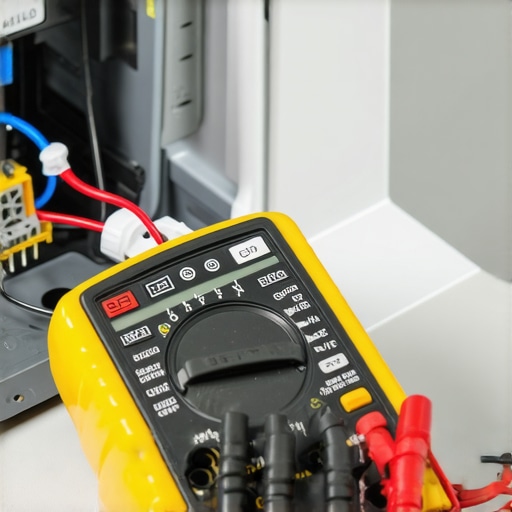
The warranty trap nobody warns you about
Here is something your local big-box store won’t tell you: your dishwasher and your sink are legally married. I’ve seen countless people lose their coverage because of a plumbing oversight. Specifically, your warranty claim can be denied because of your garbage disposal if the knockout plug wasn’t removed or if food waste is backing up into the dishwasher drain. It’s categorized as an external installation failure, not a manufacturing defect. This is why understanding appliance diagnostics is vital—you need to know if the ‘error’ is coming from the pump or a blockage in your own pipes. Have you ever fallen into this trap and been stuck with a repair bill you thought was covered? Let me know in the comments. Lastly, don’t forget that diagnostics can save your warranty benefits by providing a digital paper trail of the fault before a technician even arrives. It proves the issue was intermittent and not caused by neglect.
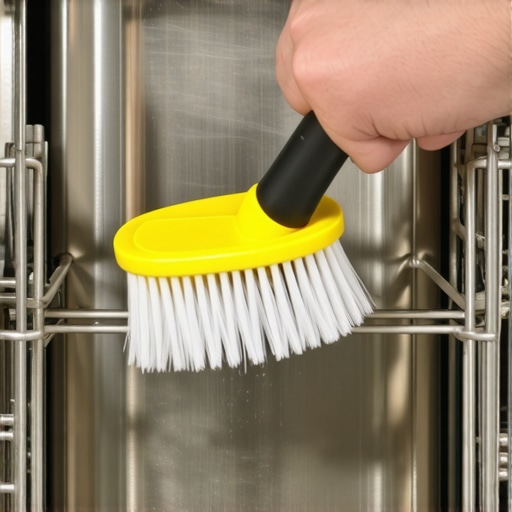
To keep your machine from becoming a high-tech brick, you need a proactive maintenance mindset. I personally keep a small ‘Diagnostic Kit’ under my sink: a soft-bristle brush, a dedicated pack of citric acid, and—believe it or not—a cheap shop vacuum. When my machine starts acting up, I don’t just guess; I use the secret diagnostic mode hidden on your touch control panel to pull the exact data. If the drainage feels sluggish, I’ve learned that clearing a blocked impeller with a shop vacuum is far more effective than pouring chemicals down the drain. You’re literally pulling the debris out rather than pushing it deeper into the pump housing where it can cause real damage.
How do I maintain my dishwasher’s performance over time?
The hardware needs physical attention just as much as the software needs patches. I’ve found that cleaning your sump filter with a soft brush once a month prevents the bacterial build-up that leads to sensor interference. If you have hard water, you’re in a constant battle. Using the eco-friendly way to remove hard water scale keeps your spray arms spinning freely. While you’re at it, take five minutes for cleaning the hidden spray arm nozzles with a toothpick. It sounds tedious, but it’s the difference between sparkling glasses and a gritty finish that makes you want to throw the machine away. According to the Repair Association’s white papers on the Right to Repair, manufacturers are increasingly using proprietary software locks, making these manual cleaning steps even more critical to avoid a forced—and expensive—service visit.
The Future of Smart Appliance Care is Predictive
I predict that within five years, your dishwasher won’t just tell you it’s broken; it will order its own replacement parts before the failure even happens. We are moving toward a world of predictive diagnostics where the machine monitors the current draw of the motor to sense a failing bearing weeks before it seized. Until then, you need to be the brain of the operation. If you start hearing a new hum, learn how to document intermittent noises for a repair claim so you have digital proof when the tech arrives. Stop assuming that pre-rinsing dishes actually makes your machine more efficient; the modern turbidity sensors actually need those food particles to calibrate the water usage properly. Don’t wait for a floor-warping leak to check your coverage. Make sure you know the real difference between service plans and manufacturer warranties before your machine hits the three-year mark. Many people assume they are covered for everything, only to find out their warranty claim was denied due to lack of maintenance. Tonight, I want you to do one thing: run a high-temp cycle and actually pull out that bottom filter. You’ll be shocked at what’s living down there.
The Most Expensive Lesson My Smart Sump Ever Taught Me
Looking back at my own repair journey, I realized that I spent way too much time worrying about the ‘brain’ of the machine while ignoring simple mechanical triggers. I learned that the real reason your detergent cup won’t open is often just a physical obstruction from a stray plate, not a board failure. Also, never underestimate the gap in your door gasket you can’t see with the naked eye; it can cause subtle moisture build-up that confuses your touch panel over time. My biggest takeaway? Trust the internal diagnostics, but always verify the physical hardware before you start clicking ‘buy’ on expensive replacement parts.
Tools That Keep My Digital Kitchen From Crumbling
You don’t need a degree in electrical engineering to keep your appliances running, but a few key items under your sink will save you hundreds. I always recommend using a voltmeter to check your power cord connection before assuming the motherboard has fried during a storm. For routine maintenance, skip the harsh abrasive chemicals and stick with the best way to clean your spray arms using only lemon juice to prevent scale build-up without damaging the plastic bearings. Finally, keep an eye on your plumbing connections; knowing how to spot a failing drain pipe early can prevent a catastrophic kitchen flood that no software update can fix.
#IMAGE_PLACEHOLDER_E#
You Are the Real Brain Behind the Machine
It is incredibly easy to feel intimidated by Wi-Fi enabled boards and flashing touch screens, but remember that these are just tools meant to serve you. When you find yourself fixing the dreaded error code that stops everything, take a breath and follow the logic we have discussed today. If you do end up needing a major professional repair, don’t forget to look into how to claim a repair refund from your appliance manufacturer if the failure is linked to a known manufacturing defect. You now have the diagnostic roadmap to handle whatever your ‘smart’ kitchen throws your way. Have you ever had a ‘smart’ appliance fail for a reason that turned out to be incredibly simple? Let me know your story in the comments below!