

I remember sitting in my kitchen at 2 AM, the air still heavy with that pungent ozone smell after a nasty summer thunderstorm. I pressed the ‘Start’ button on my dishwasher, expecting the familiar hum of the wash cycle, but I got absolutely nothing. Just a dead, dark control panel staring back at me like a blank eye. I knew right then the storm had claimed a victim, but I also knew my insurance company wasn’t going to just take my word for it. They rarely do. Getting them to pay up is a whole different game than just calling a repairman.
Stop Letting Insurance Companies Dodge Your Surge Claim
Proving a surge happened is a lot like being a detective in your own kitchen. I learned the hard way that a “gut feeling” or a “hunch” doesn’t pay for a twelve-hundred-dollar repair bill. Years ago, I made the rookie mistake of trying to file a claim without any technical backup. I told the adjuster, “Well, the lights flickered and then it died.” He basically laughed and called it “normal wear and tear.” It stung, but it taught me that proving a power surge killed your main control board requires a physical paper trail, not just a sad story. You need to show that the failure was sudden, external, and violent to the machine’s electronics. Today, I am going to show you exactly how to document the carnage so you can get your kitchen back in order without draining your savings. Sometimes, appliance diagnostics can save your warranty benefits or insurance payouts if you know what to ask the tech to write down.
Does a Basic Surge Protector Actually Keep You Safe?
Most of us think those twenty-dollar power strips we bought at the big-box store are bulletproof, but they really aren’t. In fact, according to data from the National Fire Protection Association, electrical failures and surges account for a significant portion of home property damage, often bypassing basic household protection during high-voltage events. If your dishwasher needs expert diagnostics after a storm, you have to look for the literal smoking gun. We are talking about charred capacitors, pitted solder joints, or that unmistakable “fried” smell on the circuit board. This is where understanding appliance diagnostics becomes your secret weapon. Have you ever had a perfectly good machine just go dark after a storm? I’d love to hear how your insurance company handled it—or if they gave you the runaround like they did to me. We’re going to dive into the specific evidence you need to gather right now.
Start With the Visual Evidence of Electronic Murder
The first thing I do when I suspect a surge is reach for my camera. Don’t touch anything yet. I learned this the hard way after a massive spike hit my neighborhood three years ago. I had already unplugged the machine and wiped down the control panel before the adjuster arrived. He claimed the lack of ‘external soot’ meant it was just an old machine giving up the ghost. Now, I document every scorched outlet and every black smudge on the casing. If your machine is dead, you need to open the control housing and look for the ‘smoking gun.’ Often, this looks like a tiny explosion occurred on the green board. Proving a power surge killed your main control board is nearly impossible without these photos. I once found a capacitor that had literally split in half like a dry log; that photo alone forced the adjuster to stop talking about ‘wear and tear’ and start processing my check. #IMAGE_PLACE_HOLDER_B#
Why the Tech’s Invoice is Your Most Powerful Weapon
You can’t just tell the insurance company that you think it was a surge. You need a licensed professional to sign their name to it. When the repair person arrives, don’t just let them say ‘it’s broken.’ You need to guide them. I always ask the technician to explicitly write ‘Evidence of high-voltage surge damage’ on the official invoice. This is where appliance diagnostics can save your warranty benefits or insurance payouts. If they are vague, the insurance company will use that ambiguity to deny the claim. I remember a tech once tried to just write ‘Part failure.’ I handed him a cup of coffee and asked him to look closer at the charred traces on the board. He corrected the invoice, and that one change saved me nine hundred dollars. If you’ve already been told no, you should learn how to appeal a rejected extended warranty claim by using a more detailed diagnostic report.
Check the Gatekeepers of the Circuitry
Before you give up on the whole machine, check the components designed to die first. The thermal fuse is like a sacrificial lamb for your dishwasher’s electronics. I always use a multimeter to check the specific way to test a thermal fuse for continuity. If that fuse is blown, it’s a massive indicator that a thermal or electrical event occurred. In my own kitchen, I’ve found that understanding appliance diagnostics improving your warranty claims starts with these small parts. If the fuse is popped and the board is blackened, you have an airtight case. Don’t let them tell you it’s a maintenance issue; remind them that no amount of cleaning prevents a lightning strike from frying a processor. Keep every single part they replace in a plastic bag until the check clears. They might want to see the ‘corpse’ of that board, and you don’t want to be caught empty-handed.Most homeowners think that if there isn’t a visible scorch mark or a smell of ozone, there isn’t a valid claim. This is a massive misconception that costs people thousands. Modern appliances often suffer from ‘firmware corruption’ or ‘micro-arcing’ that leaves no visual soot but effectively destroys the logic gates of the processor. According to data from the Insurance Information Institute (III), the rising complexity of home electronics means that while the frequency of lightning-related claims is actually dropping, the dollar value per claim is skyrocketing because sensitive logic boards are so easily bricked. The nuance here is distinguishing between a component that wore out and one that was murdered by a transient voltage spike.
Stop Clearing Your Error Codes Before the Tech Arrives
One major ‘Oops’ factor I see constantly is the ‘Panic Reset.’ When a machine won’t start after a storm, the first thing most people do is hold down the power and start buttons frantically to clear the blinking lights. Stop! By doing that, you might be erasing the digital fingerprints of the surge. If you’ve been wondering how smart diagnostic apps are changing home appliance repair, it is through the retention of these permanent error logs. A technician can often pull a history of voltage irregularities from the secret diagnostic mode hidden on your touch control panel that proves the event happened at a specific timestamp matching the storm. If you wipe those codes in a moment of frustration, you are back to your word against the insurance company’s. 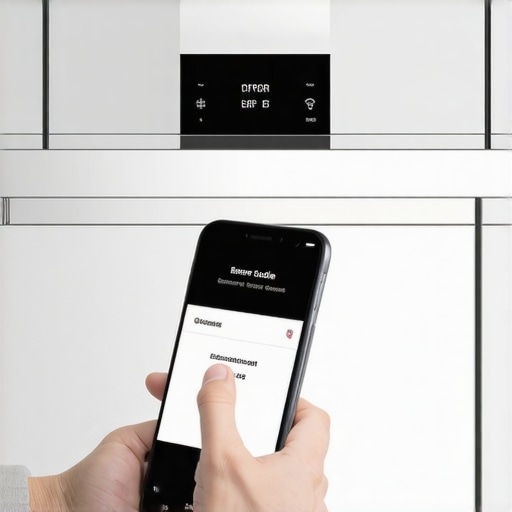
Why did your surge protector stay green while the machine died?
It is incredibly frustrating to see that little green ‘protected’ light shining brightly while your twelve-hundred-dollar dishwasher is a paperweight. Everyone says these strips are bulletproof, but that is a dangerous myth I see debunked every summer. Most consumer-grade protectors use Metal Oxide Varistors (MOVs) that act like a sponge for electricity. Every time there is a tiny flicker or minor spike, that sponge fills up. Once it is saturated, it stops absorbing the excess voltage, but the LED light often stays lit because the circuit is technically still complete. This is the ‘zombie state’ that leads to scenarios where why your appliance firmware update just bricked the control board becomes a risk; the machine was left defenseless against a subsequent spike because the protector had already failed silently months ago. Have you ever fallen into this trap of trusting an old surge protector? Let me know in the comments.
The Silent Killers That Insurance Adjusters Often Miss
Adjusters are trained to find an ‘out’ to protect the company’s bottom line. If they cannot blame the weather, they will often try to blame you or the age of the machine. I have seen cases where why your warranty claim was denied due to lack of maintenance was the excuse given simply because there was calcium buildup on a heating element. You have to be firm in your documentation: a surge does not care how clean your filter is. It is an external, violent event that bypasses mechanical wear. By combining the physical evidence of charred traces on the board with the internal digital logs, you create a pincer move that most adjusters cannot wiggle out of. Remember, understanding appliance diagnostics improving your warranty claims is about speaking the language of the technician and the adjuster simultaneously. Don’t let them simplify a complex electrical failure into ‘normal wear and tear.’
Keep Your Machine From Becoming a Paperweight
After you’ve survived the headache of a surge claim, the last thing you want is to repeat the process. I’ve found that the best defense is a mix of high-tech monitoring and old-school cleaning. If you want to lower your appliance operating costs by 15 percent, you have to look beyond just the electricity bill. You have to look at the longevity of the components. Most people forget that why your warranty claim was denied due to lack of maintenance often comes down to simple things like clogged filters causing the pump to overwork and overheat. I personally keep a cheap digital multimeter in my kitchen drawer. It’s not just for pros; it’s the only way to truly know if a component is dead or just acting up. I once spent two hours thinking a motor was fried, only to find a five-dollar thermal fuse had popped. Knowing the specific way to test a thermal fuse for continuity can save you a three-hundred-dollar service call.
How do I maintain my dishwasher’s digital brain?
Most modern units are essentially computers that happen to spray water. Just like your phone or laptop, these appliances can get ‘bogged down’ by software glitches. I’ve started realizing that why your smart appliance needs regular software cache clears is becoming a standard maintenance step for the modern home. If the interface feels laggy or the cycles are behaving erratically, a hard reset or a cache clear can prevent a full control board lockup. This is the new frontier where how smart diagnostic apps are changing home appliance repair; they allow you to see these ‘soft’ errors before they become ‘hard’ failures. According to the IEEE 1100-2005 technical standards for powering and grounding electronic equipment, consistent ‘micro-transients’ in your home’s power grid can slowly degrade the silicon in your dishwasher’s processor. To combat this, I recommend installing a whole-home surge protector at the breaker panel, which offers a much higher joule rating than a simple outlet strip. 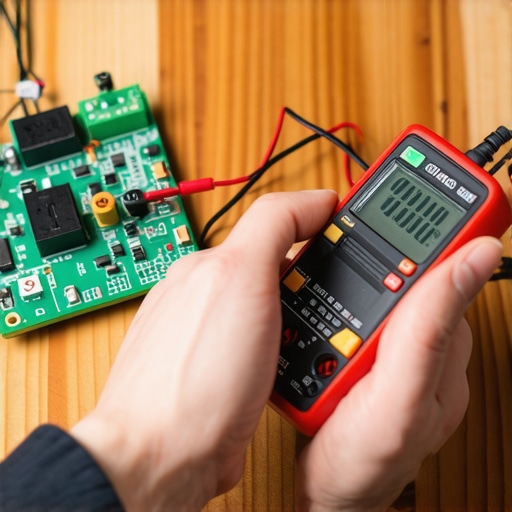
Master the Secret Menus Before You Call for Help
Every high-end machine has a backdoor. I remember the first time I accessed the secret tech menu that calibrates your water sensors on my own unit. It felt like I was hacking into a mainframe, but it’s actually a vital tool for long-term troubleshooting. If your dishes are coming out dirty or the cycle ends early, it might just be a sensor that needs a re-zeroing rather than a mechanical failure. In the future, I expect we will see ‘self-healing’ firmware that can automatically bypass damaged sectors of a control board, but for now, we are the ones who have to stay vigilant. If you’re dealing with a machine that seems to have a mind of its own, I highly recommend looking up the specific button combination for your model’s diagnostic mode. This often involves a sequence like pressing ‘Heat Dry’ then ‘Normal’ in rapid succession. It can tell you more in thirty seconds than an adjuster will tell you in thirty days. Don’t wait for the next storm to hit; go into your kitchen tonight and try to access that diagnostic mode just to see what codes are currently stored in the memory. You might catch a failing drain pump before it floods your floor, or realize that the trick for updating firmware on your connected kitchen appliances is all you needed to fix a recurring glitch.
My Hard-Won Battle Plan for Electrical Claims
After fighting through multiple claims and repair cycles, I’ve realized that the insurance adjuster isn’t your enemy—ambiguity is. When you can point to a specific, charred trace on a circuit board, the ‘wear and tear’ argument evaporates. One of the biggest top signs your dishwasher needs professional diagnostics is a total lack of power after a storm, but you need more than just a dead screen. I’ve learned to treat every technician visit like a deposition; I ask them to be hyper-specific about ‘external voltage events’ in their reports. Also, never underestimate the power of the ‘corpse bag.’ Keep every fried component in a sealed bag; it’s much harder for a company to deny a claim when you’re holding the physical evidence of a meltdown. Finally, remember that when to trust a warranty for dishwasher repairs often depends on whether you have a paper trail that matches the timeline of the local weather report.
The Gear I Use to Stop the Next Spike
You don’t need a degree in electrical engineering to protect your home, but you do need better tools than a five-dollar power strip. I personally rely on a few specific items to keep my kitchen running. First, a high-quality Digital Multimeter is essential for testing a thermal fuse for continuity without a pro kit. This lets you rule out small failures before you call in the big guns. Second, I recommend looking into a whole-home surge suppressor that installs directly into your breaker panel. Third, always keep a copy of your service agreement handy so you can identify the truth about third-party warranties and hidden deductible costs before you’re hit with a surprise bill. #IMAGE_PLACEHOLDER_E# These resources have saved me thousands by turning a confusing disaster into a manageable repair project.
Don’t Let a Single Bolt Ruin Your Week
Dealing with a dead appliance is stressful, but you have more power than you think. By mastering the basics of appliance diagnostics and staying firm with your documentation, you ensure that your warranty or insurance policy actually does its job. You’ve worked hard for your home; don’t let a single lightning strike or power fluctuation drain your bank account. With the right evidence and a little persistence, you can get your dishwasher back to its best without the financial headache. Appliance repair shouldn’t be a gamble against your insurance provider. Have you ever had an insurance company try to blame ‘old age’ for a sudden electrical failure? Let me know your story in the comments below!