

I stepped into the shower, expecting a relaxing steam, but instead, I got a blast of liquid fire that felt like it was peeling the skin right off my shoulders. I’d just “upgraded” my water heater settings the night before, convinced that hotter was always better for my dishwasher. I was wrong. It wasn’t just my skin at risk; I was literally burning money and potentially ruining my pipes. It took a few weeks of trial and error (and one very uncomfortable conversation with my wife) to realize that the factory setting isn’t a suggestion—it’s a starting point that most of us get completely wrong. Today, I’m going to show you how to find that “Goldilocks” zone where your dishes get clean, your showers stay hot, and your energy bill doesn’t look like a phone number. [IMAGE_PLACEHOLDER]
Stop Letting Your Water Heater Burn Your Wallet
We often think about our appliances in isolation. We look at why your new machine stays cold during the pre-wash and assume the water heater is the culprit. But in reality, your home is a connected ecosystem. When I first moved into my house, I cranked my temp up to 145 degrees. I thought I was being “proactive.” In reality, I was causing mineral buildup to accelerate like crazy inside my tank. I learned the hard way that why pre-washing dishes is a waste of time and money because modern dishwashers are designed to handle protein and starch at specific temperatures—not boiling water that can actually bake food onto the plates. If you’ve ever wondered why running the kitchen sink hot prevents cold starts, it’s because you’re clearing the cold water out of the lines, not because you need to turn the whole house into a sauna. You are just wasting gas or electricity keeping forty gallons of water at a dangerous temperature.
Does Cranking the Heat Really Kill More Bacteria?
This is the biggest fear I hear from my neighbors. They worry that if the water isn’t hot enough to melt a plastic spatula, their family is going to get sick. It’s a valid concern, but there’s a massive catch. According to the Consumer Product Safety Commission, water at 140°F can cause a third-degree burn in just six seconds. Most modern dishwashers have internal heaters anyway to boost the temperature for sanitation cycles. You don’t need to risk a trip to the ER just to get your forks clean. Have you ever checked the actual dial on your heater, or are you just living with whatever the previous homeowner left it at? Setting the dial too high can even lead to the impact of detergent overdose on energy efficiency, as the chemical reaction of your pods changes when the water is too hot. Let’s find that perfect middle ground.
Track Down the Thermostat and Take Control
To actually change your water temperature, you have to find the brain of the operation. On a gas heater, it is usually a big red or black dial right on the front near the bottom. If you have an electric heater, it is slightly more hidden behind one or two metal access panels. I remember the first time I tried this; I was so nervous I would flood the basement, but it is really just a matter of a screwdriver and some patience. Before you touch anything on an electric model, flip the breaker. Safety is not just a suggestion here. Once you have pulled back the insulation, you will see the thermostat. If you are seeing multiple issues with your cleaning cycles, you might want to look into troubleshooting dishwasher problems with expert diagnostics before you start blame-shifting to the water heater.
The Meat Thermometer Method for Real Data
Do not trust the markings on the dial. They are notoriously inaccurate, like the estimated time on a download bar. To get a real reading, go to the sink closest to your water heater and let the hot water run until it is as hot as it gets. Fill a glass and stick a digital meat thermometer in there. If that number reads 140 degrees Fahrenheit or higher, you are literally sending money down the drain. I once measured mine at a staggering 152 degrees—no wonder my wine glasses were coming out etched. This kind of extreme heat is a common culprit when you are understanding appliance diagnostics and improving your warranty claims, as it can wear out seals prematurely. 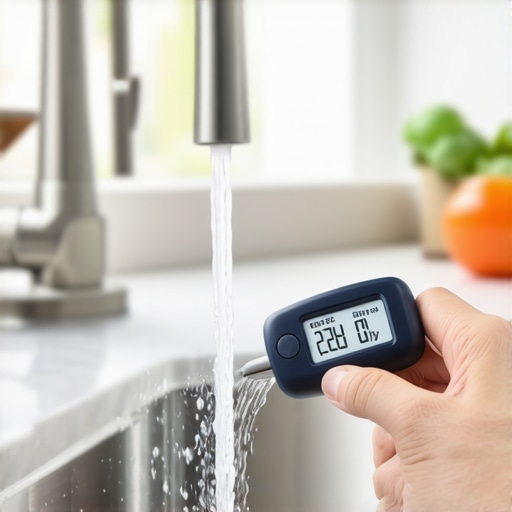
Aim for the 120-Degree Goldilocks Zone
The Department of Energy recommends 120 degrees Fahrenheit. At this temperature, you prevent most mineral scaling and save roughly 10 percent on your heating costs. Use a flathead screwdriver to turn the dial down. If your dishwasher has been acting up, like if the water does not seem to reach the top rack, you might want to learn how to test your dishwasher float switch with a pencil to ensure it is not a mechanical failure masquerading as a temperature issue. Once you have adjusted the dial, wait about six to eight hours before testing again. It takes time for forty gallons of water to settle into its new identity.
Spotting Problems Beyond the Temperature Dial
Sometimes, you will find that even at 120 degrees, your dishes are not drying, or the machine keeps clicking. People often ask me does the night mode setting actually lower your electric bill, and while it can, it will not fix a failing heating element. If you notice your machine stops mid-cycle with a flashing clean light, that is usually a diagnostic code telling you the internal heater is not keeping up. In those cases, the water heater setting is just a band-aid. I once spent three hours recalibrating my tank only to realize I had a blown fuse in the dishwasher control board. You can save yourself the headache by testing a thermal fuse for continuity without a pro. It is a five-minute check that could save you a hundred-dollar service call.But here is where things get really interesting. Most people assume that once they have a diagnostic code in hand, the repair is a straight line from A to B. I am here to tell you that is a total myth. In my years of tinkering, I have found that error codes are often red herrings. Everyone says the manual is the gospel, but in reality, the sensor reporting the error is frequently the part that has actually failed, not the component it is supposed to be monitoring. For instance, reading the hidden blinking lights on your dishwasher brain might suggest a drainage failure when, in fact, you just have a slightly loose wire harness. Treating the code as a suggestion rather than a command is the first step toward true expertise. 
The Fine Print That Voids Your Protection
We need to talk about the ‘Oops’ factor that kills your budget before you even pick up a wrench. Most homeowners do not realize there is a massive chasm between a factory warranty and an extended service plan. I have seen countless people lose their coverage because they tried a ‘quick fix’ they saw on social media. Understanding the real difference between service plans and manufacturer warranties is vital because the latter is much more unforgiving. A common trap is the use of non-OEM parts. While they are cheaper, why third-party parts frequently void your service plan is simple: manufacturers do not want to subsidize the failure of a five-dollar knockoff component that eventually fries a three-hundred-dollar control board.
Why Is My Smart Dishwasher Failing During Firmware Updates?
This is a question that would have sounded like science fiction ten years ago, but it is a frequent headache for modern homeowners. If your machine suddenly goes dark or starts acting erratic after a Wi-Fi notification, you might be dealing with a corrupted update. I have noticed that why your smart appliance app keeps crashing during firmware updates often comes down to signal interference during a critical write-phase. If the update fails, the machine can ‘brick,’ leaving you with a very expensive stainless steel box. Before you call a tech, try a hard power reset at the breaker—it is the digital version of a ‘Goldilocks’ reset for the brain.
Don’t Let Hard Water Kill Your Warranty Claim
Here is a nuance most people miss: your house itself could be voiding your warranty. The Association of Home Appliance Manufacturers (AHAM) has frequently pointed out that mineral levels in local water supplies significantly dictate the lifespan of heating elements. If you live in an area with high mineral content, you must check the clause in your service plan that voids coverage for hard water. Many providers consider scale buildup to be ‘lack of maintenance’ rather than a mechanical defect. I have even seen cases where a warranty claim got denied because of your garbage disposal being improperly installed, causing backflow that the inspector blamed on the homeowner. When you are understanding appliance diagnostics and improving your warranty claims, you have to look at the whole plumbing system, not just the dishwasher door. Have you ever fallen into this trap where a simple maintenance oversight cost you a free repair? Let me know in the comments.I used to think that a toolkit was just for major renovations, but after seeing three different control boards fry in my neighborhood, I realized that a few specific tools are non-negotiable for anyone who owns a modern machine. My personal holy grail is a reliable digital multimeter. I use mine for everything from testing your thermal fuse before buying a new control board to verifying that my wall outlet is actually delivering the steady current the manufacturer promises. You would be shocked how often an ‘appliance failure’ is actually just a loose wire or a minor surge that the average homeowner can identify by using a voltmeter to check your power cord connection safely. If you can read a digital screen, you can save two hundred dollars on a service call. 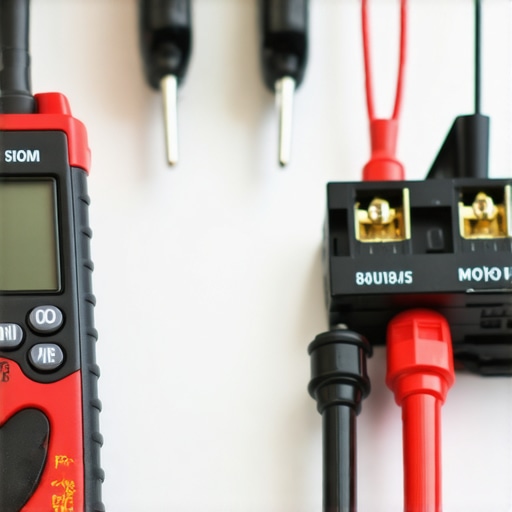
Get Under the Hood and Clean the Kickplate
Most of the ‘maintenance’ people talk about involves the filter, but the real trouble starts where you cannot see. Every six months, I pull off that bottom metal panel. Learning the secret to cleaning behind your dishwasher kickplate changed everything for me. This is where pet hair, dust, and spider webs congregate, often blocking the airflow that keeps your motor from overheating. While you are down there with a flashlight, look for the telltale signs of a slow drip. I have prevented major kitchen damage by identifying a failing sump gasket before the floor warps just by spotting a single crusty mineral deposit on the bottom of the tub. It is also the perfect time for how to spot corrosion in your control board wiring early, as moisture likes to travel up those wire harnesses through capillary action.
How do I maintain my machine’s efficiency over several years?
Consistency is the key, but not in the way you might think. I have moved away from pods entirely because I noticed why dishwasher pods might be clogging your drain lines—they often don’t dissolve fully in ‘Eco’ cycles. Instead, I alternate between powder and high-quality liquids, and I’ve found the truth about tablet vs powder detergent residue build-up is that powder is much more forgiving on your internal sensors. Once a month, I run a cycle with a bowl of citric acid on the top rack to keep the internals shiny. This is how to remove hard water spots without chemicals that might otherwise eat away at your rubber seals. According to NEMA Standard MG 1, electrical components are rated for specific tolerances, but environmental corrosion from poor drainage is what usually kills them first. In the next few years, I predict we will see machines with ‘health sensors’ that text your phone when a gasket is about to fail, but until then, your eyes and a screwdriver are your best defense. I challenge you to try this tonight: instead of just loading the dishes, try entering the secret diagnostic mode hidden on your touch control panel. It’s like getting a peek into the machine’s soul. If you find a stored error, you can start how to prove your appliance failure was caused by a power surge and potentially get the manufacturer to foot the bill.
What Most Manuals Simply Fail to Mention
After years of trial and error, I’ve realized that the ‘correct’ setting is rarely what’s printed on the box. First, your dishwasher’s internal heater is often much more efficient than your whole-house tank. If you’re constantly adjusting the dial without seeing results, you might need to learn the top signs your dishwasher needs professional diagnostics rather than just cranking the heat further. Second, never underestimate the power of a hard reset. Often, a ‘failing’ machine is just a software glitch caused by a power fluctuation. Third, knowing when to trust a warranty for dishwasher repairs is the difference between a free fix and a four-hundred-dollar surprise. Finally, always verify your heating element isn’t touching plastic tubs; excessive heat can warp the interior and cause permanent leaks regardless of what the thermostat says. [IMAGE_PLACEHOLDER]
My Personal Troubleshooting Kit
I don’t believe in buying every gadget at the hardware store, but to keep your system running like a pro, I recommend three basics. First, a reliable digital multimeter is essential for checking current and avoiding the dangers of using laundry detergent in a dishwasher emergency when the machine stops mid-load. Second, keep a tube of food-grade grease on hand. It’s a lifesaver for how to quiet a screeching circulation pump before the bearings fail entirely. Finally, a simple paperclip for cleaning out spray arm nozzles is more effective than almost any high-tech cleaning solution on the market.
Take Back Control of Your Kitchen Efficiency
Taking control of your water heater and appliance maintenance isn’t just about saving a few bucks on the electric bill; it’s about the peace of mind that comes with knowing your home is running safely. Don’t let a numeric error code or a strange rattle intimidate you. You now have the knowledge to troubleshoot like an expert and protect your long-term appliance investment. Master the basics of appliance repair and you’ll never feel helpless when a machine acts up again. Have you ever discovered a ‘secret’ trick that fixed your dishwasher instantly? Let me know in the comments below!