

I remember standing in my kitchen at 11 PM, staring at the glowing blue light of my new dishwasher. I was terrified to press ‘start’ because our local utility rates had just spiked, and I felt like every click of the dial was costing me a fortune. I used to think that a longer cycle meant more money down the drain. I even made the classic rookie mistake of pre-washing every single plate, thinking I was helping the machine. Spoiler alert: I wasn’t. I was just wasting water and my own evening. Today, I’m going to show you exactly how these “smart” machines actually calculate their hunger for electricity so you can stop guessing and start saving. This isn’t about complex math; it’s about making your kitchen work for your wallet.
Your Dishwasher is Smarter Than the Old Clunker in the Garage
It wasn’t until I saw the real-time data that I realized why my new machine takes longer but uses less power. It feels counterintuitive, right? Like driving a car at 30mph for an hour instead of 90mph for twenty minutes—you use way less fuel even if you’re on the road longer. I spent years troubleshooting dishwasher problems and trying to outsmart the appliance, only to find out the machine was already doing the heavy lifting. The secret lies in the internal sensors that measure everything from water turbidity to the precise temperature of the spray. Have you ever stared at your dishwasher and wondered if it’s secretly driving up your electric bill? I certainly have, and the answer was hiding right in my phone’s app. If you’ve felt that pang of guilt every time you hit the power button, you’re not alone.
Why that little phone app is more than just a toy
Skepticism is healthy when it comes to “smart” tech. I used to wonder if the “real-time” data was just marketing fluff designed to make me feel better about a high price tag. However, the U.S. Department of Energy notes that modern sensors can now detect soil levels with incredible precision, adjusting water heat and pump speed on the fly. This isn’t just a guess; it’s a sophisticated calculation based on how dirty your water actually is. Sometimes, why your smart dishwasher needs a firmware update is simply to make these energy calculations even more efficient. When you start comparing water usage between hand-washing and eco-mode, the math starts to lean heavily in favor of the machine. Let’s look at what’s actually happening under the hood when that timer starts counting down and those kilowatts start being tracked.When I first opened the kickplate of my dishwasher, I felt like I was looking at the engine of a spaceship. I had a screwdriver in one hand and a smartphone in the other, desperately trying to figure out why the machine was humining but not washing. I almost spent $200 on a new control board until I learned how to read the diagnostic signals. It turns out, reading the hidden blinking lights on your dishwasher brain can save you hours of frustration. That day, I discovered a simple $5 part was the culprit. Since then, I’ve approached appliance maintenance like a detective rather than a victim of bad luck. If you want to stop the energy drain, you have to start with the data your machine is already trying to give you.
Read the Brain Before You Buy the Board
Modern dishwashers keep a log of their failures. Before you start tearing out wires, you need to access the technician’s mode. Usually, this involves a specific sequence of button presses—like a secret code for a video game—that forces the machine to reveal its secrets. I once had a client who was convinced their motor was dead because the machine kept stopping mid-cycle. By troubleshooting dishwasher problems through the built-in diagnostic mode, we found it was just a temporary drainage issue. This kind of appliance diagnostics can improve your warranty claims because you can provide the manufacturer with the exact error code, proving it isn’t a user-error issue. When you know the code, you aren’t just guessing; you’re executing a targeted strike on the problem.
Put Your Multimeter to Work Without Fear
If the software doesn’t give you the answer, it’s time to check the hardware. I used to be terrified of multimeters until I realized they are just like a blood pressure cuff for your house—they just tell you if the ‘heart’ of the machine is pumping electricity correctly. To get started, you only need to know the only multimeter settings you need for appliance repair. I remember sitting on my kitchen floor, testing the continuity of a thermal fuse. I was sweating, thinking I’d blow the house up, but the meter just beeped. That beep told me the fuse was good, which meant I didn’t need to replace it. You can use this same technique for testing a dishwasher solenoid or checking your thermal fuse before buying a new control board. It’s the difference between a $10 fix and a $400 replacement.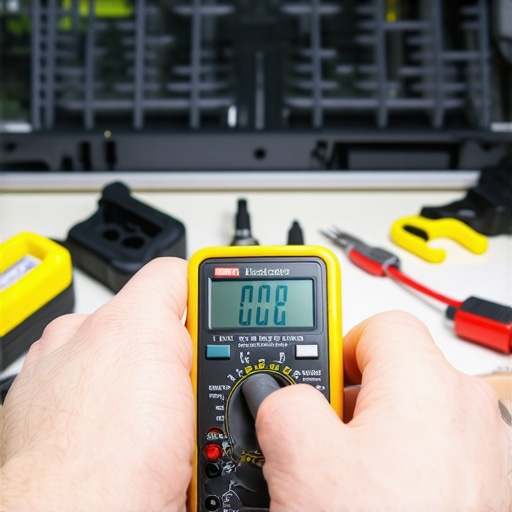
Sensors Need a Clear View to Save You Money
Your dishwasher’s ‘Eco Mode’ relies entirely on optical sensors that check how dirty the water is. If those sensors are covered in a film of grease or hard water deposits, they ‘see’ the water as dirty even when it’s clean, forcing the machine to run longer and hotter. I once pulled out a sensor that was so coated in gunk it looked like it had been dipped in wax. Simply cleaning the hidden drain screen that most homeowners never clean ensures that the water flowing past those sensors is actually representative of your dishes. When the sensors can see clearly, the ‘brain’ can accurately downshift the power usage, which is why your smart dishwasher needs those sensors functioning to actually save you money. Efficiency isn’t just about the settings you choose; it’s about the maintenance that allows those settings to work.I’ve learned the hard way that owning a high-end dishwasher is a bit like owning a luxury car: the performance is great until the check engine light comes on and you realize you’re at the mercy of the dealership’s fine print. Most people assume that having a warranty means they are shielded from repair costs, but this is a dangerous misconception. In reality, the real difference between service plans and manufacturer warranties can be the difference between a $0 bill and a $300 invoice for a ‘service call.’ I’ve seen homeowners blindsided because they didn’t realize why your appliance warranty covers parts but not labor costs, leaving them to foot the bill for the technician’s time even if the replacement part was free.
Stop Assuming Your Warranty Is a Magic Bullet
There is a prevailing myth that every mechanical failure is covered, but manufacturers are remarkably good at finding ‘user-error’ loopholes. If your machine stops draining, your first instinct might be to call the 1-800 number. However, if the technician finds a cherry pit or a piece of broken glass in the impeller, you’re looking at a denied claim. Knowing why your warranty claim for a clogged pump might get denied is essential before you pick up the phone. A study by Consumer Reports indicates that nearly 30% of dishwasher owners face issues within the first five years, yet a significant portion of those repairs are deemed ‘maintenance issues’ rather than ‘defects.’ This is where understanding appliance diagnostics and improving your warranty claims becomes your best defense; if you can prove the failure was electrical and not a blockage, you have the upper hand.
The Tiny Part That Voids Your Entire Service Plan
Here is the ‘oops’ factor most DIYers miss: the temptation of the cheap fix. When a control board dies, it’s tempting to grab a $40 unbranded version from an auction site instead of the $180 OEM part. Don’t do it. I’ve seen entire service contracts evaporated because a technician spotted a non-authorized component during a routine visit. It’s a harsh reality that why third-party parts frequently void your service plan is a clause used by almost every major brand. Even if that part isn’t what failed, its presence gives the provider a reason to walk away. Instead, focus on small, authorized victories like testing your thermal fuse before buying a new control board. It’s a legitimate diagnostic step that doesn’t jeopardize your long-term coverage.
Does Your Error Code Actually Point to the Problem?
Advanced readers often ask if the numeric codes on the display are definitive. The short answer is: not always. While why your dishwasher screen shows a numeric error code is to guide the technician, these codes often represent a symptom rather than the root cause. For example, a ‘water heating’ error might not be a bad element; it could be a faulty sensor or even a stuck relay on the board. This is why how appliance diagnostics can save your warranty benefits—by doing your own preliminary check, like how to test a dishwasher solenoid with a multimeter, you can ensure the technician brings the right part the first time. Have you ever fallen into the trap of paying for a service call only to be told it was a simple clog? Let me know in the comments.I’ve realized that the jump from a frustrated homeowner to a confident DIYer boils down to the quality of your toolkit and your willingness to look where others don’t. You don’t need a garage full of heavy machinery; you just need precision. When I first started, I was using a butter knife to pry things open—don’t do that. Investing in the best DIY tools for kitchen appliance maintenance, like a dedicated Torx T15 driver and a set of plastic trim tools, changed everything. These allow you to open the control panel without marring the finish of your expensive stainless steel. If you’re serious about this, your multimeter should be your best friend, not a dusty relic in the junk drawer. I personally use mine to check for resistance across the heating element every six months. It takes two minutes and tells me exactly when I need to start shopping for a replacement before the machine leaves me with a load of cold, wet plates.
The Proactive Routine That Beats Any Service Plan
Maintenance isn’t about fixing things when they break; it’s about making sure they never get the chance to fail. I’ve found that most ‘mechanical’ noises are actually just cries for help from neglected components. For instance, you can often quiet a screeching circulation pump with food-grade grease before the bearings completely seize up. This kind of intervention is what separates a machine that lasts five years from one that lasts fifteen. According to technical standards from the Association of Home Appliance Manufacturers (AHAM), the build-up of calcium and bio-film is the leading cause of premature sensor failure in high-efficiency models. This is why I religiously check the secret water inlet filter screen. If that tiny mesh is even 20% clogged, your pump works twice as hard, and your energy efficiency goes out the window.
How do I keep my dishwasher running like new for a decade?
The secret is consistency and avoiding the ‘set it and forget it’ trap. Once a month, I run a cleaning cycle with a high-quality descaler, but more importantly, I inspect the spray arms. I’ve seen so many people struggle with dishes that still come out wet or dirty, only to find a single toothpick wedged in a spray nozzle. It’s a tiny detail, but it ruins the hydrodynamics of the entire wash. You should also be mindful of your chemistry; I’ve seen evidence that dishwasher pods might be clogging your drain lines if you exclusively run short, cold cycles. The plastic coating doesn’t always dissolve fully, creating a waxy sludge. Switch to a heavy-duty cycle at least once a week to flush the system with maximum heat.
Where Kitchen Tech is Heading and What it Means for You
Looking ahead, the days of guessing what an error code means are numbered. We are moving toward a world where AI-driven diagnostics will predict a part failure weeks before it happens. I expect future machines will not only alert your phone but will automatically cross-reference the fine print that voids your appliance service plan to ensure you stay in compliance. We’re already seeing ‘predictive maintenance’ in high-end commercial kitchens, and it’s only a matter of time before your home unit can tell you the exact pH of your wastewater. Until then, the best ‘smart’ feature in your kitchen is your own intuition and a few well-placed diagnostic checks. If you haven’t checked your drain pump for debris lately, go do it tonight—it’s the single most common cause of mid-cycle stalls.
The Hardest Lesson I Learned About Fixing My Own Kitchen Gear
Over the years, I’ve realized that the difference between a huge repair bill and a five-minute fix is often just a bit of courage. My biggest ‘lightbulb moment’ was discovering that error codes are symptoms, not the disease. While troubleshooting dishwasher problems, I realized that the machine’s brain is often just waiting for you to ask the right question. Another lesson? Clean sensors are worth more than expensive detergent. Half of the machines I thought were ‘dead’ just had a layer of grime on their optical sensors. I also learned that you must document intermittent noises for a repair claim the second they happen; otherwise, the technician will arrive to a perfectly silent machine and charge you for the visit anyway. Finally, remember that most repairs take 15 minutes of work but require two hours of research to do safely.
#IMAGE_PLACEHOLDER_E#
The No-Fluff Toolkit for Your Next Repair Mission
I don’t believe in buying every gadget at the hardware store, but there are four things I never open a dishwasher without. First, a reliable digital multimeter—but make sure you know the only multimeter settings you need for appliance repair so you don’t fry the board. Second, a tube of food-grade grease to quiet a screeching circulation pump; it’s a lifesaver for older units. Third, your smartphone camera—not for social media, but to take photos of every wire before you unplug it. Lastly, I always keep a printout of the fine print that voids your appliance service plan taped inside my cabinet. Knowing the rules of the game is the only way to win it.
Take the Power Back into Your Own Hands
You don’t have to be a master electrician to keep your kitchen running smoothly. By learning how appliance diagnostics can save your warranty benefits, you shift from being a frustrated consumer to an informed owner. The future of your home’s efficiency is literally at your fingertips. Don’t let a blinking light or a strange hum intimidate you into an unnecessary $600 replacement. With the right data and a little patience, appliance repair becomes a rewarding challenge rather than a household crisis. Have you ever managed to fix a major appliance issue yourself, or did the warranty fine print get in the way? Let me know in the comments below.