

I remember the Tuesday afternoon my five-year-old dishwasher decided to go on strike. It wasn’t a dramatic flood or a sudden puff of smoke; it was just a pathetic, wet heap of dirty dishes and a smell that reminded me of a stagnant pond. I had been tossing in those colorful, squishy pods for years, convinced they were the pinnacle of cleaning technology. But when the repair tech pulled out a circulation pump choked with a waxy, translucent sludge, he looked at me and asked, “How often do you use these?” It was my lightbulb moment. We often trade the longevity of our expensive appliances for three seconds of convenience, never realizing that the very soap we use might be shortening the life of our machine. Today, I’m going to break down why that choice matters and how you can avoid a denied warranty claim by simply changing how you load the detergent.
The Sticky Residue Hiding in Your Pipes
It starts subtly. You might notice a gritty film on your glasses or a door that doesn’t quite spring open like it used to. I made the mistake of thinking my water was just getting harder, but the reality was much more mechanical. Pods are engineered to dissolve in a specific amount of water at a specific temperature. In modern high-efficiency machines, which use surprisingly little water, these pods sometimes fail to break down completely. According to a report by the Association of Home Appliance Manufacturers (AHAM), modern machines use about 3 to 5 gallons of water per cycle, which is a fraction of what older models used. If that plastic casing doesn’t melt away entirely, it turns into a gummy adhesive that sticks to your sensors and seals. I’ve learned the hard way that ignoring these small signs usually leads to needing professional diagnostics much sooner than expected.
Do these convenient pods actually ruin the pump?
It’s the question every homeowner asks when they see the price difference between a box of powder and a tub of pods. While pods are convenient, they are a “one size fits all” solution for a world of variable water hardness and soil levels. When you have a light load, a pod provides way too much detergent, leading to excessive suds. This can cause suds locks in high-efficiency machines, which forces the motor to work twice as hard to move air instead of water. That extra strain is what eventually burns out your motor. Have you noticed your machine making a high-pitched whine or struggling to finish its cycle lately? Leaving these issues unchecked can lead to a dead drain pump, a repair that often costs half as much as a new machine.
Check the Gut of Your Machine Before Calling a Pro
The first thing I did after my repair guy left was crawl onto the kitchen floor with a flashlight. You have to get eyes on the hidden filter most owners never clean in their machine. If you see a white, slippery coating on the mesh, that’s your smoking gun. It’s essentially un-dissolved detergent plastic that’s acting like a dam, preventing water from circulating. Think of your filter like the kidneys of your dishwasher; when they get clogged, the whole system starts to poison itself with stagnant water. I realized that learning how to deep clean a dishwasher sump without pulling the machine was going to be my new Saturday morning ritual until I got all that gunk out. 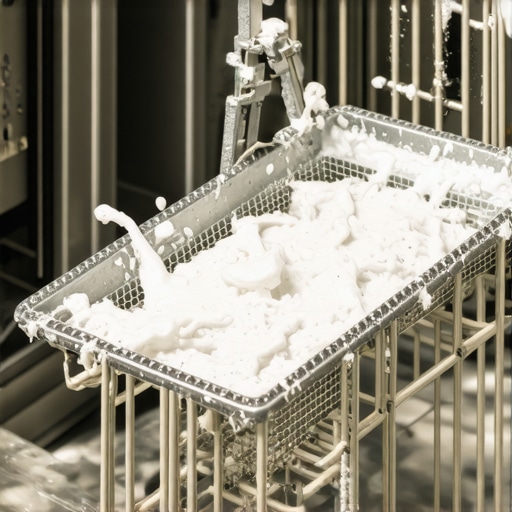
Blast Away the Clogs With a Shop Vacuum
I remember trying to scoop out the sludge with a spoon during my first attempt, but it was too slippery and stubborn. I eventually grabbed my wet/dry shop vac from the garage. The sound it made when it finally sucked up a three-inch-long piece of undissolved pod casing from the drain line was incredibly satisfying. You can actually use this same technique for clearing a blocked impeller with a shop vacuum if your machine is refusing to drain. After you clear the main blockage, you need to tackle the microscopic grease. I found that how to clean out grease build-up in a drain impeller usually involves a soft-bristled brush and a bit of patience to ensure those tiny blades can spin freely again.
Turn Up the Heat to Melt Away Problems
If you are going to stick with pods, you have to change how the machine processes them. Modern machines often default to an ‘Eco’ setting to save energy, but why the eco mode cycle takes longer than a standard wash is because it uses lower water temperatures. This is a death sentence for a pod. It’s like trying to melt a candle with a lukewarm hair dryer—it just turns into a gummy mess. I started using the ‘High Temp’ or ‘Sanitize’ wash settings. The extra heat ensures the pod’s outer casing dissolves completely in the first ten minutes. It might cost a few cents more per load, but it’s cheaper than a $300 service call.
Why the Eco Cycle Might Be Killing Your Pump
We also have to talk about water volume. I used to be a ‘pre-rinser,’ scrubbing every plate clean before it hit the rack. I learned that why your low-water dishwasher requires special rinsing habits is because the enzymes in the detergent actually need food particles to latch onto. Without them, the soap just bounces around and creates a foam party that eventually leads to a suds lock. I stopped pre-rinsing and instead just scraped off the big chunks. This small change, combined with how to clean your dishwasher interior with a single cup of vinegar once a month, has kept my machine running silently for three years now. It’s all about working with the machine’s design rather than fighting against it with ‘convenience’ shortcuts.Most people assume that as long as they aren’t making the catastrophic error of the dangers of using laundry detergent in a dishwasher emergency, their warranty is a golden ticket. But here is the contrarian truth: meticulous cleaning won’t save you if you’ve bypassed the manufacturer’s ecosystem. I’ve seen homeowners who could eat off their dishwasher floor get their claims rejected because of a single ‘gray market’ component. While we all love to save a buck, the truth about non-manufacturer repair parts and your warranty is that they often lack the precise tolerances required by modern control boards. If a generic part causes a voltage spike, you’ll be the one footing the bill for troubleshooting dishwasher problems expert diagnostics repair tips instead of the manufacturer.
Can using third-party parts actually void my entire service contract?
Although the Magnuson-Moss Warranty Act (a federal law protecting consumer product warranties) prevents manufacturers from voiding a warranty solely due to third-party parts, the ‘Oops’ factor remains a significant trap. The manufacturer can legally deny a specific claim if they can prove that the non-OEM part was the direct cause of the failure. It is a high-stakes game of ’cause and effect.’ If you find yourself facing a rejection, you need to know how to appeal a rejected extended warranty claim by providing a technical counter-argument. This is where understanding appliance diagnostics improving your warranty claims becomes your best defense; providing clear error code logs proves you know exactly what failed and why.
Why Software Glitches are the New Mechanical Failures
In the era of smart kitchens, the nuance of repair has shifted from wrenches to Wi-Fi. I once spent three hours trying to diagnose a drain issue only to realize the machine’s internal memory was simply overloaded. Many owners don’t realize that why your smart appliance needs regular software cache clears is just as vital as clearing the physical filter. If the firmware is hanging, it can send false signals to the motor, making it sound like it’s failing when it just needs a reset. 
The One-Inch Mistake That Mimics a Broken Pump
There is also a physical nuance that even seasoned DIYers miss: the plumbing geometry. I’ve walked into kitchens where the owner was convinced they had a motor failure, only to find the drain hose was sagging. There is a specific reason why your service tech always checks the drain hose high loop before even opening their toolbox. Without that loop, dirty sink water siphons back into your ‘clean’ machine, creating a bacterial sludge that mimics a mechanical pump failure. It’s a simple mechanical oversight that leads to unnecessary top signs your dishwasher needs professional diagnostics calls. This kind of ‘phantom repair’ is exactly how homeowners waste money on parts they never needed. Have you ever fallen into this trap or had a claim denied for a silly reason? Let me know in the comments.Beyond just checking the hose, I’ve found that having a small, dedicated ‘appliance kit’ in the garage saves me hundreds in service fees. I don’t just rely on a standard toolbox; my secret weapon is a basic digital multimeter. I use it because it’s the only way to get a definitive answer when a machine won’t heat. Instead of guessing, I’ve learned the specific way to test a thermal fuse for continuity, which tells me instantly if a $10 part is the culprit or if I’m looking at a $200 control board failure. This kind of data-driven DIY is what separates a frustrated homeowner from someone who actually wins against planned obsolescence.
How do I maintain my dishwasher over time?
Consistency is the boring but essential truth. I’ve realized that the real cost of skipping your monthly descaling cycle isn’t just a bit of white film on your plates; it’s the slow erosion of your pump’s efficiency. A study by the Residential Energy Services Network (RESNET) suggests that scale buildup on heating elements can increase energy consumption by nearly 12% before the component even fails. To combat this, I now treat my machine like a high-performance engine. I’ve moved past basic cleaning and started testing a thermal fuse for continuity without a pro kit whenever I notice the dry cycle isn’t quite as hot as it used to be. It’s about catching the degradation before it becomes a ‘dead on the floor’ emergency. 
Why Your Phone is Now Your Best Repair Tool
We are moving into an era where how smart diagnostic apps are changing home appliance repair is making the traditional ‘guess and check’ method obsolete. Most modern machines have a hidden language of beeps and flashes that these apps can translate. I recently discovered the secret tech menu that calibrates your water sensors by holding a specific combination of buttons—information usually buried in a service manual that isn’t shipped with the machine. By accessing this, you can actually see the ‘turbidity’ level your sensor is reporting. If it thinks the water is dirty when it’s clean, it’ll keep running, wasting energy and wearing out your motor. Understanding this level of detail is exactly how appliance diagnostics can save your warranty benefits because it allows you to speak the same language as the manufacturer’s support team.
The Future of Kitchen Maintenance is Proactive
Looking ahead, I predict we are only a few years away from ‘predictive maintenance’ being the standard. Instead of you noticing a leak, your machine’s internal Wi-Fi will alert you that the pump’s current draw has increased by 5%, suggesting a blockage is forming. This is already starting with why firmware updates are essential for new smart dishwashers; these updates often recalibrate how the machine handles voltage spikes or water pressure fluctuations. If you aren’t keeping your machine’s software current, you’re basically running an unoptimized ‘Beta’ version of your appliance. I highly recommend you spend ten minutes this weekend diving into your machine’s settings. Try to find the secret diagnostic mode hidden on your touch control panel—it’s usually a combination like ‘Normal’ and ‘Heated Dry’ pressed three times in a row. Documenting what you find there is the best insurance policy you can have. Just be careful not to change settings you don’t understand, or you might find yourself needing troubleshooting dishwasher problems expert diagnostics repair tips sooner than you planned.
Lessons from a $400 Repair Bill I Refuse to Repeat
First, I stopped believing the ‘self-cleaning’ marketing hype. No machine is truly self-cleaning if you use pods in cold water without regular intervention. Second, I realized that how appliance diagnostics can save your warranty benefits is more powerful than any extended service contract because it gives you the data to fight back. Lastly, I learned that the real cost of skipping your monthly descaling cycle isn’t just dirty dishes—it’s the slow, silent death of the circulation motor’s bearings. These lightbulb moments changed how I treat every appliance in my home, shifting my focus from reactive fixes to proactive care.
The Small Toolbag That Defeats Planned Obsolescence
I keep three things on hand now: a basic digital multimeter for electrical checks, a bag of citric acid for deep de-scaling, and the PDF service manual for my specific model stored on my phone. I also make sure to know how to tell if your service plan actually covers motor failure before I even pick up the phone to call a technician. Don’t forget that when to trust a warranty for dishwasher repairs often depends entirely on your ability to prove the machine was maintained according to the manufacturer’s strict guidelines. I trust these tools because they remove the guesswork and put the power back in my hands as a homeowner.
#IMAGE_PLACEHOLDER_E#
Take Control of Your Kitchen Performance
Your dishwasher isn’t just a box that hides dirty plates; it’s a complex piece of engineering that deserves a bit of respect. By mastering these DIY habits and diagnostic tricks, you aren’t just saving a few dollars—you’re extending the life of your home’s most hardworking assistant and avoiding unnecessary waste. Effective appliance repair starts with prevention and ends with the confidence to look under the hood yourself. Understanding why your warranty claim got denied because of your garbage disposal is a tough lesson many learn too late; don’t let it happen to you. Have you ever found a weird gummy ‘gunk’ in your filter that looked like undissolved plastic? Let me know in the comments below!