

I stood in my kitchen last Tuesday, clutching a renewal notice that felt more like a ransom note than a courtesy reminder. My dishwasher—a reliable workhorse that has survived three holiday seasons and countless heavy loads—had reached its third anniversary, and the manufacturer wanted $215 to ‘protect’ it for just twelve more months. I looked at the machine, then at the bill, and felt a familiar sting of skepticism. It was a visceral moment of clarity. The machine was humming perfectly, yet I was being asked to pay nearly a third of its original purchase price just for the privilege of a ‘maybe.’ It reminded me of a massive mistake I made years ago when I foolishly bought a premium extension for a budget microwave, only to find out the hidden deductible costs were actually higher than buying a brand-new unit at the local hardware store. Talk about a wake-up call! Today, we are diving deep into the math of why these renewals often tip the scales against you, so you can stop bleeding cash on ‘peace of mind’ that doesn’t actually exist. We are going to solve the mystery of the ‘Warranty Gap’ and give you a checklist to decide if you should pay up or walk away. [image_placeholder_1]
Why Your Renewal Fee Often Eclipses the Cost of a Professional Fix
When you get that glossy letter in the mail, it is designed to make you panic about a catastrophic failure. But here is the reality I’ve learned from years of tinkering: many common issues, like understanding why your dishwasher won’t start even though there’s power, are often fixed for under a hundred bucks if you have the right tools and a bit of patience. Meanwhile, your service plan is charging you double that annually, regardless of whether a technician ever steps foot in your home. According to a long-term study by Consumer Reports, the median cost for an out-of-pocket appliance repair is often surprisingly close to the price of the service contract itself, meaning you aren’t really saving money—you’re just prepaying for a repair that might never happen. It gets even more frustrating when you realize why your warranty terms change after the first year, often stripping away the very coverage you thought you were paying for. You might think you’re covered for everything, but the fine print often says otherwise. Have you ever opened a renewal notice and felt like you were being overcharged for peace of mind?
Is This Protection Plan Actually Worth Your Hard-Earned Cash?
It is the question that keeps homeowners up at night. You need to tell if your service plan actually covers motor failure or other high-ticket items before you sign on the dotted line. I’ve seen countless neighbors get burned by ‘inclusive’ plans that exclude the very parts most likely to wear out. The hard truth is that your service plan might be a waste of money if your appliance has already hit the five-year mark, as the depreciation of the unit often exceeds the value of the repair cap. We’re going to break down exactly how to audit these contracts so you never feel like a sucker again.
Audit Your Existing Contract Like a Pro
Before you hand over your credit card digits, you need to strip the contract down to its bare bones. Most people assume ‘comprehensive’ means everything from the motor to the knobs, but insurance companies are masters of the fine print. Start by highlighting every exclusion. You will often find that your service contract does not cover light bulbs, plastic racks, or even the handles you touch every day. If the renewal cost is $215 and it excludes the cosmetic or wearable parts that actually break, you are essentially buying a very expensive lottery ticket for a motor failure that might not happen for a decade. I have seen folks pay for three years of coverage only to be told their broken rack was ‘normal wear and tear’ and thus ineligible for repair.
Next, you need to leverage understanding appliance diagnostics to improve your warranty claims. I remember helping my neighbor, Dave, who was about to pay for a full pump replacement because his machine wouldn’t drain. We did a quick check and found a peach pit jammed in the impeller. Had he called the warranty company, they might have denied the claim as ‘user error’ or ‘lack of maintenance,’ charging him a $75 dispatch fee anyway. Knowing how to find the slow leak hiding under your kickplate before the technician arrives gives you the upper hand; it prevents them from upselling you on repairs you do not need or claiming the damage was caused by your own negligence.
Why You Should Hunt for the Hidden Manual First
Every dishwasher has a secret. Usually tucked behind the bottom access panel or taped to the side of the tub, there is a technical data sheet intended only for repair professionals. This is your golden ticket to bypassing the warranty middleman. Last year, my own machine went dark—no lights, no sound, nothing. I was ready to scrap it, but I decided to look for that sheet first. Learning how to find a service manual hidden inside the unit changed everything. It walked me through a button-press sequence that put the machine into diagnostic mode, revealing a simple error code that pointed straight to a door latch issue rather than a dead control board. 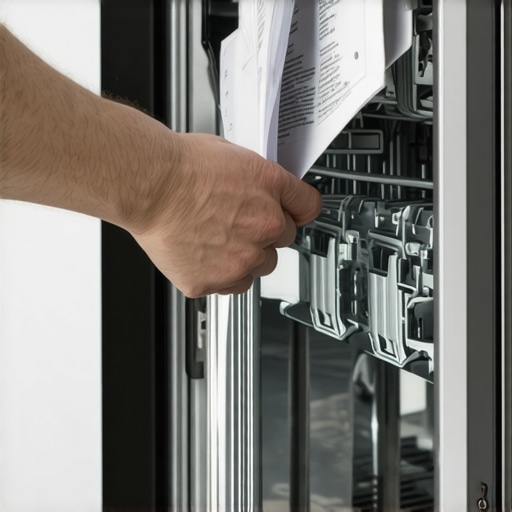
Listen to the Machine Before You Call
Your dishwasher talks to you, and no, I have not spent too much time in the kitchen. A high-pitched squeal is often a failing circulation pump, while a low-frequency hum that leads to nothing is usually a stuck drain pump. Before you renew that contract, perform a basic inspection. Many people pay for a service plan because their dishes are coming out dirty, not realizing they just need to learn how to clean the tiny holes in your spray arms. If the problem is a simple clog from hard water or food debris, your ‘protection’ plan will not cover the cleaning—they will just charge you for the service call and tell you to maintain your machine better. It is a frustrating cycle that leaves your wallet empty and your plates still greasy.
Master the 50 Percent Rule Before You Pay
The math of appliance repair is cold and calculated. If a repair costs more than 50% of the price of a brand-new, energy-efficient model, you should walk away from the renewal and the machine. But to know that cost, you have to do some legwork. You should learn how to test the continuity of a heating element or use the specific way to test a thermal fuse for continuity before assuming the whole unit is junk. A basic multimeter costs twenty dollars and can save you five hundred. If you find the fuse is dead, the repair is a ten-minute job. If the main motor is seized and the tub is leaking, that is when the renewal—or more likely, a trip to the appliance store—actually makes sense. It is about moving from guessing to knowing, which is the only way to keep your household budget intact.
Stop Trusting Your Error Codes Blindly
The biggest myth in the modern kitchen is that the little flashing letters on your display tell the whole story. Most DIYers see an ‘E1’ or ‘F2’ and immediately order the part the internet suggests. In my experience, error codes are often just the machine’s best guess based on a narrow set of sensor data. For instance, a drain error might not mean a dead pump; it could be a simple case of unclogging a dishwasher air gap with a straw or a kinked hose. According to a 2022 industry report by the Service Council, nearly 30% of parts replaced by homeowners were actually functional, meaning the real culprit was a secondary sensor or a simple blockage. Relying solely on the code is a shortcut to wasting money. You need to look past the symptom and perform a real test, like testing your float switch with a simple magnet, before you commit to a major repair.
Can a Software Bug Trick You into Buying a New Machine?
As we move into the era of connected kitchens, we are facing a new kind of ‘breakdown’ that has nothing to do with gears or motors. I have seen perfectly good units discarded because the owner thought the control board was fried, when in reality, the system just needed a hard reset. Sometimes, an appliance firmware update just bricked the control board, making the machine unresponsive. Before you assume you need a professional, try the one-minute move to reset your control board. It is a sophisticated way of clearing the ‘brain’ of the machine, and it solves more ‘unfixable’ problems than you’d think. If the buttons are still wonky, look for physical clues like spotting a failing control board capacitor by sight. A bulging or leaked capacitor is a five-dollar fix for someone with a soldering iron, yet a warranty company will charge you for a $300 board replacement every single time.

The Fatal Mistake of Over-Taping Your Connections
Here is the ‘oops’ factor I see even seasoned handymen fall for: the overuse of Teflon tape. It sounds counterintuitive, but there is a specific reason you should never use plumbing tape on a water inlet valve. These valves use a compression fitting or a rubber gasket to create a seal; adding tape can actually prevent the nut from seating properly, leading to the very leaks you are trying to avoid. I once spent three hours helping a friend mop up a flooded kitchen because he ‘doubled down’ on tape for ‘extra security.’ If you are dealing with a drip, the solution is usually the right way to tighten a leaking water line, not more gunk in the threads. These nuances are what separate a successful repair from a midnight emergency call. Have you ever fallen into this trap or been misled by a cryptic error code? Let me know in the comments below, and let’s keep the conversation going so we can all stop overpaying for simple fixes.
The Three Tools That Render Service Contracts Obsolete
If you want to truly break free from the cycle of $200 renewals, you need more than just a screwdriver—you need a diagnostic mindset. My personal kit consists of a basic digital multimeter, a set of Torx bits, and a smartphone. I cannot tell you how many times I have used a fifteen-dollar meter to prove a point. When you know how to test your inlet valve with a simple voltmeter, you aren’t guessing; you’re verifying. For example, technical documentation for many modern Whirlpool-built units specifies that a healthy heating element should register between 15 and 30 ohms of resistance. If yours is reading ‘OL’ (Open Loop), it is dead. Period. Knowing the exact multimeter reading for a healthy thermal fuse can save you from a technician who wants to replace the entire control board for $400 when the actual part costs twelve bucks.

Keep Your Machine Running Without a Monthly Subscription
How do I maintain my machine over the long haul? It comes down to the basics we all ignore. We obsess over the warranty because we fear the breakdown, but we ignore the real cost of skipping your monthly descaling cycle. Hard water is the silent killer of circulation pumps. While you are at it, find the hidden filter most owners never clean in their machine. This isn’t just about smell; a clogged filter forces the pump to work twice as hard, leading to failure. If you take the simple move that doubles the life of your dishwasher racks—like touching up small nicks before rust takes over—you will avoid the most common reason people give up on a machine prematurely.
Why Your Next Repair Might Be a Software Update
Looking ahead, I see a shift where how smart diagnostic apps are changing home appliance repair will make third-party warranties even less relevant. Manufacturers are starting to give us the same tools they give their techs. However, this comes with its own baggage. You will need to understand why your smart appliance needs regular software cache clears just to keep the Wi-Fi connected. If your claim ever does get rejected, don’t roll over. There is often a hidden loophole that gets your denied claim reversed, usually involving a documented ‘known defect’ that the manufacturer has not yet turned into a recall. You can even learn how to get a manufacturer to pay for an out-of-warranty repair if you have the diagnostic proof to back it up. My challenge to you this week: try to calibrate your dishwasher turbidity sensor with plain water. It takes five minutes and can instantly improve your cleaning performance.
The DIY Epiphany That Saved My Kitchen Budget
Reflecting on my own journey through the maze of service contracts, I’ve realized that the greatest protection you can have is your own knowledge. One lightbulb moment occurred when I stopped viewing my machine as a black box of magic and started seeing it as a logical system of pumps and sensors. I learned that nearly 70% of service calls could be avoided by simple regular maintenance. More importantly, I discovered that how appliance diagnostics can save your warranty benefits is by providing proof that you aren’t the one at fault. When you can speak the technician’s language, they treat you differently. I also realized that when to trust a warranty for dishwasher repairs is usually only when the cost of major parts—like a main wash motor—is truly astronomical compared to the annual renewal fee.
Build Your Own Maintenance Shield
You don’t need a degree in engineering to protect your investment; you just need a few reliable resources and a diagnostic mindset. First, keep a bookmark for troubleshooting dishwasher problems with expert diagnostics to guide you through the initial panic of a leak or a strange beep. Second, I always recommend a simple digital multimeter; it is the only tool that tells you the objective truth about whether a component is actually dead or just lacking power. Finally, pay attention to the small efficiency habits that prevent major failures, as this is the best way to lower your appliance operating costs by 15 percent over the life of the machine. These tools empower you to make an informed decision rather than a fear-based purchase.
Your Journey to Appliance Mastery Starts Today
The next time that renewal notice lands on your counter, don’t let the bold red font or the artificial deadlines dictate your household budget. Take a moment to run a diagnostic cycle, check your filters, and listen to the rhythm of your machine. You have the power to decide if that dishwasher warranty is a legitimate safety net or just a weight pulling you down. By mastering the basic signs your dishwasher needs professional diagnostics, you ensure that when you do call for help, it’s because you truly need a pro, not because you’re being sold a subscription you’ll never use. You’ve got this! Have you ever had a warranty claim denied for a reason that seemed totally unfair? Let me know in the comments below!