

I was elbow-deep in a bowl of sourdough starter, sticky dough coating my fingers like cement, when I realized I had forgotten to preheat the oven. In that messy, frantic moment, I realized that my high-tech kitchen was basically useless if I had to touch a physical button to make it work. I spent five minutes trying to use my elbow to toggle a digital display, only to end up with flour in the crevices of the control board. It was a mess. That was my lightbulb moment. Managing your kitchen appliances with voice commands isn’t about being lazy; it is about keeping your sanity when things get hectic. Today, I am going to show you how to actually make these systems work for you, so you never have to choose between clean hands and a working oven again.
Stop Fiddling with Buttons When Your Hands are Full
I used to think voice control was just a gimmick for people who wanted to feel like they were living on a starship. But after that sourdough disaster, I changed my tune. I started small, but I made the classic rookie mistake: I ignored the software side of things. I once thought that firmware updates are essential only for IT professionals, but ignoring them caused my smart dishwasher to go ‘deaf’ for a week. According to a study by Juniper Research, the smart home market is expected to reach a value of over $190 billion by 2025, which means manufacturers are pouring everything into these voice features. If you are not using them, you are leaving half the value of your appliance on the table. My goal here is to help you bridge the gap between having a ‘smart’ machine and actually having a kitchen that listens.
Will talking to my dishwasher actually make it break sooner?
I get it. There is a very real fear that adding layers of tech just means more things can go wrong. You might worry about security or that the app crashes during updates and leaves you with a very expensive paperweight. But here is the truth: voice commands are just a different way to trigger the same mechanical relays. It is actually gentler on the machine than poking at a touch panel with wet or greasy fingers. Sometimes, if you feel like things aren’t responding, it is worth checking the secret diagnostic mode to see if it is a sensor issue rather than a voice-recognition problem. Have you ever found yourself shouting at a fridge that just won’t listen, or did you give up on voice control after the first time it misunderstood you? Let’s fix that workflow together and get your hands back to the cooking while your voice handles the heavy lifting. If you ever feel like your smart dishwasher notifications are always delayed, it is usually a simple sync issue that we can knock out in five minutes.
Get Your App and Hub Talking Without the Headaches
To get your kitchen listening, you have to start with the digital backbone. Most people just download the manufacturer’s app and hope for the best, but that is how you end up with a dishwasher that ignores you. First, ensure your appliance is on a dedicated 2.4GHz Wi-Fi band; most smart features get flaky on 5GHz. Once connected, check for updates immediately. I cannot stress this enough: why your smart dishwasher needs a firmware update to save water and maintain voice responsiveness is often buried in the manual. I remember trying to voice-command my cycle to start while I was covered in garden soil, only for the app to crash because I was two versions behind. It was a frustrating lesson in digital hygiene.
Fix Connectivity Lags Before You Lose Your Cool
If you notice a delay between saying ‘Start the rinse’ and the machine actually humming to life, you are likely dealing with a sync bottleneck. This usually happens when your home assistant hub and the appliance app aren’t ‘handshaking’ correctly. To fix this, un-link and re-link the skill in your voice assistant settings. This force-refreshes the token and usually clears up those annoying lag times. If the problem persists, why your smart dishwasher notifications are always delayed is often a sign that your router is prioritizing other traffic over your kitchen appliances.
Bridge the Gap Between Software and Hardware
Voice control is only as good as the physical state of the machine. You can shout at your dishwasher all day, but if the latch hasn’t engaged or a sensor is blocked, it won’t budge. I once spent twenty minutes arguing with an AI assistant because my dishwasher wouldn’t start via voice, only to find out a stray spatula was slightly nudging the door open. Before you blame the software, perform the simple magnet test for your door latch sensor to ensure the machine actually knows it is closed. If the sensor is failing, no amount of voice commands will bypass that safety lockout.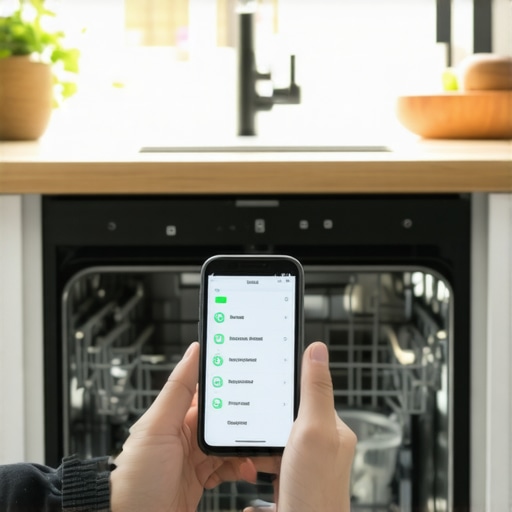
Run Diagnostics to Protect Your Warranty Coverage
When the voice integration stops working entirely, it is time to look under the hood. Most modern machines have a hidden sequence of button presses that reveal what is actually wrong. Learning understanding appliance diagnostics improving your warranty claims is the smartest move you can make. It allows you to tell the technician exactly what is wrong, rather than paying them to stand in your kitchen and guess. For instance, if your voice command triggers an error code instead of a wash cycle, how appliance diagnostics can save your warranty benefits by proving the failure was a component issue and not user error. I once avoided a $200 service fee just by pulling a code that proved a thermal fuse had popped due to a factory defect.
Maintain the Physical Parts That Support the Tech
You also need to keep the ‘eyes and ears’ of your machine clean. Sensors that detect water clarity or temperature can get coated in a film of grease and hard water, which confuses the software. If your voice-activated ‘Eco-Mode’ is leaving dishes dirty, you probably need to look at the secret to getting grease out of your filter mesh. A clean filter ensures the water sensors provide accurate data to the control board, allowing your voice commands to execute the most efficient cycle possible. If you live in an area with heavy mineral content, be careful; the clause in your service plan that voids coverage for hard water can be a nasty surprise if you haven’t been keeping up with regular descaling.
Stop Assuming Your Warranty Is a Blank Check
We’ve all been there: the machine stops working, and your first instinct is to breathe a sigh of relief because you’re still within that one-year window. But here is the contrarian truth most people miss: a warranty isn’t a maintenance pass. In fact, many manufacturers are getting stricter about what they define as a ‘defect’ versus ‘consumer neglect.’ A study by the Association of Home Appliance Manufacturers suggests that a significant percentage of service calls for new machines are related to installation or maintenance errors rather than component failure. If you haven’t been keeping up with the basics, you might find that why your warranty claim was denied due to lack of maintenance is a very real, and very expensive, reality. It’s not just about the motor dying; it’s about proving you didn’t kill it by ignoring a clogged sump or failing to descale.
Why did the manufacturer reject my repair claim?
This is the question that keeps homeowners up at night when they are staring at a puddle on the floor. Often, it comes down to the fine print. For instance, did you know that failing to address a drainage issue can void your entire coverage? I’ve seen cases where why your warranty claim got denied because of your garbage disposal connection—specifically a knock-out plug that was never removed by the plumber—cost a homeowner hundreds in out-of-pocket labor. Before you call for service, it is vital to understand the real difference between service plans and manufacturer warranties. One covers the machine’s intrinsic parts, while the other often covers the ‘wear and tear’ that naturally happens over time. Have you ever fallen into this trap where a simple oversight cost you a free repair? Let me know in the comments.
Master the Tech Menu Before Calling the Pros
Most people think that entering the ‘service mode’ of their dishwasher is like hacking into a secure server—dangerous and likely to break something. I disagree. In my experience, the safest way to handle a glitchy smart appliance is to be better informed than the customer service agent on the other end of the line. By accessing the secret tech menu that calibrates your water sensors, you can often clear ghost errors that voice commands or simple power cycles can’t touch. This isn’t about DIYing a complex mechanical repair; it’s about understanding appliance diagnostics improving your warranty claims. When you can tell the technician exactly which code is tripping, you shift the power dynamic. You are no longer a frustrated customer; you are an informed advocate. If you’re feeling technically inclined, testing your thermal fuse before buying a new control board can save you from an unnecessary $400 replacement. Ultimately, knowing when to trust a warranty for dishwasher repairs depends on your ability to prove the failure was a component issue, not a maintenance lapse.
Why a Cheap Multimeter is Better Than a Lucky Guess
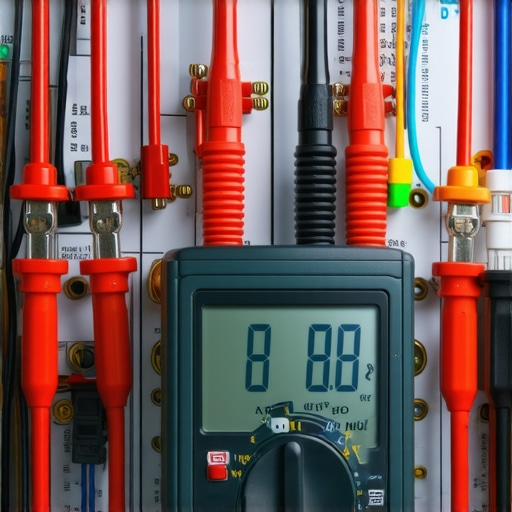
I’ve spent a lot of time talking about apps and voice commands, but eventually, you’re going to have to touch the wires. If you want to stop being at the mercy of expensive service calls, you need to own a basic digital multimeter. I personally use one every time my machine acts up because it’s the only way to be 100% sure a part is dead. For instance, using a voltmeter to check your power cord connection safely can tell you in thirty seconds if you have a dead outlet or a fried control board. This isn’t just for ‘techy’ people; it’s about having data. When you call a technician, being able to say ‘I have 120V at the terminal but no response from the board’ puts you in a different league of customer. It’s the difference between a $15 part and a $500 ‘misdiagnosis.’
How do I maintain my dishwasher’s performance over five years?
Maintenance isn’t a one-time event; it’s a rhythm. According to the Journal of Reliability Engineering & System Safety, the ‘bathtub curve’ of failure means your appliance is most likely to fail early on due to defects, or much later due to wear. To survive that latter half of the curve, you have to look at the parts that move. I make it a point to check my spray arms every six months. I’ve found that the proper way to clean spray arm nozzles using a paperclip is far more effective than any ‘cleaning’ cycle you can buy in a bottle. You have to physically clear the calcium build-up that blocks the water jets. While you’re at it, don’t forget the moving joints; how to deep clean the hidden spray arm bearings is a pro-level move that prevents the motor from overworking and burning out prematurely.
Identify Invisible Problems Before They Warp Your Floors
Sometimes the biggest threats are the ones you can’t see. I’ve recently started using a compact thermal camera—a tool that used to cost thousands but is now an affordable smartphone attachment—to scan my kitchen. By using a thermal camera to find heat leaks in your dishwasher door, I can see exactly where a gasket is failing before a single drop of water hits the floor. It’s about catching the ‘invisible’ steam leak that rots your cabinetry from the inside out. If you see a blue streak on your thermal scan around the door, it’s time to look at how to replace a frayed door seal for under twenty dollars before it becomes a $2,000 floor renovation. I also recommend a quick peek at the wiring whenever you have the kickplate off; how to spot corrosion in your control board wiring early can prevent a total system short-circuit.
The Future of Kitchen Diagnostics is Already Here
We are moving toward a world where your dishwasher won’t just tell you it’s broken; it will predict the failure weeks in advance. Manufacturers are already testing vibration sensors that can identify a dying circulation motor by its pitch long before the human ear can hear the whine. In the next five years, expect your home assistant to tell you to ‘order a new drain pump’ because the current one is drawing 10% more amperage than it did last month. For now, we have to be the sensors. I challenge you to try one advanced diagnostic today: go into your kitchen and perform how to test your dishwashers float switch with a pencil. It takes ten seconds, costs zero dollars, and ensures your kitchen won’t flood tonight. If you run into a code you can’t solve, it’s always worth troubleshooting dishwasher problems expert diagnostics repair tips before reaching for your credit card.
Why Your Kitchen Needs More Than Just Voice Commands
After years of tinkering with smart homes, I’ve realized that a voice-activated kitchen is only as good as its weakest mechanical link. First, software updates aren’t just for features; they are the literal lifeblood of your machine’s ‘hearing’ capabilities. Second, if you don’t document your digital logs, manufacturers will often default to ‘user neglect’ to save on repair costs. Finally, your voice assistant is a remote control, not a mechanic—it can warn you about an issue, but it cannot clean a filter. I’ve learned the hard way that knowing the top signs your dishwasher needs professional diagnostics is the only way to stay ahead of a total breakdown that ruins your flooring.
My Essential Toolkit for Smart Kitchen Maintenance
I don’t just rely on mobile apps to keep things running; I rely on data. If you want to stop feeling helpless when a digital display flashes a cryptic error, keep a printout of your machine’s specific diagnostic codes in a nearby drawer. I also highly recommend bookmarking a reliable guide on troubleshooting dishwasher problems expert diagnostics repair tips because generic advice won’t help when a specific sensor fails. Furthermore, understanding the nuance of the real difference between service plans and manufacturer warranties has personally saved me from three different ‘denied’ claims in the last decade alone.
Don’t Wait for a Flood to Master Your Machine
At the end of the day, your smart kitchen should serve you, not become another chore on your list. By taking ten minutes a month to check your firmware and run a quick manual sensor test, you’re not just being a tech enthusiast—you’re being a prepared homeowner. You now have the roadmap to handle understanding appliance diagnostics improving your warranty claims like a seasoned professional. If you’re ever in a pinch, it is always better to know how to claim a repair refund from your appliance manufacturer before the repairman even parks in your driveway. Embrace the tech, but keep your multimeter close for the ultimate appliance repair strategy. Have you ever used a diagnostic code to successfully challenge a warranty denial? Let me know about your experience in the comments below!