

I’ll never forget the sound of my socks squelching against the linoleum. I had just spent forty-five minutes trying to figure out why my dishwasher was holding a gallon of gray, greasy water hostage, and I finally admitted defeat. I felt confident, though. I had the paperwork. I had the “full coverage” sticker on the side of the machine. But when the tech arrived, he didn’t even touch the dishwasher first. He walked straight to the cabinet under the sink, tapped my garbage disposal, and told me I was on the hook for the full $300 repair bill. It felt like a punch to the gut. I’d made the classic rookie mistake of thinking these two appliances lived in separate worlds, but in the eyes of a warranty inspector, they are joined at the hip.
Your Disposal and Your Warranty Are More Connected Than You Think
The hard truth is that most dishwasher drainage issues aren’t caused by a faulty motor or a fried circuit board; they start at the sink. When I first started DIYing my kitchen repairs, I didn’t realize that a clogged disposal creates backpressure that can destroy a dishwasher’s pump. This is exactly why your warranty claim was denied due to lack of maintenance. The manufacturer views a clogged sink connection as “user-induced failure” rather than a mechanical defect. I learned the hard way that if you don’t keep your disposal clear, you are essentially throwing your warranty coverage into the trash. According to data from Consumer Reports, nearly 30% of appliance service calls could have been avoided with simple homeowner maintenance, and warranty companies are increasingly using this data to reject expensive claims. If your disposal is backed up, your dishwasher simply cannot breathe. You might even need to look into clearing the air gap to stop sink water from backing up before you even think about calling a technician.
Is the “Improper Installation” Clause Actually Fair?
Many of us feel like these clauses are just legal traps designed to save the company money. While there is some truth to that, the mechanics don’t lie. Early in my homeowner journey, I installed a new disposal and forgot to remove the plastic “knockout plug” where the dishwasher hose connects. It was a humiliating mistake that caused an immediate flood and a very short conversation with a warranty rep who laughed at my claim. They see this as a fundamental failure to provide a clear path for the water. If you’ve been hit with a rejection, you should know how to appeal a rejected extended warranty claim, but your best defense is a good offense. Have you ever had a technician point at a completely different appliance to justify denying your repair? I want to hear your stories in the comments because it happens more often than you’d think. By understanding appliance diagnostics before the pro arrives, you can spot these “gotcha” moments before they cost you a fortune.
Clear the Disposal Before You Call for Help
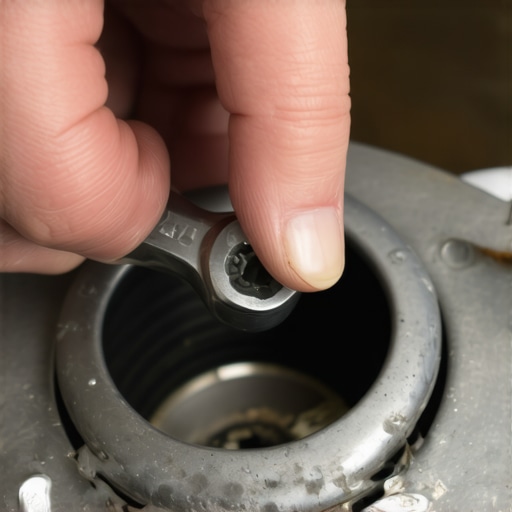
Before you spend hours on hold with a warranty provider, you need to verify that the blockage isn’t actually in your sink’s plumbing. If your disposal won’t turn, your dishwasher won’t drain—it is that simple. I remember standing on my head with a flashlight, sweat dripping into my eyes, as I tried to jam a 1/4-inch hex wrench into the bottom of my disposal. I gave it a hard crank, heard a sharp ‘pop’ as a cherry pit dislodged, and suddenly the dishwasher began to drain. That five-second move saved me a $150 ‘no-fault’ service fee. This is the easy way to unjam a garburator and avoid an emergency plumbing call. If the flywheel doesn’t spin freely, the water in your dishwasher will have nowhere to go but back into the tub, triggering a sensor error that looks like a mechanical failure to the untrained eye.
Fix the Drain Hose Slouch to Stop Backflow
Warranty inspectors have eagle eyes for one specific setup error: the sagging drain hose. Think of your drain hose like a mountain pass; if the hose dips too low before it enters the disposal, gravity pulls dirty sink water back into your clean dishwasher. This is the red flag your service tech looks for in your drain line the moment they open the cabinet. To fix this, you must ensure the hose is arched high against the underside of the countertop—a technique known as a ‘high loop.’ This simple physics trick prevents siphoning. If you see a puddle in the bottom of your machine after running the kitchen faucet, why your service tech always checks the drain hose high loop becomes immediately obvious. It is also worth checking the quick drain pipe fix that stops your dishwasher from backing up to ensure your plumbing isn’t working against your appliance’s pump.
Talk to the Machine Through the Secret Service Menu
Modern dishwashers are basically rolling computers, and they keep a log of every hiccup they experience. You can often bypass the guessing game by accessing the secret diagnostic mode hidden on your touch control panel. This usually involves a specific sequence of button presses—like High Temp Wash and Heated Dry in rapid succession—to trigger a series of codes. These codes will tell you if the issue is a genuine part failure or just a ‘long drain’ error caused by a clog. By troubleshooting dishwasher problems with expert diagnostics, you can walk into a warranty call with data, rather than just complaints. Finally, never overlook the basics of hygiene; cleaning your sump filter with a soft brush to stop foul odors is the kind of routine maintenance that proves to the warranty company that you haven’t neglected the machine. When the tech sees a pristine filter, they are much less likely to scrutinize your claim for ‘user neglect’ triggers.
Most people treat their dishwasher like a high-powered trash can that happens to spray hot water, but that mindset is exactly what leads to those dreaded ‘claim denied’ letters. If you are pre-rinsing your dishes until they are spotless before loading them, you are actually sabotaging the machine’s internal logic. Modern units are equipped with advanced turbidity sensors that ‘see’ how much food soil is in the water. If the water stays clear because you did all the work at the sink, the machine assumes the dishes are already clean and drastically shortens the cycle, which often leads to a buildup of detergent film and grease in the internal plumbing. In fact, studies by the Association of Home Appliance Manufacturers (AHAM) show that modern sensors are far more efficient than manual rinsing, and skipping the pre-rinse can save up to 20 gallons of water per load. This is exactly why pre-rinsing dishes actually makes your machine less efficient and can even lead to detergent etching your glassware because the enzymes in the soap have no food particles to latch onto.
Stop Using Vinegar Like It Is a Magic Potion
I see this advice in every ‘home hack’ video on social media: ‘just put a bowl of vinegar in the top rack to clean your machine!’ While vinegar can help clear some hard water spots, it is an acidic nightmare for your appliance’s long-term health. Over time, that concentrated acid can eat away at the rubber components and door gaskets. I have seen countless units where the owner wondered why using distilled vinegar every week may damage your seals, resulting in slow, hidden leaks that eventually rot the kitchen subfloor. When a warranty technician sees pitted rubber or a brittle gasket, they do not see a ‘defective part’; they see evidence of chemical damage caused by the user. If you have been using vinegar as a weekly cleaner, you are walking into a trap where the manufacturer will argue you caused the leak yourself through improper care.

Can a Software Glitch Legally Void Your Repair Claim?
This is the new frontier of ‘gotcha’ moments in the appliance world. We are moving into an era where your dishwasher might stop working simply because of a bad Wi-Fi handshake or a corrupted firmware update. I once dealt with a homeowner whose machine wouldn’t even power on after a routine system update. We eventually figured out why your appliance firmware update just bricked the control board, but the warranty company argued that software wasn’t covered under their ‘mechanical’ agreement. It is a frustrating gray area that many owners aren’t prepared for. Before you let a technician talk you into a $300 control board replacement, you should know the specific way to test a thermal fuse for continuity. Often, a ‘dead’ board is just a $10 safety fuse that tripped during a minor power surge, but if you don’t know how to check it, you will be on the hook for the entire repair bill.
Always remember that the parts you use for DIY repairs matter just as much as the maintenance you perform. I’ve seen claims denied because someone replaced a simple latch with a generic part from a random auction site. You need to understand the truth about non-manufacturer repair parts and your warranty before you try to save a few dollars. Have you ever had a warranty claim denied for something as seemingly minor as the type of detergent you used? I’ve heard of companies blaming ‘cheap pods’ for pump failures—have you ever fallen into this trap? Let me know in the comments.
If you really want to move from ‘clueless owner’ to ‘kitchen pro,’ you need to stop guessing and start measuring. I spent years trying to listen for the specific ‘thunk’ of a relay before I finally realized that a cheap digital multimeter is more reliable than a decade of ‘intuition.’ When my machine stopped drying, I didn’t just buy a new element; I started testing your heating element for ground faults with a meter. This one tool changes everything because it allows you to verify a component’s health without relying on the warranty company’s biased inspector. You can even use how to test your dishwashers float switch with a pencil to rule out mechanical stuckness before you even touch a screwdriver. Professional technicians, like those cited in Bosch’s technical training modules, rely on these resistance values to prove a part is defective, and you should too.
How Can I Keep My Dishwasher Running for a Decade?
The secret isn’t some expensive miracle chemical; it’s consistency. I treat my machine’s internals like a vehicle engine. If you ignore the grime, the friction eventually wins. I’ve seen that the real cost of skipping your monthly descaling cycle isn’t just a few spots on your plates; it’s the gradual erosion of the pump’s impeller. Over time, calcium buildup acts like sandpaper on the plastic seals. Beyond cleaning, you need to check the structural integrity of your internal parts. Use the flashlight trick for finding micro-cracks in your spray arm every six months. A tiny crack reduces water pressure, which makes the motor work twice as hard, leading to a premature—and likely uncovered—failure. By staying ahead of these tiny issues, you are effectively how to lower your appliance operating costs by 15 percent through sheer mechanical efficiency.

The Future of Kitchen Repairs is Already in Your Pocket
We are rapidly moving toward a world where your dishwasher won’t just break—it will tell you it’s going to break three weeks before it happens. I’m already seeing this shift with how smart diagnostic apps are changing home appliance repair. Most modern LG and Samsung units already have ‘tag on’ or acoustic diagnostic features where the machine literally ‘sings’ its error history to your phone. However, this high-tech shift is a double-edged sword. You have to ensure why firmware updates are essential for new smart dishwashers because many ‘mechanical’ failures are actually just software bugs that the manufacturer has already patched. I predict that within five years, warranty companies will require you to upload a digital diagnostic log before they even authorize a service visit. If you haven’t started using these tools, you’re going to get left behind with a massive bill. I challenge you to go into your kitchen right now and try to access the diagnostic menu. See what your machine is trying to tell you before the next flood starts. It might just save you from that $300 punch to the gut I felt years ago.
Hard Lessons from My Most Expensive Repair Blunders
Looking back at my stack of denied claims, a few patterns emerge that every homeowner should recognize. First, I realized that the warranty company isn’t your enemy, but they are looking for proof of care. If I had spent more time cleaning the sump filter with a soft brush, I could have avoided the ‘user neglect’ tag entirely. I also learned that keeping a paper trail of your maintenance is just as important as the maintenance itself. When you can show a technician exactly when you last performed a descaling cycle, you shift the power dynamic in your favor. Lastly, never underestimate the power of a simple visual check; I once almost paid for a pump replacement when I just needed to know the secret to unclogging a dishwasher air gap with a straw.
The Only Gear You Really Need for a DIY Win
You don’t need a truck full of tools to protect your appliance’s lifespan. I personally swear by a digital multimeter; it is the only way to know for sure if a part is dead or just ‘resting.’ This is essential for testing a thermal fuse for continuity without a pro kit. I also keep a simple business card in my kitchen drawer—not for contact info, but because how to test a door latch with a business card is the fastest way to diagnose a machine that won’t start. For cleaning, forget the harsh chemicals; I’ve found that the best way to clean your spray arms using only lemon juice keeps the plastic from becoming brittle, unlike vinegar which can cause long-term damage.
Your Path to Becoming a Maintenance Pro
It is time to stop feeling intimidated by the humming box in your kitchen. By taking these small, proactive steps, you aren’t just fixing a machine—you are protecting your household budget and ensuring your appliance repair needs stay within the bounds of your warranty coverage. Whether it is replacing a cracked sump housing without calling a plumber or simply running a diagnostic check, the more you know, the less you pay. You have the tools and the data to handle dishwasher issues before they turn into diagnostics nightmares. What is the one ‘weird’ sound your dishwasher makes that has always worried you? Let me know in the comments and let’s figure it out together.