

I was standing in my kitchen with hands covered in lasagna grease, staring at a dishwasher that had decided to go on strike. It wasn’t that the motor had died or the water was leaking; it was worse. The control panel was just… glowing. A mocking blue light stayed frozen on ‘2:00’ and refused to acknowledge my existence no matter how hard I jabbed at the Start button. I felt that immediate, visceral punch in the gut that every homeowner knows. Is the motherboard fried? Am I about to spend five hundred dollars because of a glitch? It’s a helpless feeling, standing there while your dishes soak in lukewarm, stagnant water. Today, I’m going to help you break that digital paralysis and show you exactly how to snap your machine back to its senses.
Why Your Fancy Machine Just Quit on You
Most of us assume a frozen screen means the ‘brain’ of the appliance has suffered a stroke. In reality, these modern machines are more like temperamental computers than simple water-buckets. I remember once I panicked so hard I nearly ripped the door off, only to realize I was overcomplicating things. I actually paid a technician a hundred-dollar ‘diagnostic fee’ years ago just for him to flip a switch. It was a massive hit to my pride, but it taught me a valuable lesson about [understanding appliance diagnostics](https://applianceoutletpro.com/understanding-appliance-diagnostics-improving-your-warranty-claims) before reaching for the phone. Usually, the processor just gets stuck in a logic loop, often triggered by a minor power surge or even just [why your dishwasher screen shows a numeric error code](https://applianceoutletpro.com/why-your-dishwasher-screen-shows-a-numeric-error-code) that didn’t clear properly.
Is a Digital Control Panel Actually Just a Headache?
You might be skeptical about whether all these touchscreens and LEDs are worth the hassle. I get it. Sometimes I miss the chunky mechanical dials of the 90s that never seemed to ‘freeze.’ However, once you learn the ‘secret handshakes’ of these modern boards, they aren’t so scary. According to data from the Association of Home Appliance Manufacturers, electronic control failures are one of the top reasons for service calls, yet a significant portion of these are resolved with a simple hard reset rather than a part replacement. Before you worry about [why your appliance warranty covers parts but not labor costs](https://applianceoutletpro.com/why-your-appliance-warranty-covers-parts-but-not-labor-costs), we need to try the power-cycle method. Have you ever felt like your dishwasher was intentionally ignoring your commands just to ruin your evening? Tell me your horror stories in the comments! If you’re currently staring at a [flashing clean light](https://applianceoutletpro.com/why-your-machine-stops-mid-cycle-with-a-flashing-clean-light), hang tight—we’re about to fix it.
To get that blue light to stop mocking you, we have to start with the digital equivalent of a bucket of cold water: the hard reset. I used to think ‘resetting’ just meant pressing the ‘Cancel’ button, but that’s like trying to restart a laptop by wiggling the mouse. You need to physically sever the connection. Head to your circuit breaker. Find the switch for the kitchen—or specifically the dishwasher if it’s on its own leg—and flip it to the ‘Off’ position. Leave it there for at least three full minutes. I once tried to rush this after only thirty seconds, and the machine just picked up right where its ‘logic loop’ left off. You need to give the capacitors on that control board enough time to fully discharge. This is the first step in troubleshooting dishwasher problems and it solves a massive percentage of ‘frozen’ screen issues caused by minor electrical hiccups. If you suspect a storm caused the freeze, you might eventually need to know how to prove your appliance failure was caused by a power surge for insurance reasons, but let’s try to save the board first.
Master the Secret Handshake of Diagnostic Mode
If the hard reset didn’t work, your dishwasher is trying to tell you something; it’s just speaking in code. Every modern brand has a ‘secret handshake’—a specific sequence of button presses—that forces the machine into a service mode. For many Bosch or KitchenAid models, it’s often a 1-2-3 sequence repeated three times. I remember crouching on my floor with a flashlight, frantically tapping ‘High Temp Wash’ and ‘Sani-Rinse’ like I was entering a cheat code for a retro video game. Suddenly, the frozen timer disappeared and was replaced by a flashing ‘E1.’ That was my ‘Aha!’ moment. Finding the secret diagnostic mode hidden on your touch control panel is the only way to get the machine to admit what’s actually wrong instead of just staying paralyzed.

Test the Thermal Fuse Before Buying Parts
One of the biggest mistakes I ever made was dropping two hundred dollars on a new main control board because I assumed the ‘brains’ were fried. I spent two hours pulling the door apart, replaced the board, and… nothing. Still dead. It turns out, there’s a tiny component called a thermal fuse designed to blow if the machine gets too hot. It’s the dishwasher’s version of a sacrificial lamb. It’s a cheap part, but when it goes, the whole display goes dark or freezes. Before you commit to expensive parts, you should be testing your thermal fuse before buying a new control board to see if you can get away with a ten-dollar fix. You can even learn the process for testing your thermal fuse for continuity without a pro kit if you have a basic multimeter. I felt like a total amateur when the tech pointed at that tiny white plastic piece and told me my ‘broken’ board was perfectly fine. That experience is exactly why I advocate for understanding appliance diagnostics so you don’t waste money on parts you don’t need.
Look for Corrosion Before It Spreads
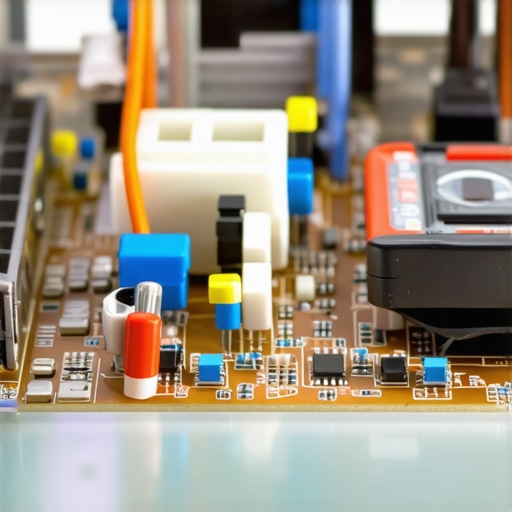
Sometimes the freeze isn’t a digital glitch but a physical one. Since dishwashers are basically boxes of steam and vibration, the wiring harnesses can wiggle loose or, worse, develop ‘green crust’—corrosion. I once found a single wire that had slightly melted near the heater terminal, causing the control panel to freak out and lock up. Learning how to spot corrosion in your control board wiring early can save you from a full-blown hardware failure later. If you see any blackening or brittle plastic on the connectors when you open the panel, you’ve found your culprit. This is a common reason the reason your dishwasher stays stuck on the last minute of its cycle without actually finishing.
Most people assume that once you have pulled the code and successfully reset the machine, the job is done. I used to be one of them. But here is the contrarian truth: clearing a code without addressing the environment is just putting a bandage on a broken leg. I have seen countless DIYers celebrate a successful reset, only to have the same board fry three weeks later because they ignored the root cause. For instance, the reason your dishwasher stays stuck on the last minute is often related to a sensor being ‘blinded’ by calcium buildup rather than a digital glitch. If you keep force-resetting it, you are eventually going to wear out the memory on that expensive control board by forcing it to operate under stress.
The Sneaky Clause That Voids Your Protection
You might think your service plan is a safety net, but it is often more like a sieve. One of the biggest ‘oops’ factors I see involves the connection between your sink and your machine. It sounds crazy, but why your warranty claim got denied because of your garbage disposal is a story I hear all too often. If your disposal is clogged or the knockout plug wasn’t removed properly, it creates back-pressure. This trips the dishwasher’s drain sensor, throwing an error that looks like a motherboard failure. When the technician arrives and finds the issue is your plumbing and not the appliance, they will hand you a bill for the full ‘diagnostic fee,’ regardless of your coverage. This is why understanding appliance diagnostics is about more than just fixing a screen; it is about protecting your wallet from technicalities.
Does a firmware update actually solve hardware lag?
In the world of ‘smart’ appliances, we are seeing a shift where hardware problems are actually software bugs in disguise. A study by the Association of Home Appliance Manufacturers (AHAM) highlights that nearly 20% of modern service calls for electronic controls could be resolved through software calibration rather than part replacement. This is where things get tricky. If your machine supports Wi-Fi, why your smart dishwasher needs a firmware update to save water and prevent UI freezing becomes a critical maintenance step. However, a ‘failed’ update can brick your board just as easily as a power surge. Always check your connection stability before hitting ‘update’ on your app, or you might find yourself needing to know how to prove your appliance failure was caused by a power surge if the board dies during a sync. Have you ever fallen into this trap? Maybe you spent money on a tech just for them to point at a clogged sink? Let me know in the comments!
Before you commit to a major repair, remember that how appliance diagnostics can save your warranty benefits depends entirely on your ability to document the issue correctly. If you can show that you performed basic troubleshooting, like testing your thermal fuse before buying a new control board, you stand a much better chance of getting a manufacturer to cover the parts. Don’t let a frozen screen intimidate you into a bad financial decision. Take it one step at a time, check the physical connections, and always look for the clause in your service plan that voids coverage for hard water before you blame the computer.
I’ve spent too many hours on my knees with a flashlight to realize that the ‘magic’ of repair is really just having the right data. I don’t just rely on my ears anymore; I keep a basic multimeter in my junk drawer—the kind that costs twenty bucks but saves two hundred. For instance, using a v oltmeter to check your power cord connection safely is my first move if the screen won’t even flicker. If I find that the power is reaching the machine but the display is still dead, I immediately suspect the brain. But before I order a part, I grab my shop vacuum. It sounds overkill, but how to clear a blocked impeller with a shop vacuum is a trick I learned from an old-school tech who swore it was the only way to get every last bit of glass out of the pump. If that pump is stuck, the control board might just ‘freeze’ as a safety precaution, making you think you have an electrical failure when you actually have a physical blockage.
The Minimalist Tool Kit for Modern Circuits
I recommend everyone keep a few ‘non-professional’ tools on hand: a multimeter, a shop vacuum with a narrow crevice attachment, and a can of compressed air. Compressed air is my secret weapon for cleaning out the dust that accumulates behind the kickplate. If dust builds up, the board overheats. It’s that simple. In my experience, most ‘dead’ boards are just ‘hot’ boards. According to the latest reliability data from Yale Appliance, modern dishwashers with electronic controls are actually more reliable than old-school mechanical ones, provided they are kept clean and protected from power surges. You can’t control the grid, but you can control the debris.
How do I keep this machine running like new for a decade?
The long-term secret isn’t a special chemical; it’s moderation. I see so many people thinking more soap equals cleaner plates, but the impact of detergent overdose on energy efficiency and component wear is massive. Excessive suds can actually leak into the base pan, triggering the flood switch and causing the control panel to lock you out. I always tell my friends to watch the cycle times. If you notice why your new machine takes longer but uses less power, don’t panic—that’s the sensors doing their job. But if that ‘one minute remaining’ lasts for twenty minutes, you are seeing the top signs your dishwasher needs professional diagnostics. You should be running a cleaning cycle with a dedicated descaler once a month to keep the sensors from getting ‘fogged’ by hard water deposits.
AI and Sensors Are the New Mechanics
Looking ahead, I suspect we are moving toward a world where your dishwasher will tell you it’s going to fail three weeks before it actually does. We are already seeing ‘predictive maintenance’ in high-end brands where the machine monitors the amperage of the drain pump. If the amp draw spikes, the machine knows there is a blockage and sends a notification to your phone. This is a game changer because how appliance diagnostics can save your warranty benefits will shift from you proving a failure to the machine providing a data log of the error. If you’re currently struggling with a machine that won’t cooperate, don’t be afraid to contact us for a second opinion on a weird error code. My advanced tip for today? Go to your kitchen right now, find your manual (or look it up online), and enter the diagnostic mode just to see the real-time data your machine is hiding. It’s the best way to get comfortable with the ‘brain’ of your home before it decides to go on strike again.
Lessons I Learned Crawling Under the Kitchen Sink
After years of battling glitchy circuit boards, I realized that the display is often just the messenger, not the criminal. One of the biggest mistakes I made early on was replacing parts without checking the plumbing first. If I had known when to trust a warranty for dishwasher repairs instead of DIYing every little glitch, I would have saved hundreds. Here are a few things I keep in mind now:
- Your manual is a cheat code. Don’t throw it away; it contains the specific sequences needed to unlock the brain of your machine.
- Resetting the power is a diagnostic tool, not a repair. If you have to do it more than once a month, something is fundamentally wrong with the voltage or the sensor.
- Hard water creates a “fog” on sensors that software can’t fix. I’ve learned that the impact of hard water on eco-friendly detergent performance can actually lead to buildup that makes your control panel think the machine is overflowing.
- Cheap parts are a trap. I found out the hard way why third-party parts frequently void your service plan, leaving me on the hook for a $400 motherboard later on.
Gear That Actually Saves You Money
You don’t need a van full of tools to be your own repair tech. I personally rely on a few specific items to keep my kitchen running. First, a decent multimeter is non-negotiable for testing continuity on things like thermal fuses. Second, I always keep a narrow-profile screwdriver set; those tiny Torx screws on dishwasher doors are impossible to turn with standard household tools. For physical leaks, I’ve managed how to replace a frayed door seal for under twenty dollars just by having the right adhesive and a pair of needle-nose pliers. I also highly recommend bookmarking the technical breakdown pages on Appliance Outlet Pro, as they often have the specific error code charts that manufacturers hide from the general public.
Take the Power Back from Your Appliances
It is easy to feel defeated when a high-tech machine stops working over a digital hiccup, but you have more control than you think. By mastering appliance diagnostics, you aren’t just fixing a dishwasher; you’re becoming the manager of your home’s ecosystem. Don’t let a flashing light or a frozen timer intimidate you into calling for an expensive service visit before you’ve tried the basics. You have the tools, the data, and the patience to get those dishes clean again. Have you ever managed to fix a “dead” machine with just a simple power reset? Let me know your wins (or your frustrations) in the comments below!