

I stood in my kitchen last Tuesday, arms crossed, glaring at the digital display on my brand-new dishwasher. Three hours and forty minutes? I could have hand-washed every dish in the house, dried them, and organized the spice rack in that time. I genuinely thought I had bought a lemon or that my appliance diagnostics were already failing me on day one. I even considered calling for a warranty repair because, surely, no functioning machine should take half a workday to clean a few dinner plates.
The Day I Thought My New Dishwasher Was Broken
Years ago, I made the classic rookie mistake: I assumed more power meant a faster clean. I used to blast my old 1990s “water-guzzler” on the heaviest setting and it would be done in 45 minutes. When I got my new high-efficiency model, I spent the first week troubleshooting dishwasher problems that didn’t actually exist. I was convinced the machine was stuck on the last minute or that the motor was weak. In reality, I was just witnessing modern engineering at work. I used to spend twenty minutes pre-rinsing every fork, but I quickly learned that pre-rinsing actually makes your machine less efficient because the sensors can’t tell how dirty the load really is. Today, I’m going to explain why that marathon cycle is actually saving you money and how to tell if your machine is truly sluggish or just doing its job.
Wait, is this “Efficiency” actually a scam?
I get it. You paid a premium for a smart machine, and now it feels like it’s taking a nap in the middle of the cycle. You might even wonder if eco-dry settings are just making things worse by leaving your plastics soaking wet. But here is the surprising truth: modern dishwashers use about 3 to 5 gallons of water per load, compared to the 10 or 15 gallons our parents’ machines used. According to the U.S. Department of Energy, these longer cycles are necessary because they allow the water to stay at a lower temperature for a longer period, which uses significantly less electricity than flash-heating water for a quick blast. It’s like the difference between a slow cooker and a microwave; one takes longer, but the results (and the energy bill) are much better. Have you ever sat there staring at your dishwasher timer, wondering if it’s ever going to end? Drop a comment below and let me know the longest cycle time you’ve ever seen on your display! It’s also worth checking out the benefit of half-load settings if you’re in a rush, but for the full story on why time is your friend, let’s dive into the mechanics of low-wattage cleaning.It feels counterintuitive, but time is actually a cleaning agent in modern dishwashers. Think of it like soaking a stubborn pan in the sink. If you scrubbed hard for 60 seconds using an old 1990s machine, you might get it clean, but you’d use massive amounts of electricity and water. If you let it soak for three hours in a new unit, the gunk slides right off with a gentle, low-pressure touch. That ‘gentle touch’ is a lower-wattage motor designed to sip power rather than chug it.
The Math Behind Why Slow Cycles Save Cash
When your machine runs for three hours, it isn’t blasting water the entire time. It is often just letting the enzyme-rich detergent sit on your plates to break down proteins. If you feel like your machine is underperforming, the first thing you should do is make sure it is starting with a fighting chance.
Get the Hot Water Moving First
One major reason for those initial delays is the machine waiting for the water to heat up. I used to think my dishwasher was a miracle worker that could turn ice water into steam instantly. One winter, I noticed my dishes were coming out greasy. I realized the water coming in from the pipes was near freezing, and the machine was spending forty minutes just heating it. Now, I always make sure running the kitchen sink hot prevents cold starts. It’s a simple trick: run the faucet until it’s hot before you hit ‘start’. This saves your machine from the heavy lifting of thermal regulation.
Let the Sensors Do the Heavy Lifting
Modern units use turbidity sensors—basically tiny eyes that look at how cloudy the water is. If you’ve spent ten minutes pre-washing every plate, the sensor thinks the job is done and cuts the cycle short or uses less detergent. This often results in a filmy residue. I learned this the hard way when I over-cleaned my plates and then wondered why your dishwasher leaves a gritty film on your glasses. The machine needs the dirt to calibrate the cleaning power effectively.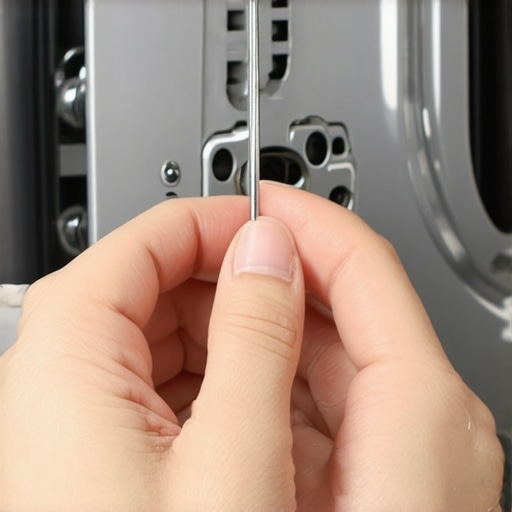
How to Fix a Cycle That Actually Is Too Slow
Sometimes the clock really is lying to you. If you notice the reason your dishwasher stays stuck on the last minute is a recurring nightmare, it is usually not a ghost in the machine. It is often a hardware struggle.
Clear the Spray Arms for Better Flow
If the water cannot reach the dishes, the sensors will keep the cycle running longer to compensate for the lack of ‘action’ inside. I once spent an hour troubleshooting dishwasher problems only to find a single popcorn kernel wedged in a spray arm hole. You should regularly try the proper way to clean spray arm nozzles using a paperclip. It sounds low-tech, but it is often more effective than any software reset.
The Filter Is the Gatekeeper
If your water isn’t draining fast enough, the machine stalls. It is trying to protect the motor from burning out. I once had a ‘no-start’ issue that turned out to be a buildup of labels from jelly jars. Always prioritize cleaning your sump filter with a soft brush to stop foul odors and ensure flow. If the water cannot leave, the next cycle phase cannot start.
Listen for the Correct Clicks and Whirs
If you hear a distinct thumping, do not ignore it. You might need to focus on stopping the thumping noise in your water supply line before it stresses the inlet valve. If you aren’t sure if the noise is normal, try how to document intermittent noises for a repair claim so a tech knows exactly what they are looking for when they arrive at your door.I’ve seen a lot of ‘hacks’ online that make my skin crawl as someone who looks at these machines daily. For instance, everyone says to use vinegar for everything. In my experience, while it’s great for descaling a showerhead, why using distilled vinegar every week may damage your seals is a conversation I have with homeowners at least once a month. The high acidity can degrade the rubber door gasket and internal O-rings over time, leading to mystery leaks that are expensive to track down. Have you ever fallen into this ‘natural cleaner’ trap and noticed a leak later? Let me know in the comments.
Can a software update actually wash your plates better?
It sounds ridiculous, but for a high-end unit, it’s the truth. We often think of appliances as purely mechanical beasts, but why firmware updates are essential for new smart dishwashers becomes clear when you realize the ‘brain’ controls the heater timing and sensor sensitivity. If the code is buggy, the water never gets hot enough, or the machine gets stuck in a loop. Sometimes, the secret tech menu that calibrates your water sensors is the only way to tell the machine it’s not actually clogged. 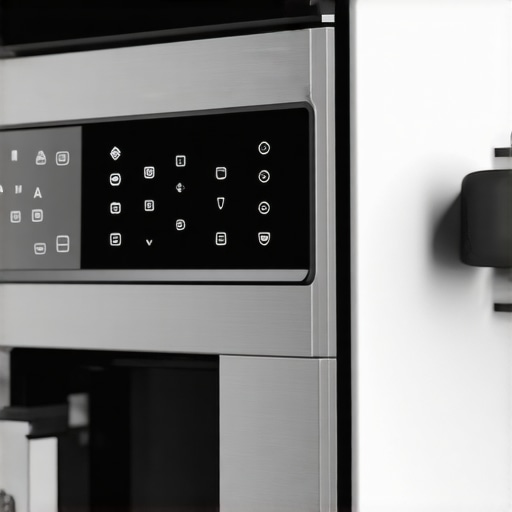 According to the Association of Home Appliance Manufacturers (AHAM), modern machines are designed with such tight tolerances that even a minor sensor drift can add 20% to your total cycle time. Another nuance people miss is the physical setup. If your machine is struggling to drain or smells, why your service tech always checks the drain hose high loop is usually the first mystery to solve. Without that loop, dirty sink water siphons back into your clean tub, forcing the machine to restart the rinse phase. This isn’t a failure of the machine; it’s a failure of the installation. If you’re trying to protect your wallet, remember that how appliance diagnostics can save your warranty benefits often starts with proving the machine was installed to spec. Finally, the biggest ‘Oops’ factor I see is ‘Suds Lock.’ If you use too much detergent, the bubbles cushion the spray arms. The motor spins, but no water actually hits the dishes. This is exactly the impact of detergent overdose on energy efficiency—your machine runs forever because it literally can’t ‘feel’ the water hitting the turbidity sensors. If you’re seeing a ‘low pressure’ error, check your soap levels before you assume the pump is dead. If you are still seeing issues, it might be time to look into when to trust a warranty for dishwasher repairs versus calling a local tech for a quick fix.I’ve spent a lot of time under sinks, and if there is one thing I’ve learned, it’s that being proactive is cheaper than being reactive. I keep a few specific tools in my kitchen junk drawer just for the dishwasher. For instance, I use a basic multimeter because using a voltmeter to check your power cord connection safely can tell me if a mid-cycle stop is an electrical fault or a control board failure before I spend a dime on parts. I also occasionally pull out a thermal imaging attachment for my phone. You might think it’s overkill, but using a thermal camera to find heat leaks in your dishwasher door helped me spot a failing seal months before it would have warped my hardwood floors.
How can I make this machine last fifteen years instead of five?
The secret isn’t just about what you do, but what you ignore. Most people wait for a puddle to form before they look at the guts of their machine. I make it a habit to listen to the rhythm of the wash. I know it sounds a bit intense, but how to identify a dying circulation motor by its pitch is a skill that has saved me hundreds in emergency labor costs. If the usual hum turns into a high-pitched growl, I know the bearings are shot. To prevent that, I prioritize cleaning your sump filter with a soft brush to stop foul odors and clear out the tiny shards of glass or plastic that eventually reach the impeller. According to the International Electrotechnical Commission (IEC) Standard 60436, the presence of foreign objects in the pump assembly can reduce cleaning efficiency by up to 30% and significantly increase energy consumption before the motor actually fails. #IMAGE_PLACE_HOLDER_D# I also keep an eye on my water quality. If you live in an area with high mineral content, you have to be vigilant. I’ve seen homeowners get blindsided by the clause in your service plan that voids coverage for hard water damage. It’s a bitter pill to swallow when why your warranty claim was denied due to lack of maintenance comes down to simple limescale buildup that could have been prevented with a monthly descaling cycle. Looking ahead, we are moving toward a world of truly predictive maintenance. Newer smart dishwashers are starting to use power-monitoring AI to compare their current energy draw against ‘perfect’ factory specs. If the machine sees it is drawing 5% more power to move the same amount of water, it will eventually ping your phone to suggest a filter cleaning before a part breaks. Until your machine is that smart, you have to be the brain of the operation. I highly recommend you take five minutes this weekend to access the secret diagnostic mode hidden on your touch control panel. Run a self-test and see if any latent error codes are hiding in the memory—it’s the best way to ensure your understanding appliance diagnostics is based on hard data rather than guesswork.
Hard Truths About Why the Timer Lies to You
After years of hearing homeowners complain about three-hour cycles, I’ve realized that the digital timer on your dishwasher isn’t a stopwatch; it is an estimate. One of the biggest lightbulb moments for me was learning that the machine will literally pause the clock if the incoming water is too cold. It isn’t broken; it is protecting your dishes. If you see it sitting at 1:01 for twenty minutes, it is likely doing a ‘thermal hold’ to ensure the detergent enzymes actually activate. I also learned that the ‘Auto’ cycle is a double-edged sword. While it sounds efficient, it relies entirely on those turbidity sensors we discussed. If you have hard water, those sensors can get ‘blinded,’ leading to cycles that never want to end. This is why knowing the top signs your dishwasher needs professional diagnostics can save you from weeks of frustration. Finally, stop fearing the ‘Heavy’ cycle. People think it uses more water, but often it just uses the same water more effectively by heating it higher, which can actually be shorter than a struggling ‘Eco’ cycle if your dishes are truly greasy.
My Go-To Kit for Keeping Cycles Fast and Quiet
I don’t just rely on the machine to take care of itself; I use a few specific resources to keep things running at peak performance. First, I always keep a bag of food-grade citric acid in the pantry. It is my secret weapon for hard water. If you are tired of hazy film, learning how to remove cloudiness from glasses using citric acid is a total game-changer. Second, I highly recommend every homeowner bookmark the digital manual for their specific model to find the secret tech menu that calibrates your water sensors. Calibrating once a year can shave ten to fifteen minutes off your daily wash. Lastly, if you are debating whether a repair is worth the cost, make sure you understand the real difference between service plans and manufacturer warranties so you don’t end up paying out of pocket for something that should be covered.
#IMAGE_PLACEHOLDER_E#
Don’t Let the Beeping Win
It is easy to get frustrated with modern technology when it feels slower than the ‘good old days,’ but the trade-off is a lower energy bill and a quieter home. You aren’t just washing dishes; you are managing a sophisticated piece of thermal engineering. By performing basic dishwasher diagnostics and keeping your filters clear, you ensure that your machine stays a helper rather than a headache. If you ever feel like the machine has truly defeated you, don’t hesitate to contact us for a professional opinion before you go out and buy a new unit. You’ve got the knowledge now—go clear that filter and let your machine do the hard work for you. Have you ever timed your dishwasher cycle only to find it took an extra hour? Let me know in the comments below!