

I stood there in my pajamas, reaching for a clean coffee mug, when a cascade of cold, stagnant water poured out of a plastic lid and straight down my sleeve. It is a frustratingly familiar scene. You spend good money on a modern machine, hit the Eco button to feel better about your utility bill, and end up hand-drying half the load anyway. If you are tired of playing the dish towel shuffle every morning, you are not alone. We are going to dive into exactly why this happens and how you can actually get a dry finish without spiking your electric bill.
Your High-Efficiency Machine is Not Actually Broken
When I first saw those puddles sitting in the grooves of my storage containers, I panicked. I was convinced my heating element had bitten the dust. I even started looking into professional diagnostics before I realized the problem was my own settings. Modern dishwashers, especially those aiming for high energy ratings, have moved away from the old-school, high-heat drying coils that could melt a spatula. Instead, they rely on residual heat and condensation. But here is the catch: plastic is a terrible heat conductor. It cools down almost instantly, while your ceramic plates stay warm enough to evaporate the remaining moisture. According to the U.S. Department of Energy, these eco-cycles are specifically designed to minimize energy consumption, which often means skipping the most energy-intensive part of the cycle—the high-wattage heated dry.
Is the Eco-Dry mode actually worth the extra work?
You might be wondering if saving a few cents on your power bill is worth the ten minutes you spend with a dish towel in hand. I have been there, and honestly, my big mistake early on was assuming that more expensive machines just handled this better. I eventually learned that the eco mode cycle takes longer precisely because it is trying to use less heat to achieve the same result. If you do not use the right tricks, you are basically fighting physics. I want to help you understand how to navigate these settings so you can protect your warranty benefits while still getting the performance you expected when you bought the thing. Have you ever opened your dishwasher after a full cycle only to find your clean plastic tubs literally swimming in water? Let’s get into the practical steps to stop the dampness for good.
Get the Water Off Your Dishes Without Using Extra Power
Drying in a modern dishwasher is more about physics than raw heat. Since many of these units use condensation drying, the moisture needs a surface to cling to other than your plates. I remember a Tuesday morning when I was so fed up with dripping bowls that I almost called for professional diagnostics, convinced the heater had failed. It turns out, I was just loading the machine like it was 1995. You have to change your approach to match how these low-energy systems actually function.
Stop Skipping the Rinse Aid
This is the single most important factor in the drying equation. Rinse aid is not just a cosmetic addition to make glasses shine; it is a surfactant that lowers the surface tension of water. Imagine water as a bunch of tiny spheres; rinse aid flattens those spheres into a thin sheet that slides right off. The energy drain of keeping your rinse aid reservoir empty is real because your machine will often work harder or run longer trying to compensate for the lack of shedding power. If you find your dishes are constantly wet, check the dispenser first. It is a common maintenance item, and ignoring it is why your warranty claim was denied due to lack of maintenance in many cases.
Tilt Your Tupperware to Beat Gravity
Plastic is the enemy of drying because it does not hold heat. To combat this, you need to use gravity. Every bowl, mug, and plastic container should be at a steep angle. If a container has a recessed bottom (that little well where water pools), it must be tilted so the water can run off. I once did a test where I loaded one side of the rack flat and the other at a 45-degree angle. The flat side was a swamp; the angled side was nearly dry. This is especially true if you have a third rack. If your items are flat, why your third rack sprayer isnt getting enough water pressure becomes a moot point because the water has nowhere to go once it lands. 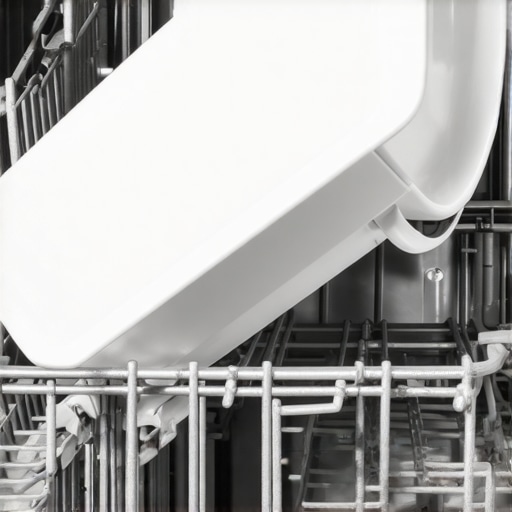
The Five-Minute Pre-Heat Hack
Most dishwashers do not have a dedicated water heater that can instantly flash-heat cold water from the pipes. If your machine starts with cold water, the first ten minutes of the cycle are wasted just trying to get the temp up. Before you hit start, run the hot water at your kitchen sink until it feels hot to the touch. This ensures the very first fill of the dishwasher is at the optimal temperature for cleaning and, more importantly, for the final rinse that facilitates drying. This simple move can prevent many troubleshooting dishwasher problems related to poor cleaning performance.
Crack the Door at the End of the Cycle
If your machine does not have an auto-open feature, be the human version of that sensor. As soon as the cycle ends, crack the door open about an inch. This allows the hot, moisture-laden air to escape rather than cooling down and raining back onto your clean dishes. I used to think this was a myth until I realized that leaving the door shut overnight basically turned my dishwasher into a sauna. Just be careful not to do this if you have delicate wooden countertops that might be sensitive to the steam. Dealing with these nuances is just part of the reality since why your new dishwasher doesnt include a heating element is a standard design choice for energy efficiency today.
Stop Washing Your Dishes Before You Wash Your Dishes
It sounds counterintuitive, but why pre-rinsing dishes actually makes your machine less efficient is one of the most common mistakes I see. Most modern units are equipped with soil sensors. These sensors measure how dirty the water is during the first few minutes of the wash. If you have scrubbed everything clean already, the sensor tells the machine to run a shorter, cooler cycle. The result? The detergent—which is chemically designed to latch onto food particles—ends up attacking your glassware instead, leading to permanent etching and cloudiness. According to the Association of Home Appliance Manufacturers (AHAM), these sensors are most effective when they have actual debris to detect, allowing the machine to calibrate its intensity accurately.
Can my garbage disposal really kill my dishwasher warranty?
Surprisingly, yes. Many homeowners do not realize their dishwasher and sink are part of the same ecosystem. If you just installed a new disposal and forgot to knock out the drain plug, or if your disposal is backed up, it can cause backflow into the dishwasher. This is often why your warranty claim got denied because of your garbage disposal issues; manufacturers often categorize this as an external installation error rather than a mechanical failure. Before you pay for understanding appliance diagnostics improving your warranty claims, verify that your drain line has a high loop to prevent sink water from siphoning back into your clean tub.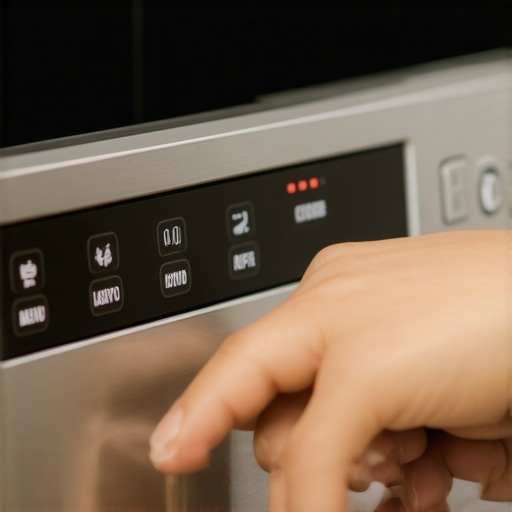
The Technical Trap Most Owners Ignore
If you really want to level up your appliance game, you need to look into the secret tech menu that calibrates your water sensors. These menus are not just for pros; they often allow you to adjust for hard water levels or even your local altitude. Speaking of hard water, have you read the fine print in your service agreement? Often, there is the clause in your service plan that voids coverage for hard water damage unless you can prove you have been using a softener or specific descalers. It is a classic ‘gotcha’ that catches people off guard during a repair. Have you ever fallen into this trap or been surprised by a warranty denial? Let me know in the comments. Digging into these technical nuances is what separates a frustrated owner from one who actually gets twenty years out of their appliances.
Don’t Fly Blind When Your Machine Dies
I used to be terrified of the internal wiring of my kitchen appliances until a fifteen-dollar multimeter changed my life. Now, whenever the unit refuses to start, I am not guessing; I am testing a thermal fuse for continuity without a pro kit to see if it is a simple five-dollar fix or a major component failure. This level of self-sufficiency is exactly how appliance diagnostics can save your warranty benefits because you can tell the service tech exactly what is wrong over the phone, often preventing those annoying multiple diagnostic visits that eat up your coverage and time. I personally keep a basic toolkit that includes a T15 Torx driver and a needle-nose plier specifically for these moments.
How do I keep my dishwasher running like new for a decade?
It really comes down to managing the grit. Most people ignore the filter until the kitchen smells, but I have found that cleaning your sump filter with a soft brush to stop foul odors every single month prevents microscopic debris from sandblasting your spray arm bearings. If you have a high-end European-style unit, you also need to stop ignoring the truth about salt reservoirs in modern high-end dishwashers. According to the Whirlpool WDT Series Technical Training Manual, failing to regenerate the ion-exchange resin with proper dishwasher salt in hard water areas is the leading cause of internal scale build-up that sensors cannot detect until the machine literally chokes.
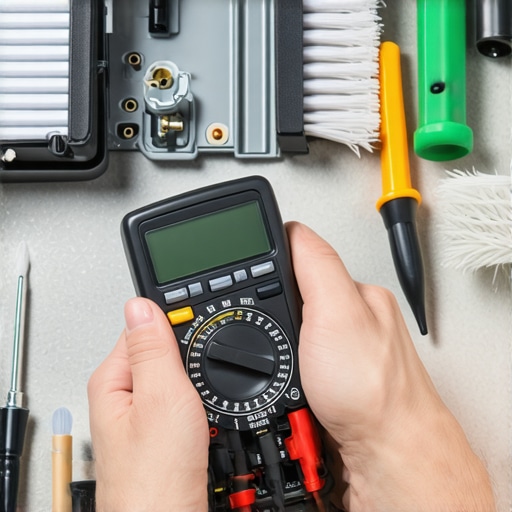
Beyond physical cleaning, we are moving into an era where your dishwasher is basically a computer that happens to spray water. I have started treating mine like my smartphone, which means understanding why firmware updates are essential for new smart dishwashers to fix software bugs that might be causing weird mid-cycle pauses or sensor errors. Looking ahead, I predict we will soon see predictive failure sensors as a standard feature, where how smart diagnostic apps are changing home appliance repair will eventually allow the machine to order its own replacement parts before it even breaks down. For now, my best advice is to go grab a cheap multimeter and run a continuity test on your door switch just to get familiar with the hardware before an actual emergency strikes.
The Lessons I Learned While Chasing Puddles
I used to think a wet plate meant a broken machine, but it usually just means the physics of the cycle aren’t aligned with your loading style. One of the most expensive realizations I had was that why your warranty claim was denied due to lack of maintenance often boils down to simple things, like ignoring that little rinse aid notification for months. If you live in an area with hard water, keeping an eye on your heating element is vital; the clause in your service plan that voids coverage for hard water damage is a real threat that caught me off guard once. Now, I keep a bag of citric acid on hand to prevent scale before it starts. Most importantly, don’t fear the internal components. Learning the specific way to test a thermal fuse for continuity can save you a two-hundred-dollar service call just to find out a ten-dollar part needs replacing.
My Must-Have Toolkit for Appliance Longevity
I keep a very specific kit under my sink that has saved my dishwasher more than once. It includes a basic digital multimeter for electrical checks, a T15 Torx driver for removing access panels, and food-grade citric acid. These three items allow me to handle most troubleshooting dishwasher problems without the stress of waiting for a professional. If you are struggling with a white haze on your plates, I highly recommend looking into how to remove cloudiness from glasses using citric acid as it is much safer for your machine than harsh industrial descalers. I also suggest bookmarking your manufacturer’s specific technical training manual, which offers far deeper insights than the standard user guide you get in the box.
Take the Mystery Out of Your Next Wash
#IMAGE_PLACEHOLDER_E#
Your dishwasher should be a tool that makes your life easier, not a source of daily frustration or wet sleeves. By mastering your loading angles, staying on top of the rinse aid, and understanding how the sensors work, you reclaim control over your kitchen. You don’t need to be a professional engineer to get high-end results; you just need to work with the machine’s energy-efficient design instead of fighting against it. Have you ever discovered a hidden setting or a weird loading trick that finally got your plastic containers dry? Let me know in the comments below!