

I still remember the “Great Foam Migration” of 2018. It started because I was lazy. I had a sink full of dirty plates, a dishwasher ready to go, and exactly zero detergent pods left in the cabinet. I looked at the bottle of Dawn sitting on the counter and thought, “It’s all soap, isn’t it?” Boy, was I wrong. Within fifteen minutes, white suds were creeping out from under the kickplate like a slow-moving glacier of regret. I spent the next three hours mopping the floor and wondering if I’d just turned my expensive appliance into a very large, very heavy paperweight.
The Kitchen Floor Foam Party You Never Wanted
Most of us think that soap is just soap, but the chemistry inside your dishwasher is surprisingly delicate. Unlike the soap we use in the sink, which is designed to create lots of lovely, grease-fighting bubbles, dishwasher detergent is specifically engineered to be low-sudsing. When you swap them out, you aren’t just getting “extra clean”—you are creating a pressurized foam engine. I learned the hard way that the impact of detergent overdose on energy efficiency is the least of your worries when your kitchen is underwater. Have you ever tried to explain a bubble-covered floor to your spouse? It’s not a conversation I’d recommend.
Can a tiny drop of dish soap actually break the machine?
You might be thinking, “Come on, surely a little bit won’t hurt.” That was my exact logic. But according to the experts at The Spruce, even a small amount of regular liquid soap can cause the pump to cavitate, meaning it tries to pump air bubbles instead of water, which leads to overheating. I once made the mistake of thinking I could “flush it out” by running more cycles, but that just made the foam thicker. If you’ve already made this mistake, you might notice top signs your dishwasher needs professional diagnostics like weird grinding sounds from the motor. Even worse, if you call for help, why your warranty claim for a clogged pump might get denied becomes a very real and very expensive reality because most manufacturers consider this “user error.”
Today, I want to walk you through exactly why this happens and what you should do if you—or a well-meaning teenager—already squeezed that bottle of Palmolive into the dispenser. We’re going to look at troubleshooting dishwasher problems and expert diagnostics so you can save your appliance before it’s too late. Have you ever had a “foam-pocalypse” in your own kitchen, or are you just here to make sure you never do?
Kill the Power Before the Flood Starts
The absolute second you see a single bubble escaping the door, hit the ‘Cancel’ or ‘Drain’ button. Don’t wait to see if it settles. My biggest mistake during my 2018 ‘foam-pocalypse’ was letting the machine finish its cycle. I thought the water would just wash it away, but the spinning arms only whipped the soap into a stiffer meringue. If your machine is freaking out, you might notice why your machine won’t stop draining after the cycle ends, which happens when the sensors get confused by the dense foam.
The Salty Secret to Killing Foam Fast
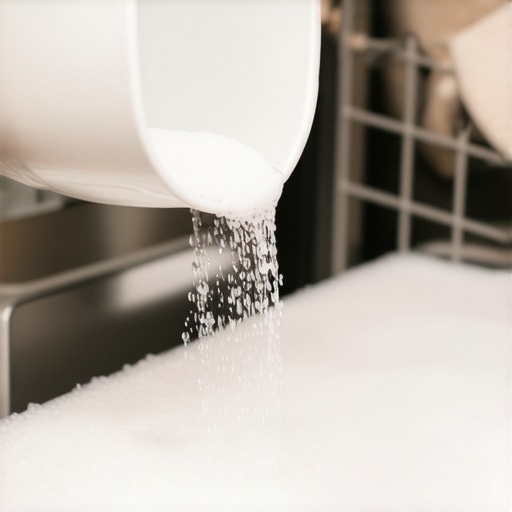
I once spent nearly an hour scooping bubbles out with a plastic bowl, only for them to grow back like a sci-fi monster. A seasoned repair tech eventually told me the secret: table salt. Ordinary salt acts as a chemical ‘off’ switch for suds. I grabbed a full container and dumped about half a cup right onto the mountain of foam. It was incredible to watch—the bubbles didn’t just pop; they dissolved into a flat, watery liquid almost instantly. While why salt is the secret for clean dishes in hard water areas is usually about mineral management, in this case, it’s about breaking surface tension to save your floor.
Clear the Drain Path to Protect the Motor
Once the foam has collapsed, you need to flush the system. High-sudsing soap creates a thick film that traps food particles and debris in places they shouldn’t be. Take this opportunity to check the hidden drain screen that most homeowners never clean. If that screen is clogged with soap residue, your pump has to work twice as hard. This is where the impact of detergent overdose on energy efficiency becomes visible; the motor draws more current to fight the resistance, which can lead to a premature burnout. Pour a gallon of cold water into the bottom of the tub and run a drain cycle again to ensure the pump isn’t cavitating.
Verify the Damage with a Diagnostics Check
If your machine is still acting weird—maybe it’s blinking at you or refusing to start—it’s time to look at the internal computer. Modern units will often throw a code. Understanding why your dishwasher screen shows a numeric error code can tell you if the flood sensor was tripped or if the heater is struggling. You need to know how appliance diagnostics can save your warranty benefits because if you can prove the machine is functioning properly after a cleanup, you might avoid a service call. However, be careful with how you handle this. Knowing when to trust a warranty for dishwasher repairs is vital, as admitting you used Dawn might lead to why your warranty claim for a clogged pump might get denied. If you’ve cleaned it out and the code persists, you may need to learn how to claim a repair refund from your appliance manufacturer if the failure wasn’t actually your fault, but a pre-existing sensor issue.
While most homeowners think the first step after a foam-filled disaster is to call the manufacturer immediately, that is often where the real financial headache begins. I have seen countless neighbors get their claims rejected because they were too honest with the dispatcher. If you mention that you used hand soap instead of dedicated detergent, you have basically handed them a reason to deny your claim on the spot. Manufacturers look for any reason to cite improper usage or user error. My advice? Before you pick up the phone, focus on understanding appliance diagnostics improving your warranty claims so you can speak their language without accidentally admitting fault.
Don’t let your honesty kill the warranty claim
Everyone tells you to be upfront with repair technicians, but in my experience, silence is often golden until you know what is actually broken. If the pump failed because of a mechanical defect that just happened to coincide with your soap mishap, the company will still try to blame the bubbles. This is the trap many fall into. You also need to realize the real difference between service plans and manufacturer warranties; one might cover your accidental mishaps, while the other is strictly for factory defects. According to a study by the Association of Home Appliance Manufacturers (AHAM), a significant percentage of service calls are denied because of environmental factors rather than internal component failure. This is why I always recommend running your own checks first.
Is your dishwasher motor actually dead?
This is the question that keeps most DIYers up at night after a foam-pocalypse. The motor might not be fried; it might just be stuck in a protective thermal trip mode. Before you assume you need a three-hundred-dollar part, try the multimeter trick for checking your dishwasher motor to see if there is still continuity. If the motor is getting power but not turning, it might be jammed by a foreign object rather than being burnt out. If you do find a fault, knowing how to document intermittent noises for a repair claim is your best weapon. Don’t just tell them it sounds weird—show them the evidence or a recording of the specific failure pattern.

The gamble of using third-party parts
When the warranty adjuster arrives, they aren’t just looking at the pump; they are looking for anything non-standard. I once met a homeowner who saved twenty dollars on a generic door latch, only to have a thousand-dollar control board claim denied because why third-party parts frequently void your service plan is a standard clause in almost every contract. If you have replaced a small part yourself to save time, you might have inadvertently closed the door on a major repair refund later. It is a nuance that many beginner blogs miss: the save-a-buck today mentality can cost you a fortune tomorrow. Have you ever fallen into this trap or had a warranty claim denied for something silly? Let me know in the comments—I would love to hear your stories and see if we can find a workaround together.
I used to think a toolbox was just for fixing cars or hanging shelves, but for a modern dishwasher owner, a few specific tools are a survival kit. If you really want to avoid that heart-sinking moment when the kitchen floor turns into a swamp, you have to move past basic cleaning and start thinking like a technician. I keep a dedicated bag in my laundry room specifically for these moments. It’s not just about having a wrench; it’s about having the right diagnostic gear so you aren’t at the mercy of a repairman’s schedule.
Stop guessing and start measuring
The single most important tool in my arsenal is a digital multimeter. Most people look at one and see a confusing mess of wires and numbers, but once you learn the only multimeter settings you need for appliance repair, it becomes your best friend. Instead of wondering if your heating element is shot, you can verify it in thirty seconds. I’ve seen people throw away perfectly good machines because they didn’t realize they were just testing your thermal fuse before buying a new control board. A ten-dollar fuse is a lot cheaper than a five-hundred-dollar board. If your machine won’t even power on, don’t panic. Grab the meter and check for continuity; it’s often the simplest component that fails first.
How do I keep my dishwasher running like new?
Maintenance isn’t a once-a-year event; it’s a series of small, intentional habits. I personally make it a point to check the mechanical parts every three months. For instance, you’d be surprised how often a ‘broken’ machine is just a stuck float switch. I’ve shared how to test your float switch using a plastic straw with dozens of neighbors, and it works because it lets you feel the mechanical ‘click’ without disassembling the entire tub. You should also get into the habit of the proper way to clean spray arm nozzles using a paperclip. Over time, tiny bits of calcium or even popcorn kernels wedge themselves in there, killing your water pressure. According to the technical documentation provided by the National Appliance Repair Association (NARA), over 30% of ‘poor wash performance’ complaints are solved simply by clearing physical obstructions in the spray arms.

The digital shift in kitchen maintenance
Looking ahead, I suspect we are moving toward a world where your dishwasher tells you exactly what is wrong before the leak even starts. We are already seeing this with high-end models that connect to your home Wi-Fi. However, this brings its own set of headaches. I’ve noticed that why your smart dishwasher needs a firmware update to save water is becoming a more common troubleshooting step than actually turning a screwdriver. In the next five years, I predict AI diagnostics will be standard, but that doesn’t mean the physical parts won’t break. You’ll still need to know how to identify a dying circulation motor by its pitch because no app can replace the human ear when a bearing starts to scream.
If you really want to take control of your kitchen’s longevity, I challenge you to try one advanced tip this weekend: find your machine’s ‘tech sheet.’ It’s usually tucked behind the kickplate or inside the door panel. This document is the holy grail of troubleshooting dishwasher problems and expert diagnostics. Once you have that, you can enter the service mode and see exactly what the computer is thinking. It’s a bit like being a digital detective in your own home. Have you ever tried to access your appliance’s hidden service menu, or does the thought of touching the ‘brain’ of the machine scare you a little?
Hard-Won Lessons from the Bubble Trenches
After years of tinkering, I’ve realized that a ‘foam-pocalypse’ is usually just a rite of passage for homeowners. The most important thing I’ve learned is that technical knowledge is your best shield when talking to manufacturers. If you understand that understanding appliance diagnostics improving your warranty claims is part of the game, you are already ahead of 90% of your neighbors. Another lightbulb moment? Always check the simple stuff first. A ‘dead’ machine is often just a tripped safety sensor, not a catastrophic motor failure. Finally, always distinguish between your contracts; knowing the real difference between service plans and manufacturer warranties will save you from wasting time on the phone with the wrong department when the suds start rising.
Get These Three Tools to Save Your Next Weekend
I don’t expect you to keep a professional workshop, but three items are non-negotiable for a self-sufficient kitchen. First, a digital multimeter is your eyes and ears for electricity. You only need to master the only multimeter settings you need for appliance repair to feel like an absolute wizard. Second, find that paper ‘tech sheet’ hidden behind your kickplate; it is the map to your machine’s brain. Third, keep a basic toolkit ready for testing your thermal fuse before buying a new control board. These simple resources have saved me thousands of dollars and kept me from waiting weeks for a repair truck to show up in my driveway.
#IMAGE_PLACEHOLDER_E#
Turn Your Kitchen Crisis into Expert Knowledge
Don’t let a mountain of bubbles or a scary blinking error code make you feel like you’ve failed. Every mistake is just a hands-on tutorial in how your home actually functions. By mastering troubleshooting dishwasher problems and expert diagnostics, you aren’t just fixing a machine; you are gaining the confidence to handle whatever your kitchen throws at you next. You’ve got this—one salt-shaker and multimeter probe at a time. Have you ever successfully fixed a dishwasher mishap with a simple household item, or did you have to call in the professional cavalry? Let me know in the comments below!