

I spent two hours yesterday staring at a blinking LED on my dishwasher’s control panel, feeling like an absolute amateur. I had just installed a shiny new mesh Wi-Fi system, expecting my kitchen to become a futuristic hub of efficiency. Instead, my ‘smart’ appliance became a stubborn paperweight. It’s a classic scenario: you spend the extra money for features that promise to save time, only to find yourself deep in a rabbit hole of troubleshooting dishwasher problems that shouldn’t exist in the first place. Today, we’re going to stop the cycle of frustration and get your machine talking to your network again.
Why Your Expensive Router and Dishwasher Aren’t Talking
I used to think that a stronger Wi-Fi signal solved everything. I was wrong. My biggest mistake early on was ignoring how mesh systems steer devices between different frequencies. Most dishwashers are built with cheap 2.4GHz chips, while your mesh system is constantly trying to ‘force’ them onto the faster, but weaker, 5GHz band. This ‘band steering’ is the secret killer of smart home stability. If you’ve noticed that your smart dishwasher keeps dropping its Wi-Fi connection, it’s likely not a broken part, but a communication breakdown.
Is a Connected Kitchen Actually Worth the Headache?
You might be wondering if it’s even worth the effort. Why not just press the ‘Start’ button and walk away? I get it. But when you realize how smart diagnostic apps are changing home appliance repair, the value becomes clear. These apps can tell you exactly which sensor is failing before you ever call a tech. However, the fear of a connection failing mid-update is real. I’ve seen cases where a firmware update bricked the control board simply because the Wi-Fi cut out at the wrong second. Have you ever stood in your kitchen, phone in hand, praying for a signal bar to appear on your appliance? It’s a lonely feeling. Interestingly, a study published by the IEEE indicates that 2.4GHz signals are roughly 30% more effective at passing through dense obstacles like kitchen cabinetry compared to 5GHz. Your dishwasher is essentially shouting through a pillow, and we need to make sure the router is actually listening.
Force Your Router to Play Nice with 2.4GHz
Most modern mesh systems act like a helicopter parent, trying to push every device onto the 5GHz band because it’s faster. But your dishwasher is more like an old-school FM radio; it needs the long-range, penetrate-anything 2.4GHz signal to stay alive inside a metal tub surrounded by wood cabinets. To fix this, log into your router settings and look for ‘Band Steering.’ Disable it temporarily or, better yet, create a dedicated 2.4GHz guest network specifically for your appliances. I did this last year after my machine went offline for the third time in a week. By isolating the dishwasher on its own frequency ‘lane,’ the connection became rock solid. If you skip this, you’ll constantly be troubleshooting dishwasher problems that are actually just network congestion issues.
Update Your Firmware Without Bricking the Board
Once you have a stable connection, you need to handle updates with extreme caution. Think of a firmware update like open-heart surgery for your appliance. If the power or Wi-Fi cuts out, the ‘patient’ might not wake up. I learned this the hard way when I tried to run an update while my kids were streaming 4K movies. The bandwidth hiccuped, the dishwasher stalled, and I had to perform the one-minute move to reset your control board just to get the lights to stop flashing. Always check the trick for updating firmware on your connected kitchen appliances before you hit ‘start’ on that app notification.
Clear the Digital Gunk from Your Machine
Just like your phone gets sluggish when the memory is full, your dishwasher has a small internal computer that can get overwhelmed. If the app is laggy or the dishwasher isn’t responding to remote commands, it’s often because the internal cache is full of old error logs. You need to learn why your smart appliance needs regular software cache clears to keep the communication lines open. 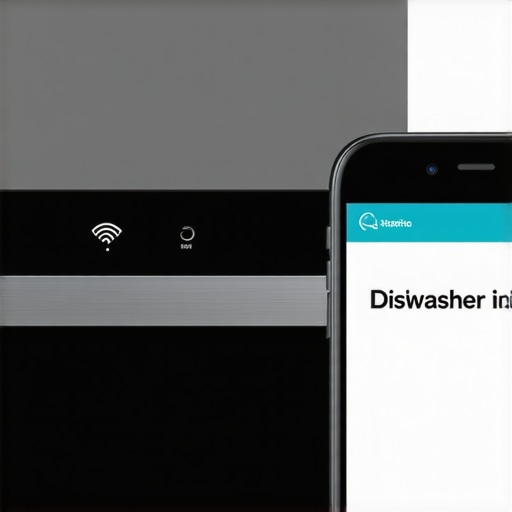
Verify the Physical Triggers Before Blaming the App
Sometimes the ‘smart’ part of the machine is fine, but a physical sensor is lying to the computer. For instance, if your app says the cycle won’t start because the water level is wrong, it might be a stuck float. You can actually learn how to test your float switch with a simple magnet without even picking up a screwdriver. If the physical switch is stuck, no amount of Wi-Fi troubleshooting will help. This is where understanding appliance diagnostics improving your warranty claims becomes your best weapon. When you can tell a service agent exactly which sensor is failing based on your own tests, they are far less likely to give you the runaround on a repair. Being able to prove a failure with data is the difference between a free repair and a $200 ‘no problem found’ service fee.
Don’t Trust the Full Coverage Sales Pitch
Most people believe that an extended warranty is a bulletproof shield for their wallet, but in my experience, it’s often more like a sieve. We’ve been conditioned to think that ‘full coverage’ means every glitch is the manufacturer’s problem. However, a study by Consumer Reports found that nearly 20% of appliance service contracts are never utilized because the repair costs often fall below the plan’s deductible. If you aren’t careful, you might find that your service plan renewal costs more than the repair itself. The biggest myth is that these plans cover user-induced errors or environmental factors. I once saw a claim denied simply because the owner used the wrong soap, leading to a ‘suds lock’ that the warranty company deemed ‘misuse.’ If you want to avoid paying out of pocket, you must master understanding appliance diagnostics improving your warranty claims before the technician even knocks on your door.
The One Clause That Voids Your Protection Instantly
Here is the ‘Oops’ factor that catches almost everyone off guard: moving the machine. If you decide to renovate your kitchen and slide that dishwasher three feet to the left, you might have just set your warranty on fire. Many contracts contain the clause that voids your coverage if you move the appliance without a certified professional. It seems pedantic, but companies look for any reason to deny a high-cost claim. This is especially true for ‘cosmetic’ issues. I’ve had readers complain that their stainless steel started pitting, only to be told why your manufacturer warranty doesn’t cover cosmetic scratches or surface-level rust. They consider it ‘wear and tear,’ not a mechanical failure. Have you ever fallen into this trap? Let me know in the comments.
Does Your Plan Actually Cover the Expensive Motor?
This is the question you need to ask before signing any contract. Not all components are created equal. A common mistake is assuming that a ‘parts and labor’ guarantee applies to the entire unit for the full duration of the plan. In reality, why your warranty terms change after the first year is often due to the phasing out of labor coverage. You might get a free motor, but you’ll be billed $300 for the hour it takes to install it. You need to know how to tell if your service plan actually covers motor failure specifically. 
Why DIY Diagnostics are Your Best Defense
Most homeowners wait for a total breakdown before looking at their machine, but the top signs your dishwasher needs professional diagnostics usually appear weeks in advance. If you can identify a failing component early, you can often appeal a rejected extended warranty claim by providing data that proves the failure wasn’t caused by neglect. For example, knowing the truth about non-manufacturer repair parts and your warranty can save you from a major headache. If a previous tech used a third-party pump, your official warranty might be dead in the water. Always insist on OEM parts and keep your digital logs clear to ensure that when a real problem strikes, you are the one in control, not the insurance company.
Stop Guessing and Buy a Cheap Multimeter
I’ve spent way too many afternoons swapping out parts that weren’t actually broken because I was ‘pretty sure’ I knew the problem. That changed when I finally learned how to test your inlet valve with a simple voltmeter. If you really want to stop being at the mercy of expensive repair quotes, you need to own a basic digital multimeter. I personally use one to verify continuity every time my machine acts up; it’s the only way to know if a part is electrically dead or if the control board is just having a tantrum. For example, testing your heating element for ground faults with a meter is the only definitive way to explain to a warranty rep why your dishes are coming out wet. Without that data, they’ll just tell you that you’re using the wrong rinse aid. The Association of Home Appliance Manufacturers (AHAM) notes that nearly 25% of service calls are for ‘no-fault-found’ issues that could be diagnosed by the homeowner with basic electrical testing.
Keep Your Sump from Becoming a Science Experiment
Physical maintenance is where most people fail because they think the dishwasher cleans itself. It doesn’t. There is a hidden filter most owners never clean in their machine located right under the bottom spray arm. If you leave it, food particles recirculate and eventually clog the tiny holes in your spray arms, leading to those annoying redeposit spots on your glasses. I make it a habit to perform a deep clean every thirty days. You shouldn’t ignore the real cost of skipping your monthly descaling cycle, especially if you live in a hard-water area. Calcium buildup doesn’t just look ugly; it puts extra physical strain on your pump impeller, which eventually leads to why your drain pump makes a clicking sound as it struggles to spin. 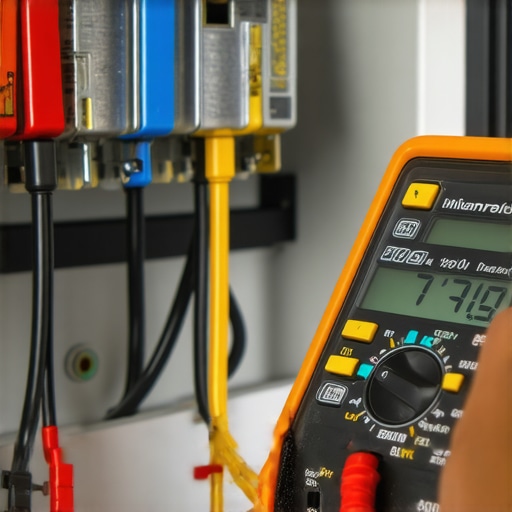
How do I keep my dishwasher alive for a decade?
Consistency beats intensity every time. Instead of waiting for a flood, I recommend a ‘touch-point’ check every six months. Check the door seal for tears and use the simple move that doubles the life of your dishwasher racks by touching up any exposed metal with rack paint before rust sets in. In the future, I expect we’ll see AI-driven sensors that can detect a failing motor by its acoustic signature before it actually stops. Until then, you are the sensor. If you notice a change in sound, don’t ignore it. Use the trick to identifying a failing drain pump by sound to catch the issue while you still have a valid service contract.
Take Control of Your Warranty Documentation
When a tech finally arrives, don’t just hand them the keys and walk away. Show them your logs. Tell them you’ve already checked the basics, like how to test a door latch with a business card. This immediately changes the dynamic of the visit. It shows you understand how appliance diagnostics can save your warranty benefits by narrowing the scope of their work. I’ve found that being proactive often leads to the tech being more transparent about when to trust a warranty for dishwasher repairs versus when to just fix it yourself. My challenge to you: tonight, pull out that bottom filter and give it a scrub with an old toothbrush. You’ll be shocked at what’s been sitting there.
The Hardest Lesson My Broken Dishwasher Taught Me
After years of wrestling with tech, I realized that modern appliances aren’t just machines; they are computers with a plumbing habit. The biggest shift for me was moving from “what is broken?” to “what is the machine thinking?” By understanding appliance diagnostics improving your warranty claims, I stopped being a victim of the “No Fault Found” service charge. I also learned that why your service plan might be a waste of money often comes down to how much you are willing to verify yourself before the tech arrives. Most technicians actually appreciate a homeowner who has already done the legwork, as it makes their job faster and more accurate. My lightbulb moment was realizing that data is the only language warranty companies actually respect.
The Three Things Always in My Kitchen Drawer
I don’t just keep silverware in my kitchen; I keep a small “survival kit” for my appliances. First, a digital multimeter is essential for the specific way to test a thermal fuse for continuity. Second, I keep a digital copy of my machine’s tech sheet—usually hidden behind the kickplate—saved on my cloud drive. Third, I always keep a guide bookmarked for how to appeal a rejected extended warranty claim. These resources turn you from a frustrated consumer into an informed advocate for your own home. Knowing the hidden loophole that gets your denied claim reversed can save you thousands over the life of your kitchen. I trust these tools because they remove the guesswork and put the power back in my hands.
#IMAGE_PLACEHOLDER_E#
Take Back Control of Your Household Tech
It is easy to feel overwhelmed by a machine that seems “smarter” than you, but remember that you are the one in control of the power cord. Whether you are deep in troubleshooting dishwasher problems or just trying to get a Wi-Fi signal back, your persistence is your greatest asset. Don’t let a blinking LED or a confusing app notification ruin your weekend. With the right diagnostic mindset, you can ensure how appliance diagnostics can save your warranty benefits and keep your kitchen running efficiently. Have you ever successfully argued a warranty claim using your own diagnostic data? Let me know in the comments below!