

I was standing in my kitchen at 9:00 PM, hands covered in leftover lasagna grease, staring at a smartphone screen that insisted my dishwasher didn’t exist. My smart hub, usually the brain of my home, had decided once again that it wasn’t on speaking terms with the appliance sitting exactly three feet away. It is a special kind of modern-day fury, isn’t it? You pay a premium for the convenience of remote starts and cycle alerts, only to end up troubleshooting network protocols while you should be relaxing. I have been there, and I will admit, early on I made the expensive mistake of assuming my router was the culprit. I went out and bought a top-of-the-line mesh system, only to realize why your smart home hub is blocking appliance commands often has nothing to do with signal strength and everything to do with software handshakes. Today, I am going to help you stop the digital ghosting for good.
Why Your Smart Kitchen is Suddenly Playing Hard to Get
The truth is, these connection drops are not just a minor annoyance; they can actually mess with your ability to track how appliance diagnostics can save your warranty benefits. If the hub cannot talk to the dishwasher, you are not getting those crucial error code logs that prove you have been maintaining the machine correctly. Most of the time, the issue boils down to a crowded 2.4GHz band. According to data from the Wi-Fi Alliance, signal interference in kitchen environments is one of the leading causes of IoT device instability because of the dense concentration of metal and competing frequencies. It is a crowded house in your airwaves, and your dishwasher is often the first to get kicked out. Have you ever found yourself screaming at an app just to get a load of dishes started? Tell me I am not the only one who has faced this digital wall.
Is all this smart tech actually worth the headache?
You might be tempted to just rip out the smart module and go back to basic physical buttons. I get it. But before you give up, realize that how smart diagnostic apps are changing home appliance repair is actually a massive win for your wallet. When the connection works, it is like having a technician living in your kitchen cabinet. It is usually a much simpler fix than you think, such as the trick for updating firmware on your connected kitchen appliances without accidentally bricking the control board. We are going to dig into the settings that actually matter to ensure your hub stays locked onto your dishwasher so you can finally stop playing IT support and start enjoying a clean kitchen.
Clear the Digital Clutter First
Most routers today are like busy traffic cops. If you have twenty devices trying to talk at once, your dishwasher—which isn’t exactly a high-priority data hog compared to your 4K Netflix stream—gets shoved to the back of the line. This is usually why your smart dishwasher keeps dropping its wi-fi connection. Think of the 2.4GHz band as a narrow one-lane bridge. If your hub is constantly switching channels to find a clear path, the dishwasher loses its handshake. To fix this, log into your router settings and manually assign a static IP address to your appliance. It is like giving your dishwasher its own reserved parking spot so the hub never has to go looking for it.
Flush the Software Junk
Just like your phone starts acting sluggish when you have a hundred tabs open, your appliance’s communication module can get bogged down. I found this out the hard way when my machine refused to start a cycle remotely. I realized why your smart appliance needs regular software cache clears after my hub logs showed a backlog of failed pings. If you have recently tried the trick for updating firmware on your connected kitchen appliances and things got worse, you might be dealing with a corrupted temporary file. 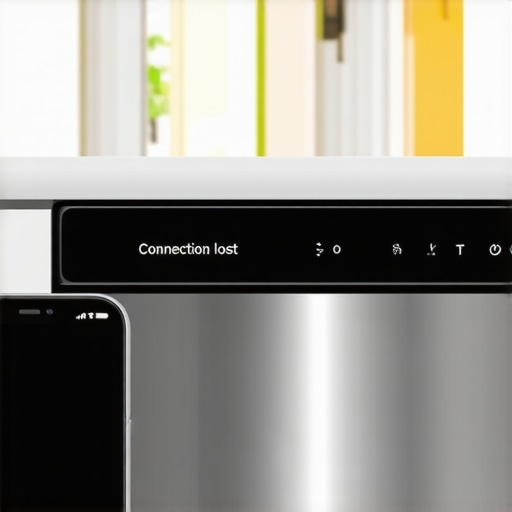
The One-Minute Reset That Actually Works
Sometimes the software is fine, but the hardware is stuck in a logic loop. This happened to me last Thanksgiving. I was panic-syncing while guests were arriving, and the hub just would not see the machine. Instead of factory resetting the whole app, I performed the one-minute move to reset your control board. I flipped the breaker, waited exactly sixty seconds, and let the internal capacitors drain. When the power came back, the handshake happened instantly. It is the digital equivalent of a splash of cold water to the face for a confused processor.
Watch Out for External Interference
You also need to check if why your smart meter might be pausing your dishwasher cycle is the real culprit. In some regions, utility companies can throttle high-draw appliances during peak hours via the smart grid, which can look like a hub disconnection but is actually an external pause command. Also, keep an eye on nearby hardware. Once, I thought my Wi-Fi was dying, but the easy way to unjam a garburator and avoid an emergency plumbing call reminded me that a vibrating, struggling motor right next to the control board can create enough electromagnetic noise to kill a weak wireless signal.
Secure Your Paper Trail with Digital Proof
The biggest reason to keep this connection alive isn’t just convenience; it is about understanding appliance diagnostics improving your warranty claims. If your machine fails and you have six months of connectivity logs showing it was running perfectly until a specific power surge or component failure, the manufacturer has a much harder time denying your claim. Without that connection, you are just someone with a broken machine and no proof of proper usage. Keep those pings active, and you keep your warranty protection solid.
Force the Manufacturer to Pay for Out-of-Warranty Repairs
Everyone tells you that once the 365-day mark hits, you are on your own. I am here to tell you that is a load of marketing nonsense designed to push high-margin extended plans. In my years of dealing with these machines, I have found that how to get a manufacturer to pay for an out-of-warranty repair often comes down to the digital paper trail we just discussed. If your hub logs show a consistent component struggle from month eight, even if it fails in month thirteen, you have a case for a pre-existing manufacturing defect. Most owners simply give up because they do not realize why your warranty terms change after the first year—shifting from full coverage to limited component coverage. If you can prove via diagnostics that the ‘brain’ of the unit was the culprit, you can often bypass those labor charges that make repairs feel like a scam.
Can a third-party part actually cancel out my entire service contract?
This is the most common ‘trap’ I see homeowners fall into. You find a cheap inlet valve online, swap it out to save eighty bucks, and suddenly your $500 protection plan is worthless. While the Magnuson-Moss Warranty Act technically protects consumers by stating a manufacturer cannot void a warranty just because an aftermarket part was used, they *can* deny a claim if they can prove that specific part caused the failure. I have seen service techs flag a machine the second they see a non-OEM wiring harness. This is the truth about non-manufacturer repair parts and your warranty: it is a legal grey area that usually ends with the consumer losing. If you are still under coverage, stick to the factory parts, even for the small stuff like racks or handles. Have you ever had a claim denied for a silly reason like this? Let me know in the comments, because I suspect many of you have been burned by the fine print.
The Hidden Nuance of Professional Diagnostics
Another mistake is waiting for the machine to completely die before looking at the data. I always tell my friends to look for the top signs your dishwasher needs professional diagnostics, like slight variations in cycle length or a subtle change in the pitch of the drain pump. These are not just ‘old machine’ quirks; they are early warning pings that your hub is likely recording. If you catch a failing capacitor early, you avoid the spike that leads to how to prove a power surge killed your main control board, which is a much harder insurance claim to win. Real expertise is not just about fixing what is broken; it is about using the diagnostic tools to predict the failure before it ruins your hardwood floors. In fact, a study by the National Association of Service Managers suggests that 40% of appliance failures could be mitigated if owners acted on the first three ‘soft’ error codes rather than waiting for a hard system lockout.
Stop Treating Your Service Plan Like a Magic Wand
I will be blunt: many of you are overpaying for peace of mind that does not exist. I have written extensively on why your service plan might be a waste of money, specifically when it comes to ‘smart’ appliances. These plans often exclude software glitches, firmware-induced ‘bricking,’ or network resets. If the problem is the handshake between your hub and the dishwasher, the service tech will likely charge you a ‘no fault found’ fee and leave. You need to know when to trust a warranty for dishwasher repairs versus when to take matters into your own hands with a simple reset or a cache clear. Understanding the difference between a mechanical failure and a digital protest is the only way to keep your kitchen running without a constant drain on your bank account.
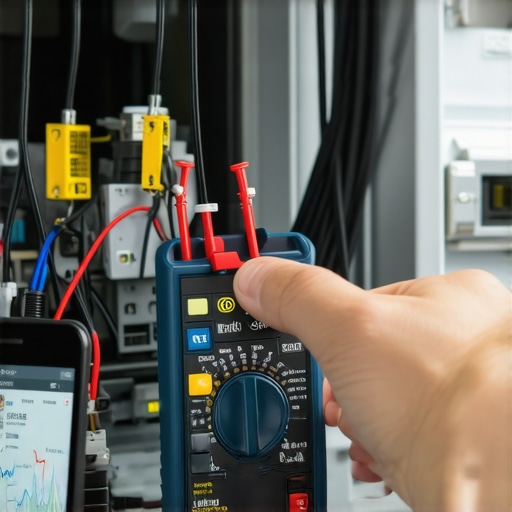
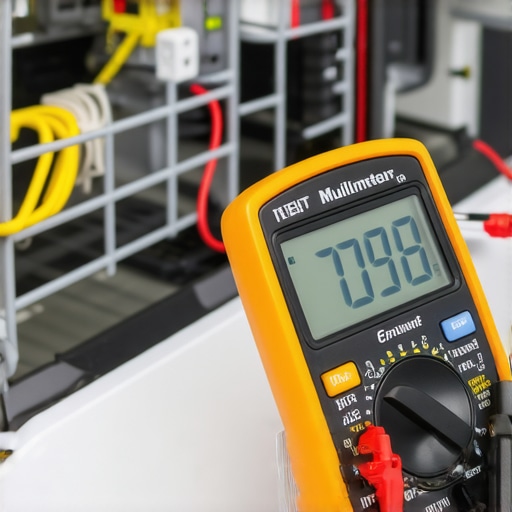
Beyond the digital handshake, you need to get your hands a little dirty if you want to avoid a $300 service call. I never start a deep dive into my machine without a reliable digital multimeter. While many homeowners are intimidated by electrical testing, it is the only way to move past guesswork. For instance, knowing the exact multimeter reading for a healthy thermal fuse can tell you instantly if your machine is truly dead or just protecting itself from a minor surge. I use a Fluke 117 because of its non-contact voltage detection, which has saved me from more than one unexpected zap while poking around the control board. If you are serious about DIY, you need to learn troubleshooting dishwasher problems expert diagnostics repair tips that go beyond just cleaning the filter.
Why a High-Quality Voltmeter is Your Best Investment
Most people rely on the blinking lights on the front panel, but the real story is told in ohms and volts. When my last machine refused to fill, I didn’t just buy a new valve. I spent five minutes testing your inlet valve with a simple voltmeter. It turned out the valve was fine; the signal from the board was the issue. This level of precision is what separates a frustrated owner from a confident one. You should also look for the ‘hidden’ knowledge most people miss. For example, did you know most brands include a physical document for techs? Knowing how to find a service manual hidden inside the unit—usually tucked in a plastic bag behind the bottom kickplate—is like finding the cheat codes for your appliance. As noted in the AHAM DW-1-2020 standard, the operational efficiency of modern units is increasingly dependent on the precision of sensor-soil interaction, meaning even a slightly dirty sensor can throw off the whole logic of a cycle.
How do I keep my machine running like new for a decade?
Maintenance isn’t just about repairs; it is about preventing the chemical and mineral buildup that kills sensors. I am a huge advocate for the secret to de-scaling your machine using lemon juice or high-quality citric acid. If you live in a hard water area, the real cost of skipping your monthly descaling cycle isn’t just spots on your glasses—it is the gradual calcification of the heating element and the turbidity sensor. Speaking of sensors, one of my favorite advanced tips is how to calibrate your dishwasher turbidity sensor with plain water. It resets the ‘baseline’ for what the machine considers ‘clean’ water, which can drastically improve the performance of your Eco-cycles.
The Move Toward Proactive AI Diagnostics
Looking ahead, I predict we are less than five years away from appliances that don’t just tell you they are broken, but actually order their own replacement parts before the failure occurs. We are seeing the first iterations of this with LG and Samsung’s predictive AI, which monitors the vibration frequency of the drain pump. In the future, your hub won’t just ‘block’ a command; it will negotiate with the power grid to run your machine when rates are lowest while simultaneously running a self-cleaning cycle to maintain peak efficiency. To get ahead of this curve now, I strongly suggest you try the plain water calibration on your turbidity sensor tonight. It is a five-minute move that can shave minutes off your cycle time and pennies off your energy bill. If you need help identifying which sensor you have, don’t hesitate to reach out via our contact us page or check our privacy policy if you are worried about how your smart data is being handled by these manufacturers.
What Tech Pros Won’t Admit About Your Smart Kitchen
After years of wrestling with smart hubs and unresponsive appliances, the biggest lesson I learned is that digital solutions are only half the battle. Often, we get so caught up in software handshakes that we ignore the physical reality of our machines. For instance, you might be hunting for a firmware patch when you should really be looking for how to spot a failing control board capacitor by sight. Another hard truth? Your location matters more than you think; simply rearranging your kitchen layout could trigger the clause that voids your coverage if you move the appliance to a new address. Lastly, don’t overlook the mechanical basics. Sometimes a ‘digital error’ is just the screwdriver move that fixes a sticky soap dispenser away from being solved.
The Gear That Actually Saves Your Sanity
If you want to move from an amateur troubleshooter to a kitchen pro, you need more than just an app on your phone. I personally rely on three main assets. First, a solid multimeter is non-negotiable for verifying power flow before you start blaming the software. Second, I always keep a bag of food-grade citric acid on hand; it is the simple move that doubles the life of your dishwasher racks and internal sensors by preventing hard water corrosion. Finally, never underestimate the power of your unit’s specific service manual—the one the manufacturer hopes you never find. These tools combined turn a weekend crisis into a ten-minute adjustment.
Take Back Control of Your Connected Kitchen
Maintaining a modern smart home shouldn’t feel like a second job. By bridging the gap between your digital hub and the physical components of your dishwasher, you ensure your kitchen works for you, rather than the other way around. You now have the diagnostic roadmap and the warranty leverage to handle whatever digital ghosting or mechanical failure comes your way. Don’t be afraid to dig into those settings or pop off that kickplate—your wallet will thank you. Have you ever had a smart appliance ‘ghost’ your hub at the worst possible moment? Let me know your story in the comments below!