

I stood there in my slippers, staring at a dishwasher that had just decided to quit mid-wash. It wasn’t a leak. It wasn’t a blown fuse. It was just… sitting there. I remember the panic—thinking I’d have to call a repairman or spend my Saturday resetting the control board for the tenth time. But then I noticed a tiny, blinking ‘Eco’ light on the panel that usually wasn’t there. That’s when it hit me: my house was smarter than I was, and not in a good way. If you’ve ever opened your machine only to find a pool of lukewarm water and dirty plates, you aren’t crazy. You’re likely a victim of ‘Demand Response’—a fancy term for your utility company putting your chores on a forced break. Today, I’m going to show you exactly how to spot this ‘hidden’ pause and how to make sure your machine actually finishes what it starts. [image]
Your Utility Company is Sneaking Into Your Kitchen
It sounds like a conspiracy theory, doesn’t it? But it’s real. Many modern smart meters are designed to talk directly to your high-draw appliances. When the local grid gets stressed—maybe because everyone in the neighborhood just cranked their AC—the utility company sends out a signal. This signal tells your dishwasher to chill out until the peak passes. I once made the massive mistake of assuming my pump had died, nearly wasting a fortune on professional dishwasher diagnostics. It turns out, I just needed to understand my settings. According to the U.S. Department of Energy, these Demand Response programs are becoming standard to prevent blackouts, but they can be a total nightmare if you’re trying to get through a load of dishes. While these features are great for lowering your operating costs, they shouldn’t happen without your permission.
Is this whole smart home thing actually just a headache?
You might be wondering if it’s even worth having a ‘connected’ kitchen if your gear won’t listen to you. It’s a fair question! Between constant Wi-Fi connection drops and software updates that feel like they’re breaking more than they fix, the frustration is real. But here’s the secret: you can usually opt-out or schedule around these peaks. Have you ever walked into your kitchen and realized your dishwasher just… stopped for no reason? I’d love to hear if your utility company has ever pulled this move on you. We’re going to look at the reasons why your eco cycle takes forever and how to finally regain your household’s autonomy.
How to Tell if Your Grid is Bossing You Around
First, you have to verify if your dishwasher is actually broken or just being told to ‘take five’ by the city. Think of it like a traffic jam—the utility company is the traffic cop holding up your wash cycle to save the grid from crashing. If you see a specific light pattern, usually a blinking ‘Eco’ or ‘Leaf’ icon, it is a signal, not a mechanical failure. I remember the time I spent a whole afternoon on my knees thinking I had a major drainage issue. I even went as far as degreasing a clogged pump impeller because the machine stopped mid-drain. It was a complete waste of time; the machine was just waiting for the peak electricity hours to pass. If your machine refuses to start but you know it has power, try the one-minute move to reset your control board to see if you can override the temporary lockout. This simple reset can often clear the utility signal and let you finish the load on your own schedule without waiting until midnight. 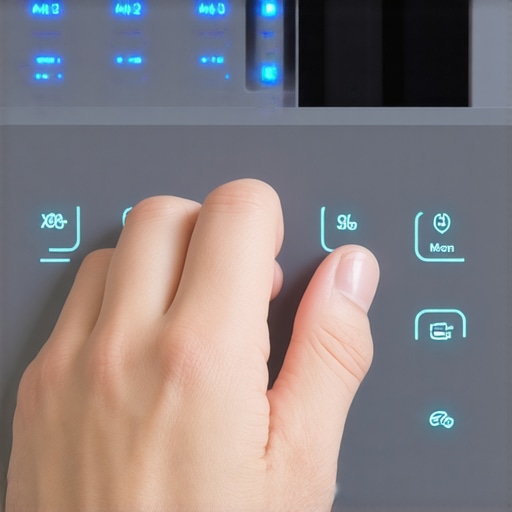
Break into the Service Menu to Kill the Override
Most modern machines have a hidden ‘Service Mode’ or ‘Installer Menu.’ This is where the magic happens and where you can tell the Demand Response program to get lost. To find yours, you usually need a specific sequence of button presses, like ‘Normal-Heated Dry-Normal-Heated Dry.’ This isn’t just for show; it is how you perform expert diagnostics without paying for a service call. Once you are in, look for settings labeled ‘DR’ or ‘Smart Grid.’ Flipping these to ‘Off’ restores your autonomy. If you find your buttons are completely unresponsive, you might need to check why your dishwasher buttons are unresponsive after cleaning or even how to spot a failing control board capacitor by sight. It is a delicate balance between being tech-savvy and accidentally turning your kitchen into a bricked-hardware graveyard, so always proceed with caution when messing with internal firmware.
Smart Features that Actually Work for You
You do not have to go totally ‘off-grid’ to win. The goal is to use smart features to lower your electric bill on your own terms. Instead of letting the utility company decide when to pause your cycle, use the ‘Delay Start’ function to run the machine at 2:00 AM. This avoids the grid stress entirely and ensures you wake up to clean dishes. I once tried to ‘cheat’ the system by manually restarting the cycle every time it paused, but all I did was cause a suds lock because the detergent had already partially dissolved. It is much more efficient to focus on timing your dishwasher cycles correctly. If your machine is still acting up after you have disabled the grid features, it might be time for diagnostics that save your warranty benefits. Sometimes the timing is just a coincidence and you actually have a mechanical failure like a blown thermal fuse or a failing drain pump. Checking why your smart home hub is blocking appliance commands can also save you from a lot of unnecessary hardware resets if the connection itself is the real bottleneck.
But here is where most people—even the tech-savvy ones—get it completely wrong. They assume that if they touch the machine, they have killed their warranty. In reality, being afraid to look under the hood is exactly what allows manufacturers to wiggle out of their obligations. Most owners believe that any level of self-investigation is a risk, but in my experience, understanding appliance diagnostics is actually your best defense against a denied claim. When you know exactly what is wrong before the tech arrives, you prevent them from misdiagnosing the issue as ‘user error’ or ‘environmental factors,’ which are the two biggest reasons claims get rejected.
Stop Paying for ‘No Fault Found’ Service Calls
Everyone tells you to call a professional the moment something goes wrong, but that is a trap that can cost you hundreds. According to data from Yale Appliance, a staggering 20% of service calls result in a ‘No Fault Found’ status. If a technician comes to your house and finds that your machine stopped because of a clogged house drain or a simple tripped breaker, the warranty company will not pay that bill. You will be stuck with a hefty service fee for a ten-minute visit. By learning how appliance diagnostics can save your warranty benefits, you can rule out these external issues first. For instance, I always suggest that you test a door latch with a business card or check the basics before scheduling. It is not just about saving money; it is about ensuring that when you finally do use your coverage, it is for a legitimate mechanical failure. 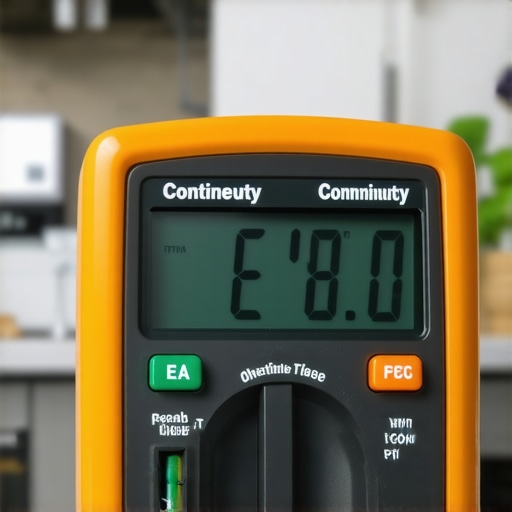
Can your own troubleshooting actually save your warranty benefits?
The short answer is yes, provided you do not start stripping wires. There is a huge difference between diagnostic verification and unauthorized repair. Manufacturers often have the hidden loophole that gets your denied claim reversed, but you can only find it if you can prove the failure was a manufacturing defect. I have seen owners get a full replacement simply because they could quote the specific error code and provide a multimeter reading for a healthy thermal fuse versus their own failed one. It shows the company you aren’t just guessing. Have you ever fallen into the trap of paying for a service call that should have been covered? Let me know in the comments. I want to hear your horror stories about those ‘No Fault’ fees.
The Dangerous Trap of Using Non-OEM Spare Parts
Here is the ‘Oops’ factor that kills more warranties than anything else: the temptation of the cheap fix. If you identify a failing part and decide to swap it yourself with a generic version from an online marketplace, you are playing with fire. If that third-party part fails or—worse—damages another component, your entire policy is toast. You need to know the truth about non-manufacturer repair parts and your warranty before you click ‘buy.’ Even if you are just trying to save a few bucks on a drain pump, if a technician sees a non-standard part during a later visit, they are obligated to report it. Always stick to OEM (Original Equipment Manufacturer) parts if you are still within your coverage window. This is especially true when you are trying to tell if your service plan actually covers motor failure; the fine print almost always requires genuine parts for the claim to remain valid. Beyond just parts, be wary of the truth about third-party warranties and hidden deductible costs, as these often add a layer of complexity to an already stressful situation. Mastering the balance between when to trust a warranty for dishwasher repairs and when to take matters into your own hands is the hallmark of a truly expert homeowner.
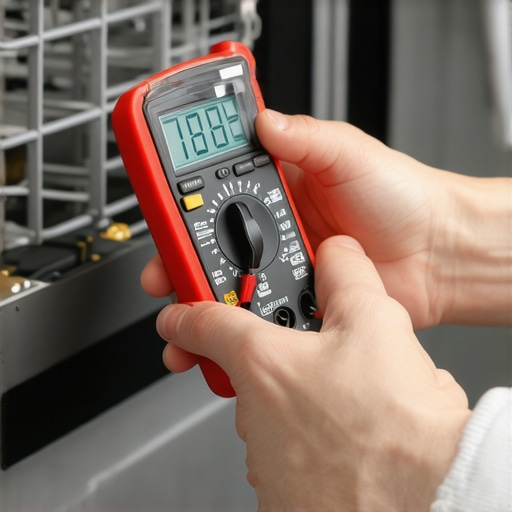
I used to think my ‘gut feeling’ was enough to diagnose a machine, but I was wrong every single time until I bought a decent digital multimeter. If you want to move from being a ‘parts-swapper’ to a ‘diagnostic expert,’ you need to get comfortable with one. I personally rely on the Klein Tools MM400 because it handles the vibration of a kitchen environment without losing calibration. This one tool turns a guessing game into a science. For instance, when I’m testing your inlet valve with a simple voltmeter, I’m looking for a specific resistance (usually between 500 and 1500 ohms) that tells me the solenoid hasn’t shorted out. It’s the same logic I use when testing your heating element for ground faults with a meter. Without that numerical proof, you’re just throwing money at parts you might not even need.
How do I maintain my dishwasher’s accuracy over time?
Maintaining a modern machine isn’t just about cleaning the filter; it’s about the sensors. The most overlooked component is the turbidity sensor—the ‘eye’ that tells your dishwasher how dirty the water is. If this gets coated in a film of lime or grease, your machine will run for hours because it thinks the water is always dirty. This leads to the real cost of skipping your monthly descaling cycle, which is eventually a dead heater or a worn-out pump. I’ve found that learning how to calibrate your dishwasher turbidity sensor with plain water can actually shave 20 minutes off your cycle time by restoring the factory baseline. According to technical standards from the Association of Home Appliance Manufacturers (AHAM), sensor drift is the primary cause of efficiency loss in machines older than three years. If you don’t keep those ‘eyes’ clean, the brain of the machine starts making very expensive mistakes.
I’m predicting that within the next five years, we’ll see a massive shift toward ‘locked-down’ diagnostics. We are already seeing how smart diagnostic apps are changing home appliance repair, where the machine sends an encrypted code to the manufacturer’s server before a technician even arrives. While this sounds convenient, it often means the consumer is locked out of the repair process entirely. We’ve seen why your appliance firmware update just bricked the control board in several recent smart-home ecosystems, and it’s a trend that worries me. The best defense is to master these manual diagnostic skills now, while we still have access to the service menus. I strongly encourage you to try the turbidity sensor calibration this weekend—it’s the fastest way to prove to yourself that you’re actually in control of your kitchen.
Hard Truths I Learned While Staring at My Dishwasher Control Board
After years of tinkering, I’ve realized that a blinking light isn’t a death sentence—it’s an invitation to listen. The most expensive mistake you can make is assuming your machine is “broken” just because it stopped mid-cycle. Often, it’s just following a script written by someone else. By understanding appliance diagnostics, you stop being a passive victim of technology and start becoming the master of your own domain. I’ve learned that keeping a paper trail of every error code is just as important as keeping the filters clean. It’s the difference between a denied claim and getting a manufacturer to pay for an out-of-warranty repair when the hardware actually fails. Don’t let the fear of a service fee keep you from looking at the diagnostic screen.
My Go-To Toolkit for Conquering Kitchen Tech
You don’t need a van full of spare parts to be effective, but you do need the right mindset and a few key items. First, a reliable digital multimeter is my non-negotiable; it takes the guesswork out of electrical failures. Second, never underestimate the power of a simple test of a door latch with a business card to rule out mechanical alignment issues. Third, I always keep a copy of the service manual—often tucked in a plastic sleeve behind the kickplate—to decode those cryptic “DR” or “Grid” messages. Finally, I swear by the paper plate test for spray arm coverage. It’s a low-tech way to ensure that your machine is actually getting water where it needs to go. These tools give you the confidence to perform the simple move that doubles the life of your dishwasher racks and other components without needing an expensive engineering degree.
Take Back Control of Your Kitchen Choreography
Modern appliances are designed to be efficient, but that efficiency shouldn’t come at the cost of your peace of mind. Whether it’s a utility company override or a clogged sensor, you now have the blueprint to fight back and maintain your household autonomy. Don’t let a “smart” feature turn your kitchen into a source of frustration. By mastering appliance diagnostics and staying proactive, you ensure your home works for you, not the other way around. You’ve got the skills, the tools, and the knowledge—now it’s time to put them to use and keep those dishes sparkling on your own schedule. Have you ever felt like your “smart” appliances were actually making your life harder? Let me know in the comments below!