

I was standing there with a half-full glass of wine and a sink full of lasagna pans when my dishwasher decided to sing me its favorite song: three sharp, annoying beeps before going completely dark. It felt like the machine was mocking me. I’d spent the last hour scrubbing, and now I was facing a potential $400 repair bill—or so I thought. That visceral feeling of dread when an appliance fails is universal. You start wondering if you need a vancouver plumber for your kitchen sink backup or if the whole unit is headed for the scrapyard. But here’s the secret: that beep is actually a coded cry for help, and today, we’re going to decode it together. I promise that by the time you finish reading, you’ll know exactly why your machine is acting up and how to handle it without losing your cool.
Your Dishwasher is Trying to Tell You Something
It’s easy to assume the worst. I remember the first time this happened to me; I panicked and immediately started looking at new models online. I even considered when to trust a warranty for dishwasher repairs before I’d even pulled the kickplate off. That was a rookie mistake. Early on, I actually replaced an entire drain pump because I thought the noise meant mechanical failure, only to find a small piece of plastic stuck in the impeller. The truth is, modern machines are programmed to shut down to prevent further damage, like a dishwasher flood that ruins your hardwood floors. Knowing the hidden reason your dishwasher is beeping constantly can save you hours of frustration and hundreds of dollars.
Is a triple beep really a sign of a dead control board?
The short answer is: probably not. Most people fear that a sudden shutdown means the brain of the appliance has fried. While a failing control board capacitor can happen, those three beeps are frequently linked to the leak protection system or a float switch that needs testing. Have you ever opened your machine only to find it completely unresponsive despite having power? It’s a common frustration. I once spent an entire Saturday afternoon troubleshooting what I thought was a dead motor, only to find out it was a suds lock from using the wrong detergent. If you’re curious, you can see why your dishwasher wont start even though theres power to avoid the same headache I had. According to data from the Association of Home Appliance Manufacturers, nearly 30% of service calls can be resolved with simple consumer-level maintenance rather than part replacement. This is exactly why how appliance diagnostics can save your warranty benefits is such a crucial topic for every homeowner to master. Before you call a tech, you need to listen to what the machine is telling you when you see what to do when your machine beeps three times and stops. Have you ever faced this specific beeping mystery in your own kitchen? It’s time we stop guessing and start fixing.
Master the Diagnostic Mode Without a Manual
Most people do not realize their dishwasher has a “secret menu.” It is like a cheat code for a video game, but instead of extra lives, it gives you a series of flashing lights that tell you exactly what is wrong. To enter this mode, you usually press a combination of two buttons—like “Normal” and “Start”—three times in a row. This is where how appliance diagnostics can save your warranty benefits becomes your best friend. Instead of guessing, you are looking at actual error codes. I once spent two hours trying to clear a drain that was not even clogged because I refused to just read the code first. It was an embarrassing waste of a Saturday. Do not be like me; listen to the machine first.
The One Minute Move to Reset Your Control Board
Sometimes, the brain of the machine just gets confused by a power spike or a mid-cycle interruption. Think of it like your laptop freezing; you do not buy a new laptop, you restart it. You can perform the one minute move to reset your control board by unplugging the unit or flipping the circuit breaker for exactly sixty seconds. This clears the “cache” of the internal computer. If the interface remains frozen afterward, you might be looking at the fix for a dishwasher that wont start but has power which often involves a simple thermal fuse swap rather than a full board replacement.
Testing Your Float Switch with a Simple Magnet
The float switch is the “bouncer” of your dishwasher; its only job is to stop the water flow if the tub level gets too high. If it gets stuck in the “up” position by a piece of debris, your machine thinks it is flooding and shuts down. You can actually test your float switch with a simple magnet to see if the internal reed switch is still clicking. I remember one frantic Tuesday where I thought I had a massive leak because my machine kept beeping three times and stopping. It turns out a stray olive pit had wedged itself under the float. 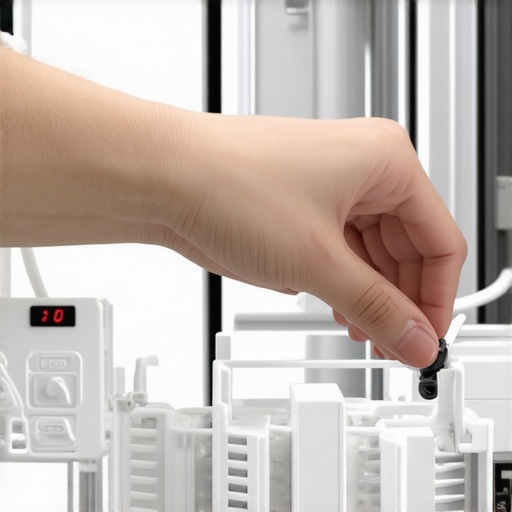
Check the Drain Pump for Obvious Obstructions
If your machine beeps and then fails to drain, the pump is likely struggling against a physical barrier. You do not always need a pro for this. In fact, troubleshooting dishwasher problems with expert diagnostics and repair tips often starts with just reaching into the sump area. I once found a literal piece of a broken wine glass jammed in the impeller blades. Before you panic about the cost of a new motor, learn the best way to degrease a clogged pump impeller. It is a messy job, but it is infinitely better than paying a service fee for something you can fix with a pair of needle-nose pliers and five minutes of your time.
Testing Your Inlet Valve with a Simple Voltmeter
If the water is not entering the tub at all, the inlet valve is the likely culprit. This part is the gatekeeper. Using how to test your inlet valve with a simple voltmeter is the only way to know if the part is electrically dead or just physically stuck. If the meter shows continuity but no water flows, the valve is jammed with sediment or calcium. This is much cheaper to fix than a full motherboard. Remember that the hidden reason your dishwasher is beeping constantly is usually a cry for one of these specific hardware checks rather than a total system failure.The biggest mistake I see isn’t failing to fix the machine; it’s failing to understand the legal landscape of your kitchen. Everyone tells you to stick to the manual, but in my experience, the manual is written by lawyers to limit liability, not to help you fix things. For example, many people think a ‘lifetime warranty’ on the tub covers everything. It doesn’t. You need to know why your warranty terms change after the first year before you assume that repair is free.
Does using a non-OEM part actually void your entire warranty?
This is the ultimate ‘boogeyman’ of the appliance world. Service techs will swear up and down that a third-party filter or rack will kill your coverage. However, the Magnuson-Moss Warranty Act actually protects you here; a manufacturer cannot void your whole warranty just because you used a non-brand part unless they can prove that specific part caused the failure. Despite this, the truth about non-manufacturer repair parts and your warranty is that companies will still try to bully you. I’ve seen claims denied for the most trivial reasons. The real ‘oops’ factor is when you try to ‘clean’ the interface and end up with why your dishwasher buttons are unresponsive after cleaning, which they’ll almost always label as physical damage. According to data from the Consumer Reports National Research Center, about 20% of warranty claims are contested by manufacturers. This is why knowing how to get a manufacturer to pay for an out-of-warranty repair is a more valuable skill than actually knowing how to turn a wrench.
The Silent Trap of Modern Firmware
We live in an era where your dishwasher needs Wi-Fi, which sounds great until it doesn’t. I once saw a perfectly good machine rendered useless because a background update failed. You need to be careful because why your appliance firmware update just bricked the control board is a reality that many warranties don’t explicitly cover under ‘standard wear and tear’. It’s often categorized as a software issue, leaving you in a lurch.  Before you panic, check if why your smart dishwasher keeps dropping its wi-fi connection is a router issue or a hardware failure. Have you ever been denied a warranty claim for a silly reason? Let me know in the comments below, because your horror story might just save someone else a thousand dollars.
After navigating the warranty minefield, we need to talk about the physical tools that separate the hobbyists from the pros. I used to think a screwdriver was all I needed until I realized electricity doesn’t care about my feelings. You need a digital multimeter. It is the difference between replacing a $150 board and a $12 fuse. Knowing the exact multimeter reading for a healthy thermal fuse saved me from a full tear-down last Christmas. You can also use it to figure out how to test the continuity of a heating element. If the meter reads ‘OL’ (open loop), the part is dead. It is that simple. As noted in the Whirlpool Service Pointer technical bulletins, many recurring issues are actually ‘nuisance’ trips caused by slight voltage fluctuations rather than total component failure, which you can only verify with precise testing.
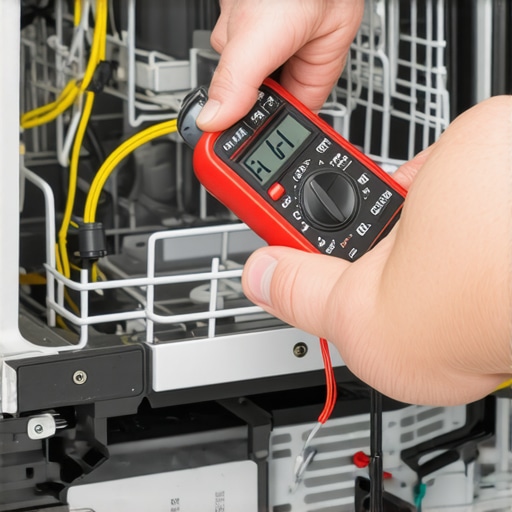
Grab a Multimeter and Stop Guessing
Maintenance isn’t just about the big parts, though. It is the ritual. I personally swear by the real cost of skipping your monthly descaling cycle. If you live in an area with hard water, that white film is slowly choking your pumps and sensors. You don’t need fancy chemicals; the secret to de-scaling your machine using lemon juice is my favorite eco-friendly hack. It works because the citric acid breaks down calcium better than most store-bought liquids. While you’re at it, how to clean the tiny holes in your spray arms is a task most people forget until their plates come out covered in grit. I use the toothpick method for unclogging spray nozzles every six months. It sounds tedious, but it ensures water actually hits your dishes instead of just swirling around the bottom of the tub.
The Future of Fixing Your Own Stuff
Looking ahead, I see a future where ‘Software as a Service’ (SaaS) infects our kitchens even more. We are moving toward a world where manufacturers might try to lock down software diagnostics behind a digital paywall. This is why mastering manual testing now is so vital. You can how to lower your appliance operating costs by 15 percent just by being proactive with these mechanical checks before the sensors fail. Being your own first responder is the only way to stay ahead of the planned obsolescence curve.
How do I maintain my dishwasher over the next decade?
The secret isn’t a secret at all; it is consistency. You need to treat the machine like a car. This means the simple move that doubles the life of your dishwasher racks, which is basically just checking for exposed metal and sealing it before rust spreads throughout the machine. If you want to go pro, I challenge you today to pull your kickplate and check the floor pan for any signs of ‘ghost leaks.’ Catching a tiny drip now prevents a floor-destroying flood later. Don’t wait for the beeping to start—take control of your kitchen’s health today.
The Hardest Lesson I Learned About DIY Dishwasher Repair
If there is one thing I have learned after years of tinkering with appliances, it is that your first instinct is usually too expensive. I used to see an error code and immediately think hardware replacement was the only option. Now, I view understanding appliance diagnostics improving your warranty claims as a mental game rather than a mechanical one. Most of the time, the machine is not broken; it is just overwhelmed by environmental factors like hard water or a slight power surge that needs a simple reset. My lightbulb moment came when I realized that a manufacturer’s warranty is often a shield for them to avoid costs, but the hidden loophole that gets your denied claim reversed is the sword you can use to protect your investment. You have more power than you think when you approach these machines with logic instead of frustration.
The Diagnostic Toolkit Every Homeowner Should Own
You do not need a truck full of specialized parts to be effective at maintaining your kitchen. First, you absolutely need to know how to find a service manual hidden inside the unit; it is usually tucked behind the bottom kickplate in a plastic baggie and contains the literal keys to the diagnostic kingdom. Second, a digital multimeter is non-negotiable for verifying actual failures. Using the specific way to test a thermal fuse for continuity will save you from buying expensive control boards when only a fifteen-dollar fuse has blown. Finally, keep a simple bottle of lemon juice and some toothpicks on hand for the scale and clogs that cause eighty percent of common dishwasher failures. #IMAGE_PLACEHOLDER_E#
Stop Fearing the Beep and Take Control
It is easy to feel defeated when your kitchen starts chirping at you in the middle of a busy evening, but that sound is just raw data waiting to be interpreted. By mastering dishwasher diagnostics, you are not just fixing a machine; you are protecting your time and your bank account from unnecessary service fees that add up over the years. You have the tools, the expert links, and the diagnostic knowledge now to handle the next three-beep emergency with total confidence. You are the master of your kitchen, and no appliance should tell you otherwise. Have you ever discovered a surprisingly simple fix for a dead appliance that saved your weekend? Let me know in the comments below!