

I was standing in a puddle of lukewarm, greasy water, staring at a flashing ‘E24’ code on my dishwasher. It was a Tuesday, the kids were screaming, and I had exactly forty-two minutes before my next Zoom call. I didn’t panic, though. I reached for the ‘Gold Star Protection Plan’ I’d paid fifteen dollars a month for since 2021. I thought I was smart. I thought I was protected. But when the tech arrived and handed me a bill for one hundred and twenty-five dollars just to ‘diagnose’ the issue—on top of my seventy-five dollar deductible—I realized I’d been sold a bill of goods. It felt like a punch in the gut, especially since I thought I was doing everything right by the book. [image placeholder]
The Shocking Reality of the Hidden Service Fee
The truth is, third-party warranties are often designed to make money by hoping you never use them, or by making the process so expensive you’ll just buy a new machine. My biggest mistake early on was assuming ‘coverage’ meant ‘all-inclusive.’ It doesn’t. I learned the hard way that many warranty plans for dishwasher repairs have clauses that allow companies to stack fees. Have you ever been told a repair was covered, only to be hit with a ‘travel fee’ or a ‘diagnostic surcharge’ that exceeded the cost of the actual part? It’s a common tactic that leaves homeowners feeling abandoned when they need help the most.
Are these protection plans actually worth the hype?
According to the Federal Trade Commission, the Magnuson-Moss Warranty Act protects you, but third-party contracts aren’t always traditional ‘warranties’—they are often service contracts with vastly different rules. I used to think I was being responsible by signing up. In reality, your service plan might be a waste of money if you don’t know how to navigate the fine print. I spent three hours on hold once, only to find out that ‘gaskets’ were considered ‘consumables’ under my specific plan. Talk about normal wear and tear on appliances being a massive loophole! But don’t lose hope yet. Today, I’m going to pull back the curtain on how to spot these traps before you sign. I’ll also show you how appliance diagnostics can save your warranty benefits if you play your cards right. We are going to make sure your next appliance breakdown doesn’t break your bank account too. Have you ever felt cheated by a service contract deductible?
To avoid getting fleeced like I did, you have to stop acting like a passive consumer and start acting like a claims adjuster. The moment your dishwasher starts acting up, the clock is ticking on your ability to prove the failure wasn’t your fault. Most people wait for the technician to tell them what’s wrong, but by then, you’ve already lost control of the narrative. You need to build a case before you even make the first phone call. This proactive approach is the only way to ensure you aren’t paying for ‘diagnostics’ that should be covered by your plan.
Build an Ironclad Evidence File
The secret to a successful claim isn’t just having the contract; it’s having the history. You need to keep these three receipts to ensure a smooth repair claim: the original purchase receipt, any professional installation records, and proof of maintenance, like descaling agents. I once had a claim denied because I couldn’t prove the unit was professionally installed, even though it clearly was. Now, I keep a digital folder with every scrap of paper related to my appliances. Along with receipts, you must capture the photo evidence you need for every warranty claim. Take pictures of the error code on the screen, any standing water, and the state of your filters. If the tech arrives and the error code isn’t currently active, those photos are your only proof that a problem exists.

Take Your Own Diagnostic Readings
If you really want to protect your wallet, you need to learn how to get professional-grade diagnostic codes from your interface. Most modern dishwashers have a ‘service mode’—usually a sequence of button presses—that reveals the hidden history of the machine’s failures. I remember a time my machine wouldn’t drain, and the warranty company tried to blame a ‘clogged house drain,’ which isn’t covered. I pulled out my multimeter and checked the thermal fuse. Knowing the exact multimeter reading for a healthy thermal fuse allowed me to tell the dispatcher exactly what part had failed. When you can say, ‘I have checked and found that I am testing the continuity of a heating element and it has failed,’ the company is far less likely to try and wiggle out of the repair with a generic excuse.
Navigate the Maze of Fine Print Exclusions
Warranty companies love to blame ‘user error’ or ‘environmental factors’ to avoid paying. One of the most common traps is soap choice. It sounds ridiculous, but there is a reason why service techs deny warranty claims for soap choice. If they find excessive suds or residue from cheap pods, they can claim you’ve neglected the machine. In fact, why your service tech secretly hates pod detergents often boils down to the fact that they cause buildup that mimics mechanical failure. If they can pin the problem on your detergent, the ‘repair’ becomes a ‘maintenance issue’ and you’re stuck with the bill.
Find the Loophole That Reverses a Denied Claim
Even if you get a ‘no,’ don’t take it as the final word. There is often the hidden loophole that gets your denied claim reversed by simply asking for a second opinion or pointing out that the failed part isn’t listed under their specific ‘wear and tear’ exclusions. You have to be meticulous. Many people get frustrated and give up when they see the fine print about normal wear and tear on appliances, but a circulation pump failing after two years is not ‘normal wear.’ It’s a mechanical defect. Stand your ground, use your diagnostic data, and show them that you know exactly what your contract covers. This persistence is often the only difference between a free repair and a two-hundred-dollar mistake.
Stop Treating Your Service Contract Like Insurance
The biggest myth in the appliance world is that a protection plan works like car insurance. It doesn’t. Insurance covers accidents; service contracts cover specific, narrowly defined mechanical failures. I’ve seen homeowners get denied because they didn’t realize why your warranty terms change after the first year. In year one, you’re usually covered by the manufacturer’s robust bumper-to-bumper promise. By year three, you’re dealing with a third-party administrator whose sole job is to minimize ‘loss ratios.’ This is where understanding appliance diagnostics and improving your warranty claims becomes your only shield. If you can’t speak their technical language, they will use your lack of knowledge against you to classify a break as ‘preventable maintenance.’
Is your smart dishwasher actually working against your claim?
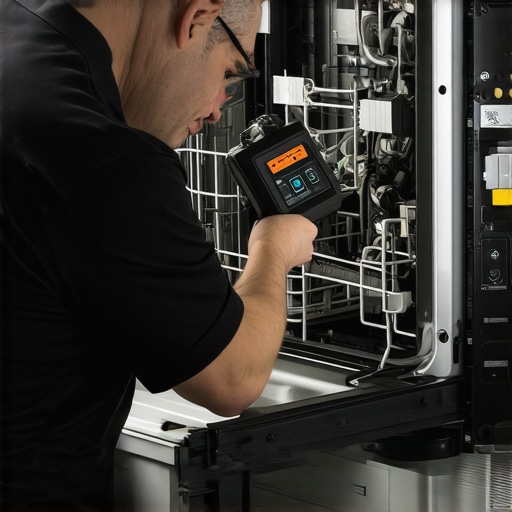
We’re told that ‘smart’ appliances make life easier, but for warranty claims, they are often a double-edged sword. Most people think a diagnostic code is the final word, but I’ve learned that the real reason your dishwasher won’t start might be a sensor misreading triggered by your home’s Wi-Fi mesh system rather than a part failure. Techs now use advanced tools to find loopholes—that’s why your service technician carries a thermal camera. They aren’t just looking for a broken heating element; they are looking for ‘non-covered’ issues like poor cabinet ventilation or high ambient kitchen temperatures that technically void the contract. A study in the International Journal of Quality & Reliability Management highlights that ‘secondary environmental factors’ are the leading cause for denied service claims in modern appliances because they are classified as ‘site issues’ rather than ‘product defects.’ If you don’t know how appliance diagnostics can save your warranty benefits, you’re essentially walking into a courtroom without a lawyer. Furthermore, watch out for the ‘software trap.’ Everyone thinks a firmware update is a good thing, but why your appliance firmware update just bricked the control board is a reality that often falls outside ‘mechanical’ coverage in many fine-print documents. Don’t let them tell you it’s a ‘software issue’ and walk away. You can often learn how to get a manufacturer to pay for an out-of-warranty repair if you can prove the failure was a known design flaw rather than a random glitch. Have you ever fallen into this trap where a ‘smart’ feature was blamed for a mechanical breakdown? Let me know in the comments.
To really beat the system, you need a toolkit that makes a service tech nervous when they walk in the door. I don’t mean a massive chest of wrenches; I mean a quality digital multimeter. This is your truth-teller. When you know how to test your inlet valve with a simple voltmeter, you stop being a victim of ‘maybe it’s this, maybe it’s that’ repair bills. I personally use my multimeter to verify the exact multimeter reading for a healthy thermal fuse every time my machine loses power. It takes two minutes and saves a hundred-dollar service call just to find a blown fuse. If you’re feeling adventurous, you can even learn testing a solenoid valve for continuity in 3 steps to pin down fill issues before the warranty company tries to blame your home’s water pressure.
How do I maintain my dishwasher to avoid a warranty rejection?
The best defense is a clean machine. Warranty adjusters look for any excuse to cite ‘neglect’ to save their bottom line. That’s why I’m obsessive about the debris-trap most owners miss during monthly cleaning. It’s not just the main filter; it’s the fine mesh under the spray arm assembly. While you’re down there, take a second to learn how to clean the tiny holes in your spray arms using a simple toothpick. This prevents backpressure on the pump—a major cause of ‘normal wear and tear’ denials. You also need to factor in the real cost of skipping your monthly descaling cycle. Hard water is the silent killer of internal gaskets. I’ve seen enough ‘corrosion’ denials to know that a five-dollar bottle of citric acid once a month is the cheapest insurance policy you can buy.

Spot Trouble Before the Error Code Appears
I believe the future of appliance care is moving toward ‘predictive diagnostics,’ where AI-driven apps analyze your motor’s acoustic profile. We’re already seeing high-end machines that alert your phone when a pump’s amperage starts to climb. Until then, you have to be the sensor. I’ve learned to listen for the specific noise that means your circulation pump is dying—it’s a low-frequency growl that starts weeks before the E-code. If your dishes aren’t coming out quite right, don’t wait for a total failure. Learn how to calibrate your dishwasher turbidity sensor with plain water to see if the machine is just ‘blinded’ by soap film. As noted in the Appliantology technical curriculum, many ‘smart’ sensors fail not because they are broken, but because of mineral buildup that tricks the infrared eye. I challenge you to try one thing this weekend: go find the ‘hidden’ manual. Most people don’t realize how to find a service manual hidden inside the unit—it’s usually tucked into a plastic sleeve behind the bottom kickplate. Read it. It contains the diagnostic sequences the pros use. If you can master the one-minute move to reset your control board, you’ll be ahead of 90% of homeowners. Even your digital brains need a refresh, which is why your smart appliance needs regular software cache clears to prevent those annoying phantom errors. Stop being afraid of the tech; start owning it.
Hard Truths I Learned While Fighting My Service Contract
After years of navigating the murky waters of appliance protection plans, I’ve realized that the system isn’t necessarily rigged, but it is definitely weighted toward those who stay silent. One of the most vital things to remember is that why your warranty terms change after the first year often comes down to who is actually writing the check; switching from a manufacturer to a third-party administrator changes the entire game. I also learned that if you can’t show a history of basic care, they will use it against you. This is exactly why service techs deny warranty claims for soap choice—it’s the easiest path to a ‘negligence’ denial. Finally, I discovered that being prepared with the photo evidence you need for every warranty claim is the only way to avoid the ‘could not replicate’ fee when the technician arrives and the machine suddenly behaves. Use your phone to document everything before you even call for service.
Grab These Essentials to Outsmart Your Next Breakdown
You don’t need a degree in mechanical engineering to protect your home, but you do need a few specific items in your corner. First, invest twenty dollars in a digital multimeter; knowing how to test your inlet valve with a simple voltmeter can prevent a dishonest tech from upselling you on parts you don’t need. Second, locate your physical documentation. I always recommend people learn how to find a service manual hidden inside the unit because it contains the diagnostic ‘cheat codes’ that the pros use to verify failures. Lastly, never underestimate the power of a simple maintenance schedule. Understanding the real cost of skipping your monthly descaling cycle taught me that five minutes of cleaning is worth five hundred dollars in avoided repairs. These tools move you from being a frustrated owner to an empowered advocate for your own kitchen.
Take Back Control of Your Kitchen Maintenance
The journey from a flooded kitchen floor to a successfully repaired appliance is paved with data and persistence. You have the power to stop being a victim of fine-print loopholes by mastering troubleshooting dishwasher problems with expert diagnostics. When you approach a repair with knowledge, you aren’t just saving money—you’re ensuring your home runs efficiently and safely. Don’t let a service contract bully you into paying for their mistakes. Stand your ground, use your diagnostics, and remember that you are your appliance’s best line of defense. Have you ever had a warranty claim denied for a reason that felt like a complete technicality? Let me know in the comments below.