

I stood there in my socks, staring at a puddle of stagnant, gray water sitting at the bottom of my dishwasher, feeling surprisingly smug. I had a service plan, after all. I’d paid my $25 a month like clockwork for the peace of mind. But then the technician pulled out the circulation pump, pointed at a chalky, white crust blocking the impeller, and told me the repair would be $400 out of pocket. He called it “environmental damage.” I called it a scam. That was my lightbulb moment: a warranty is only as good as your water softener. I remember the smell most of all—that slightly metallic, burnt-sugar scent of a motor trying to turn against a seized bearing. I’d spent years ignoring the white spots on the door hinges, thinking they were just a cosmetic nuisance. I was a “set it and forget it” kind of guy, and that mistake cost me a $1,200 machine. If I had known that my “comprehensive” plan specifically excluded “damage resulting from mineral scale,” I would have spent five minutes a month on maintenance instead of five hours on hold with customer service.
Why Your Service Plan Might Ignore Your Next Breakdown
I learned the hard way that why your warranty claim was denied due to lack of maintenance is usually the first thing a technician looks for when they see a high-end machine failing prematurely. Most of us just sign the digital line and forget about it. But there’s a sneaky paragraph in almost every contract—usually buried under “Exclusions”—that treats hard water like a self-inflicted wound. Early in my homeownership journey, I assumed that if a part broke, the company fixed it. Period. I didn’t realize that by ignoring the calcium buildup in my pipes, I was effectively shredding my own contract every time I ran a load of dishes. It is a harsh reality: you can pay for the best plan in the world, but if your water is “liquid rock,” you’re essentially uninsured for the most common types of pump failure.
Is hard water really enough for them to void a whole contract?
It sounds like an excuse, but legally, they have a leg to stand on. According to the Water Quality Association (WQA), hard water can reduce the efficiency of water-using appliances by as much as 48% due to scale accumulation, which adjusters cite as a failure to provide a suitable operating environment. This isn’t just about how to remove cloudiness from glasses using citric acid; it’s about the fact that those same minerals are baking onto your heating element and seizing your motor. When a service provider sees that white buildup, they classify it as “improper maintenance” or “adverse site conditions,” neither of which are covered by a standard manufacturer warranty or even most extended plans. I once argued that I shouldn’t be a chemist to own a kitchen, but the contract doesn’t care about my feelings, only the mineral content of my sump.
Keep Records to Force Their Hand on a Claim
Today, we are going to fix this. I’m going to show you how to identify these clauses before you pay for a plan and, more importantly, how to document your maintenance so they can’t say no. You need to master understanding appliance diagnostics to improve your warranty claims. If you can prove you’ve been tracking the real cost of skipping your monthly descaling cycle and actually doing the work, you shift the burden of proof back onto them. Have you ever been told a repair wasn’t covered because of your “water quality”? Let’s make sure that never happens to you again. By the end of this guide, you will know exactly what to say to a technician to ensure they write up the report in a way that actually gets your parts covered.
Spot the Sneaky Clauses That Void Your Protection
Start by grabbing your service contract and searching for two specific phrases: “site conditions” and “preventative maintenance.” These are the legal trapdoors. I remember looking at my own policy after my $400 disaster and finding a line that said coverage was void if the failure was caused by “external factors including but not limited to water quality.” It is a total gut-punch. You need to know how to tell if your service plan actually covers motor failure specifically versus just a general “mechanical breakdown,” which is a much broader and more easily denied category. If your contract mentions “mineral accumulation” as an exclusion, you are already at a disadvantage unless you can prove you have been fighting the scale from day one.
Build a Maintenance Trail They Can’t Ignore
If you want to win a claim, you need a paper trail that is impossible to argue with. Every time you run a cleaning cycle, snap a photo of the empty machine with the cleaner bottle sitting next to the open door. It sounds obsessive, but when a tech claims “lack of maintenance,” you can pull up a dated folder on your phone and shut that conversation down. I started doing this after my second pump started making a high-pitched squeal from the circulation pump. When the technician arrived, I didn’t wait for him to diagnose the problem; I showed him my digital logs of every descaling cycle. It changes the dynamic instantly. You are no longer a clueless homeowner; you are a meticulous operator who understands why your warranty claim was denied due to lack of maintenance in the past and refuse to let history repeat itself.
Access the Secret Diagnostic Mode for Real Proof
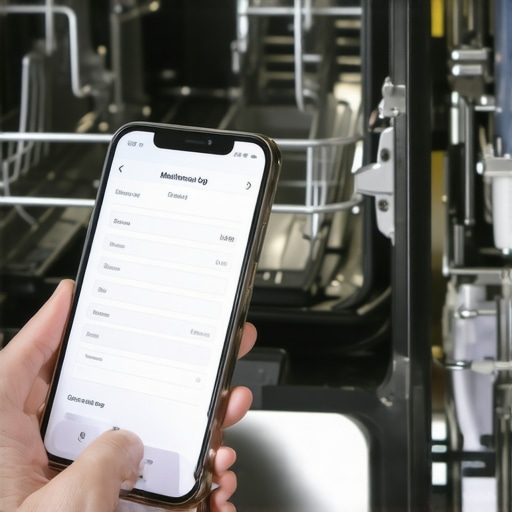
Most modern machines have an internal “brain” that records every error code and system fluctuation. You do not need a degree in engineering to find it. Usually, it involves a specific sequence of button presses—like “Normal-Heated Dry-Normal-Heated Dry” in rapid succession. Accessing the secret diagnostic mode hidden on your touch control panel allows you to see exactly what the sensors are reporting before the tech even pulls into your driveway. If the machine logs an “Error E15” (a leak code) and the tech tries to blame it on “hard water scale,” you have the internal data to push back. This is the heart of understanding appliance diagnostics to improve your warranty claims. You aren’t just guessing based on a puddle; you are speaking the machine’s own language to prove a component failed due to a defect rather than neglect.
Talk the Talk When the Repairman Shows Up
The technician is often caught between you and a corporate office that wants to minimize payouts. Your job is to make it easy for them to say “yes” to coverage. Instead of saying “It just stopped working,” say “The diagnostic cycle flagged a motor failure, and as you can see from my records, I have used citric acid to remove cloudiness and scale every thirty days.” This framing forces the tech to document in their report that the operating environment is well-maintained. If they still try to walk away from the claim, you need to know how to appeal a rejected extended warranty claim by requesting a senior supervisor review. Often, just mentioning that you have the internal diagnostic codes and a maintenance log is enough to get a “denied” status flipped to “covered” before they even leave your kitchen.
The Vinegar Myth That Might Be Eating Your Gaskets
Common wisdom suggests that a bowl of vinegar in the top rack is the ultimate ‘green’ hack for a clean machine. I used to be a believer until a senior technician showed me a pile of brittle, cracked rubber seals from a three-year-old Bosch. The truth is, while vinegar is great for dissolving scale, its acidity can be relentless on certain types of industrial rubber. In fact, experts at the Association of Home Appliance Manufacturers (AHAM) suggest that modern high-efficiency machines are designed for specific pH-balanced cleaners. If you’re overdoing the DIY solutions, you might be surprised to find out why using distilled vinegar every week may damage your seals and eventually lead to a leak that your service plan won’t touch because it’s classified as ‘chemical damage.’ I’ve seen homeowners lose $2,000 appliances over a $5 bottle of salad dressing. Have you ever fallen into this trap? Let me know in the comments.

Your Garbage Disposal Is a Warranty Trojan Horse
The most common reason for a ‘dead’ drain pump isn’t actually a mechanical failure—it is a plumbing issue masquerading as one. When you install a new disposal, there is a plastic knockout plug where the dishwasher drain line connects. If the person installing it forgets to remove that plug, or if your disposal gets backed up with potato peels, your dishwasher will throw a drainage error. When the warranty tech arrives, the first thing they check is that connection. If the blockage is in your sink’s plumbing, you’ve just paid for a service call out of pocket. This is exactly why your warranty claim got denied because of your garbage disposal and not because of a faulty part. I always tell people to check the sink drain before they ever pick up the phone to call for service.
Can a software update actually fix a mechanical failure?
We are living in an era where a ‘broken’ dishwasher might actually just need a reboot. I’ve seen cases where a motor seemed seized, but the reality was a bug in the sensors that wouldn’t let the cycle advance. This is why how appliance diagnostics can save your warranty benefits is such a critical skill for a modern homeowner. However, there is a dark side: the ‘bricked’ board. If your Wi-Fi flickers during a firmware push, you could be left with a dead machine. Understanding why appliance firmware update just bricked the control board is often the only way to convince a manufacturer that they owe you a new PCB, rather than blaming you for ‘improper use.’ Always ensure your smart home connection is stable before hitting ‘Update’ on your kitchen screen.
The Clause That Forbids You From Moving
Here is a trap most people miss: if you move your dishwasher to a different house, or even a different part of the kitchen during a remodel, you might have just shredded your protection. Many service contracts include the clause that voids your coverage if you move the appliance without a certified professional installer. They argue that the structural integrity or the electrical connection could have been compromised during the move. It feels like a technicality, but in the world of high-end appliance repair, technicalities are the difference between a free repair and a $600 bill. Always keep the receipt from the plumber who moved the unit; it is your only shield against a claim denial based on ‘unauthorized relocation.’
The Three Tools I Keep in My Kitchen Drawer
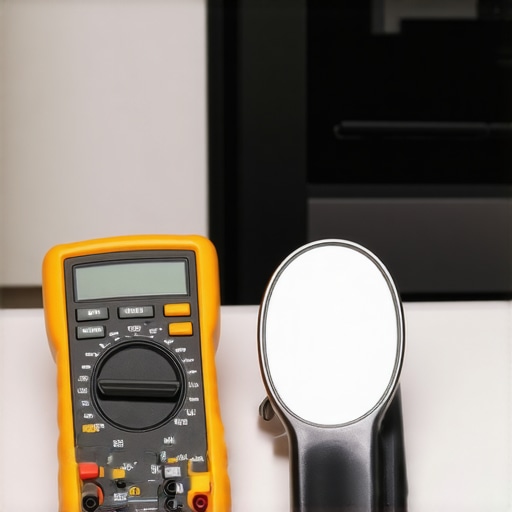
I realized early on that if I wanted to win a war against a warranty adjuster, I needed better weapons than a sponge and some soap. I started carrying a basic digital multimeter and a telescoping inspection mirror. Why? Because when you know the specific way to test a thermal fuse for continuity, you stop being a victim of ‘unknown’ electrical failures. I personally use a Klein Tools MM325 because it is rugged enough for the wet environment under a sump. If I can show a technician that my fuse has no continuity but my power supply is active, I’ve effectively narrowed down the repair to a covered part before they even open their toolkit. This isn’t just about being handy; it’s about understanding appliance diagnostics to improve your warranty claims by speaking with technical authority. I also recommend a cheap USB endoscope. I’ve used mine to find the red flag your service tech looks for in your drain line—usually a tiny piece of plastic or a bone shard that would have cost me a $150 ‘no-fault’ service fee if I hadn’t cleared it myself.
How do I keep my machine running for a decade or more?
Long-term success isn’t about one big repair; it is about the mundane stuff most people skip. According to Miele’s technical service guidelines, a dishwasher’s lifespan is calculated based on roughly 7,500 cycles, but that number drops drastically if the heater element is constantly fighting mineral scale. I make it a habit to perform a ‘deep dive’ every six months. This involves how to deep clean a dishwasher sump without pulling the machine using a soft brush and a shop vac. You would be shocked at the sludge that accumulates under the filter housing. If you let that sit, it creates backpressure on the pump, leading to that dreaded failing drain pump sound that usually signals the end of your motor’s life. By keeping the sump clear, you ensure the motor runs at its intended RPM, which prevents the overheating that often voids ‘normal wear and tear’ clauses in extended service plans.
The Future Is Predictive and Your Machine Is Watching
We are moving into an era where appliances will effectively ‘tattle’ on their owners. Newer Bosch and Samsung units are already integrating AI that tracks how often you clean the filter and what type of detergent you use. In the very near future, how smart diagnostic apps are changing home appliance repair will mean that your warranty provider will know you skipped a descaling cycle before you even file a claim. This is why I advocate for a digital maintenance log today. If the machine is tracking you, you should be tracking it. I’ve started using firmware updates for new smart dishwashers to keep my sensors calibrated, which prevents the machine from overworking the heater during high-altitude or hard-water conditions. Don’t let the technology work against you; use it to prove you are the ‘perfect’ owner. My best advice for you this week? Go grab a simple pencil and try how to test your dishwashers float switch with a pencil. It is a five-second check that can save you from a major leak and a denied claim.
What Your Service Provider Hopes You Never Discover
After years of fighting with adjusters, I’ve realized that the “peace of mind” sold in service plans is often a one-way street unless you bring your own data to the table. Here are the core truths I live by now:
- The “Set it and Forget it” trap is real. If you aren’t actively monitoring your machine, the manufacturer assumes you’re neglecting it. This is understanding appliance diagnostics to improve your warranty claims at its most basic level: stay ahead of the buildup before it stays ahead of you.
- Photos are better than receipts. A receipt shows you bought a cleaner; a photo of the cycle running proves you actually used it. When you know how appliance diagnostics can save your warranty benefits, you can pair that digital proof with the internal error logs to make an ironclad case.
- The motor is rarely the first thing to die. It’s usually a sensor or a fuse that gives up first. Learning how to check these small components can save you from a complete system replacement.
The Only Tools You Need to Fight Back
You don’t need a garage full of gear, but these three items changed how I handle every service call. I trust them because they take the guesswork out of a breakdown.
- The Digital Multimeter: This is my go-to for testing a thermal fuse for continuity without a pro kit. If the fuse is dead, I know exactly what part to demand under the warranty.
- pH-Balanced Descalers: Stop relying on pure vinegar if you want your gaskets to last. Proper cleaners prevent the real reason your glasses come out cloudy after a cycle without eating away at the rubber seals that keep your kitchen dry.
- The Manufacturer’s Diagnostic App: Whether it’s SmartThings or Home Connect, seeing the raw error data on your phone is a game changer. It’s fascinating to see how smart diagnostic apps are changing home appliance repair by giving homeowners the same “eyes” as the pros.
Stop Fearing the Next Breakdown
The most important thing I can tell you is that you are no longer at the mercy of a “site condition” exclusion. By keeping a log, learning your machine’s secret menus, and performing basic checks yourself, you shift the power balance. You aren’t just a policy number; you are an informed operator who knows the value of their investment. The next time your machine throws a code, don’t panic. Grab your tools, check your logs, and use your knowledge of understanding appliance diagnostics to improve your warranty claims to ensure you get the service you actually paid for. Have you ever had a warranty claim denied for a reason that felt like a total technicality? Let me know your story below.