

I was standing knee-deep in a lukewarm puddle of grey, sudsy water when I finally hit my breaking point. My three-year-old dishwasher had just quit mid-cycle, and that repetitive, piercing beep felt like it was mocking my entire Saturday. My first instinct? Total panic. I almost pulled the trigger on a two-hundred-dollar replacement drain pump I didn’t actually need. I have been there before, honestly. Years ago, I spent an entire afternoon tearing apart a machine only to find out how a toothpick can save your spray arm from clogs. I felt like a total amateur back then, but this recent flood was the moment I decided to stop playing the guessing game. I pulled out my smartphone, opened the manufacturer’s diagnostic app, and held it near the power button. Within seconds, the mystery was gone. It was not the pump; it was a simple sensor misalignment. Today, I want to show you why these smart diagnostic tools are the neighborly hand we all need in the kitchen.
Your Smartphone is the New Multimeter
I used to think these smart features were just flashy ways for companies to charge an extra hundred bucks at the register. I was wrong. These apps are changing the game because they give us the one thing we never had before: transparency. Instead of throwing parts at a machine and hoping for the best, you get a direct line to the appliance’s brain. When you are trying to figure out the real reason your dishwasher won’t start, the machine literally whispers the answer to your phone. It turns a stressful, expensive call to a plumber into a five-minute fix you can do yourself. I remember one specific time I ignored the app and tried to manually find a leak; I ended up soaked and frustrated, missing the fact that I could have learned how to find the slow leak hiding under your kickplate just by reading the error log first. Have you ever stood in front of a blinking control panel and felt like your dishwasher was speaking a foreign language? You are not alone, and you do not have to stay frustrated. [image_placeholder]
Does an app really replace a pair of expert hands?
I get the skepticism. It sounds a bit like digital snake oil to suggest a piece of software can diagnose a mechanical failure. However, when you are understanding appliance diagnostics improving your warranty claims, you realize that data is your best defense. According to a study by Consumer Reports, modern appliances are increasingly controlled by complex electronic boards, making software-based diagnostics a necessity rather than a luxury for accurate troubleshooting. Even if why your smart dishwasher keeps dropping its wi-fi connection is a temporary headache, the diagnostic payoff is worth the setup time. We are not just looking for random numbers; we are looking for the confidence to either handle the repair ourselves or hold a service technician accountable when they show up at the door. I once let a tech talk me into a repair I didn’t need because I didn’t have the diagnostic data to prove him wrong—I won’t let that happen to you.
Get Your Smartphone Synced Before Trouble Hits
Most people wait until they see a puddle on the floor to download their appliance’s app. That is a mistake. You want that connection established while the machine is healthy so you have a baseline of what ‘normal’ looks like. Start by ensuring your home network is stable, as why your smart dishwasher keeps dropping its wi-fi connection is often more about router placement than machine failure. Once you are paired, navigate to the maintenance or ‘care’ tab. This is where the magic happens. I remember when I first synced my unit; I realized my water softener wasn’t even active because the app flagged a low-salt alert I had been ignoring on the physical display for weeks. It is like having a mechanic sitting in your kitchen, pointing out the small things before they become engine-explosions. If the interface seems frozen, remember the one minute move to reset your control board to get the digital handshake back on track.
Deciphering the Code Without a Secret Ring
When the dreaded beeping starts, do not reach for your wallet; reach for your phone. Most modern apps use an acoustic or Wi-Fi-based diagnostic tool. You literally hold the phone’s microphone to a specific button on the dishwasher, and the machine ‘sings’ its problems to the app. Last summer, my dishwasher stopped mid-cycle with a cryptic ‘E24’ on the screen. Instead of guessing, I ran the acoustic diagnostic. The app didn’t just give me a code; it gave me a photo of the drain pump and told me exactly where the obstruction likely was. I followed the guide and learned how to fix a dishwasher that won’t drain in five minutes just by clearing a stray popcorn kernel. 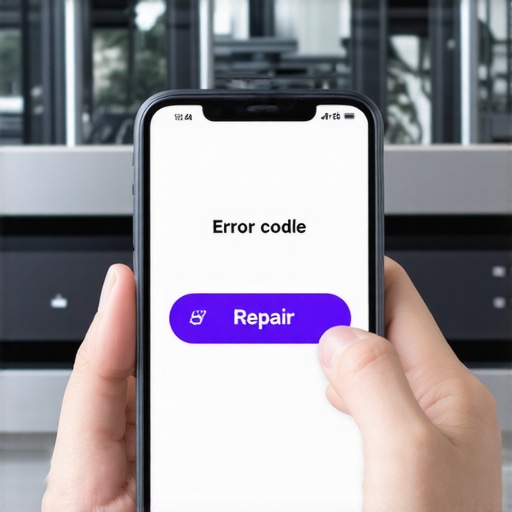 Without that app, I would have spent $120 on a service call just to have a guy pull out a piece of corn. If the app suggests the problem is internal or electrical, you should check the top signs your dishwasher needs professional diagnostics before you start unscrewing the main chassis.
Use Your Phone to Win Your Next Warranty Battle
The real power of these apps lies in the ‘service log’ feature. This is a chronological history of every hiccup your machine has ever had. When you are how appliance diagnostics can save your warranty benefits, this log is your primary evidence. I once had a technician try to tell me a motor failure was due to ‘user error’ regarding detergent. I pulled up the app, showed him the diagnostic history that proved the motor had been spiking in temperature for three months, and he backed down immediately. To make this work for you, always capture the photo evidence you need for every warranty claim directly through the app interface if possible. Also, be aware that why service techs deny warranty claims for soap choice is a common tactic, but having a clean diagnostic report showing proper sensor readings can help you dispute those unfair denials. Data doesn’t lie, even when a service contract tries to find a loophole.
The Myth of the Service Tech’s Secret Tool
I’ve spent years talking to pros, and here is a secret they won’t always lead with: their ‘special’ diagnostic tools are often just proprietary versions of the exact same app you can download. We tend to believe that a physical gadget with wires and a screen is inherently more accurate than our smartphones, but in modern machines, the data source is the same control board. However, the nuance is in how you read that data. While you might be tempted to rush out and buy a new pump based on a single error code, seasoned experts know that software can sometimes glitch. This is why why your smart appliance needs regular software cache clears to prevent false positives. According to research published by the Association of Home Appliance Manufacturers (AHAM), up to 25% of ‘failed’ components are actually functional parts that were misdiagnosed due to sensor interference or dirty filters. If you are not careful, you will fall into the ‘parts-cannon’ trap, firing money at a problem that just needs a simple reset.
Can You Really Trust Your Phone Over a Human Expert?
This is the advanced question every DIYer eventually faces. The answer is yes—but only if you understand the context. Your app might tell you the motor is failing, but it won’t tell you that a stray chicken bone is wedged in the impeller. This is the ‘Oops’ factor most homeowners miss. They see an electrical code and assume the part is fried, ignoring the physical reality. Before you commit to a repair, you must distinguish between a hard electrical failure and a mechanical obstruction. I always recommend checking troubleshooting dishwasher problems expert diagnostics repair tips to bridge the gap between what the screen says and what the machine is actually doing. 
The Danger of Chasing Ghost Codes
Another high-level mistake is ignoring the power of your home’s infrastructure. I once spent three days trying to fix a ‘low pressure’ error on my dishwasher, only to realize my water heater’s mixing valve was failing. The dishwasher wasn’t broken; its environment was. This is where understanding appliance diagnostics improving your warranty claims becomes vital. If you can prove to a manufacturer that your sensors were reading consistent input errors rather than a component failure, you are much more likely to get a favorable outcome. Be wary of the truth about non-manufacturer repair parts and your warranty, as using the wrong sensor can throw off the very diagnostic data you’re trying to rely on. If your app is giving you conflicting information, take a breath and check for top signs your dishwasher needs professional diagnostics before you start tearing out the main harness. Have you ever replaced a part only to find out the real problem was something completely different? Let me know in the comments—I’d love to hear how you solved your ‘ghost’ problems.
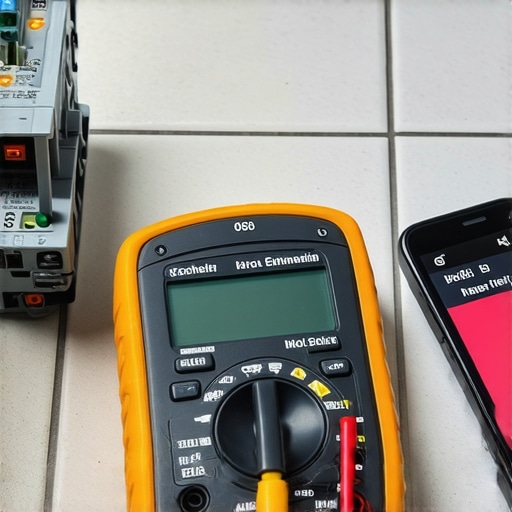
I have spent a lot of time talking about apps, but there comes a moment where you have to put down the phone and pick up a screwdriver. If you want to move from ‘lucky amateur’ to ‘household hero,’ you need a few physical items in your kit. I am not talking about a thousand-dollar professional toolbox; I am talking about a decent digital multimeter. Knowing the exact multimeter reading for a healthy thermal fuse saved me from replacing a perfectly good control board last winter. You are looking for continuity, not a guess. I also keep a simple business card handy—not for my contact info, but because I learned how to test a door latch with a business card to ensure the seal is tight enough to engage the sensor. According to the technical training manuals from Master Samurai Tech, a leading authority in appliance repair education, the most common ‘part failure’ is actually a failure to understand the machine’s sequence of operations rather than a component death.
How do I maintain my dishwasher’s performance over the long haul?
Maintenance is not just about cleaning the filter once a year when the smell becomes unbearable. It is about managing the chemistry and physics inside the tub. You have to realize that the real cost of skipping your monthly descaling cycle is not just a bit of white film on your glasses; it is the slow, agonizing death of your heating element. I personally use a citric acid-based cleaner every thirty days like clockwork. While I am at it, I always check the debris trap most owners miss during monthly cleaning—that tiny mesh screen located just behind the main sump housing. If that gets clogged, your pump works twice as hard, and you will eventually find yourself looking up why your service technician carries a thermal camera to find the resulting electrical hotspots on your overworked motor.
When Your Dishwasher Starts Predicting the Future
In the near future, we are going to see ‘Predictive Failure’ become the consumer standard. Instead of an error code appearing only after the pump dies and floods your kitchen, your app will likely ping you three weeks early because it detected a 5% increase in amp draw over ten cycles. We are not quite there for every budget model yet, so for now, you have to be the brain of the operation. Stop relying on the ‘auto’ settings for every single load. Sometimes, you need to know how to calibrate your dishwasher turbidity sensor with plain water to reset the machine’s ‘eyes’ and ensure it is actually sensing the soil levels correctly. And please, listen to what the veterans say: why your service tech secretly hates pod detergents is usually because they cause massive oversudsing in soft water, which tricks the sensors into thinking the machine is drained when it is still full of foam. If you really want to level up your game, I challenge you to try a manual recalibration this weekend. It takes less than ten minutes and can instantly improve your cleaning results without costing a dime in parts.
Realizations That Saved My Sanity and My Wallet
Reflecting on my journey from a panicked homeowner with a wet floor to someone who actually understands the ‘brain’ of my kitchen has taught me a few things that aren’t in any manual. First, the machine isn’t your enemy; it’s a data source. When you start understanding appliance diagnostics improving your warranty claims, you stop feeling like a victim of bad luck and start feeling like a prepared investigator. I also realized that a ‘failed’ diagnostic code is actually an invitation to look deeper, not just an order to buy a new part. By combining digital data with troubleshooting dishwasher problems expert diagnostics repair tips, I stopped wasting money on components I didn’t need.
The Tech and Gear I Won’t Fix Without
Over the years, I’ve narrowed my repair kit down to just a few essentials that work in tandem with my smartphone apps. I always keep my smartphone charged and the manufacturer’s diagnostic app updated, but I also rely on these physical staples. I trust a high-quality multimeter because knowing the exact multimeter reading for a healthy thermal fuse provides a level of certainty an app alone sometimes misses. For checking water distribution, I swear by the paper plate test for spray arm coverage, which is a low-tech way to verify what the sensors are claiming. Finally, I’ve seen firsthand why your service technician carries a thermal camera; even a cheap smartphone attachment version can help you spot a board that is about to fry before it smells like smoke.
Your Future as a Master of the Machine
[image_placeholder]
You don’t need a trade certificate to handle your own appliance repair or to effectively manage your home maintenance. You just need the right data and the willingness to look at the screen before you look for the toolbox. By staying proactive and learning how appliance diagnostics can save your warranty benefits, you put the power back in your own hands. You’ll save money, reduce waste, and gain the incredible satisfaction of knowing exactly how your home works. Don’t let a simple error code ruin your weekend. If you ever feel overwhelmed, remember to check for the top signs your dishwasher needs professional diagnostics so you know when to call in reinforcements. Have you ever managed to fix a machine using just a diagnostic app, or did you find the code lead you to a completely unexpected physical problem? Let me know in the comments below!