

I remember the exact moment I realized my kitchen was betraying me. It was a Tuesday morning, and I was staring at a notification from my internet service provider informing me that I’d already used 90% of my monthly data allowance. I live alone. I don’t stream 4K movies all day, and I certainly wasn’t hosting a secret LAN party. My first thought? A neighbor was stealing my Wi-Fi. I spent the next two hours changing passwords and checking securing your smart appliance from local network security risks, feeling more like a paranoid detective than a homeowner. It turns out the culprit wasn’t a hacker—it was my “smart” dishwasher. It had been stuck in a loop for three days, trying to upload a simple diagnostic log that kept timing out. Each failed attempt used a tiny bit of data, but repeated a thousand times? It was a disaster.
Your Dishwasher is Gossiping Behind Your Back
We buy these smart machines because we want convenience. We want to know when the pods are low or if a firmware update to save water is available. But here’s the thing I learned the hard way: these appliances are chatty. They are constantly pinging servers, checking for updates, and sending telemetry data back to the manufacturer. Sometimes, they get confused. A minor glitch in your connection can cause the appliance to constantly retry a data-heavy task. I’ve seen cases where a simple smart appliance app losing connection causes the machine to go into a frenzy of data requests, essentially hogging your own home network.
Is a Smart Appliance Actually Worth the Privacy Headache?
It’s a fair question to ask. When you realize your fridge or washer is communicating more frequently than you talk to your own mother, it feels a bit intrusive. According to the Cisco Annual Internet Report, Machine-to-Machine connections are now a massive portion of global traffic, often operating without any user oversight. You might wonder if the tiny benefit of a phone notification is worth the potential for data overages or security vulnerabilities. Personally, I was ready to pull the plug and go back to a mechanical timer. But I realized that the problem isn’t the technology itself; it’s how we manage it.
How to Stop the Invisible Data Drain
Most of us just set it and forget it. We connect the appliance to the Wi-Fi and never look at the settings again. That’s exactly what I did, and it cost me an extra fifty dollars on my cable bill that month. If you’ve noticed your smart dishwasher notifications are always delayed, it might actually be a symptom of a larger network bottleneck caused by the appliance itself. We need to be more proactive. Have you ever actually checked your router’s admin panel to see how much data your appliances are pulling? It’s eye-opening, to say the least. Today, I’m going to walk you through exactly why this happens and how you can throttle these hungry machines without losing the features you actually paid for. We’re going to look at settings you didn’t know existed and how a few simple tweaks can save your bandwidth and your sanity.
Audit Your Router Before Touching the Appliance
The first step isn’t to start tearing apart your machine; it’s to look at the invisible highway it’s traveling on. Think of your router as a traffic cop. If you don’t give it instructions, it lets every device speed as much as it wants. Log into your router’s administrative panel—usually by typing 192.168.1.1 into your browser—and find the device list. I did this and found my dishwasher labeled as ‘Unknown Device’ but sucking up data like it was streaming Netflix. By assigning it a static IP address, I stabilized the connection, which is often why a smart appliance app keeps crashing during firmware updates. When the IP address keeps shifting, the download gets interrupted, and the machine goes into a frantic retry loop that drains your bandwidth.
Crack the Code on Your Control Panel
You don’t need to be a software engineer to see what your dishwasher is thinking. Most manufacturers build in a backdoor for technicians that you can use too. By pressing a specific sequence of buttons—often ‘High Temp’ and ‘Start’ three times in a row—you can access the secret diagnostic mode hidden on your touch control panel. 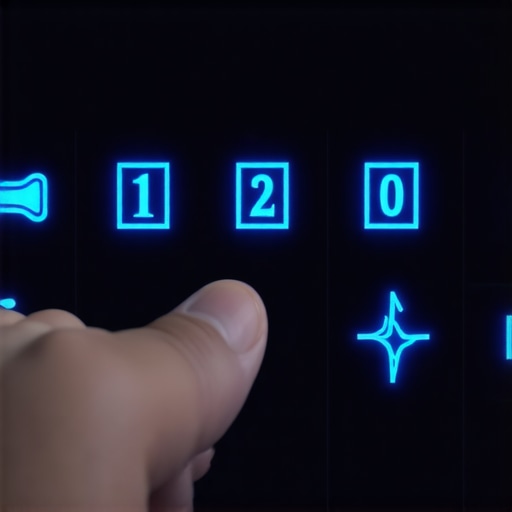 This mode isn’t just for show; it will spit out a series of blinks or numbers. If you see why your dishwasher screen shows a numeric error code, you might find that the ‘data drain’ is actually the machine trying to report a hardware failure it can’t quite describe. I once spent an hour troubleshooting a ‘network error’ only to realize the diagnostic mode was flagging a sensor issue. Knowing how appliance diagnostics can save your warranty benefits is huge because you can tell the service tech exactly what the ‘brain’ is saying before they even arrive.
My 3:00 AM Discovery with a Mesh Router
I learned about network interference the hard way. I had just installed a new mesh Wi-Fi system and thought I was a genius. Suddenly, my dishwasher became a data glutton. It turns out, the machine was constantly jumping between two different mesh nodes, causing it to drop and reconnect every five minutes. Each reconnection triggered a ‘status report’ upload. I fixed it by ‘pinning’ the dishwasher to the closest node in the app settings. If your machine is constantly searching for a signal, it’s not just wasting data; it’s wearing out the Wi-Fi module. Before you consider testing your thermal fuse before buying a new control board, check your signal strength. A simple ‘forget network’ and re-pair can sometimes clear the cache and stop the cycle of fixing the dreaded error code that stops everything.
Switch to Manual When the Tech Fails
Sometimes the ‘smart’ features just aren’t worth the hassle. If you’ve gone through the top signs your dishwasher needs professional diagnostics and everything hardware-wise looks fine, consider a ‘digital diet.’ Most apps allow you to turn off ‘Remote Telemetry’ or ‘Usage Statistics.’ You’ll still get a notification when your dishes are dry, but the machine will stop whispering to the home office every few seconds. In my case, disabling the ‘Auto-Order Detergent’ feature cut my appliance’s background data usage by 60%. It’s about taking back control of your own hardware and ensuring that the convenience you paid for doesn’t turn into a monthly bill surprise.
Most DIYers think that once they’ve accessed the secret diagnostic mode hidden on your touch control panel, the battle is won. I used to think the same. If the screen flashes a code, we assume that specific part is toast. But here is the contrarian truth: your dishwasher’s brain is often a pessimist that over-reports electrical faults while ignoring mechanical realities. In my experience, troubleshooting dishwasher problems expert diagnostics repair tips involve looking past the code at the actual environment. For example, a code for a failing drain pump might actually just be the truth about tablet vs powder detergent residue build up clogging a pressure sensor. I’ve seen homeowners spend $200 on a new control board when all they needed was to learn the secret to getting grease out of your filter mesh. The machine isn’t ‘smart’ enough to know it’s just dirty; it only knows the water isn’t moving at the expected rate and throws a panic code.
Can a Clogged Sink Actually Kill Your Appliance Warranty?
This is the ultimate ‘trap’ I see people fall into every single week. You call for service because the machine won’t drain, confident that your service plan will cover the repair. Then the tech arrives, clears a piece of plastic from your sink’s air gap, and hands you a bill for $150. Why? Because why your warranty claim got denied because of your garbage disposal is one of the most common fine-print exclusions in the industry. According to data from the Association of Home Appliance Manufacturers (AHAM), a staggering percentage of service calls for ‘broken’ appliances are actually maintenance-related issues that fall outside of manufacturing defects. If the problem originates in your home’s plumbing, the warranty company considers it ‘site-related’ and rejects the claim. Before you panic-buy parts, check the simple plumbing fix for a dishwasher that wont drain and ensure the easiest way to unclog your kitchen sink air gap hasn’t been overlooked. This simple five-minute check could save your entire repair budget.
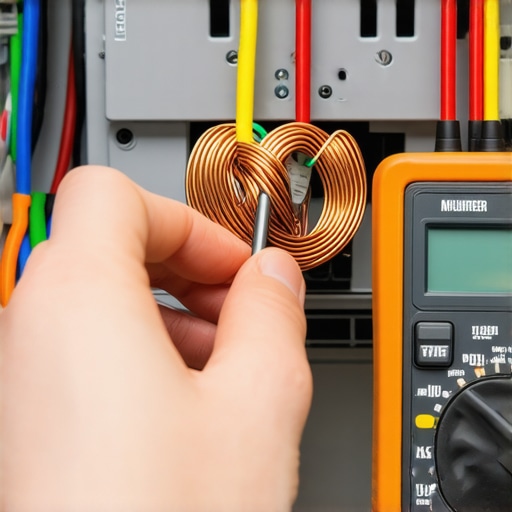
There is another hidden nuance that separates the pros from the amateurs: the phantom power surge. Many modern boards are so sensitive that a minor flicker in your local grid can freeze the software, leading you to believe the hardware has failed. Before you start testing a thermal fuse for continuity without a pro kit, try a hard ‘flea power’ reset. Unplug the unit for ten full minutes to allow the capacitors to discharge completely. This often clears the ‘brain’ better than any software reset button. If that doesn’t work, you’ll need to get technical. Using the only multimeter settings you need for appliance repair, you can verify if a component is truly dead or if the board is just failing to send voltage. Have you ever fallen into the trap of replacing a part only to find the error code remains? Let me know in the comments.
The Hidden Hard Water Clause in Your Service Plan
We often treat a warranty like a total safety net, but it’s actually more of a sieve. There is a specific clause most homeowners miss: the clause in your service plan that voids coverage for hard water damage. If a technician pulls out your heating element and sees a thick coating of white calcium scales, your claim is dead on arrival. They will argue you failed to provide ‘proper operating conditions’ as outlined in the manual. This is why understanding appliance diagnostics improving your warranty claims starts with preventative care. It’s significantly cheaper to spend ten minutes cleaning your dishwasher with nothing but steam and water than to lose a $1,000 coverage plan over scale buildup. If you are noticing why your new machine stays on one minute for ten minutes, it might be the sensors struggling with mineral deposits rather than a mechanical failure. Before committing to a service fee, check these top signs your dishwasher needs professional diagnostics to ensure you aren’t paying for a visit that won’t be reimbursed. If you’re still stuck, you can contact us to walk through the specifics of your model’s diagnostic quirks.
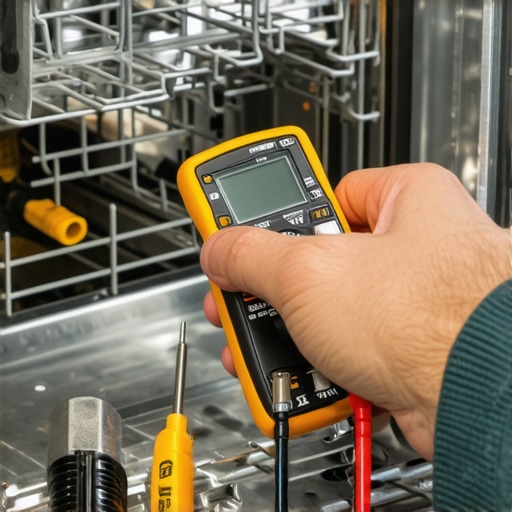
If you are tired of the ‘parts cannon’ approach—where you just keep throwing expensive components at the machine hoping one of them fixes the leak—it is time to upgrade your toolkit. Personally, I do not go anywhere without my Klein CL800 multimeter. I use this specific digital model because it features a Low Impedance (LoZ) mode, which is crucial for modern electronics. In the world of appliance repair, ‘ghost voltage’ is a frequent headache where a standard meter shows a reading on a wire that actually has no current-carrying capacity due to a bad relay or loose connection. By using the only multimeter settings you need for appliance repair, you can verify if your heating element is receiving real power or just a phantom signal from a confused control board. I have also learned that you do not always need a fifty-dollar specialized diagnostic tool; sometimes, simply knowing how to test a door latch using a screwdriver handle is enough to prove the mechanical switch is the real culprit behind a machine that won’t start.
How can I keep this machine running for a decade?
Maintaining a dishwasher isn’t about performing deep cleans once a year; it is about the small, consistent habits that prevent mechanical stress. Every three months, I take ten minutes for the proper way to clean spray arm nozzles using a paperclip. It sounds primitive, but those tiny holes are the lifeblood of your wash quality. If they are even twenty percent blocked, your internal water pressure drops and the ‘smart’ sensors start overcompensating by running the motor harder and the cycle longer. I also swear by using white vinegar to clear a blocked drain line before the buildup becomes a solidified mass of grease and soap scum. According to the Whirlpool Corporation Technical Training Manual for Global Dishwashers, nearly one-third of electronic control failures reported are actually ‘ghost’ errors caused by minor resistance in the door latch wiring or simple debris in the sump. If you can learn how to identify a dying circulation motor by its pitch, you can often replace a ten-dollar bearing or seal before the entire three-hundred-dollar motor assembly burns out. This proactive approach is the only way to navigate the real difference between service plans and manufacturer warranties without losing your sanity or your savings.
The Future of Your Kitchen is Local
Looking ahead, I suspect the ‘data drain’ and connectivity issues we see today will eventually force a major shift in how these machines are designed. We are moving toward ‘edge computing’ for kitchen appliances, where the heavy diagnostic processing happens inside the machine’s own processor rather than on a remote manufacturer server. This will stop the constant pinging of your home router and provide more accurate, offline feedback. Imagine a dishwasher that tells you exactly which spray arm nozzle is clogged with a strawberry seed instead of just flashing a generic ‘service required’ light. Until that becomes the industry standard, your best bet is to stay curious and keep your basic tools ready. I highly recommend trying the paperclip trick on your spray arms this weekend—you will be shocked at how much debris a seemingly ‘clean’ machine is actually hiding from you.
Lessons I learned the hard way about ‘smart’ error codes
One of the most eye-opening moments of my DIY journey was realizing that reading the hidden blinking lights on your dishwasher brain is more of an art than a science. I once spent days chasing a software bug when the real culprit was just a slightly loose connector. These machines are designed to be helpful, but their sensors can be overly dramatic. For instance, you might see a code for a catastrophic pump failure that is actually just a symptom of the impact of detergent overdose on energy efficiency causing too many suds for the sensors to handle. I’ve learned to always look for the mechanical root cause before trusting the digital messenger. If you find yourself in a similar spot, remember that understanding appliance diagnostics improving your warranty claims often starts with proving the machine is actually getting clean power and water first.
The minimalist toolset for pro-level repairs
You don’t need a garage full of specialized gear to keep your kitchen running. Over the years, I’ve narrowed my essential kit down to three things that solve the vast majority of the problems I encounter. First, a reliable multimeter is non-negotiable; mastering the only multimeter settings you need for appliance repair will save you from buying expensive control boards you don’t actually need. Second, I keep a simple paperclip nearby because the proper way to clean spray arm nozzles using a paperclip is surprisingly effective at restoring water pressure. Finally, a bottle of white vinegar is my secret weapon; using white vinegar to clear a blocked drain line prevents the kind of sludge buildup that leads to expensive plumber visits. These simple, low-cost tools are often more valuable than any fancy smart diagnostic app.
#IMAGE_PLACEHOLDER_E#
Your path to a decade of reliable performance
Maintaining a modern appliance is less about fixing things when they break and more about preventing the stress that leads to failure in the first place. By taking charge of your diagnostics, you aren’t just saving money—you’re extending the life of your machine and reducing electronic waste. Whether you are troubleshooting dishwasher problems expert diagnostics repair tips or deciding when to trust a warranty for dishwasher repairs, the goal is the same: stay informed and stay proactive. Don’t be intimidated by the touchscreens and Wi-Fi antennas. At its heart, a dishwasher is still just a mechanical box that uses water and heat to get the job done. With a little curiosity and the right approach, you can master your kitchen technology instead of letting it master you. Have you ever had a ‘smart’ appliance go rogue on your home network or throw an error code that made no sense? Let me know your story in the comments below!