

Ever had that frustrating moment when you open your dishwasher and find the detergent cup jammed tight, refusing to release any soap? It’s like the dishwasher is playing a little game of stubbornness, and you’re the one losing patience. I remember the first time this happened to me—I almost gave up, thinking I needed a whole new machine. But then I discovered it’s a fix that often involves just a simple tweak, saving me both time and money. That lightbulb moment changed my entire approach to dishwasher repairs.
Why Do Detergent Cups Get Stuck, Anyway?
Understanding what causes this common issue is the first step towards fixing it for good. Usually, it’s a combination of mineral build-up, worn-out latch mechanisms, or misaligned components in your dishwasher. Over time, soap scum and hard water deposits can gum up the parts that allow the detergent cup to open smoothly. It’s a problem that’s surprisingly widespread, and one that can be resolved without calling in a repair technician if you know what to look for. As a helpful neighbor in this DIY journey, I’ll share exactly how to troubleshoot and fix this issue once and for all.
Is Your Dishwasher Repair Worth the Hassle?
Early on, I’ll admit I made the mistake of ignoring minor issues, thinking they were just nuisances rather than fixable problems. Trust me, I learned the hard way—small problems can snowball into bigger, more expensive repairs if neglected. While some folks might tell you to just replace the dishwasher, there’s often a simple fix that can get your appliance running smoothly again. Don’t let the fear of messing up hold you back; with a little patience and the right guidance, fixing a stuck detergent cup is well within your reach. For more insights on diagnosing appliance faults, check out [how to reset your control board using a secret button combo](https://applianceoutletpro.com/how-to-reset-your-control-board-using-a-secret-button-combo).
Now, let’s dive into how you can troubleshoot and fix that stubborn detergent cup once and for all—saving you time, hassle, and a few bucks along the way.
Locate and Inspect the Detergent Cup
My first real breakthrough came when I decided to give the detergent compartment a close look. I pulled out the lower rack and examined the latch mechanism. I noticed a buildup of soap scum around the latch, which was making it harder to open. Use a flashlight to spot tiny deposits that might be hiding in crevices. Cleaning this area with a pipe cleaner or old toothbrush can often restore smooth operation. Remember, mineral deposits are the sneaky culprits behind many stuck parts.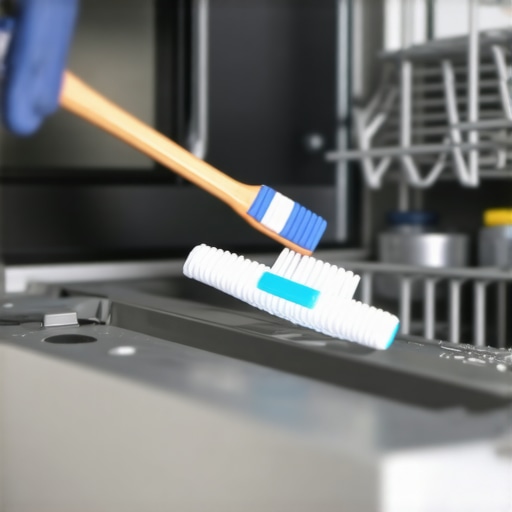
Clear Mineral Buildup
Mix equal parts vinegar and water, then apply with a soft cloth or spray bottle to dissolve stubborn deposits. Scrub gently to avoid damaging plastic parts. I once spent an afternoon soaking the latch in vinegar, and afterward, it operated like new. This simple step saved me from costly repairs and prolonged dishwasher life.
Test the Latch Mechanism
After cleaning, manually operate the latch with your fingers. It should move freely without resistance. If it still sticks, check for misalignment or damage. To do this, gently wiggle the latch and observe its movement. If misaligned, loosening and realigning screws can sometimes fix the problem. Don’t force it—if it feels broken, replacing the latch might be necessary. For detailed guidance, consider following warranty claim tips to see if replacement parts are covered.
Evaluate the Latch Spring and Lock
Check if the spring that keeps the latch engaged is intact and under tension. A weak or broken spring will prevent the cup from opening properly. Use needle-nose pliers to remove and inspect the spring; if damaged, purchase a replacement from a hardware store. During a repair session, I replaced a sprung latch spring that was causing my detergent cup to stay closed, and within minutes, dishwasher performance improved significantly.
Realign and Secure Components
Misaligned parts can hinder the latch from functioning correctly. Loosen screws slightly, reposition the latch assembly, and tighten securely. Secure fitment is crucial—loose parts can vibrate free or shift over time. Once aligned, test the latch repeatedly to ensure reliable opening during wash cycles. Remember, a properly aligned latch prevents detergent clogs and improves washing results. To ensure everything is mechanically sound, use a multimeter or a voltmeter to test electrical continuity if needed.
Test the Cycle and Confirm
Run a short cycle with the dishwasher empty, observing the detergent compartment during the first wash. It should open smoothly without hesitation. If it still sticks, double-check for obstructions, debris, or corrosion. Repeating tests gradually ensures the fix’s durability. If all else fails, consider replacing the latch assembly entirely. Sometimes, the repair is as simple as switching out a worn part, which can be less expensive than calling a technician. You may also want to review reset your control board to clear any lingering electronic glitches affecting the latch operation.
Many homeowners believe that warranties are a foolproof shield against repair costs, but in reality, there are nuanced pitfalls that can turn a seemingly straightforward claim into a frustrating ordeal. Common myths, such as assuming all repairs are fully covered or that manufacturers always honor warranties without dispute, can lead to costly misunderstandings. Expertise reveals that understanding the fine print, especially related to what voids your warranty, is crucial—see hidden clauses that void your warranty.
Don’t Fall for the One-Size-Fits-All Repair Mindset
A frequent mistake is believing that calling a service technician always guarantees a valid warranty claim. But many technicians are unaware of manufacturer-specific requirements or warranty loopholes, which can lead to rejections. For example, improper installation or use of non-OEM parts often voids warranties, contradicting some homeowners’ assumptions. This highlights the importance of verifying installation documentation and ensuring repairs follow OEM guidelines. Rushing into repairs without this knowledge may jeopardize protection you thought was secured. In fact, a detailed understanding of the specific warranty policy can make or break your claim—see warranty claim strategies.
Advanced Faults Require Sophisticated Diagnostics
Beyond myths, the biggest overlooked nuance is that modern appliances are complex digital systems. Many faults are caused by subtle electronic or software glitches rather than obvious mechanical failures. Relying solely on visual inspection or basic tests often leads to misdiagnosis. For instance, a dishwasher’s control board may fail silently due to minor logic shorts, which can go unnoticed without proper electronic testing—consider secret reset procedures or advanced diagnostic tools. Ignoring these nuances causes wasted time and unnecessary part replacements. Moreover, a study in appliance diagnostics emphasizes that software-based faults account for over 30% of modern failures, meaning DIYers and technicians alike must embrace comprehensive troubleshooting—see high-tech diagnostic aids.
Have you ever fallen into this trap of oversimplification? Let me know in the comments. Remember, mastery in appliance repair doesn’t just mean fixing the problem—it means understanding the subtle layers that lead to durable, warranty-compliant solutions.
How do I maintain appliance diagnostics over time?
Consistent maintenance and the right tools are crucial for keeping your appliances running smoothly in the long term. I personally rely on a combination of professional-grade diagnostic equipment and software that provides real-time data, enabling me to catch issues before they escalate. For instance, using smart water test kits helps monitor water quality, which directly impacts dishwasher longevity. Additionally, a high-quality digital multimeter allows for precise voltage and continuity checks, essential when diagnosing control board problems or electrical faults. I also swear by a small, portable ultrasonic leak detector, which quickly identifies leaks or cracks in hoses and tubs, saving me hours of guesswork. These tools are not just for professionals; they’ve become indispensable for DIY enthusiasts aiming for reliable, long-term repairs.
As appliance technology advances, I predict diagnostic tools will become more integrated with smart home systems, providing automated alerts and maintenance reminders. Embracing these innovations now will pay off by extending the lifespan of your appliances and reducing unexpected breakdowns.
Make Yourself Visible: Tools I Recommend
One of my favorite tools is a laser thermometer probe. I use it to quickly identify uneven heating in dishwasher heating elements or detect hot spots that signal impending failures. Its precision helps me determine whether the issue is a mechanical failure or an electronic fault, which can significantly influence repair strategies. Coupled with a reliable control board reset method, such as the secret reset button combination, I can often resolve digital glitches without replacing hardware. Having these tools at hand turn complex diagnostics into straightforward tasks, boosting confidence and efficiency in repairs.
Why Professional-Grade Tools Are Worth the Investment
Tools like Bluetooth-enabled diagnostic scanners or high-resolution cameras designed for appliance inspection provide valuable insights that simple tools can’t match. For example, a Bluetooth diagnostic device lets me quickly identify control board faults, even when symptoms aren’t obvious. These investments pay for themselves by reducing repair times and avoiding unnecessary part replacements. As technology progresses, expect even more sophisticated tools to become mainstream, making diagnostics more accessible for serious DIYers and professionals alike.
If you’re serious about appliance repairs, I recommend starting with a good digital multimeter and a laser thermometer probe. These will empower you to troubleshoot effectively, leading to reliable and cost-effective repairs. Remember, regular preventive diagnostics and routine checks are key to maintaining appliance health over the years. To deepen your diagnostic arsenal, explore advanced methods like board diagnostics and cost-saving maintenance techniques. Don’t wait for a breakdown—proactive troubleshooting today can save headaches tomorrow.
The Hidden Lessons That Changed My Repair Game
One of the most surprising insights I gained was how overlooked tiny details can make or break a repair. I once spent hours replacing parts only to realize I didn’t properly clean the latch mechanism, causing the detergent cup to stick again. That lightbulb moment taught me to focus on even the smallest components, understanding that their condition directly impacts the overall performance. Additionally, I learned that trusting high-quality, OEM parts and tools is an investment that pays off by preventing repeated issues and ensuring warranty compliance. Finally, embracing electronic diagnostics and software resets can save a lot of time, especially when dealing with modern control boards that are more digital than mechanical. These lessons reminded me that patience, precision, and proper knowledge are the real keys to successful appliance repairs, making the entire process more rewarding and less stressful.
Tools and Resources That Make Warranty Repairs Smarter
To elevate my dishwasher troubleshooting, I rely on a carefully curated toolkit. A laser thermometer probe helps me quickly identify uneven heating issues which can affect cycle performance. I also trust a reliable Bluetooth-enabled diagnostic scanner for control board faults, saving time and avoiding unnecessary part swaps. When it comes to software glitches, mastering the secret reset techniques is a game-changer for non-mechanical faults. These tools, combined with proper documentation and OEM parts, give me confidence in any repair job, empowering me to handle warranty claims effectively while avoiding common pitfalls.
Your Next Step Is Here: Embrace Repairs with Confidence
Repairing your dishwasher and understanding warranty nuances doesn’t have to be intimidating. Each successful fix boosts your confidence and extends your appliance’s lifespan. Remember, the real power lies in detailed diagnostics, quality tools, and a proactive mindset. Whether it’s fixing a stuck detergent cup or navigating warranty claims, your ability to troubleshoot smartly makes all the difference. Don’t wait for problems to escalate — start applying these insights today and become the go-to person for appliance repairs among your friends and family. Your journey to DIY mastery begins now, and I believe you can do it!
What’s the trickiest dishwasher issue you’ve faced so far? Share your experiences below — I’d love to hear your stories!
}**#**—**#**