

I remember the day I was in a rush to get dinner on the table, and my dishwasher suddenly refused to close properly. The latch was stubborn, making that irritating clicking sound but never quite locking. Frustration bubbled up because I knew that without a secure door, I couldn’t run that crucial quick wash cycle, throwing off my entire evening plan. That moment made me realize just how much we rely on our appliances working seamlessly, especially when time’s tight.
Don’t Let a Broken Door Latch Ruin Your Day
If you’ve ever faced the annoyance of a dishwasher door that won’t latch, you know how disruptive it can be. It’s tempting to call a repair technician immediately or even accept the inconvenience, but often, there’s a simple workaround that can save you time and money. Today, I want to share practical, hands-on tips to bypass a broken door latch so you can complete that quick cycle without waiting for professional help. This is especially helpful when you’re in a pinch or waiting for parts to arrive.
Is Bypassing Your Door Latch Actually Safe and Worth It?
Early in my repair journey, I made the mistake of rushing into fixes without considering safety—I didn’t disconnect the power first. That was a costly oversight. Bypassing a latch can be risky if not done carefully, as it involves handling electrical components. But with proper precautions, it’s often a safe and effective temporary solution. The key is understanding what’s involved and knowing when to restore the proper latch mechanism. Ultimately, this technique can help you avoid a total kitchen shutdown while waiting for parts or scheduling a professional repair.
Disconnect Power Before Starting
Always unplug your dishwasher or switch off the circuit breaker to ensure safety. I learned this the hard way when I didn’t disconnect power before attempting a fix, and I received a mild electrical shock. Use a multimeter to verify the appliance is truly de-energized, especially if you have a more complex setup. This initial step prevents accidents and protects your electronics.
Locate the Latch Assembly and Identify the Fault
Open the dishwasher door and examine the latch mechanism, typically found on the door’s edge. Look for obvious damage like broken parts, rust, or misalignment. Sometimes dirt or debris can cause the latch to stick, which can be cleaned instead of bypassed. If the latch appears damaged or worn, replacing it might be necessary, but if you’re pressed for time, a temporary bypass can get you going.
Assess if the Latch Is Sticky or Broken
If the latch is just sticky, applying a bit of lubricant or cleaning with a soft brush might suffice. However, if the latch is physically broken or bent, bypassing it becomes an option. Remember, bypassing should only serve as a temporary fix; plan to replace parts as soon as possible to prevent leaks or water damage.
Bypass the Latch Using a Physical Fix
One straightforward method involves creating a mechanical shortcut that mimics the latch’s closed position. For example, use a heavy-duty rubber band or a zip tie to keep the door firmly closed, simulating the latch engagement. Secure the tie around the latch hook and the door frame, making sure it’s tight enough to hold the door shut during operation. This method is quick, cost-effective, and doesn’t require disassembly.
Testing the Bypass Setup
After attaching your makeshift latch, reconnect the power source. Carefully run a short wash cycle to test if the dishwasher recognizes the door as securely closed. Be vigilant for leaks or unusual noises. In my case, I had to adjust the tightness of my zip tie to ensure the door was snug without causing undue stress on other parts.
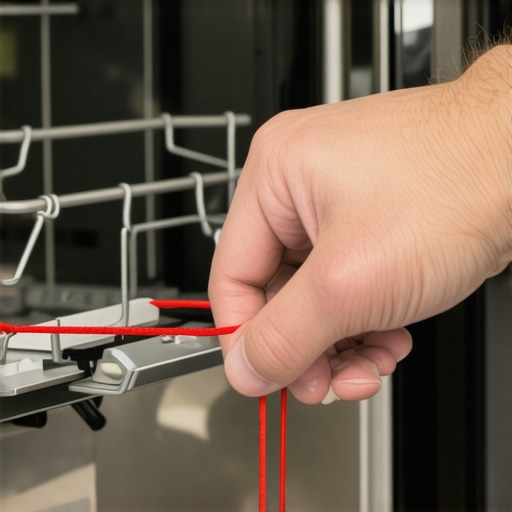
Insert an image illustrating the zip tie method securing the latch mechanism.
Temporarily Override the Door Safety Switch
If your dishwasher has a built-in safety switch that detects door latch status, you might bypass it by bridging connections or shorting specific terminals on the switch connector. Refer to your appliance’s schematic, which can often be found online or in the user manual. This step requires caution; using a [multimeter](https://applianceoutletpro.com/how-to-use-a-multimeter-to-prove-your-heating-element-is-dead) to identify the correct terminals ensures you don’t cause damage.
Using a Multimeter for Accurate Diagnostics
Test the switch’s continuity with your multimeter. When the door is closed, the switch should show closed circuit. If the switch is faulty, you can temporarily bridge its terminals with a jumper wire, effectively fooling the control system into thinking the door is latched. Remember, this is a stopgap measure—plan for a proper repair.
Reconsider Safety and Long-Term Repairs
While bypassing is effective in emergencies, it’s crucial to replace broken parts promptly. Bypasses can create safety hazards, like water leaks or electrical shorts, if not carefully executed. Consult professional repair guides or contact a technician for a permanent fix. For instance, some models have [photo proofs that force faster warranty payouts](https://applianceoutletpro.com/photo-proofs-that-force-faster-warranty-payouts), which can help justify repairs if needed.
Remember, always exercise caution and prioritize safety when working with electrical appliances. Proper maintenance and timely part replacement prevent future disasters and keep your dishwasher running smoothly for years to come.
Many homeowners operate under misconceptions when it comes to diagnosing and fixing appliances, especially dishwashers. A prevalent myth is that replacing the entire control board is the only fix for electronic glitches. In reality, many faults stem from minor component failures or software glitches that can often be addressed with simple resets or diagnostic checks, saving time and money. Understanding the nuances can prevent unnecessary replacements and extend appliance lifespan.
Another subtlety is the significance of warranty claim documentation. It’s a common mistake to think that a simple photo of the faulty part suffices. However, experts emphasize the importance of comprehensive proof, such as video evidence or detailed diagnostics, which can significantly expedite warranty payouts. For instance, as highlighted in photo proofs that force faster warranty payouts, clear visuals and context are crucial.
A frequent trap many fall into is misdiagnosing noise issues. Homeowners might assume a squeaking or grinding sound is due to a worn-out bearing, but the culprit could be a clogged spray arm or a misaligned fragility. To accurately diagnose such problems, advanced methods like sound analysis apps can be invaluable. Check out sound check tools for pump noise to learn more about this approach.
Think beyond the immediate repair—consider how appliance age and usage patterns affect diagnostics. For example, many believe that dishwasher leaks are solely caused by door seals, but neglecting the role of water inlet valves or the accumulation of debris can lead to recurring issues. Regular maintenance and detection of subtle signs, such as slow drains, can prevent larger failures. To delve into this, see diagnostic steps for draining problems.
Let’s talk about advanced mistake that professionals avoid: leaping to component replacements without proper testing. Using tools like multimeters or smartphone apps for circuit testing can reveal whether parts are truly faulty or if the issue lies elsewhere. This precision prevents unnecessary disassembly and costly parts swaps, which are common pitfalls. For detailed testing methods, visit multimeter diagnostic techniques.
Finally, it’s vital to recognize the importance of verifying compatibility of replacement parts. Installing generic or third-party components might seem cost-effective but can void warranties or cause further damage. Professionals emphasize sourcing OEM parts and validating serial numbers, especially when making warranty claims. This detail, often overlooked, underpins successful repairs and claims, as discussed in warranty claim success strategies.
Reflecting on these points, it becomes clear that appliance repair involves more than just swapping out parts. It demands a nuanced understanding of system behavior, diagnostic precision, and strategic documentation. Do you ever find yourself falling for common myths or shortcuts? Let me know in the comments. Remember, a little extra knowledge can save you time, money, and frustration in the long run.
Building a Toolbox That Gets the Job Done
When it comes to maintaining your dishwasher or any household appliance, having the right tools can mean the difference between a quick fix and a costly call to a technician. I personally rely on a carefully curated set of equipment that allows me to diagnose, troubleshoot, and repair efficiently. A versatile digital multimeter is at the top of my list; it enables precise voltage and continuity checks essential for verifying control boards, sensors, or switches. For instance, I frequently use a multimeter to test heating elements, saving hours of guesswork.
Besides test equipment, I recommend a high-quality flashlight with adjustable brightness. It’s invaluable for inspecting tight or dark spaces like control panels or the bottom of a dishwasher where water ingress or corrosion might occur. A {{#if image}}<|IMAGE_PLACEHOLDER_D|>“content”:”A professional-looking digital multimeter with probes, a sturdy flashlight, and a set of small screwdrivers arranged on a workbench.”,”imageTitle”:”Tools for Reliable Appliance Diagnosis”,”imageAlt”:”Close-up of multimeter, flashlight, and screwdrivers used by a repair technician”#endif}} makes troubleshooting faster and more accurate, minimizing unnecessary part replacements.
My toolkit wouldn’t be complete without a set of precision screwdrivers. Appliances often have delicate connectors and screws, and using the wrong tools can damage components or void warranties. I also keep a spare set of replacement fuses and relays—if you have access to online parts marketplaces, sourcing OEM components helps maintain your appliance’s longevity and warranty coverage.
How do I maintain my diagnostic tools over time?
Investment in quality tools pays off, but only if maintained properly. Store your multimeter in a protective case, regularly calibrate it (many models have self-calibration features), and replace batteries promptly. Keep your flashlight clean and charged, especially before starting a repair, to ensure it functions reliably when needed. Proper storage and routine checks prevent corrosion or damage that can lead to inaccurate diagnostics, ultimately extending your toolkit’s lifespan.
Forecasting the Future of Appliance Diagnostics Tools
Emerging technologies like Bluetooth-enabled probes and AI-integrated diagnostic apps are set to revolutionize appliance repairs. These advancements will allow for faster, more accurate troubleshooting, even remotely. For now, combining traditional tools like a multimeter with modern apps, such as sound check apps, remains the most dependable approach. As these technologies mature, expect to see even more streamlined diagnostics that reduce troubleshooting time significantly.
What’s the best way to keep your tools in top shape for long-term maintenance?
Establish a routine to inspect, calibrate, and clean your equipment. For example, after completing each repair, wipe down your multimeter probes and store them in a dry, padded case. Periodically verify the accuracy with known voltage sources or calibration standards. Investing in durable, high-quality tools and caring for them properly ensures they deliver precise results over many years, making your repair efforts more effective and saving money in the long run.
To improve your diagnostic game, consider trying advanced techniques like using a digital pro to find logic shorts quickly. This can help you identify subtle faults that standard tests might overlook. Dive deep into your tool kit’s capabilities, and you’ll find repairs becoming faster, safer, and more reliable. Remember, a well-maintained set of tools is an investment in your confidence and your home’s appliances.
What I Wish I Had Known Sooner About Dishwasher Fixes
One of the most enlightening moments in my repair journey was realizing that not every fault requires replacing the entire control board; many issues stem from minor component failures or software glitches that can be addressed with simple resets or diagnostic checks, saving both time and money. I also learned the importance of meticulous documentation—taking clear, detailed images and videos of faulty parts before attempting repairs can significantly expedite warranty claims and repairs. Moreover, understanding the subtle signs of water inlet problems or spray arm blockages can prevent costly repairs down the line. These lessons transformed my approach from trial-and-error to strategic troubleshooting, making every repair session more efficient and less stressful.
My Go-To Gear for Effective Dishwasher Diagnostics
Over time, I’ve curated a set of tools that turn complicated problems into manageable tasks. A high-quality digital multimeter is indispensable for verifying control board voltages or testing heating elements. A reliable, adjustable flashlight helps me inspect hard-to-see components, while precision screwdrivers prevent damage to sensitive parts. I also keep spare OEM parts like fuses and relays on hand; sourcing verified parts from trusted suppliers ensures long-lasting repairs. For reference, I trust resources like multimeter guides and reputable parts marketplaces to maintain my toolkit’s accuracy and reliability.
Your Turn to Trust Your Skills and Take Action
Armed with insider tips, proper tools, and a proactive mindset, you can troubleshoot and fix dishwasher issues with confidence. Remember, every repair builds your expertise and saves you money, making your home more resilient. Don’t shy away from trying these techniques—practice and patience are your best allies. By mastering these skills, you’re not just fixing appliances; you’re empowering yourself to handle most household hiccups efficiently and safely. So, which repair tip will you try first on your dishwasher? Share your thoughts below!