

I was sitting on my couch, finally relaxing after a long day, when that sharp, acrid, chemical stench hit me. It didn’t smell like overcooked dinner; it smelled like an electrical fire. I raced to the kitchen, panicking that my house might be in danger, only to find a thin wisp of gray smoke curling out from the top of my dishwasher. I thought my machine was toast. I spent the next hour frantically Googling and worrying about the cost of a replacement. It turns out, that terrifying odor is a classic cry for help from your appliance, and most of the time, it is something you can handle without calling in a SWAT team. We are going to solve this mystery today by identifying the exact source of that toxic smell and determining if you need a simple cleanup or a more serious fix. Have you ever opened your door and been hit by a cloud of plastic-smelling steam? Let me know in the comments—I’d love to hear what the culprit ended up being in your kitchen!
The Night My Kitchen Smelled Like a Chemical Factory
I remember my first big mistake like it was yesterday. I had just loaded the bottom rack with a set of new ‘dishwasher safe’ storage lids. Ten minutes into the cycle, the smell was unbearable. I made the classic rookie error of trying to scrape the melted remains off the heating element with a metal butter knife while it was still piping hot. Not only did I ruin the element’s coating, but I also nearly gave myself a nasty burn. Before you start poking around, you need to look for professional diagnostics if the smell is accompanied by sparks or if the control panel is acting wonky. Most of the time, though, it’s just a stray spatula or a rogue plastic container that fell through the rack. [image_placeholder] According to data from the National Fire Protection Association (NFPA), appliance malfunctions are a leading cause of home fires, often stemming from electrical failures in components like heating elements or frayed wiring. That’s why you shouldn’t ignore the scent. If you find that the plastic has actually bonded to the heater, you might be looking at swapping out a burnt heating element yourself to avoid that lingering odor on your clean dishes.
Should You Be Worried About Your House Burning Down?
Is a smelly dishwasher actually worth the hype of a full-blown panic? It’s a valid fear. We’ve all seen the headlines about recalled appliances. However, most modern machines have thermal fuses designed to kill power before things get truly dangerous. The first thing I always check now is how to verify your heating element isn’t touching plastic tubs or any fallen debris. If the smell persists even when the machine is empty, that’s when you need to start trusting your warranty rather than your own DIY skills. I once ignored a faint burning scent for a week, thinking it would ‘just burn off,’ only to find out a wire nut had melted in the junction box. Don’t be like me; address the ‘why’ before it becomes an expensive ‘how much.’
Hunt Down the Melting Culprit First
The heating element is essentially a giant toaster coil at the bottom of your machine. When it gets red hot during the drying cycle, anything that falls onto it—a stray plastic spoon, a Tupperware lid, or even a rubber band—becomes a toxic incense burner. I once spent an entire Saturday morning sniffing around my kitchen like a bloodhound, only to find a tiny blue zip-tie fused to the back of the element. I had used it months ago to ‘fix’ a wobbly rack, and it finally slipped. The smell was terrifying, but the fix was just a wooden spatula and some patience. Before you go buying a new unit, you must verify your heating element isn’t touching plastic tubs or debris. If the plastic is really baked on and the element looks charred or pitted, you might actually be better off swapping out a burnt heating element yourself to ensure your family isn’t breathing in those fumes every time you wash the dishes.
Check for Failing Electrical Components
If you have inspected the tub and found no melted plastic, the smell might be coming from the ‘brain’ of the appliance. A failing control board or a short-circuiting wire often produces a sharp, metallic, or ozone-like scent. This is where you need to get a bit technical. I remember a time I couldn’t find any external reason for the stink, so I pulled off the kickplate and looked at the wiring junction box. There, I found a wire nut that had partially melted due to a loose connection. To catch this before it starts a fire, you should be testing your thermal fuse for continuity without a pro using a basic tool. Knowing the only multimeter settings you need for appliance repair will save you hours of guesswork when you are trying to figure out if the smell is a simple fix or one of the top signs your dishwasher needs professional diagnostics.
Distinguish Between Burning and Bacteria
It is easy to mistake the scent of a stagnant drain for a chemical fire when the hot steam hits your face. If the smell is more ‘heavy’ and organic, like a wet dog or a moldy cellar, you are likely dealing with a clog rather than a fire hazard. Often, the reason why your dishwasher smells like a damp basement comes down to a build-up of old food and grease in the filter or around the door seal. However, if the smell is undeniably sharp plastic and your machine won’t even turn on, your manufacturer’s protection might be your best friend. Just be aware that why your dishwasher warranty might not cover labor is a common hurdle, so documenting the smell and the diagnostic steps you have taken can speed up the claim process.
Why Your Error Code Is Only Half the Story
Most homeowners assume that when a digital display spits out a sequence of numbers, the machine’s internal computer has done the hard work for them. This is the biggest ‘gotcha’ in modern appliance repair. In reality, according to a study by the Association of Home Appliance Manufacturers (AHAM), a significant percentage of service calls result in ‘No Part Required’ because the issue was environmental or a simple maintenance oversight. Those numeric codes are often just best guesses based on sensors that can be fooled by a simple clog or a loose wire. You need to be understanding appliance diagnostics improving your warranty claims if you want the manufacturer to pay up. If you simply report ‘the machine smells,’ you might be denied, but if you can point to a specific diagnostic failure, you have leverage.
The One Mistake That Voids Your Service Plan Instantly
One major ‘Oops’ factor is the temptation to use a cheap replacement part from an unknown online seller to stop the smell quickly. While it might save you fifty dollars today, why third party parts frequently void your service plan is a hard lesson many learn too late. If a technician finds an off-brand heating element or a non-OEM wire harness, they can legally walk away from the entire claim. I have seen folks lose out on a completely new machine over a ten-dollar off-brand thermal fuse. Furthermore, there is a common ‘Reset-and-Forget’ trap: people clear the error code or cycle the breaker, the smell vanishes for a day, and they think they are safe. But if you do not address the underlying moisture or the frayed wire causing the heat, you are just waiting for a bigger fire hazard. Always check the fine print that voids your appliance service plan before you decide to go rogue with a screwdriver.
Can a Software Glitch Actually Melt Your Wiring?
It sounds like science fiction, but firmware errors can occasionally cause a relay to ‘stick’ in the ON position, literally cooking your dishwasher even when it isn’t in use. Before you go replacing the whole computer, try testing your thermal fuse before buying a new control board. This tiny component is your last line of defense against a house fire, and it is a lot cheaper to replace than a new ‘brain.’ Also, be wary of the real difference between service plans and manufacturer warranties, as one might cover that expensive board while the other considers it a wear-and-tear item. Be prepared for the fact that why your dishwasher warranty might not cover labor remains the most frustrating hurdle in modern repairs. Have you ever fallen into this trap where a simple fix turned into a warranty nightmare? Let me know in the comments—I’d love to help you avoid the same headache!
The Only Toolkit You Need to Stop Smells Before They Start
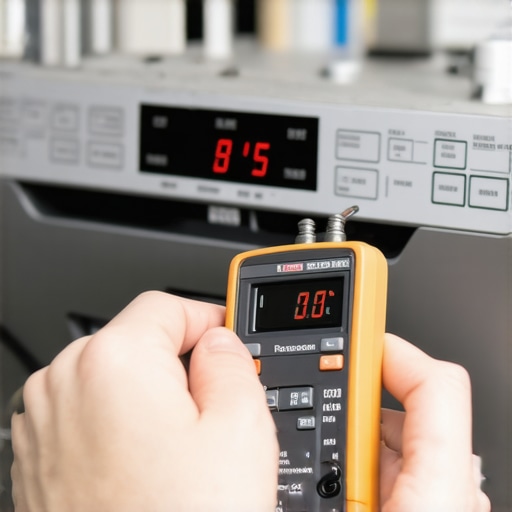
I learned the hard way that you cannot fix what you cannot measure. For years, I just poked at wires with a plastic spatula, hoping for a miracle. Now, I don’t even open the kickplate without my digital multimeter in hand. If you are serious about DIY, you need to master the only multimeter settings you need for appliance repair. I personally use a Klein Tools MM400 because the lead wires are robust enough to handle cramped kitchen corners without snapping. Using a multimeter allows you to move beyond guessing. Instead of wondering if the smell is ‘just a phase,’ you can get a definitive reading on your heating element’s resistance. If that reading is ‘O.L’ (Open Line), your element has physically failed inside, and that acrid scent is the insulation finally giving up the ghost. This is often the precursor to troubleshooting dishwasher problems expert diagnostics repair tips that actually save you money.
How can I keep my dishwasher from burning out over the long haul?
Maintenance isn’t just about avoiding a mess; it is about extending the life of your expensive control board. According to technical bulletins from RepairClinic’s master technicians, over 30% of heating element failures are actually caused by heavy calcium buildup that acts as an insulator, forcing the coil to run much hotter than designed. This is why I am obsessed with the secret to getting grease out of your filter mesh. A clogged filter restricts water flow, which means the heating element isn’t being properly cooled by the circulating water during the wash cycle. It’s a vicious cycle: low flow leads to overheating, which leads to that terrifying plastic smell. I make it a habit to check the identifying a failing sump gasket before the floor warps symptoms every six months, as a small leak can also lead to electrical shorts that mimic a burning scent.
Stop Relying on Luck and Start Using Data
The future of kitchen maintenance is moving toward AI-driven predictive sensors, but until your machine can text you a warning, you have to be the sensor. I predict that within the next five years, most high-end units will feature built-in ‘electronic noses’ that detect ozone or chemical signatures before a fire even starts. For now, we have to be proactive by understanding appliance diagnostics improving your warranty claims. If you can provide a log of when the smell occurs and what the diagnostic mode says, you are ten steps ahead of the average homeowner. One advanced tip I swear by: use a high-quality smartphone to record the sound of your machine’s drain cycle. Often, a high-pitched whine from the pump precedes a burnt-out motor. If you catch it early, when to trust a warranty for dishwasher repairs becomes a much easier decision because you have the evidence. I challenge you to go into your kitchen tonight, pull out the bottom rack, and run a finger along the heating element. If it feels gritty or looks white, it’s time for a deep descale before that grit turns into a ‘burning plastic’ emergency.
What I Wish I Knew Before That First Whiff of Smoke
After years of tinkering, I’ve realized that appliance repair is 90% observation and 10% actually turning a screwdriver. First, never underestimate the power of your nose; if it smells like ozone, it’s electrical; if it smells like a campfire, something is physically burning. Second, I learned that why your dishwasher screen shows a numeric error code is often a distraction from the real mechanical failure. Third, always take a photo of your wiring before you disconnect a single thing—it saves a world of hurt when you’re swapping out a burnt heating element yourself. Finally, don’t wait for a total failure to act. A small smell is a cheap fix; a big fire is a catastrophe.
Gear That Saved My Sanity (and My Safety)
If you want to move beyond the ‘guess and check’ method, I highly recommend investing in a few specific items. I personally never work without a digital multimeter; it’s the only way to be 100% sure about testing your thermal fuse for continuity without a pro. I also keep a simple wooden spatula in my kitchen drawer—it’s the perfect non-conductive tool for gently prying melted plastic off a heater without scratching the surface. For the heavy lifting, I rely on the official manufacturer parts diagrams to ensure I don’t accidentally buy why third party parts frequently void your service plan by mistake. Lastly, keep a physical folder for your manuals and receipts, as understanding appliance diagnostics improving your warranty claims requires proof of purchase and maintenance logs.
You Are More Capable Than the Repair Tech Wants You to Think
Don’t let a scary smell or a blinking light intimidate you into spending hundreds on a service call you might not need. By taking the time to perform troubleshooting dishwasher problems expert diagnostics repair tips on your own, you’re not just saving money; you’re gaining the confidence to maintain your entire home. Whether it’s identifying a failing sump gasket before the floor warps or simply cleaning a filter, every step you take extends the life of your machine. Your dishwasher is a tool, and with a little patience, you can master it. Have you ever found a completely bizarre object melted to your heater? Tell me your funniest (or scariest) stories in the comments below!