

I’ll never forget the sinking feeling in my gut when a simple puddle on the kitchen floor turned into a full-blown financial disaster. My dishwasher had stopped draining, and instead of calling for professional diagnostics, I decided to play handyman. I found a replacement drain pump online for a fraction of the official price. It looked identical. It fit perfectly. But three weeks later, when the control board fried, the service technician took one look at that compatible pump and closed his folder. “Sorry,” he said, “this non-factory part just voided your entire service plan.” I was out $600 for a new board because I tried to save $40 on a pump. It’s a bitter pill to swallow, but I learned the hard way that those affordable alternatives are often the quickest way to kill your coverage. Today, I’m going to show you why staying brand-loyal with your components isn’t just corporate greed—it’s the only way to keep your safety net intact. [IMAGE_PLACEHOLDER]
The Cheap Part That Cost Me Five Hundred Dollars
Listen, I get it. We all want to save a buck, especially when appliance repairs feel like a shakedown. When you’re staring at a broken machine, it’s tempting to think that a piece of plastic is just a piece of plastic. But your service contract is a legal document, and manufacturers are looking for any reason to deny a claim. If you’ve ever wondered why your warranty claim was denied, it usually boils down to a technician spotting something that didn’t come from their factory. I made the mistake of thinking compatible meant approved. It doesn’t.
Is a ‘Compatible’ Label Actually a Lie?
In many cases, yes—or at least, it’s a half-truth. While the part might physically fit, it hasn’t been tested to the same electrical or thermal tolerances as the original. According to the experts at the National Fire Protection Association, electrical failures are a leading cause of home fires, and using non-certified electrical components in major appliances significantly increases that risk. When you swap in a generic motor, you aren’t just risking a leak; you’re changing the entire diagnostic profile of the machine. This is exactly how appliance diagnostics can save your warranty benefits—by ensuring every signal the machine sends matches what the manufacturer expects. Have you ever tried to save money with a generic part only to have it backfire? Drop a comment and tell me your story. It’s important to understand when to trust a warranty for dishwasher repairs and when you’re better off just paying for the OEM part. Once that third-party piece is in there, you’ve essentially handed the insurance company a “get out of jail free” card.
How to Audit Your Machine Before Calling the Pro
Before you even pick up the phone to schedule a repair, you need to conduct your own internal audit. Think of your dishwasher as a high-stakes crime scene where the evidence needs to be pristine for the insurance investigator—also known as the service technician. Most homeowners don’t realize that a tech’s first step is often checking the ‘birth certificate’ of the internal components. If they see a wire color that doesn’t match the factory harness or a plastic casing with a slightly different texture, they’ve found their exit strategy from your claim. This is precisely the red flag your service tech looks for in your drain line or motor assembly.
Look for the Hidden Mark of Authenticity
Every genuine part has a specific manufacturer’s stamp or a laser-etched serial number that corresponds to your model’s assembly diagram. I once thought I could be clever by swapping a failing thermal fuse with a generic one I found on a discount site. I even tried to use the original metal bracket to hide the new part. When the tech arrived, he didn’t even look at the bracket; he checked the resistance values. Because the aftermarket fuse had a different thermal threshold, it didn’t align with the factory diagnostics. That $5 savings resulted in a denied $400 claim for a control board. To avoid this, you must learn testing your thermal fuse for continuity without a pro using a multimeter set to the lowest ohms setting. If your reading doesn’t match the manufacturer’s spec sheet, you are holding an ‘unauthorized’ part. 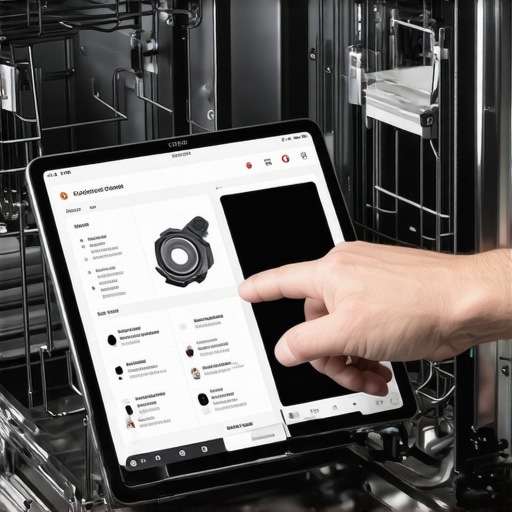
Verify the Part Number Against the Official Schematic
Don’t trust the ‘Fits Brand X’ label on a box. Always cross-reference the physical part number on the component itself with the official parts list found on the manufacturer’s website. This level of understanding appliance diagnostics improving your warranty claims ensures that when the tech runs their digital scan, every component reports back the correct identity.
Use a Multimeter to Prove Component Health
Testing components isn’t just about finding out if they are broken; it’s about proving they are the *right* kind of working. For instance, knowing the specific way to test a thermal fuse for continuity can help you determine if a power surge or a part mismatch caused the failure. If you can prove the part is OEM and within spec before they arrive, you have the leverage needed if they try to deny the claim. This is a vital part of how appliance diagnostics can save your warranty benefits.
Document Everything Before the Technician Arrives
Take clear, high-resolution photos of the installed part and its serial number. If the technician claims the part is ‘aftermarket’ when it is actually a genuine replacement you bought through an authorized dealer, you will need this photographic evidence to successfully learn how to appeal a rejected extended warranty claim. Service plans are often managed by third-party administrators who look for any reason to close a file; your photos are the only thing standing between you and a massive out-of-pocket bill.
Stop Relying Solely on Digital Error Codes
Everyone tells you that a digital display is a roadmap to a repair, but in my experience, those codes are more like a vague suggestion than a diagnosis. Most people see an error and immediately buy the corresponding sensor, assuming the machine is telling them exactly what to replace. This is a massive mistake. An error code only identifies a symptom—it doesn’t explain the cause. For instance, a ‘water level’ error might lead you to buy a new pressure switch, but the real culprit could be a tiny bit of grease in the pressure tube. If you replace the part without addressing the clog, that new sensor will ‘fail’ within a week. This is exactly where troubleshooting dishwasher problems expert diagnostics repair tips come into play; you have to look past the screen. Have you ever fallen into this trap of replacing a part only to have the same error pop up two days later? Let me know in the comments. 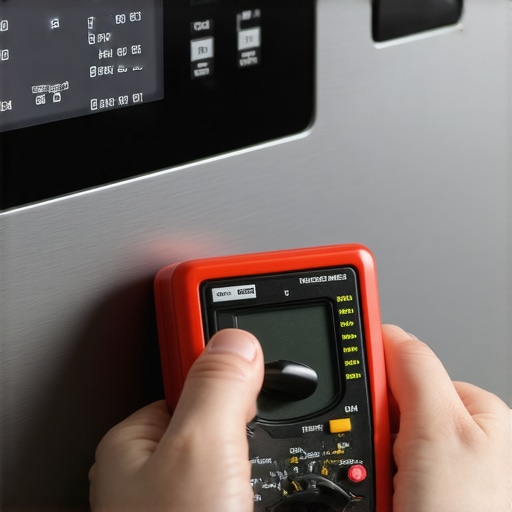
The Garbage Disposal Trap You Probably Missed
Here is a nuance that most weekend handymen overlook: your dishwasher’s health is often dictated by your sink. If you’ve recently replaced your sink’s disposal and suddenly your dishwasher won’t drain, the machine isn’t broken. You likely forgot to knock out the plastic drain plug inside the disposal’s nipple. I’ve seen homeowners pay a $150 service call fee just for a technician to tap a screwdriver through that plastic plug. It’s one of the primary reasons why your warranty claim got denied because of your garbage disposal—it’s considered an installation error, not a mechanical failure. Furthermore, why your service tech always checks the drain hose high loop isn’t just a formality; without that physical loop, dirty sink water siphons back into your ‘clean’ machine, triggering sensors that make you think the pump is dying. Before you blame the motor, check the plumbing configuration under your sink.
Does Your Smart Meter Interfere with Wash Cycles?
It sounds like a conspiracy theory, but it’s a documented reality for modern, high-efficiency appliances. According to the Association of Home Appliance Manufacturers (AHAM), modern control boards are increasingly sensitive to ‘dirty’ power and grid-management signals. If you live in an area where the utility company uses smart meters to manage peak demand, why your smart meter might be pausing your dishwasher cycle becomes a very real concern. These meters can send signals that cause the machine to pause or stay stuck on the last minute of a cycle to save energy. Most people assume the control board is fried and spend hundreds on a replacement, when the issue is actually external. This level of understanding appliance diagnostics improving your warranty claims is vital; if the tech finds that the machine is functioning perfectly but the power source is being throttled, you’ll be stuck with the bill. It’s also worth checking if firmware updates are essential for new smart dishwashers in your home, as manufacturers often release patches to help boards handle these power fluctuations.
Stop Rinsing Your Dishes Before Loading
I know your parents taught you to rinse every plate until it was spotless, but on a modern machine, you’re actually making the repairman’s job harder. Modern sensors use ‘turbidity’—a fancy word for how cloudy the water is—to decide how long to wash. If your dishes are pre-rinsed, the sensors think the load is clean and shorten the cycle, which leads to why your dishwasher leaves a gritty film on your glasses because the detergent didn’t have enough time or soil to activate properly. Over time, this lack of action causes how to identify a dying circulation motor by its pitch to become a necessity, as the motor works harder to move stagnant, soapy sludge that never fully drained. To keep your machine healthy, scrape the food, but leave the grease. It sounds counterintuitive, but it’s the only way to ensure the internal secret tech menu that calibrates your water sensors stays accurate over the life of the appliance.Even the best maintenance routine eventually hits a wall where hardware fails, and that is when your toolkit becomes your best friend. I don’t mean a generic drawer of rusted pliers; I’m talking about the specific items that allow you to peer into the ‘brain’ of your appliance. My absolute go-to is a wet/dry shop vacuum. While it sounds overkill for a kitchen, knowing how to clear a blocked impeller with a shop vacuum is a game-changer. It allows you to suck out glass shards or fruit pits that a drain pump simply cannot move. If you rely on a tech to do this, you’re paying a $150 premium for five minutes of suction.
The Two Tools That Will Save Your Saturday
Beyond the shop vac, you need a reliable digital multimeter. I personally use a Fluke 117 because of its non-contact voltage detection, but any decent meter will do if you want to be testing a thermal fuse for continuity without a pro kit. According to the General Electric (GE) Appliance Service Manual, a deviation of even 5% from the rated resistance on a heating element can trigger a software lockout, making it look like a dead control board. Being able to verify this yourself keeps the service company honest when they try to tell you the entire machine is ‘totaled.’
How do I maintain my dishwasher performance over time?
Consistency is the secret sauce. Most people wait for a leak before they look at their machine, but I recommend a quarterly ‘deep audit.’ This includes cleaning your sump filter with a soft brush to stop foul odors and checking the spray arms for mineral buildup. If you ignore the scale, the backpressure can eventually cause a split, which is why I always suggest the flashlight trick for finding micro-cracks in your spray arm. These tiny fissures reduce the water pressure reaching your top rack, leading to those annoying ‘dirty dish’ re-washes that spike your energy bill. 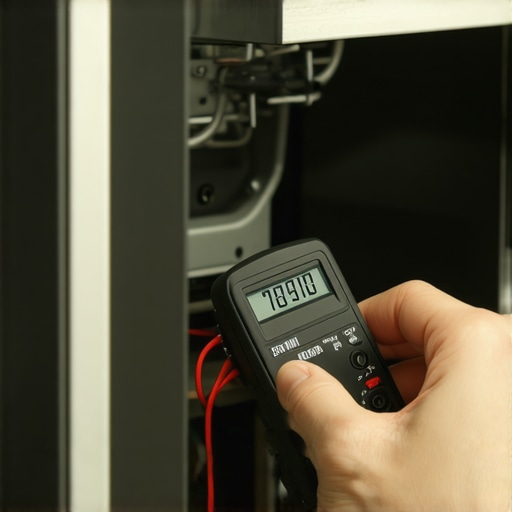
Unlock the Secret Menus Your Tech Doesn’t Want You to See
Every modern dishwasher has a back door—a button sequence that launches a self-diagnostic mode. Accessing the secret diagnostic mode hidden on your touch control panel is the most empowering thing a homeowner can do. It forces the machine to cycle through every component—the fill valve, the heater, the pump—one by one. This is the ultimate way of understanding appliance diagnostics improving your warranty claims. Instead of telling the warranty company ‘it’s broken,’ you can tell them ‘the circulation pump is drawing zero amps during the wash phase.’ That specificity makes it nearly impossible for them to deny your claim.
The Future of Smart Diagnostics is Already Here
Looking ahead, we are moving away from blinking lights and toward full-scale AI integration. Within the next few years, I predict your dishwasher will proactively email your warranty provider when it detects a vibration pattern indicative of a bearing failure. Until then, you are the primary sensor. You must stay on top of things like why firmware updates are essential for new smart dishwashers to ensure your sensors are calibrated correctly. I challenge you today: go find your model number, search for the ‘service technician manual’ online, and learn the button sequence to enter your diagnostic mode. It’s the first step toward never being at the mercy of a repair bill again.
What My Repair Tech Said Off the Record
One of the biggest eye-openers for me was realizing that “compatible” parts are often just physically possible to install, rather than electrically safe. I once thought I was being smart by skipping the factory-direct catalog, but as I learned, how to tell if your service plan actually covers motor failure depends entirely on what components are inside that motor housing. Modern machines keep a detailed history; even if you swap the old part back in before the technician arrives, the control board might have already logged the out-of-spec voltage from that cheap alternative. Finally, remember that maintenance is not just about cleaning; it is about insurance. If you have not read the clause in your service plan that voids coverage for hard water, you might be paying for a protection plan that is already nullified by your local plumbing conditions.
The Three Items That Live Under My Sink
If you are serious about avoiding that six-hundred-dollar bill I mentioned earlier, you need a specific kit. I never touch a machine without my digital multimeter; it is the only way to get troubleshooting dishwasher problems expert diagnostics repair tips that actually work in a real-world scenario. Second, keep a dedicated soft brush and some citric acid nearby. These are essential for cleaning your sump filter with a soft brush to stop foul odors before they lead to a full-system backup that requires a pro. Lastly, I always keep the manufacturer’s official parts website bookmarked—never trust a third-party seller’s compatibility list over the factory schematic. [IMAGE_PLACEHOLDER]
Take Control of Your Kitchen Tech
You do not need to be a mechanical engineer to master your appliance. By simply paying attention to the top signs your dishwasher needs professional diagnostics, you can catch minor issues before they turn into warranty-voiding catastrophes. It is about shifting from a passive owner to an active operator who knows how their machine breathes. Understanding appliance diagnostics improving your warranty claims is the best way to ensure your kitchen stays functional and your bank account stays full. Have you ever had a warranty claim denied for a reason that felt totally unfair? Let me know your story in the comments below.