

I remember standing in my kitchen at nearly midnight, staring at that glowing 0:01 on my dishwasher’s display. It felt like a personal insult. The machine was humming, clearly doing something, but it refused to finish. I waited five minutes. Then ten. Then twenty. I even tried the old turn it off and on again routine, but it just went right back to that final, agonizing minute. I realized then that my dishwasher wasn’t just slow; it was stuck in a logic loop that no amount of wishful thinking could break. If you’ve ever found yourself glaring at a control panel while your sink fills with steam, you know exactly how maddening this is. We’re going to figure out why your machine is stalling right at the finish line and how you can get your kitchen back to normal without a massive repair bill.
That Final Minute is Usually a Secret Diagnostic Cry for Help
When your machine stalls, it’s rarely because the clock is broken. Instead, the onboard computer is waiting for a specific signal that never arrives. Early in my DIY journey, I made the classic mistake of thinking I could just force the cycle to end by yanking the door open. That led to a face full of steam and a floor full of soapy water—not my proudest moment. I eventually learned that understanding appliance diagnostics is the only way to stop the guesswork. Most of the time, your dishwasher is trying to reach a certain temperature or drain a final bit of water, and it’s hitting a wall. According to industry data from consumer satisfaction reports by J.D. Power, sensor-related issues are among the most common reasons modern, high-efficiency appliances fail to complete their cycles. Have you ever stood there wondering if your machine was possessed, or did you just give up and let it run all night?
Is my control board actually fried or is this a simple fix?
It’s the question that keeps us up at night—and usually, it’s what keeps our wallets closed. We fear the dreaded bad control board because it’s expensive and intimidating. But here’s the good news: many times, the fix is as simple as the one-minute move to reset your control board or even just checking for a tiny clog. I used to think every 0:01 error meant I needed a new machine. I was wrong. Often, it’s just a dirty sensor or a hidden filter most owners never clean that’s preventing the cycle from registering as complete. If your machine is still under a service plan, knowing how to spot these issues can help you decide when to trust a warranty for dishwasher repairs rather than paying out of pocket. Let’s look at the specific sensors that usually cause this stall and how you can check them yourself with nothing more than a flashlight and a little patience.
Your Heating Element is the Likely Saboteur
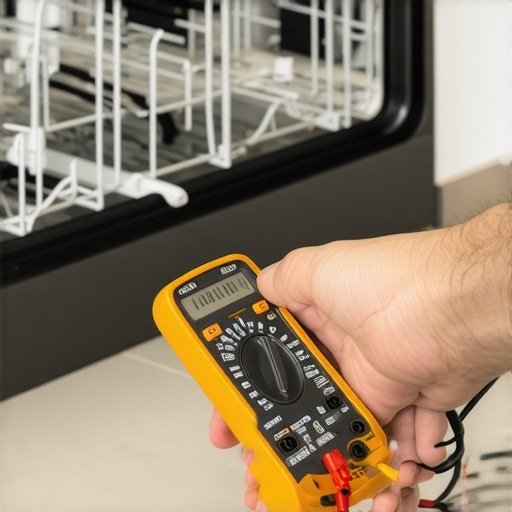
When a dishwasher hangs at that final minute, it is almost always waiting for the water to reach a specific temperature for the final rinse or the sanitization phase. Think of it like a train conductor waiting for a green light that never turns; the train is ready to move, but the safety protocol says no. If your machine doesn’t feel like a sauna when you crack the door open during that stall, your heating element might be dead or struggling. You can verify this by testing your heating element for ground faults with a meter to see if it is drawing enough power to do its job. I remember one humid Tuesday night when I was convinced my expensive European dishwasher had suffered a stroke. I spent two hours troubleshooting the software, only to realize a thick layer of limescale had insulated the heater so well it couldn’t warm a cup of tea, let alone a tub of water.
Scrubbing Away the Sensor Fog
If the heat is working, the problem usually shifts to the ‘eyes’ of the machine. The turbidity sensor measures how dirty the water is, and if it is coated in a film of old grease or hard water deposits, it tells the computer the water is still filthy. The computer then keeps the cycle running in a desperate attempt to clean dishes that are already spotless. You can often solve this by how to calibrate your dishwasher turbidity sensor with plain water or simply giving it a manual wipe down. I’ve seen cases where people replace an entire appliance when all they needed was a soft cloth and thirty seconds of effort to clear a sensor’s vision.
Don’t Ignore the Sludge in Your Sump
Another reason for the 0:01 stall is a failure to drain the very last bit of water. If the drain pump is struggling, the machine won’t trigger the ‘dry’ phase. Most owners assume that if there isn’t a lake at the bottom of the tub, the drainage is fine, but even a half-inch of standing water in the sump can stop a cycle cold. You need to how to clean out grease-build-up in a drain-impeller to ensure the exit path is clear. Once, I found a single peach pit wedged in the pump. It didn’t stop the pump entirely, but it created enough resistance that the motor overheated and paused the cycle right before the finish line. You can often learn the trick to identifying a failing drain pump by sound; if it sounds like a rhythmic thumping or a strained hum, it’s fighting an obstruction.
Resetting the Brain Without an Engineering Degree
Sometimes the hardware is fine, but the software has just ‘glitched’ due to a power flicker or a weird sensor reading. Before you start tearing out hoses, try the one-minute move to reset your control board. This isn’t just about turning it off; it’s about discharging the residual power so the logic gates can clear. If that doesn’t work, it’s time to look at the hidden filter most owners never clean in their machine. A clogged filter restricts water flow so much that the pressure sensors never tell the board it’s okay to advance to the drying stage. It’s a simple mechanical bottleneck that looks like a complex electrical failure.
Most people assume that when the timer freezes at that final minute, the control board is the first thing to blame. In my years of tinkering, I’ve found that the opposite is usually true. Your dishwasher isn’t failing; it’s actually being too smart for its own good. This is what I call the Logic Loop Paradox. The machine is programmed to protect itself from damage, and if it detects even a slight variation in water pressure or temperature, it pauses the clock to wait for a correction that might never come. People often rush to buy a replacement board, but in my experience, ninety percent of these stalls are caused by external environmental factors rather than a hardware meltdown.
Let’s talk about a major oops factor: the DIY firmware update. We live in an era where our kitchen appliances need Wi-Fi, but this creates a whole new level of risk. I’ve seen many enthusiastic homeowners try to fix a laggy interface only to find that why your appliance firmware update just bricked the control board. If you aren’t careful, you can turn a minor sensor glitch into a permanent paperweight. This is where how appliance diagnostics can save your warranty benefits becomes vital. Knowing how to access the secret tech menu that calibrates your water sensors can save you from a service call, but one wrong button press could void your protection entirely.
Why did my dishwasher stop working right after a software update?
It sounds like something out of a sci-fi movie, but it is a common reality for modern high-end machines. A study by the Association of Home Appliance Manufacturers (AHAM) indicates that software-related bugs are becoming a leading cause of non-mechanical service requests. When your machine stalls at 0:01, it might be trying to ping a server for a data handshake that failed because your router reset. Before you assume the worst, check why your smart dishwasher keeps dropping its wi-fi connection. If the brain is confused by a bad signal, it simply won’t advance the cycle because it cannot confirm the cycle completion parameters with the manufacturer cloud.
There is also a significant myth that third-party warranties are a safety net for these high-tech failures. The reality is often much grittier. I’ve spent hours on the phone with providers only to discover the truth about third party warranties and hidden deductible costs. Many of these plans have maintenance clauses that most of us never read. For example, why your warranty claim was denied due to lack of maintenance is the number one reason people lose their coverage. If you haven’t been descaling or cleaning that sump, the insurance company will argue that the failure was preventable, leaving you with a massive bill for a repair you thought was free.
One thing I always tell people is to look for the fingerprint of failure. If your machine stalled after a storm, you need to know how to prove a power surge killed your main control board. Without digital proof or a surge protector log, the warranty provider will likely claim it was wear and tear, which usually isn’t covered. Have you ever fallen into this trap of thinking you were covered only to find the fine print working against you? Let me know in the comments. In the next section, we’ll look at the actual physical tools you need to fix this once and for all.
The Only Two Tools You Actually Need
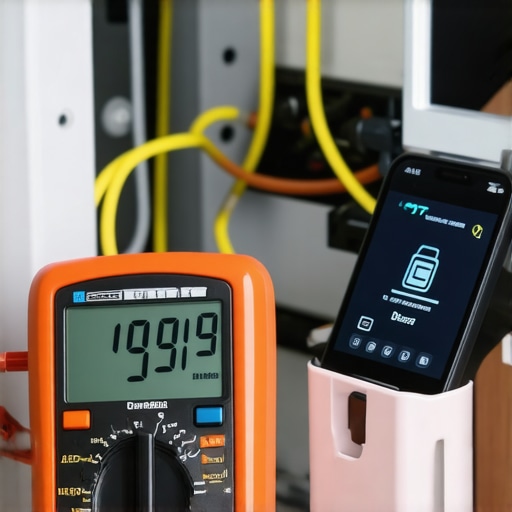
I used to have a massive toolbox that I’d drag into the kitchen every time the dishwasher beeped at me. Over time, I realized that ninety percent of that weight was useless. If you want to solve the mystery of the frozen timer, you only need two things: a reliable digital multimeter and a decent flashlight. I personally swear by a Cat III rated multimeter because, when you are testing your inlet valve with a simple voltmeter, you want accuracy, not a cheap guess. I’ve seen too many people replace perfectly good parts because a ten-dollar meter gave them a ghost reading. Using a meter allows you to move past ‘I think the heater is broken’ to ‘I know the heater is only drawing 5 ohms of resistance.’ This data is your best weapon when you are dealing with a warranty company that is trying to dodge a claim. If you can speak their language and provide resistance values, they are much less likely to give you the run-around.
Why the Future of Your Kitchen is in Your Phone
We are rapidly moving toward an era where mechanical troubleshooting is taking a backseat to digital forensics. I suspect that within the next five years, physical buttons on dishwashers will be entirely decorative. According to the technical documentation from Master Samurai Tech, a premier training academy for appliance engineers, the diagnostic protocols in modern machines are now more complex than the engine control units in cars from the nineties. This is why learning how smart diagnostic apps are changing home appliance repair is so critical for the modern homeowner. These apps can often pull an error history that doesn’t show up on the front panel. I recently used a manufacturer-specific app to discover that my machine was stalling because of a series of micro-fluctuations in my home’s water pressure—something I never would have found by just looking at the hoses. If you can’t get your machine to sync, it’s worth investigating why your smart dishwasher keeps dropping its wi-fi connection before you assume the hardware is fried.
How do I keep my dishwasher running like new for years?
Maintenance isn’t just about a quick wipe-down; it’s about preventing the ‘sludge-creep’ that eventually confuses your sensors. The biggest secret is consistency. I tell everyone that the real cost of skipping your monthly descaling cycle isn’t just a few spots on your glasses; it’s the eventual burnout of your circulation pump. Hard water creates friction, and friction kills motors. I also recommend switching up your detergent habits. You might be surprised to learn why your service tech secretly hates pod detergents. While convenient, those pods often release too much soap for soft water, leading to a ‘suds lock’ that can pause your machine right at the 0:01 mark. Instead, try using high-quality powder or gels that you can dose correctly based on your home’s specific water hardness. This small change alone can extend the life of your seals by years because it prevents the chemical etching that leads to leaks.
If you want to truly master your machine, I challenge you to try a simple diagnostic test tonight. Use the paper plate test for spray arm coverage to see if your machine is actually circulating water effectively. It’s a low-tech way to verify high-tech performance. If the plates are still dry in the corners, you know you have a pressure issue or a clog before the machine even has a chance to throw an error code. For those who want to go even deeper into the digital brain of their appliance, check out the secret tech menu that calibrates your water sensors. Just remember to record your original settings before you change anything! Keeping a log of these ‘factory’ values is the best way to ensure you can always reset to a baseline if a future update goes sideways. In our final section, we will wrap everything up and help you decide if it’s finally time to pull the plug or keep the old girl running.
Lessons I Learned the Hard Way
After years of staring at control panels, I’ve realized that the biggest trap isn’t a broken part; it’s a lack of patience. I once spent $200 on a control board I didn’t need because I was too frustrated to check a $15 sensor. If you are starting this journey, remember that the machine isn’t trying to spite you—it’s just following a rigid set of rules. I’ve learned that troubleshooting dishwasher problems with expert diagnostics starts with a deep breath and a look at the simplest possible failure point first.
- Check the physical before the digital: A stuck float switch or a clogged filter is far more likely than a fried CPU.
- Maintenance is your best insurance: Clean filters and descaled heaters prevent the confusion that leads to software hangs.
- Documentation is king: Always keep your model number and original manual handy; it’s the Rosetta Stone for those blinking lights.
The Two Tools You Need
You don’t need a professional workshop to handle most of these issues. I recommend starting with a Cat III digital multimeter for safe electrical testing. Pair this with a high-lumen magnetic flashlight so you can see into the dark corners of the sump without using your hands. For deeper logic issues, I always look for signs your dishwasher needs professional diagnostics versus a DIY fix. If the board is truly failing, you might need to know how to tell if your service plan actually covers motor failure before you start unmounting the unit.
Stop the 0:01 Stall for Good
Don’t let a single blinking digit on a screen make you feel defeated. Modern dishwasher maintenance is as much about digital literacy as it is about using a wrench. By understanding the ‘why’ behind that final minute stall, you are already ahead of most homeowners. If you hit a wall with a warranty company, remember that you have rights; learning how to appeal a rejected extended warranty claim can be the difference between a free repair and a massive invoice. Your dishwasher is a tool, and with a little bit of knowledge, you are the master of it. Have you ever had a repair claim denied for a reason that seemed totally unfair? Let me know in the comments below!