

I was standing over a pile of dirty dinner plates last Tuesday, staring down my high-end smart dishwasher like it was a stubborn toddler. The ‘Smart Home’ app on my phone insisted the cycle was running, yet the machine sat there, silent and smug. I had power, I had water, but I had zero results. It is that sinking feeling when you realize your expensive appliance is basically a glorified brick because of a software glitch. We buy these machines for convenience, yet we often end up troubleshooting them more than our old analog units. This is the new reality of home ownership: your kitchen is now a data center.
Stop Paying for Simple Digital Resets
I will be the first to admit a major mistake I made early in my smart-home journey. I once spent nearly two hundred dollars on a service call because my refrigerator screen kept freezing. The technician arrived, looked at me with a mix of pity and professional courtesy, and performed [the one-minute move to reset your control board](https://applianceoutletpro.com/the-one-minute-move-to-reset-your-control-board). He didn’t even need a screwdriver. That was my lightbulb moment. Most of these ‘failures’ aren’t mechanical at all; they are just digital fatigue. When you [how-appliance-diagnostics-can-save-your-warranty-benefits](https://applianceoutletpro.com/how-appliance-diagnostics-can-save-your-warranty-benefits), you start to realize that the ‘brain’ of your machine gets cluttered with temporary files, error logs, and outdated instructions. Just like your smartphone starts to lag when you have eighty tabs open, your dishwasher can get ‘confused’ by its own sensor data. Learning how to clear this digital gunk is the secret to avoiding unnecessary repairs and keeping your sanity intact.
Does a dishwasher really need memory to wash a plate?
It sounds ridiculous, right? It is just water and soap. However, modern units are constantly calculating water turbidity, temperature, and drying cycles. According to data from Statista, there are over 17 billion connected IoT devices globally, and almost all of them store local session data that can become corrupted or ‘stale.’ When this happens, [why your dishwasher wont start even though theres power](https://applianceoutletpro.com/why-your-dishwasher-wont-start-even-though-theres-power) becomes a very real, very annoying reality. If the cache is full of old error codes from a minor power flicker three weeks ago, the machine might stay in ‘safety mode’ even when everything is perfectly fine. We are going to walk through the exact steps to purge that digital clutter today. Have you ever found yourself screaming at a ‘smart’ appliance that was acting significantly dumber than the basic model it replaced? You aren’t alone, and it probably just needs a fresh start.
Flipping the Breaker is Your New Best Friend
Most people assume that pressing the ‘Power’ button actually shuts down the machine. In reality, modern dishwashers are always in a ‘standby’ mode, sipping electricity and keeping their memory active. To perform a true reset, you need to starve the logic board of power entirely. This isn’t just about the ‘off’ switch; it is about physically disconnecting the unit from the grid. I remember a humid Sunday afternoon when my own unit stayed stuck on a ‘sensing’ cycle for three hours. I kept hitting cancel, but nothing happened. I finally went to the basement and flipped the kitchen breaker. I waited exactly ten minutes—long enough for the capacitors on the control board to discharge. When I flipped it back, the machine sighed, drained, and reset itself to factory defaults. It was a zero-dollar fix for a problem that felt like a hardware failure.
The Ten-Minute Rule for a True Digital Purge
When you cut the power, you aren’t just restarting a motor. You are forcing the volatile memory to wipe clean. This is often the real reason your dishwasher won’t start; the software has hit a logic error it can’t resolve on its own. While the power is off, you should also check for any physical obstructions that might be triggering a safety sensor. For instance, if you have a built-in unit, the one-minute move to reset your control board can often bypass ‘phantom’ errors that occur after a power surge or a brief brownout. It is the appliance equivalent of ‘have you tried turning it off and on again,’ but on a much deeper hardware level.
Unlock the Hidden Diagnostic Interface
Every smart dishwasher has a secret handshake. This is a sequence of button presses—like High Temp Wash + Heated Dry + High Temp Wash + Heated Dry—that puts the machine into a service mode. This mode bypasses the user interface and talks directly to the hardware components. If you want to know what is actually wrong, you need to learn how to get professional-grade diagnostic codes from your interface. These codes are far more descriptive than a generic blinking ‘Clean’ light. They can tell you if the thermistor is open, if the wash motor is drawing too many amps, or if the drain pump is physically jammed. If you are lucky, you can learn how to find a service manual hidden inside the unit—usually behind the kickplate—which will give you the specific code translations for your model.
Listen to What Those Flashing Lights are Trying to Tell You
Once you are in diagnostic mode, the dishwasher will start ‘talking’ to you through flashes or beeps. Think of this as the machine’s own internal doctor’s visit. For example, three flashes might mean a heater failure, while a constant chime could indicate a flood sensor activation. This is where you can verify if a sensor is actually broken or just miscalibrated. If your dishes are coming out cloudy or the cycle feels ‘off,’ you may need to learn how to calibrate your dishwasher turbidity sensor with plain water. This sensor measures how dirty the water is, and if it is covered in a film of grease or hard water scale, it will feed the ‘brain’ incorrect data, leading to short cycles or poor cleaning performance.
Clean Sensors are Just as Important as Clean Code
Digital problems are frequently caused by physical triggers. If the turbidity sensor or the float switch is gunked up with old soap and food particles, no amount of software resetting will keep the error codes away forever. You have to treat the sensors like the ‘eyes’ of your machine. When they get ‘cloudy’ from hard water or grease, the computer effectively goes blind. Maintaining the physical cleanliness of these electronic components ensures the data being sent to the control board is accurate. This prevents the software from throwing a tantrum and locking you out of your wash cycles because it thinks the tub is overflowing when it is actually just a bit of soap foam stuck on a sensor.
Why Your Eco-Mode is a Grease Trap
We have been conditioned to believe that ‘Normal’ or ‘Eco’ settings are the gold standard for daily use. I used to think I was being responsible by running the shortest, coolest cycle possible. But here is the contrarian truth: consistently running cool, short cycles is one of the fastest ways to kill a modern machine. These high-efficiency units use very little water, and if that water never reaches a high enough temperature to fully melt animal fats and detergents, you end up with a waxy sludge known as ‘biofilm’ coating your internal pipes. I have seen countless units where why the heavy cycle is actually better for your machines health becomes obvious once you pull the drain hose and see the grease blockage. According to the Association of Home Appliance Manufacturers (AHAM), modern detergents rely on specific enzyme reactions that peak at higher temperatures—temperatures often reached only in ‘Heavy’ or ‘Sanitize’ modes.
Is your ‘Normal’ cycle actually causing long-term damage?
The biggest ‘oops’ factor I see with advanced users is the habit of pre-rinsing dishes until they are spotless. It feels like you are helping, but you are actually sabotaging the machine’s intelligence. Modern turbidity sensors look for particles in the water to determine how long to wash. If the water stays clear because you already scrubbed the plates, the computer assumes the load is clean and cuts the cycle short. This results in poor drying performance and, ironically, more residue buildup over time. If you have already fallen into this trap, you might need to learn how to recalibrate your turbosity sensor manually to get the machine back on track. Stop ‘helping’ the sensors; let them do the dirty work they were designed for.
Don’t Let Detergent Pods Sabotage Your Warranty
Here is a nuance that most people miss: those convenient ‘all-in-one’ pods can be a nightmare for high-efficiency pumps. Many pods contain too much surfactant for soft water conditions, leading to excessive foaming. This creates a ‘suds lock’ where the pump spins against air instead of water. When you call for a repair, why service techs secretly hate pod detergents becomes clear—if they see suds coming out of the kickplate, they may blame ‘user error’ and deny the claim. To protect yourself, always learn how to prevent suds-locks in high-efficiency machines by matching your detergent dose to your water hardness. 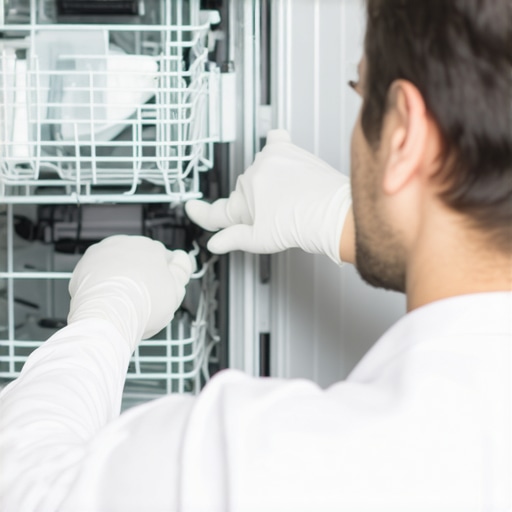
When it comes to the legal side of things, remember that the fine print about normal wear and tear on appliances often excludes damage caused by ‘improper consumables.’ If your control board fries due to a moisture leak caused by oversudsing, you might be footing a $500 bill yourself. Always keep the photo evidence you need for every warranty claim, including shots of the detergent you use and the error codes displayed on the screen. Understanding how appliance diagnostics can save your warranty benefits is the difference between a free repair and an expensive lesson in corporate loopholes. Have you ever fallen into the trap of over-rinsing your dishes or using too much soap only to find the machine acts up? Let me know in the comments.
The Essential Toolkit for Every Modern Home Chef
Once you realize that your dishwasher is essentially a computer that happens to spray water, your maintenance strategy has to change. I used to think a sponge and some vinegar were enough. Now, I don’t go near my kitchen island without a digital multimeter in my back pocket. If you are serious about avoiding a three-hundred-dollar repair bill, you need to know the exact multimeter reading for a healthy thermal fuse. It is the only way to distinguish between a dead control board and a five-dollar fuse that just needs a swap. I have also started using a pocket-sized thermal camera to check for hot spots on the wiring harness. You might wonder why your service technician carries a thermal camera, and the answer is simple: it finds loose connections before they turn into melted plastic or house fires.
How do I keep my dishwasher running like new for a decade?
Consistency beats intensity every single time. You cannot ignore your machine for six months and then expect a single ‘Clean’ cycle to fix the neglect. The most critical habit I have formed is the deep-clean of the filter assembly. Most people rinse the mesh, but they ignore the debris trap most owners miss during monthly cleaning—that tiny well beneath the sump where heavy particles like glass shards and cherry pits hide. If that trap fills up, your pump has to work twice as hard, leading to premature motor failure. Beyond the physical, you have to consider the chemistry. If you live in an area with even slightly hard water, the real cost of skipping your monthly descaling cycle is a slow death for your heating element. Limescale acts as an insulator, forcing the element to stay on longer to reach the same temperature, eventually causing it to burn out.

The Future of Kitchen Diagnostics is Already Here
We are moving toward an era of ‘predictive maintenance’ where your dishwasher will likely tell you it’s going to fail three weeks before it actually does. As noted in the IEEE Spectrum’s report on IoT appliance lifespan, the failure rate of software-integrated control boards is significantly higher than their mechanical predecessors, making diagnostic literacy a survival skill for the modern homeowner. I predict that within the next five years, we will see self-calibrating systems that can adjust pump pressure based on the specific mineral content of your water. Until then, you have to be the ‘brain’ of the operation. Simple tricks, like learning how to test your float switch with a simple magnet, can save you from a flooded kitchen floor. These sensors are prone to getting stuck, but a quick magnetic pulse can often reseat the internal reed switch without you ever having to pull the machine out from the cabinet.
Take Control of Your Maintenance Routine Today
If you want to transition from a frustrated owner to a DIY pro, start with the low-hanging fruit. Grab a box of toothpicks and use the toothpick method for unclogging spray nozzles to ensure your water pressure is hitting every corner of the rack. It is a five-minute job that yields immediate results in plate cleanliness. For more complex issues, always refer back to troubleshooting dishwasher problems with expert diagnostics and repair tips. Don’t wait for the error code to appear; spend ten minutes this weekend checking your drain line and cleaning your sensors. Your future self—and your wallet—will thank you for the foresight.
The Expensive Lessons That Taught Me to Trust the Screen
After years of wrestling with smart appliances, I’ve realized that the digital interface isn’t your enemy—it’s actually a window into the machine’s soul. First, I learned that jumping to conclusions is expensive. Before you tear out a pump, verify that a simple software glitch isn’t at play. I’ve seen cases where software logic failed, such as why your appliance firmware update just bricked the control board simply because of a Wi-Fi drop at the wrong moment. Second, documentation is your primary shield. I now photograph every error code immediately because I know the hidden loophole that gets your denied claim reversed usually involves proving you followed the diagnostic steps precisely. Lastly, never fear the hard reset. Most ‘dead’ units are just stuck in a logic loop that a complete power-cycle can resolve without a technician.
My Go-To Kit for Kitchen Troubleshooting
You don’t need a degree in electrical engineering to maintain a modern dishwasher, but you do need the right information. I never start a repair without checking how to find a service manual hidden inside the unit because it contains the ‘cheat codes’ for your specific model. For hardware testing, a reliable multimeter is non-negotiable. Knowing the exact multimeter reading for a healthy thermal fuse can save you from replacing an entire control board when only a five-dollar part has failed. I also highly recommend using your smartphone’s camera to record the diagnostic light sequences so you can review them slowly. If you want to be truly proactive, understanding why your service technician carries a thermal camera will help you spot overheating wires before they cause a permanent failure.
Own the Tech Before it Owns You
The shift toward high-tech appliances can feel overwhelming, but it actually puts more power in your hands than the old analog days. You are no longer guessing what’s wrong; the machine is literally trying to tell you. By mastering these diagnostic tricks and keeping up with maintenance, you ensure your dishwasher remains a helpful tool rather than a source of stress. Don’t let a blinking light or a sensor error intimidate you. With a little patience and the right diagnostic approach, you can protect your warranty and keep your kitchen running smoothly for years to come. Have you ever had a moment where why your dishwasher buttons are unresponsive after cleaning left you frustrated, or did a simple reset save the day for you? Let me know in the comments below!