

There I was, knee-deep in lasagna-crusted plates, staring at a control panel that was as dead as a doornail. I pushed the Start button so hard I thought I’d leave a permanent fingerprint in the plastic. Nothing. Not even a sympathetic beep. In that moment, I was convinced I was looking at a $400 repair bill or, worse, a weekend spent at the kitchen sink scrubbing by hand. I’ve made the mistake of rushing to contact us or calling a technician before doing a basic sanity check, and let me tell you, paying a $100 service fee just to have someone essentially unplug it and plug it back in is a special kind of heartbreak. Today, I am sharing the simple trick that usually solves this in sixty seconds flat.
Stop Frantically Pushing Every Button on the Panel
We’ve all been there. Your dishwasher is beeping like it’s trying to communicate in Morse code, or maybe it’s just completely unresponsive. It’s tempting to start pressing every combination of High Temp and Sani-Rinse to see if a hidden cheat code exists. But before you assume the brains of the operation are fried, you need to know about the one-minute move that saved my sanity—and my wallet—multiple times. Often, why your dishwasher buttons are unresponsive after cleaning comes down to a simple electronic glitch rather than a mechanical death spiral. According to the Association of Home Appliance Manufacturers (AHAM), modern appliances are increasingly reliant on software, which means they can occasionally hang or freeze just like your smartphone. Have you ever felt that surge of pure frustration when the lights are on but nobody is home inside your appliance?
Can a sixty-second trick actually beat a professional diagnostic?
I know what you’re thinking. It sounds too simple to be true. I used to be a total skeptic myself, thinking that if a machine stopped working, something physical must be broken. I once spent two hours trying to figure out how to identify a faulty control board without a technician only to realize I hadn’t even tried a hard reset yet. A reset doesn’t fix a burnt-out circuit, but it clears the brain fog that happens after a power surge or a mid-cycle interruption. Today, I’m going to show you exactly how to perform a power cycle that can bypass the need for complex troubleshooting dishwasher problems entirely.
Distinguish Between a Software Glitch and a Genuine Failure
It’s important to distinguish between a minor software hiccup and a hardware tragedy. If you’ve noticed the hidden reason your dishwasher is beeping constantly, it might be a cry for help regarding a leak, but often it is just a confused sensor. I remember trying to test the continuity of a heating element because my dishes were wet, only to find out the control board just needed a quick nap to restart the logic for the drying cycle. Understanding how appliance diagnostics can save your warranty benefits starts with knowing when to DIY and when to step back. If the one-minute move doesn’t work, then we look at the bigger stuff, like when to trust a warranty for dishwasher repairs. Let’s get into the step-by-step process of that hard reset.
Flip the Breaker Instead of the Bird
The fastest way to clear a digital brain fart is to cut the power completely. Modern dishwashers are basically computers that happen to spray hot water, and like any computer, they can get stuck in a logic loop. I learned this the hard way one rainy Tuesday after a power flicker. My machine was stuck on the ‘Drain’ cycle, humming indefinitely but doing nothing. I could have spent hours investigating the real reason your dishwasher wont start, but instead, I went straight to the circuit breaker. Don’t just turn the machine off; kill the flow at the source for at least sixty seconds. This allows the capacitors on the control board to discharge fully, wiping the temporary memory. When you flip that switch back on, you’re giving the appliance a fresh start. It’s the ultimate ‘have you tried turning it off and back on again’ move that actually works. 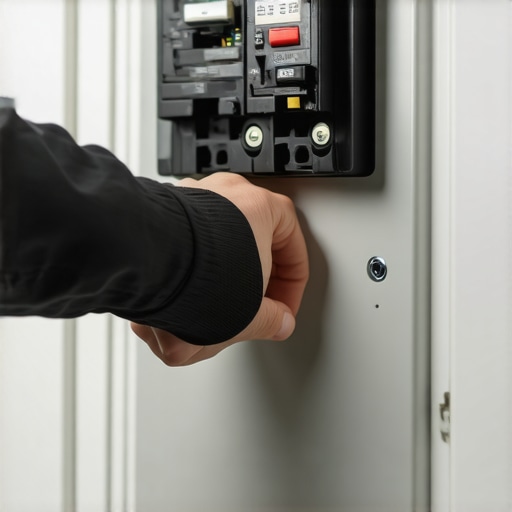
Force Your Machine to Admit What is Wrong
If the power cycle doesn’t bring the panel back to life, your dishwasher is likely holding onto an error code it hasn’t shown you yet. Most people don’t realize their machines have a hidden ‘service mode’ designed for technicians. You can usually trigger this by pressing a specific sequence of buttons—often three different buttons in a 1-2-3, 1-2-3 pattern. Once you’re in, the machine will flash lights or display a code that tells you exactly where the heart attack is happening. Learning how to get professional grade diagnostic codes from your interface is like having a translator for a foreign language. I once had a machine that kept beeping, and instead of guessing, I pulled the code ‘F8 E1,’ which immediately pointed to a water supply issue. This saved me from unnecessarily exploring how to identify a faulty control board without a technician when the problem was actually just a kinked hose.
Use a Multimeter to Stop the Guessing Game
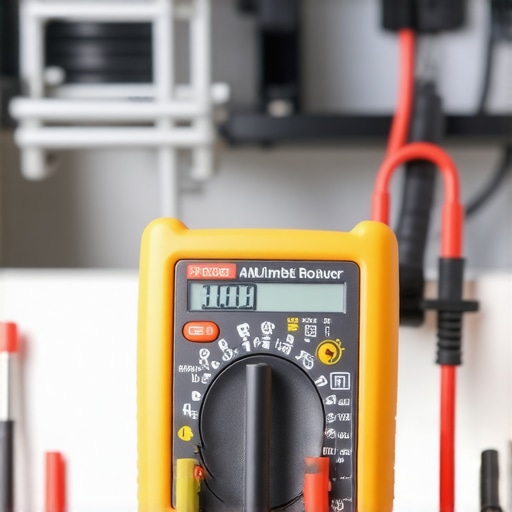
When the reset fails and the codes are vague, it’s time to move from software to hardware. This is where most DIYers get intimidated, but it’s just basic math. If your dishwasher has power but won’t initiate a cycle, the thermal fuse is often the culprit. This tiny component is a safety watchdog; if it detects the machine is getting too hot, it ‘pops’ and cuts all power to the board to prevent a fire. You can’t tell if it’s blown just by looking at it. You need to check for continuity. Knowing the exact multimeter reading for a healthy thermal fuse can save you a week of waiting for a repairman. I remember hunched over my kitchen floor, probe in hand, realizing that a $10 part was the only thing standing between me and a working kitchen. If you find the fuse is dead, replacing it is a ten-minute job. However, if the hardware is fine but the machine still acts possessed, you need to start understanding appliance diagnostics improving your warranty claims so you don’t void your protection while poking around the internals. Always keep your meter set to the lowest Ohms setting and ensure the power is off before you touch any terminals.Most homeowners live under the comforting illusion that a manufacturer warranty is a universal safety net for appliance failures. I used to think the same until I actually read the fine print about normal wear and tear on appliances. Here is the contrarian truth: manufacturers aren’t looking for ways to help you; they are often looking for ‘user error’ to disqualify your claim. If you use the wrong detergent or skip basic maintenance, you are essentially handing them a reason to walk away. I have seen claims get tossed simply because of why service techs deny warranty claims for soap choice. It sounds absurd, but using too much high-sudsing detergent can leave residue that looks like neglect to an inspector, potentially voiding your protection.
Your Warranty Isn’t the Safety Net You Think It Is
According to research by Consumer Reports, a significant number of appliance repair requests result in ‘No Failure Found’ (NFF), and this is an expensive trap. If a technician arrives and your ‘broken’ machine is suddenly working because you performed a secret reset or didn’t document the issue properly, you will likely be hit with a service fee that your policy won’t cover. This is exactly why your warranty provider might deny a no-failure-found claim. I once sat through a thirty-minute lecture from a tech because I hadn’t checked for a simple clog before calling him out. Have you ever fallen into this trap? Let me know in the comments.
Why does the technician charge you when nothing is broken?
It comes down to labor and logistics. Even if they just push a button or clear a small blockage, you are paying for their time and expertise. This is why learning the top signs your dishwasher needs professional diagnostics is so critical. You need to be sure there is a genuine mechanical heart attack before you risk the call. If you are past the coverage period, don’t panic—there are ways to navigate how to get a manufacturer to pay for an out of warranty repair if you can prove a known defect. But usually, it starts with documentation. Sometimes why your warranty claim needs a copy of your home insurance is simply to verify your address or secondary coverage, but every hoop you jump through is another chance for them to say ‘no’. 
The Detergent Trap That Voids Your Protection
The ultimate ‘oops’ factor is failing to realize that why your service plan might be a waste of money often boils down to these exclusions. If your issue is caused by a build-up of gunk or mineral scale from hard water, that is often considered your responsibility, not the factory’s. Before you submit a claim, make sure you’ve ruled out every DIY fix we’ve discussed. It is about being smarter than the system. If you find yourself stuck, understanding appliance diagnostics improving your warranty claims can be the difference between a free motor replacement and a massive bill. If the DIY route fails, you can always contact us to get professional help before things get worse.
Moving beyond the immediate panic of a dead control panel, I’ve learned that the real secret to avoiding a total appliance meltdown is in the tools you keep and the documentation you maintain. I used to think a screwdriver was the only thing I needed, but after watching a pro spend five minutes with a specialized tool and solve a problem I’d wrestled with for days, I changed my tune. If you want to stop being a victim of your appliances, you have to start thinking like a technician. This means going deeper than just wiping down the door and actually troubleshooting dishwasher problems before they become expensive replacements. It starts with the right equipment and a little bit of proactive sleuthing.
I use a multimeter more than a screwdriver
If you don’t own a multimeter, you’re essentially flying blind. Most people see a screen full of numbers and panic, but I’ve found that knowing how to test your inlet valve with a simple voltmeter can save you from replacing parts that aren’t actually broken. However, a word of caution: you must be aware of why your multimeter reading might be lying to you. Ghost voltages or improper range settings can lead you down a very expensive rabbit hole. I remember testing my own machine and getting a reading that suggested a dead motor, only to realize I hadn’t properly seated my probes. According to the technical service bulletins provided by the Samsung Support Center, ensuring a clean contact point on the control board terminals is the most critical step in getting an accurate diagnostic reading. This level of detail is what separates a lucky guess from a professional-grade repair.
How do I maintain my dishwasher’s performance over the long haul?
Long-term maintenance isn’t just about chemicals; it’s about mechanical clearance. I make it a habit to check the physical pathways where water flows and debris collects. This includes pulling the bottom rack out to find the debris trap most owners miss during monthly cleaning. If that trap is even slightly restricted, your pump has to work twice as hard, which is a fast track to a burnt-out motor. I also keep a set of picks or even a simple toothpick nearby to learn how to clean the tiny holes in your spray arms. Calcium and popcorn kernels are the natural enemies of spray pressure. Looking ahead, I expect we’ll see more appliances utilizing real-time AI to predict failure before it happens, essentially performing their own ‘health checks’ and ordering parts automatically. But until that future arrives, the heavy lifting is still on us.
Protect Your Investment with Better Documentation
When you eventually do need a technician, your best defense against a denied claim is the data you’ve collected. Most people throw away their manuals, but I suggest you look for how to find a service manual hidden inside the unit—usually tucked behind the kickplate in a plastic bag. This document contains the wiring diagrams and specific diagnostic codes that the public never sees. Furthermore, never call a warranty provider without having the photo evidence you need for every warranty claim ready to go. I’ve seen companies deny a claim because the homeowner couldn’t prove the error code was intermittent. By documenting the failure with your phone, you show them you aren’t just guessing. This is a core part of how appliance diagnostics can save your warranty benefits. If you can speak their language and provide the proof, they are much less likely to push back. I strongly encourage you to try my advanced tip tonight: reach under your dishwasher’s front panel, find that hidden service manual, and just read the first two pages of the diagnostic section. It’s like getting the keys to the kingdom.
Secrets I Learned the Hard Way About Service Techs
I used to think that a warranty was a bulletproof shield for my bank account, but the hardest lesson I learned is that the fine print regarding wear and tear is often a trap designed to favor the manufacturer. Most people don’t realize that even simple soap choices can disqualify your claim if the technician finds excessive suds residue or buildup. I’ve realized that the real power comes from knowing your machine before the tech even pulls into your driveway. Information is your best currency. If you can point to a specific code or a failed continuity test, you shift the conversation from a user error guessing game to a professional repair discussion.
The Tools That Turned Me Into a Kitchen Hero
You don’t need a massive toolbox to stop being a victim of your appliances. My essential kit fits in a single drawer and has saved me thousands over the years. First, a reliable multimeter is non-negotiable for testing your inlet valve or testing a thermal fuse without just guessing and throwing money at random parts. Second, I always recommend hunting down the hidden service manual—that secret paper tucked in the kickplate is like a cheat code for your specific model. Finally, your smartphone is your best diagnostic tool; use it to record every weird noise or flashing light so you have the photo evidence you need for every warranty claim.
#IMAGE_PLACEHOLDER_E#
Stop Dreading the Beeps and Start Saving
There is a unique sense of pride that comes from hearing your dishwasher hum back to life after you’ve personally intervened. By troubleshooting dishwasher problems yourself, you aren’t just saving a hundred bucks; you’re gaining the confidence to maintain everything in your home. Remember, mastering appliance diagnostics is a skill that pays dividends for years to come. Don’t let a blinking light or an unresponsive panel ruin your weekend when the solution might just be sixty seconds away. Have you ever actually found that secret service manual hidden inside your unit? Let me know in the comments below!