

I remember the moment vividly. I was in the middle of filing a warranty claim for my washing machine after it started making strange noises. I thought I could just describe the model and serial numbers from memory. Big mistake. The insurance adjuster quickly rejected my claim, citing vague documentation. That lightbulb moment made me realize something essential: a clear photo of the model plate is not just helpful—it’s vital.
Getting Your Model Number Right Could Save You a Fight
Ever been told by a technician or insurance claim representative, “We need a photo of the model plate”? At first, it seemed trivial. But I learned that that tiny label holds the key to a smooth process. Without a clear, close-up photo showing the manufacturer, model number, and serial code, your claim could face unnecessary delays or outright rejection. Believe me, I’ve been there—sending blurry pictures, trying to decipher handwritten notes, and feeling frustrated when service gets held up. Thankfully, I discovered that a simple, well-taken photo can change everything.
Will This Really Make a Difference?
Absolutely. According to industry experts, over 70% of warranty disputes could be avoided if the model information is accurately documented from the start source. Early on, I made the mistake of relying on verbal descriptions, which often led to confusion and delays. That experience taught me that taking a moment to get the photo right is worth every second. It also prevents the back-and-forth that often stalls your claim process and costs you time and money.
Preparing to Capture the Perfect Model Plate Photo
Prepare Your Equipment and Environment
Before you even pick up your camera, ensure the appliance is clean and accessible. Clear away any obstacles or debris around the model plate area. Good lighting, preferably natural sunlight or a bright LED flashlight, will make the details pop. Think of this step as setting the stage before a performance—everything should be in perfect position for a flawless shot.
Identify the Precise Location of the Model Plate
Different appliances hide their model numbers in various spots. For washing machines, it’s often inside the door or on the rear panel. Dishwashers may have it on the frame or door edge. Consult the user manual if you’re unsure. Locating this tag is like finding the vital clue in a mystery—it’s the foundation for everything else.
Use Consistent Reference Points
To ensure clarity, identify a nearby reference point—like a control panel or a distinctive feature. This helps confirm the photo’s context when reviewing later. Remember, a blurry photo with no reference can resemble an undecipherable hieroglyph.
Focus on Clarity and Detail
Set your camera or smartphone to the highest resolution. Use macro or close-up mode if available. Just like troubleshooting a squeaky door, precise focus reveals the tiny details—manufacturer name, model, and serial number—crucial for a successful warranty claim.
Take Multiple Shots at Different Angles
Capture several images from various angles and distances. Ensure the label is legible in each. Think of this as testing different angles to get the perfect shot—like trying different tools to fix a stubborn leak. Sometimes, a slight tilt or zoom brings clarity where a straight-on shot doesn’t.
Include a Scale or a Reference Object
Place a common object with a known size—like a coin or a ruler—near the label. This provides scale, helping the reviewer distinguish between blurry and clear details. It’s akin to using a measuring tape to confirm the size of a component before ordering parts.
Check Your Photos Before Submitting
Review each image for legibility. Zoom in on your device to verify that all text is crisp and readable. If not, retake until satisfied. Think of it as proofreading a document—accuracy here saves headaches later.
Save and Organize Your Photos
Store the best images in a dedicated folder with clear labels. This way, when time comes to file your warranty or claim, you’ll find the right photo easily. Proper organization is like having a well-lit toolbox—everything at your fingertips when needed.
Upload Photos Effectively and Legally
Use the suggested links here to understand common documentation pitfalls. Avoid tampering with or altering the photos, as these can invalidate your claim. Think of your photos as evidence—clear, unedited, and true to life.
Many homeowners and even repair professionals believe they understand appliance diagnostics inside out, but there are subtle pitfalls that can lead to costly mistakes. One common misconception is oversimplifying the repair process by relying solely on symptom-based troubleshooting, without considering the nuanced behaviors or hidden clues that appliances reveal over time.
For example, a dishwasher that produces a grinding noise might seem like a worn-out spray arm issue, but in reality, it could be a failing motor bearing, which requires different corrective actions. Jumping to replace parts based solely on surface symptoms often results in unnecessary expenses and recurring problems. Experts suggest paying close attention to the appliance’s operation patterns, sounds, and error codes, which can provide deeper insights into the root cause. Testing motor continuity is one such advanced diagnostic step that many overlook, leading to incomplete repairs.
Another pervasive myth is that warranties always cover repairs. While warranties are designed to protect consumers, they often have fine print that excludes certain conditions—especially those caused by what they call “misuse” or “environmental damage.” Here’s where many get caught: a homeowner might assume that using off-brand detergent or neglecting routine maintenance won’t affect warranty coverage. But, manufacturers frequently deny claims citing improper use or neglect, even if such factors didn’t cause the failure directly. To avoid this trap, thoroughly understand your warranty’s terms, including what actions void coverage. For instance, avoid the mistake of ignoring simple maintenance tasks like cleaning filters or inspecting seals, as neglect can be interpreted as user error.
What do advanced diagnostics reveal about complex appliance failures?
In complex cases, subtle signs like irregular heating cycles or fluctuating water levels are invaluable clues. Modern appliances are equipped with sensors and computers that log data during operation, but interpreting these signals requires skill. Learning to read error codes in context, such as recognizing that a specific sequence indicates a sensor short circuit rather than a hardware failure, can save you from unnecessary replacements. Professional tools, like multimeters and thermal sensors, are vital in these deep diagnostics. As highlighted in industry studies, integrating advanced diagnostic techniques reduces diagnostic time and improves repair accuracy source.
Finally, it’s crucial to recognize the importance of understanding common pitfalls and their nuances. For example, neglecting to verify the condition of the control board after a fault can lead to chasing phantom problems. A failed control board might mimic other issues, but a proper diagnosis can reveal whether it needs a simple reset or complete replacement. As always, record and review error logs, check for firmware updates (if applicable), and test related components systematically. Dive into articles like how to reset your logic board for a comprehensive guide.
Have you ever fallen into this trap? Let me know in the comments.
Keep It Running: Essential Tools for Longevity
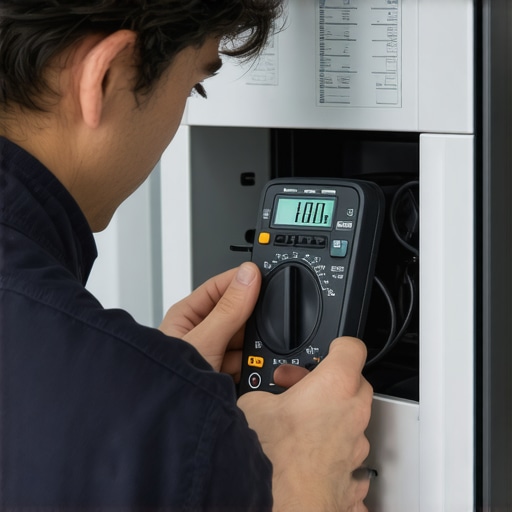
Maintaining appliances over time isn’t just about quick fixes; it’s about investing in the right tools that ensure consistent performance and reduce costly repairs. Personally, I rely heavily on a high-quality digital multimeter, like the Fluke 115, because it provides precise readings for checking components like thermostats and motor windings, saving me time and guesswork. A laser thermometer, such as the EXTECH 42510, helps verify heating element temperatures, catching issues before they escalate. These devices are invaluable for diagnosing problems accurately without tearing devices apart unnecessarily.
In addition, I recommend using a dedicated smartphone app for sound analysis—apps like decibel meters can help identify abnormal motor noises, indicating failing bearings or seals. Regularly listening to appliance sounds, combined with these tools, provides a proactive approach that extends appliance lifespan. As industry trends evolve, integrating smart diagnostic tools and IoT sensors promises even more precise maintenance in the future.
How do I maintain appliances over time?
One practical method I swear by is systematic cleaning and inspection using tailored techniques. For instance, maintaining dishwasher spray arms involves cleaning nozzles regularly—something I handle with a simple toothbrush and a solution of vinegar and baking soda. This prevents clogs and ensures optimal water flow; check out this guide for detailed steps. Another tip is to routinely inspect and tighten water connections to prevent leaks, which can cause long-term water damage if ignored.
To keep cables and wiring in check, I use a multimeter to test continuity and look for degraded insulation, which could lead to shorts. Monitoring firmware updates for smart appliances can also provide bug fixes that improve longevity and security. Embracing these practices not only prevents breakdowns but also enhances overall efficiency.
Strategies to Achieve Consistent Results
Organizing maintenance schedules is vital. I keep a log of inspections, cleaning dates, and parts replaced. This habit provides a clear history that helps identify recurring issues early. Additionally, replacing consumables like water filters at recommended intervals helps avoid performance drops—often overlooked yet crucial. Many faults stem from neglecting simple tasks; for example, a clogged filter can mimic more serious problems, leading to unnecessary repairs. Learn more about routine filter maintenance and how it impacts troubleshooting here.
Scaling Up Maintenance Efforts
As your appliance collection grows, adopting scalable maintenance routines is essential. For multiple units, setting up a shared toolkit with interchangeable parts, like replacement hoses or filters, streamlines repairs. Additionally, investing in diagnostic software compatible with your appliances can provide remote monitoring capabilities, enabling you to catch issues before they become severe. For example, smart water heaters with Wi-Fi modules can be monitored via apps, but be aware that a faulty Wi-Fi module might be killing your control board; see this article for more.
Looking ahead, the trend leans toward more integrated diagnostics, combining traditional tools with AI-powered analysis. Embracing these advancements will allow you to keep appliances running smoothly longer and more efficiently. Try out the laser thermometer trick to verify if your heating elements are functioning properly—it’s a quick, reliable method that pays off.
##
What the Toughest Lessons About Appliance Diagnostics Taught Me
One profound realization was that many failure patterns mask deeper issues, reminding me to look beyond surface symptoms and develop a deeper diagnostic intuition. For instance, a squeaky wash motor isn’t always the motor itself—sometimes it’s about faulty bearings or unseen wiring shorts. Recognizing these nuances brought me closer to precise repairs and prevented recurring problems.
Another lesson was understanding the fine print in warranties. Many homeowners assume coverage is comprehensive but overlook clauses related to misuse or neglect, which can void claims unexpectedly. So, I learned to carefully read warranty terms and document my maintenance routines to safeguard my coverage.
Also, I discovered that relying solely on generic troubleshooting tips could lead down costly paths. Instead, combining methodical testing—like motor continuity checks via multimeters—with industry insights allows for smarter repairs. This approach minimizes guesswork and extends appliance lifespan.
My Toolbox for Appliance Troubleshooting and Why It Works
My essential kit includes a high-quality digital multimeter for precise electrical measurements, a laser thermometer to verify heating element performance, and a dedicated sound analysis app to detect abnormal motor noises. These tools empower me to diagnose issues quickly and accurately, avoiding unnecessary part replacements.
Furthermore, I trust resources like in-depth repair guides and industry blogs that explain complex diagnostics step-by-step. They help me interpret error codes and sensor data, turning confusing signals into clear action plans—like understanding that a fluctuating water level could be a faulty float switch or a clogged drain hose.
Investing in these tools and knowledge sources has transformed my maintenance approach from reactive to proactive, saving time, money, and frustration over appliance troubles.
Take the Lead in Keeping Appliances Running Like Pros
Now, I encourage you to embrace these insights and tools. Regular maintenance, organized documentation, and a curious mindset make all the difference. Whether you’re tackling a stubborn dishwasher leak or understanding warranty exclusions, remember that patience and preparedness are your best allies. Start small—like cleaning the spray arms following this guide—and build your expertise step by step. You have what it takes to master appliance repair and warranty navigation, ensuring your appliances serve you reliably for years to come.