

I remember the frustration vividly: I’d just spent a rainy Sunday battling my dishwasher, pulling out the filter, scrubbing like a madman, only to discover the next morning that the water was pooling again, and my dishes weren’t drying. The classic sinking feeling of, “Did I do something wrong?” hit me hard. Turns out, I had overlooked a little detail that was causing my drain filter to remain sluggish — even after I thought I’d cleaned it thoroughly.
Stop the Cycle of Cleaning Failures: Why Your Drain Filter Remains Blocked
If you’ve faced the same problem — a stubborn, sluggish drain after what seemed like a proper cleaning — you’re not alone. Many homeowners assume that simply removing and rinsing the filter will solve the issue. However, this isn’t always the case. The truth is, your dishwasher’s drainage system can hide tricky clogs and debris in places you might never suspect, causing the filter to appear clean but still impede water flow.
Is Your Effort Really Making a Difference?
Early on, I made a serious mistake: I believed a quick rinse was enough, ignoring the hidden areas like spray arms or drain hoses. This oversight often leads to false confidence and ongoing problems. Interestingly, according to appliance diagnostics experts, a clogged drain isn’t always about visible gunk — it can be a sign of deeper issues in the system’s drainage pathway. For instance, a partial blockage upstream can cause water to back up, even if the filter itself looks spotless. To truly troubleshoot, you need to look beyond just the filter.
In this post, I’ll walk you through the common pitfalls and reveal the practical steps to restore your dishwasher’s drainage without guesswork. Ready to take control and get those dishes truly clean again? Let’s dive into what might be going wrong and how to fix it.
Disassemble the Drain Path Like a Pro
Start by unplugging your dishwasher and removing the lower panel. Use a screwdriver to access the drain hose and pump assembly. Carefully detach the hose at the clamps and inspect for knots, kinks, or debris. Pull out the pump filter and clean out any trapped gunk with a soft brush or cloth. While doing this, I once found a pile of hair tangled in the pump impeller, which was causing water to back up. Clearing this restored proper drainage immediately.
Test the Drain Pump Effectively
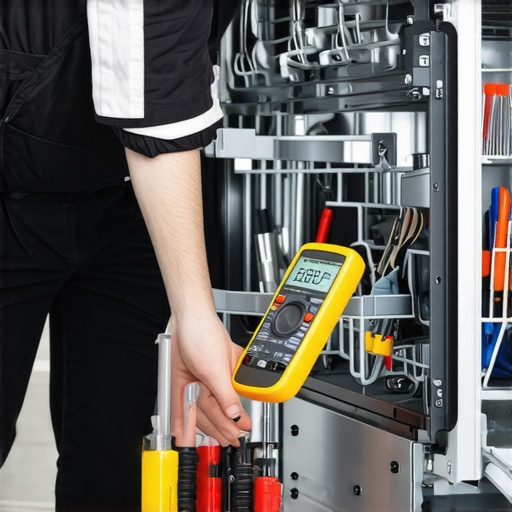
Use a multimeter set to the ohms range to check the pump’s continuity. Disconnect the pump wires and place the probes on the terminals. A reading of zero or infinite resistance indicates a failed pump. If you suspect the pump is dead, temporarily connect it to a 9V battery to see if it runs—be cautious here. This quick test saved me from replacing unnecessarily expensive parts once. If the pump is bad, replacing it can be straightforward if you follow a step-by-step guide.
Clear Hidden Blockages in Hose and Filter
Remove the drain hose carefully, then flush it with water or run a flexible wire through it to dislodge any buildup. Check the filter under the spray arm for residues or obstructions—sometimes called the “hidden filter”—which many homeowners forget to clean. I once found a small stone lodged there, causing persistent drainage issues. Reassemble everything and run a short cycle to verify the fix.
Check the Pressure Switch and Door Latch
The pressure switch signals when the water level is correct. If faulty, it may falsely indicate a full tub, halting drainage. Use a multimeter or a phone app to listen to the switch or test its continuity. For door latch issues, inspect the magnet and latch assembly. A loose or broken latch can prevent the dishwasher from advancing cycles, including draining. Test the latch with a simple magnet test, and replace if needed. These steps prevent cycle failures that seem unrelated to drainage.
Perform System Reset and Diagnostic Checks
Sometimes, the control board might glitch, causing drain errors. Consult your model’s manual for reset instructions—often involving pressing specific button combinations. After resetting, run a diagnostic cycle to observe if error codes persist. Using techniques from expert troubleshooting guides, like disconnecting power for a few minutes, can reset the logic. Remember, a quick reset can clear lingering glitches and reveal whether the issue is mechanical or electronic.
Keep Regular Maintenance to Prevent Future Clogs
Establish a cleaning routine: check and clean the filter weekly, inspect the spray arms for clogs, and ensure the drain hose’s high loop remains intact to avoid backflow. Recognize early signs of trouble—like strange noises or error codes—by reviewing guides on appliance diagnostics. Being proactive saves time and money, and understanding these core steps arms you with the confidence to fix simple issues or know when to call in professionals, especially if problems persist beyond basic troubleshooting. For more comprehensive diagnostic strategies, refer to expert repair tips.Many homeowners assume that troubleshooting their dishwasher is straightforward, but in reality, there are nuanced pitfalls that can lead to costly mistakes or even void warranties. One widespread myth is that if a repair company offers a quick fix, it’s always the best course of action. In fact, jumping into repairs without proper diagnostics—like verifying the condition of the control board or thermal fuse—can result in recurring failures and wasted money. Experts emphasize the importance of understanding the diagnostic process; for example, routinely resetting the system and conducting multimeter tests can prevent unnecessary part replacements. Notably, relying solely on superficial inspections misses hidden issues like partial blockages or electronic glitches that only thorough diagnostics can uncover, as detailed in trusted appliance repair resources.
A common oops is misjudging warranty coverage—many believe that if they contact the manufacturer immediately, their claims will be accepted. However, warranties often have fine print requiring proof of proper maintenance and diagnostic history. To strengthen your claims, documenting diagnostic procedures—such as recording error codes, photographic proof, and timestamps—is crucial. This approach aligns with expert advice encouraging homeowners to understand their warranty rights and the importance of professional diagnostics before attempting repairs themselves. Failing to do so can lead to denial of coverage, especially if the damage is deemed due to user error or neglect.
An advanced consideration involves the impact of DIY repairs on warranty status. While some believe that small fixes won’t affect their coverage, many manufacturers explicitly void warranties if unauthorized repairs are performed, particularly if they bypass official diagnostic protocols. For instance, replacing a part without verifying its necessity or using incompatible components can inadvertently void the warranty, as highlighted in specialized appliance diagnostics guides.
Furthermore, there’s a misconception that all repair shops are equal. In reality, choosing an unqualified technician might mean missing critical diagnostic steps or introducing new issues. It’s essential to select professionals who follow comprehensive diagnostic procedures, as documented in trusted industry sources. This rigorous approach not only ensures effective repairs but also maintains warranty validity.
In essence, the secret lies in understanding that effective diagnostics demand more than just surface-level checks. Investing time in learning how to interpret error codes, perform system resets, and document repairs can save you money and uphold your warranty privileges. As highlighted in [this comprehensive guide](https://applianceoutletpro.com/understanding-appliance-diagnostics-improving-your-warranty-claims), mastering diagnostic workflows is your best defense against being misled by common myths. Have you ever fallen into this trap? Let me know in the comments.
How Do I Maintain My Dishwasher Over Time?
Keeping your dishwasher in top shape requires more than just occasional cleaning. Investing in the right tools and adopting a routine maintenance schedule can significantly extend its lifespan and ensure it operates reliably. One of my go-to tools is a high-quality multimeter, specifically the Fluke 115 True RMS Multimeter. I prefer this model because of its accuracy and durability, which helps me diagnose electrical issues like faulty heating elements or malfunctioning pumps with confidence. Additionally, a flexible drain cleaning brush allows me to clear out stubborn debris from hoses and filters without dismantling the entire assembly.
For firmware and diagnostics, I rely on software like the Whirlpool Diagnostic Tool for advanced troubleshooting—this aids in interpreting error codes and performing system resets efficiently. Using a silicone spray lubricant on door latches and moving parts periodically keeps them functioning smoothly, preventing wear and tear. Regularly inspecting spray arms with a magnifying glass helps me spot buildup or broken jets early, avoiding costly repairs down the line. These tools and practices form the core of my long-term maintenance strategy.
Looking ahead, I predict that as smart appliances become more prevalent, diagnostic tools will evolve to integrate wireless connectivity and AI-driven insights, making maintenance even more accessible and intuitive. Staying informed about these advancements ensures you’re prepared to leverage technology for optimal appliance care.
What Are the Best Methods to Keep Your Dishwasher Reliable?
Establishing a routine check-up schedule—like monthly filter cleaning and biannual spray arm inspections—prevents clogs and maintains optimal water flow. Always refer to your dishwasher’s manual for manufacturer-recommended procedures, and consider using a service like professional diagnostics when issues become persistent. Remember, addressing minor problems early can save you from extensive repairs later. Make it a habit to observe error codes and performance patterns; early detection is key to avoiding warranty voids, especially when you’ve performed DIY fixes. Regular maintenance not only preserves warranty coverage but also ensures your appliance continues to serve you efficiently for years to come.
If you’re ready to enhance your troubleshooting skills, I recommend trying the self-diagnostic test sequence on your dishwasher. It’s a powerful way to identify issues before they escalate and can be done with a simple button combination—saving time and money. Embrace these tools and practices, and you’ll keep your dishwasher functioning seamlessly while staying ahead of potential problems.
< >
>
What The Hardest Lesson Taught Me About Appliance Troubleshooting
One of the most profound lessons I learned is that appearances can be deceiving. A spotless filter doesn’t always mean the drainage system is clear—deeper issues lurk in hidden hoses or electrical components, and overlooking them can cause recurring headaches. Recognizing this early made me realize the importance of comprehensive diagnostics over quick fixes, saving me time and money in the long run.
How I Discovered My Best Diagnostic Tool Isn’t Fancy Tech
Initially, I relied heavily on expensive diagnostic software, but I found that a reliable multimeter and a keen eye often revealed more than a complex app. Simple tools, when used properly, provided instant insights—they’re the unsung heroes in every repair scenario. This experience reminded me that mastering basic equipment often trump high-end gadgets in everyday troubleshooting.
overlooking Weak Spots in Your Warranty Could Cost You
Old habits die hard—many repair enthusiasts neglect to document repairs or understand warranty nuances. I realized that taking detailed notes, photos, and following repair protocols not only accelerates claims but also fortifies my position when facing warranty disputes. Knowledge of warranty intricacies has become a critical part of my repair toolkit, ensuring I stand on solid ground.
Why Knowing When to Stop Can Save Your Repair Budget
Sometimes, the toughest part of troubleshooting is recognizing when to call in a professional. I learned to trust diagnostic signals—persistent error codes, unusual noises, or unresponsive components—and avoid unnecessary part replacements. Knowing when to step back and seek expert advice has been a game-changer in maintaining both peace of mind and appliance longevity.
Where My Search for Reliable Resources Keeps Evolving
I’ve come to rely on carefully curated guides and industry-recognized resources, like insightful diagnostic strategies and trusted tools that I truly trust. Over time, I’ve learned that continuous learning from credible sources elevates my repair skills, reduces downtime, and ensures warranty compliance—a win for any DIY enthusiast or professional alike.
Take Your Repair Skills to the Next Level
Remember, every appliance has its quirks—and even the most experienced technicians learn something new. Embrace a mindset of ongoing education, deliberate diagnostics, and meticulous documentation. This approach not only empowers you to troubleshoot confidently but also helps preserve your warranty rights and extends the lifespan of your dishwasher. What’s one diagnostic tip or tool that has transformed your repair game? Share your story below and keep the learning going!
,