

I remember the sinking feeling when my dishwasher broke down just past the warranty period, and I wondered—was there something I missed? Turns out, a surprisingly simple cleaning task could be the deciding factor in whether your warranty stands or slips through your fingers. Trust me, I learned this the hard way, and it changed how I handle appliance care forever.
The Lightbulb Moment That Changed Everything
One day, my dishwasher started acting up—strange noises, inconsistent cleaning, and error codes flashing like Christmas lights. Frustrated, I dove into forums and user manuals, only to discover that I might have inadvertently compromised my warranty through neglecting one routine maintenance step: cleaning the filter meticulously.
It sounds trivial, but I learned that neglecting this task can cause clogs, sensor errors, and even long-term damage that voids warranty coverage. And here’s the kicker—many warranty policies explicitly cite dirty filters and accumulated debris as grounds for claim denial. That’s right—something as simple as a regular filter clean can make or break your warranty claim.
But how do you ensure you’re not falling into the same trap? That’s what we’ll dive into today—how a straightforward cleaning routine can protect your warranty and keep your dishwasher running smoothly.
Is the Hype About Filter Cleaning Overblown?
I used to think that routine cleaning was an overkill—until I realized that I was risking my warranty with each neglected wash. Early on, I mistakenly assumed that my dishwasher’s self-cleaning cycles would handle everything, but it turns out that manual maintenance is crucial. Don’t make my mistake; staying proactive about cleaning can save you money, stress, and the headache of warranty disputes. For more tips, check out this detailed guide.
Are you worried that your own dishwasher might be at risk? If you’ve noticed sluggish performance or strange odors, it might be time to act. In the sections ahead, I’ll show you exactly how to keep your filter—and your warranty—intact with a simple yet effective cleaning routine.
Remove and Access the Filter
Start by unplugging your dishwasher to ensure safety. Locate the bottom of the unit, usually behind a small cover or access panel. Use a screwdriver if needed to open it. Grasp the filter—it’s often a circular or rectangular component at the drain area—and gently twist counter-clockwise to unscrew it. Remember, handle with care to avoid damaging seals or surrounding parts. When I did this for the first time, I accidentally dropped the filter into a pile of dishwashing soap and dirty water—messy but a quick clean-up made me realize the importance of being prepared with gloves and towels.
Clean the Filter Thoroughly
Rinse the filter under warm running water to remove loose debris. Use a soft brush, like an old toothbrush, to scrub away stubborn grease or buildup. For mineral deposits or scale, soak the filter in a mixture of vinegar and water—about one part vinegar to three parts water—for 15-20 minutes. This is similar to descaling a kettle but on a smaller scale, and it prevents hard water from clogging the filter or damaging sensors. Be cautious: over-aggressive scrubbing can scratch delicate parts, so gentle is better. Regular cleaning ensures your dishwasher’s performance stays optimal, and it helps you avoid warranty pitfalls tied to neglect.
Inspect and Clear Clogs
While your filter is out, check the drain area for any blockages or debris that could cause drainage issues. Use a toothpick or a soft wire to gently remove hair or fibrous materials. Confirm that the impeller—part of the pump that moves water—is free to spin. If you notice resistance or strange noises during operation, it could signify a clog or mechanical failure, which might affect your warranty if overlooked. Think of the drain like your car’s oil filter—if it’s clogged, everything else suffers. Keeping it clear means fewer repairs and preserves your coverage.
Replace the Filter Correctly
Once cleaned, reassemble the filter by aligning it properly and turning clockwise until snug. Do not overtighten; just ensure a secure fit to prevent leaks. A loose or improperly installed filter can cause water leaks or error messages, leading to warranty issues. After replacement, run a short cycle with an empty dishwasher to verify everything functions smoothly. If issues persist, consider testing other components, such as pressure sensors or float switches. For complex diagnostics, consult professional resources like this guide to troubleshooting sensor problems.
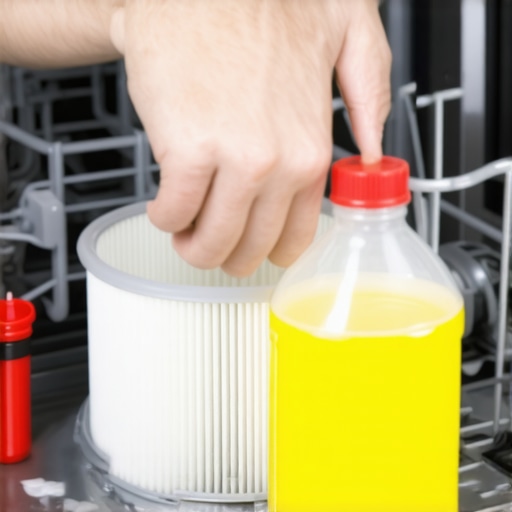 When it comes to fixing appliances like dishwashers, many homeowners believe that simple troubleshooting steps are foolproof. However, this mindset often leads to overlooked nuances and common myths that can jeopardize warranty coverage. For instance, many assume that resetting the machine or replacing parts based solely on symptom guesses will resolve issues without vetting the root cause thoroughly. In my experience, rushing to replace components without understanding the underlying electrical or sensor failures can unintentionally void warranties—especially if your repairs violate manufacturer protocols. **A prevalent myth** is that all error codes relate to hardware failures, but sometimes, digital glitches or software issues are at play, which only advanced diagnostic procedures can reveal—like testing control boards with multimeters or inspecting sensor signals. It’s crucial to recognize that not every malfunction warrants a part replacement; many problems are due to calibration errors or minor sensor misalignments that, if addressed properly, keep your warranty intact.
Are Diagnostic Steps Beyond Basic Troubleshooting Necessary for Warranty Preservation?
This is where most homeowners falter. Relying solely on quick fixes can lead to misdiagnosis, causing false assumptions about appliance health. According to appliance repair expert sources, comprehensive diagnostic protocols—including voltage tests, sensor signal analyses, and circuit evaluations—are essential to pinpoint issues accurately and prevent warranty disputes. For example, instead of replacing a control module at the first sign of malfunction, performing voltage and resistance tests, like those detailed here, can save you from unnecessary expenses and warranty invalidation. Moreover, many warranties have hidden clauses—such as specific maintenance records or proper installation documentation—that homeowners often overlook, making their claim vulnerable. To navigate this, consult reputable guides and ensure every diagnostic step aligns with manufacturer instructions and authorized repair procedures.
Ultimately, understanding the nuances beyond basic troubleshooting can make a significant difference in preserving your warranty and extending appliance longevity. Have you ever fallen into this trap? Let me know in the comments. For advanced diagnostics, check out resources like this guide to ensure your repairs are both effective and warranty-friendly.Maintaining your dishwasher’s performance over the long term requires the right tools and consistent practices. A digital multimeter is indispensable for diagnosing electrical issues; I rely on the Fluke 117 for its accuracy and ease of use when testing control boards or sensors, especially since many common failures involve voltage irregularities that are subtle to detect with basic tools. Additionally, a high-quality toothbrush or small wire brush helps me remove stubborn debris from filters and spray arms without damaging delicate components. To tackle mineral deposits, I use a 10-inch long, flexible inspection mirror, combined with a smartphone camera, to visually inspect inaccessible areas behind panels or beneath the unit—saving me time and unnecessary disassembly. For software diagnostics, I recommend a compatible Wi-Fi-enabled device that can connect to your dishwasher’s app, providing real-time operational data and error logs.
As technology advances, we’re seeing smarter diagnostic tools emerge, like Bluetooth sensors that can monitor a dishwasher’s internal conditions remotely. This trend points toward more predictive maintenance models, allowing homeowners and technicians alike to anticipate problems before they lead to failure or warranty issues. In the future, leveraging AI-based diagnostic applications might become standard, guiding users through step-by-step troubleshooting processes based on aggregated data.
How can you ensure your dishwasher remains dependable over time? Regularly scheduled maintenance, such as filter cleaning and spray arm checks, is fundamental. Also, investing in reliable tools like a multimeter or inspection mirror makes diagnosing problems more straightforward, preventing minor issues from escalating. Don’t forget that software updates for smart dishwashers can improve their diagnostics capabilities—so keep your appliance’s firmware current.
If you’re serious about preventing unexpected breakdowns and warranty disputes, I highly recommend trying a voltage test using a digital multimeter before assuming any control board failure. This simple step can save you time and money, confirming whether a component actually needs replacement or just a minor adjustment. For detailed testing procedures, check out this resource on diagnosing control boards with voltage measurements. Incorporating these methods into your routine maintenance will extend the life of your dishwasher and give you peace of mind knowing tools are aiding your care—because an ounce of prevention is worth a pound of cure.
The Hardest Lesson I Learned About appliance repair, diagnostics, dishwasher, warranty
One of the toughest lessons was realizing how a small oversight—like neglecting regular filter cleaning—could jeopardize my warranty eligibility. This taught me that maintenance isn’t just about performance; it’s a shield for warranty protection, and missing it can cost more than just repairs. I also discovered that trusting quick fixes over thorough diagnostics often leads to unnecessary expenses and warranty disputes, especially when only detailed testing can identify the true issue. Finally, I learned to document every step meticulously—photos, test results, dates—as warranties often hinge on clear, verifiable records. These insider lessons transformed my approach from reactive to proactive, saving me money and giving peace of mind in my appliance care.