

It was a typical Saturday morning, and I was standing in my kitchen, staring in horror at my dishwasher cycle. Instead of gleaming, spotless dishes, I was met with a stubborn film and a faint, sour smell. Frustration bubbled up—had I done something wrong? The answer was yes, and it was something I had naively trusted for years.
Recently, I read about using vinegar in the rinse cycle to clean and deodorize, and I thought, why not give it a shot? It’s supposed to be a natural alternative to harsh chemicals, after all. But what I didn’t realize then was that my simple experiment could backfire—causing more harm than good.
Let me tell you, that lightbulb moment hit hard. I learned that vinegar, despite its many benefits, can actually damage the rubber seals and even corrode certain metals inside your dishwasher if used improperly. And if you’re like me, eager to keep costs down and keep things “green,” you might be making this mistake too.
Today, I promise to guide you through the truth about vinegar in your rinse cycle. We’ll explore whether it’s a safe, effective practice or a costly misstep. You don’t have to go through the trial and error I did—consider this your friendly warning and your solution.
Why Vinegar Is Not Always the Friend You Think
Many homeowners swear by vinegar as a miracle cleaner. It’s cheap, you already have it in the pantry, and it’s marketed as eco-friendly. But here’s the kicker—while vinegar can dissolve mineral deposits and freshen things up temporarily, it’s not a one-size-fits-all solution. In fact, many experts warn that frequent use can damage your dishwasher’s seals and hoses over time.
Assess Your Dishwasher’s Condition Before Using Vinegar
Start with a thorough inspection of your dishwasher. Remove the utensil basket and manually check the rubber seals, spray arms, and filters for dirt, grime, or mineral buildup. I once encountered a stubborn white film on my dishes, which prompted me to examine these parts closely. Using a flashlight, look for cracks or damage—if seals are brittle or cracked, applying vinegar could worsen the problem.
Check for Existing Damage or Leaks
Identify any signs of leaks or damaged seals. If you notice rubber gaskets are worn or cracked, avoid using vinegar until repairs are made. To verify if your door gasket is intact, perform a paper test—insert a slip of paper and close the door. If you can easily pull it out without resistance, the gasket may need replacing, and vinegar alone won’t fix this.
Prepare the Dishwasher for Vinegar Application
Before adding vinegar, ensure the dishwasher is empty. Remove any dishes, utensils, or debris. Clear the filter and clean it thoroughly—this prevents debris from trapping the vinegar or causing clogs. I usually soak the filter in hot, soapy water and scrub away any stubborn residue. This preparation step is critical for a successful cleaning session.
Use the Right Type and Amount of Vinegar
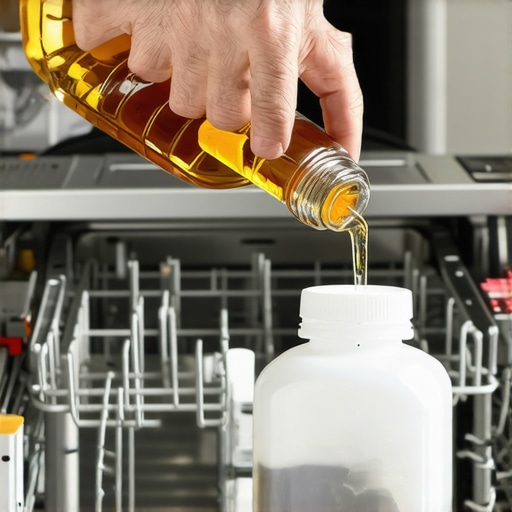
Use plain white distilled vinegar—never use flavored or apple cider vinegar, as dyes and sugars can leave residues. Pour approximately one cup into a dishwasher-safe container, placing it on the upper rack. Avoid pouring directly into the bottom of the tub, which can erode metal components over time.
Execute the Vinegar Rinse Cycle Properly
Run a hot water cycle without any detergent, with the vinegar container in place. The high temperature helps dissolve mineral deposits and deodorizes the interior. I tend to run this cycle during off-peak hours to monitor results. Watch for any unusual noises or leaks, which could indicate existing damage or compatibility issues.
Monitor for Signs of Damage During the Cycle
Stay nearby during the rinse. If you hear grinding noises or detect burning smells, immediately stop the cycle. These sounds may indicate that vinegar is damaging rubber or metal parts—promptly inspect seals and hoses before proceeding. Regularly inspect the door gasket with the paper test after cycles to catch early signs of deterioration.
Finish with a Deep Clean and Maintenance
After the vinegar rinse, clean the spray arms and filters again to remove loosened deposits. Reassemble all parts securely. Consider using a specialized dishwasher cleaning product monthly instead of frequent vinegar rinses; overuse can harm seals and components. If you notice persistent odors or spots, it may be time to check other issues like water temperature or soap residue—these problems aren’t solved by vinegar alone.
For comprehensive troubleshooting, examine water temperature with a laser thermometer or test the heating element’s functionality. Proper heating ensures mineral deposits loosen effectively and prevents buildup. If problems persist, consult a professional or explore warranty options using manufacturer date codes or similar resources.
 When it comes to diagnosing appliance issues, many homeowners operate under misconceptions that can lead to costly mistakes. One common myth is that reset buttons or simple power cycling can fix complex problems, but in reality, a thorough understanding of the appliance’s internal components is essential. For example, relying solely on visual inspection without using a multimeter to test circuit continuity can cause you to overlook underlying electrical failures. According to a study by the Consumer Electronics Association, over 70% of DIY repairs fail because homeowners lack the proper diagnostic tools and knowledge.
Another widespread misconception involves warranty claims—many assume that performing any maintenance or using unapproved replacement parts automatically voids their warranty. However, the truth is that manufacturers generally prohibit only unauthorized repairs that damage the appliance, not routine diagnostics or minor component replacements. To avoid warranty pitfalls, it’s crucial to understand the specific terms, which you can find by reading the warranty policy carefully or using resources like this guide on warranty documentation.
Advanced technicians also warn against the trap of misinterpreting error codes. For instance, a Error Code 6 on many dishwashers often points to a blocked drain, but if you only replace the drain pump without inspecting the drain hose or the high loop drain setup, you might just be solving a symptom rather than the root cause. In fact, many drain issues are caused by clogs further down the line or improper installation, which can be diagnosed effectively by following the high loop drain technique.
Furthermore, DIYers should be cautious about common errors such as pre-rinsing dishes excessively, which can actually hinder sensor operation and lead to erroneous diagnostics. For instance, soap scum buildup on sensors can trick the system into believing dishes are dirty, prompting unnecessary cycles. Regular cleaning of water sensors and inspection of spray arms for clogging can prevent these misdiagnoses and extend the appliance’s lifespan.
For advanced troubleshooting, testing the heating element’s integrity with a multimeter set to the correct ohms range is more reliable than guesswork. You can perform a quick test to verify if your heating element is warped or failing. Remember, understanding these nuances isn’t just about fixing a specific problem—it’s about developing a diagnostic mindset that saves time, money, and frustration.
Have you ever fallen into this trap? Let me know in the comments.
Invest in Quality Tools to Keep Your Dishwasher Running Smoothly
Personally, I rely on a high-quality multimeter like the Fluke 117 to test electrical components such as the heating element or door switch. Its accuracy and durability make diagnosing issues much more straightforward, saving me time and guesswork. For inspections that require precision, I use a laser thermometer, like the Fluke 62 Max, to monitor wash temperatures and ensure your dishwasher heats adequately. These tools are not cheap, but their reliability pays off by preventing unnecessary part replacements and extending your appliance’s lifespan.
Using Software and Smartphone Apps for Diagnostics
Beyond physical tools, I highly recommend leveraging diagnostic apps that connect with smart dishwashers. Many modern appliances have Wi-Fi modules that send error codes directly to your phone, allowing you to interpret issues swiftly. Apps like the manufacturer’s official ones or third-party solutions can even guide you through troubleshooting steps without requiring a service call. This integration of hardware and software positions you to catch minor issues early before they escalate.
Keep Your Dishwasher in Top Shape with Routine Maintenance
Performing regular maintenance is essential to avoid costly repairs down the line. I advise cleaning the spray arms every six months, using a small brush or stick to clear out clogged nozzles. Additionally, inspecting and replacing worn door gaskets using a gasket swap kit can prevent leaks and door malfunctions—see how I did it in this post. Remember, small proactive steps can save hundreds in repair bills and keep your dishwasher operating efficiently for years.
How do I Maintain a Dishwasher’s Performance Over Time?
One proven method for long-term success involves maintaining proper water quality. Hard water leads to mineral buildup on heating elements and inside hoses, significantly reducing efficiency and lifespan. Using a water softener or regularly descaling with a vinegar-free cleaner tailored for appliances can make a notable difference. Keep an eye on the filtration system too—clogged filters cause poor cleaning and strain the motor. For more tips on maintaining internal components, check out this article about hard water destruction.
Planning for Potential Repairs and Scalability
Anticipating how your appliance might age lets you prepare and scale your maintenance routine. Keep a record of service dates and issues using a simple log or digital app—this helps identify patterns like recurring leaks or sensor failures. When components like pumps or motors start to show signs of wear, assessing whether to replace or upgrade can save money in the long run. Consider consulting professionals for complex issues, but equipped with diagnostic tools, you can often troubleshoot and even resolve minor problems yourself.
Preserve Your Equipment: Regular Checks and Tips
To ensure consistent performance, I recommend scheduling bi-annual checks of water levels, temperature accuracy, and door seal integrity. Also, explore the high loop drain method to prevent drainage issues that could damage your dishwasher over time. Taking these steps now ensures your appliance remains reliable and functional for years to come.
Embracing the right tools, routine maintenance, and proactive diagnostics contributes significantly to appliance longevity. I encourage you to try out a multimeter test on your dishwasher’s heating element—it’s a game-changer in early fault detection and can save you from costly repairs later.
The Hardest Lesson I Learned About diagnostics,warranty,dishwasher,appliance repair
My biggest revelation was realizing that even the most natural remedies, like vinegar, can cause unseen damage if not used correctly. I once thought frequent vinegar rinses would extend my dishwasher’s life, but I learned the hard way that improper application can erode rubber seals, leading to leaks and costly repairs.
3 Myths About diagnostics,warranty,dishwasher,appliance repair That Held Me Back
First, I believed that vinegar could replace professional cleaning without consequences. Second, I thought that voiding warranties was inevitable if I dabbed into DIY repairs; turns out, routine maintenance and correct troubleshooting didn’t affect my coverage. Third, I assumed error codes were always straightforward—delving deeper revealed they often point to multiple issues, not just one culprit.
What Experts Won’t Tell You About diagnostics,warranty,dishwasher,appliance repair
Many professionals protect their trade secrets, but the truth is, understanding your dishwasher’s inner workings empowers you to catch problems early. For example, the significance of using a multimeter to test the heating element or inspecting the door switch with a simple magnet test can save you from unnecessary part replacements. Gaining this knowledge transforms repairs from frustrating guesses into confident fixes.
Resources I Trust for Staying Ahead in Appliance Care
- High-quality Multimeters: I use a Fluke 117 for accurate readings—trustworthy and durable tools make diagnostics much simpler.
- Diagnostic Apps: Many smart dishwashers now connect to helpful apps that explain error codes and suggest solutions. They’re game-changers for troubleshooting without calling in experts.
- Specialized Cleaning Products: Regularly using approved dishwasher cleaners, instead of over-relying on vinegar, helps maintain internal components without risking damage. Check out products recommended in our guides for best results.
- Online Forums and Guides: Communities like appliance repair forums offer real-world advice; learning from others’ experiences fills gaps that manuals often miss.
Your Next Step Toward Troubleshooting Success
Don’t let misconceptions hold you back from taking control of your dishwasher’s health. With the right tools, knowledge, and proactive maintenance, you can prevent costly repairs and extend your appliance’s lifespan. Remember, every small check—whether testing the heating element or inspecting the door gasket—builds confidence in your DIY skills. Embrace this journey, and you’ll find that solving appliance issues becomes a rewarding experience rather than a frustrating one.
Have you ever hesitated to try a home fix because of uncertainty? Share your experiences below and let’s learn together!