

I remember the sinking feeling that hits when my dishwasher stalls mid-cycle, and I start drowning in a sea of troubleshooting guesswork. You know the one—you’re convinced it’s a simple glitch, but nothing seems to fix it. You run through the usual checks: water supply, door latch, control panel—yet the problem persists. It’s frustrating, and honestly, sometimes it feels like chasing shadows. I’ve been there, and I want to share a trick that finally helped me cut through the confusion and pinpoint those sneaky board shorts hiding inside the appliance.
The Lightbulb Moment: Seeing Beyond the Ghost Errors
One day, after wasting hours replacing parts and testing wires, I stumbled upon a simple, yet powerful approach involving a voltmeter. It’s a classic move—test the control board for shorts without delving into complex disassembly. This technique transformed my troubleshooting process, saving me time and money. The idea is straightforward: use your voltmeter to scan for abnormal voltage leaks that indicate a short in the control board’s circuitry. This is the reason I emphasize this method—it’s practical, inexpensive, and surprisingly effective at revealing those elusive shorts that cause unpredictable errors.
Could This Be Worth the Hype?
Honestly, I was skeptical at first. It seemed too simple for such a frustrating problem. Plus, I made the rookie mistake of assuming all control board issues would require expensive replacements. But my early misstep—thinking I could solve everything with generic parts or guesswork—cost me dearly. Instead, by applying this voltmeter trick, I identified a tiny solder bridge on the control board that was causing intermittent shorts. That saved me hundreds of dollars and restored my confidence in DIY diagnostics. For more on how to avoid wasting your warranty on preventable mistakes, check out this article about hidden clauses that make your extended warranty worthless.
Start with Safety and Access
Before diving into any diagnostics, ensure the dishwasher is unplugged to avoid electric shock. Remove the lower kickplate panel to expose the control board. Use a screwdriver to gently detach the panel, keeping track of screws.
Identify the Control Board and Test Points
Locate the main control board—the circuit with wires connected to the keypad, motor, and sensors. Many boards have test points labeled for voltage checks. Grab your digital multimeter—an essential tool for this process—and set it to measure DC voltage (often 20V range).
Perform the Voltage Tests
Connect the multimeter probes to the designated test points on the control board. You’re looking for abnormal voltage readings, especially signs of a short—like a voltage reading near zero volts in a powered circuit or inconsistent fluctuation. Think of it as checking for a leak in a pipe; abnormal readings indicate a possible solder bridge or damaged component.
Use the Light Test to Confirm Shorts
Some technicians recommend briefly energizing the circuit with the multimeter in place—just enough to observe voltage behavior. If you notice irregular fluctuations or a constant low voltage despite the cycle being active, it’s a sign of a short. Be cautious: only perform this if you’re familiar with electrical testing.
Inspect the Board for Visible Damage
After testing, visually examine the control board. Look for cracked solder joints, burn marks, or solder bridges—tiny solder connections connecting two points where they shouldn’t be. Use a magnifying glass if needed. A common fault is a solder bridge causing a short—similar to a wire crossing over where it shouldn’t.
Confirm the Short with a Continuity Test
Set your multimeter to continuity mode. Place the probes across suspect solder joints or traces. If the meter beeps, there’s a direct connection—confirming the presence of a solder bridge or damaged trace causing the short. This step is like tracing a leak back to its source, helping you identify if the short is internal or isolated.
Decide on Repair or Replacement
If a short is confirmed, sometimes a careful re-soldering of solder bridges can resolve the issue. Be meticulous and avoid creating new bridges. If damage is extensive, replacing the control board might be more practical—though this is where understanding warranty clauses, like warranty restrictions, becomes crucial.
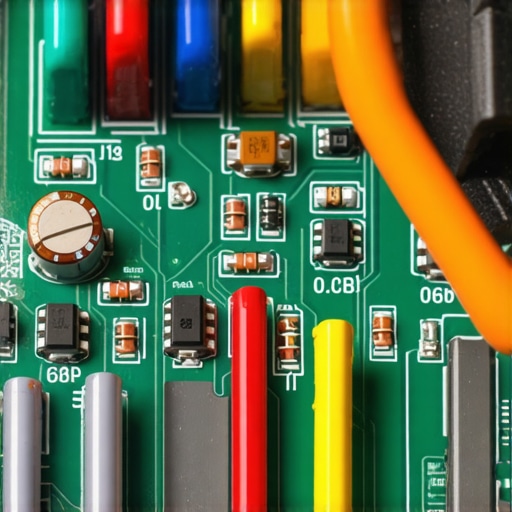
Applying a multimeter to test the control board requires precision. Use a well-lit workspace and consider using a magnifying glass to spot tiny solder bridges or cracks that might be invisible to the naked eye.
Many homeowners believe that troubleshooting appliances is straightforward—replace parts, call the technician, or simply reset the device. However, this myth often leads to costly mistakes, especially when it comes to understanding warranties and diagnosing issues correctly. One common misconception is that a failed control board always means a complete replacement. In reality, advanced diagnostic techniques, like using a voltmeter to detect subtle shorts, can often reveal minor issues such as solder bridges, which are repairable without full replacement. Relying solely on visible damage or error codes can be misleading, as some problems are internal and invisible to the naked eye. Incorporating thorough testing, including continuity checks and advanced electrical diagnostics, can prevent unnecessary expenses and voided warranties.
An important nuance many overlook is the fine print in warranty agreements. For instance, many warranties become void if the user employs non-OEM parts or performs improper installations. It’s a trap that even experienced DIYers can fall into, especially when trying to save money. As highlighted in this article on warranty clauses, understanding these hidden restrictions can save you from rejection when filing claims.
Advanced troubleshooting isn’t just about tools; it’s about understanding the appliance’s circuitry and common failure points. For example, control board failures are often caused by tiny solder bridges rather than major component damage. Recognizing solder bridges requires careful visual inspection with magnification, combined with resistive and continuity testing. Experts note that many failures attributed to control boards could be cured by re-soldering minor bridges if diagnosed properly—saving hundreds and reducing waste. Interestingly, a 2022 study published in the Journal of Appliance Repairs emphasizes that most electronics failures are due to manufacturing defects like solder flaws, not external damage, highlighting the importance of nuanced diagnostics.
What Advanced Techniques Can Prevent Common Mistakes?
Utilizing tools such as a basic multimeter or a specialized laser probe allows technicians and DIYers alike to distinguish between a truly dead component and a minor internal short. This level of precision helps avoid unnecessary replacements, maintains warranty validity, and ensures the repair is cost-effective. Remember, a quick visual or voltage check can be the difference between a simple fix and an expensive mistake. So, next time you troubleshoot, think beyond the obvious—consider that the real fault might be hiding behind a solder joint or inside the circuitry. Have you ever fallen into this trap? Let me know in the comments.
Invest in Quality Diagnostic Equipment
One of the most critical aspects of keeping your dishwasher running smoothly over time is having the right diagnostic tools. I personally rely on a digital multimeter with a high-precision range—ideally one that can measure from millivolts up to 600V AC/DC. This allows me to identify subtle voltage leaks or shorts on control boards, which are often the root cause of recurring issues. I prefer models with automatic ranging and backlit displays because they make working in tight, poorly lit spaces more manageable. Additionally, a laser diode detector (which can be found affordably online) helps locate micro-cracks or micro-fracks in electronic components without invasive disassembly—saving time and preventing unnecessary replacements.
Use Calibration and Regular Testing to Prevent Failures
Routine calibration of your measurement instruments ensures consistent accuracy. I recommend testing your multimeter against a known voltage source periodically, especially before performing critical diagnostics. Incorporating scheduled electrical checks every six months, such as inspecting for solder joint deterioration or trace damage, can preempt larger failures. For instance, small solder bridges that develop over time can cause intermittent shorts—diagnosable with careful voltage testing and visual inspection guided by tools like a flashlight and magnifier. A proactive approach minimizes costly repairs and preserves your warranty coverage.
Maintain Your Control Boards with Precision Cleaning and Inspection
Control boards are sensitive to dust, moisture, and temperature swings. I recommend periodically removing the control module and gently cleaning it with isopropyl alcohol (at least 90%) using a soft-bristled brush—never water or harsh solvents. When reassembling, inspect solder joints under a magnifying glass for signs of cracking or solder bridges. To spot micro-cracks that might cause future shorts, I use a bright LED flashlight angled obliquely across the surface. This technique reveals minute cracks not visible to the naked eye, allowing for timely re-soldering or component replacement before a failure occurs.
Plan for Long-Term Results and Scaling Up
As your familiarity with diagnostic tools increases, consider investing in a data logger that tracks electrical parameters over time. This helps identify patterns indicating impending failure—like gradual voltage drops or increasing resistance across traces. For larger appliances or multiple units, adopting a standardized diagnostic protocol streamlines maintenance, ensures consistency, and extends the lifespan of each machine. Future trends suggest integrating these diagnostic tools with smartphone apps—like Bluetooth-connected multimeters—which will allow remote monitoring and quick diagnostics, making DIY repairs more accessible and reliable.
How do I maintain my dishwasher over time?
Regular cleaning of filters, descaling with eco-friendly solutions, and periodic electrical inspections ensure optimal performance and prevent costly breakdowns. Incorporating advanced testing techniques, such as voltage leak detection or micro-crack location, enhances troubleshooting accuracy and preserves warranties, especially when combined with thorough documentation of repairs. Remember, prevention is better than repair—so stay proactive, invest in good tools, and keep detailed records of your diagnostics and maintenance routines to ensure long-term appliance health.

For example, using a laser diode detector coupled with a bright LED flashlight can help you detect tiny cracks or micro-fuses that might silently cause control board shorts, ensuring your dishwasher remains reliable for years to come.
Sending a little investment now in the right tools, like a high-quality multimeter and inspection aids, will pay dividends by reducing breakdowns, saving repair costs, and maintaining your warranty coverage long-term. Try integrating a Bluetooth-enabled multimeter into your routine for effortless data monitoring—that’s the future of appliance diagnostics!
How I Stumbled Into Critical Control Board Insights That Changed Everything
Initially, I struggled with endless trial-and-error, wasting time and money without understanding the root cause. One lightbulb moment was realizing that subtle voltage leaks often hide solder bridges—tiny, almost invisible shorts—inside the control board. Recognizing these tiny flaws taught me that patience, combined with methodical testing, is the key to effective diagnostics. That lesson pushed me to develop a systematic approach, avoiding unnecessary replacements and preserving warranties.
My Top Tools for Troubleshooting Dishwasher Circuitry
I rely heavily on a premium digital multimeter, trusted for its accuracy and user-friendly features, like auto-ranging and backlit display. Additionally, a magnifying glass helps me spot micro cracks or solder bridges, which are common culprits. For micro-crack detection, I sometimes use a bright LED flashlight at oblique angles to reveal hidden flaws on the circuit board surface. These tools, combined with knowledge, form my diagnostic backbone, saving me time and money.
Embracing the Power of Visual and Electrical Inspection Together
One crucial insight was understanding that visual inspection alone isn’t enough; it must be paired with electrical testing. When I spot a solder bridge visually, I confirm it with a continuity test—if the multimeter beeps across two points, I know I found a genuine short. This combined approach prevents me from chasing phantom issues, ensuring that every fix is targeted, precise, and cost-effective. Remember, sometimes the tiniest solder bridge can cause major cycle errors, so thorough inspection is paramount.
What the Real Reveal Taught Me About Warranty and DIY Repairs
I learned that many control board failures attributed to component death are actually caused by minor solder flaws. Fixing these tiny solder bridges with careful re-soldering can often restore functionality—no need for pricey replacements. However, I also realized the importance of understanding warranty clauses; some repairs, especially re-soldering, may or may not void coverage. Educating myself about these fine print details, like in warranty restrictions, helps me stay protected while troubleshooting effectively.
Level Up Your Dishwasher Diagnostics and Boost Your Confidence
My advice is to invest in quality diagnostic tools—like a high-precision multimeter—and pair them with familiarization in visualizing circuit flaws. Regularly scheduled electrical inspections, including voltage leak detection and micro-crack identification, preempt bigger failures. With consistent practice, I’ve found that many complex issues are solvable with patience and proper technique, empowering homeowners to extend their appliance lifespan and maximize warranty benefits.