

There is nothing quite like the feeling of defeat when you open your dishwasher after a long cycle, only to see that little plastic door still stubbornly shut, mocking you with a half-dissolved pod dripping down the front. I’ve lived that nightmare more times than I care to admit. I remember one specific Tuesday where I was so convinced my machine was toast that I almost started shopping for a new one. It turned out I had just wedged a giant wooden salad bowl right in the door’s path. I felt like a total amateur. We buy these machines to save time, yet we end up standing over the sink hand-washing everything because of a one-inch piece of plastic. If you are tired of the soggy soap mess, you are in the right place.
Why Your Soap Door Refuses to Open During the Cycle
The reality is that your dishwasher is a choreographed dance of water and timing. When that dance gets interrupted, your dishes stay dirty. I used to think it was a major mechanical failure every time, but after years of tinkering and talking to pros, I realized there’s usually a secret reason your dishwasher detergent door stays shut that has nothing to do with broken motors. Most of the time, it is about physical clearance. If a stray spatula or a “handy” oversized cutting board blocks the path, the actuator simply can’t push the door open. It is a simple fix, but it requires changing how we think about the lower rack.
Have you ever had to re-run a full three-hour cycle just because of one misplaced spoon? It is a massive waste of energy and water. In fact, running a second cycle can significantly increase your utility costs over a year. I have learned the hard way that understanding appliance diagnostics early on can save you from unnecessary frustration and even help when you are dealing with warranty claims down the road. Have you noticed a specific dish that always seems to be the culprit in your kitchen? Let me know, because I am convinced certain cookie sheets are out to get us.
Is my dishwasher actually broken or am I just loading it wrong?
It is a fair question to ask. You might be worried that the spring is snapped or the wax motor is burnt out. While those components do fail, 90% of the “blocked door” issues I see are purely related to how the machine is packed. Sometimes, it is not even the dishes—it is the detergent itself. I found out through a very grumpy technician that service techs often hate pod detergents because they can get sticky if your hands are even slightly damp when you touch them. That sticky residue acts like glue on the dispenser seal, holding it shut against the spring’s pressure.
Did you know that according to research from the University of Bonn, the most common reason for poor dishwasher performance isn’t the machine’s age, but how the user interacts with the spray arms and dispensers? It is true. Even a small obstruction can drop the internal cleaning efficiency by over 40% because the soap isn’t released at the optimal time for the heat cycle. I want to help you get back to a life where you don’t have to double-check the dispenser every single morning. We are going to look at the geometry of your racks and the chemistry of your soap to ensure that door pops open every single time.
Stop Blocking the Soap Door Swing Path
To fix this, you need to treat your dishwasher rack like a game of Tetris where the dispenser is the ‘no-go’ zone. I remember once cramming a massive wooden pizza peel into the front-left corner. I thought I was being efficient, but when the cycle ended, the peel was covered in half-melted detergent ‘goo’ and the dishes were filthy. That taught me the golden rule: nothing taller than five inches should ever sit directly in front of the detergent door. This is often the secret reason your dishwasher detergent door stays shut. You should use the trick for fitting oversized pots without breaking the rack to shift those larger items toward the back or the far right, well away from the dispenser’s swing path. If the door can’t swing out at least 90 degrees, your soap is staying put.
Clean Your Seals to Prevent Soap Glue
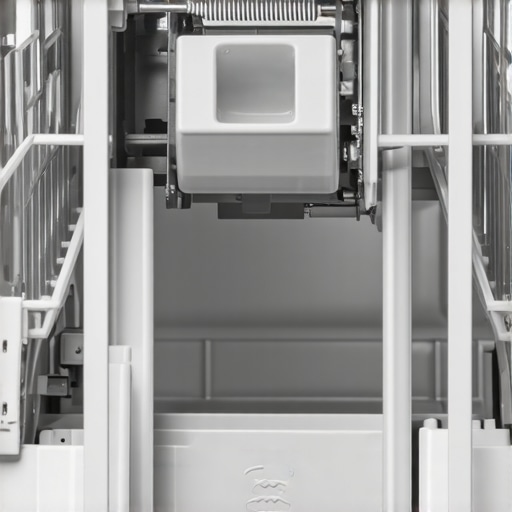
Next, look at the gasket. Detergent pods are convenient, but they are also incredibly sticky. If you handle them with wet hands, a tiny bit of soap residue can transfer to the dispenser’s rubber seal. Over time, this acts like a low-grade adhesive. I’ve seen doors that were mechanically perfect but held shut by nothing more than a thin layer of dried soap. Grab a damp cloth and wipe the perimeter of the door and the latch mechanism. If you suspect the dispenser itself is failing, you might find that the $2 fix for a leaking soap dispenser is all you need to stop the buildup from happening in the first place. Keeping this area clean ensures that when the machine signals for soap, the spring has enough force to break the seal and release the payload.
Check the Dispenser Solenoid for Vital Signs
If the path is clear and the seal is clean, it’s time for a quick hardware audit. Your dishwasher uses either a mechanical spring or a small electric ‘wax motor’ to pop that door open. Think of the wax motor as a tiny heater: it warms up, expands, and pushes a rod to trigger the latch. If you have a multimeter, you can check for continuity. Knowing how to test your inlet valve with a simple voltmeter uses similar principles to testing the dispenser solenoid. You are looking for a specific electrical ‘pulse’ during the wash cycle. If the motor is dead, no amount of careful loading will save you. If you’re still stuck, you might need to find a service manual hidden inside the unit—usually behind the kickplate—to see the specific wiring for your model’s dispenser.
Ensure the Main Door Is Level
Sometimes the issue is deeper, like a failing control board or physical misalignment. I’ve learned that understanding appliance diagnostics can help you figure out if the machine is even sending the signal to open the door. You can also test a door latch with a business card to see if the overall door alignment is putting pressure on the dispenser housing. If the main door is sagging or the machine isn’t level, it can warp the inner plastic enough to pinch the soap door shut. Before you start tearing parts off, take photos of the failed pod in the door. Having the photo evidence you need for every warranty claim is vital if you eventually decide this is a manufacturer defect rather than user error.
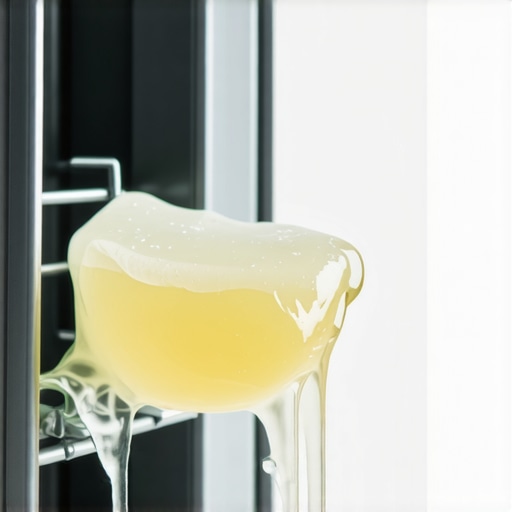
Most people assume that running the most efficient, low-temperature cycle is the kindest thing they can do for their appliance and their wallet. I used to be one of them. However, here is a truth that might sting: your ‘Eco’ setting is often the hidden reason your detergent door is failing. Modern pods require specific thermal thresholds to break down the outer membrane. If you are constantly running cold or lukewarm cycles, that membrane doesn’t fully dissolve—it turns into a gelatinous sludge that gums up the dispenser hinge. In my experience, why the heavy cycle is actually better for your machines health often comes down to the fact that higher heat keeps these mechanisms clear of debris.
The Association of Home Appliance Manufacturers (AHAM) has pointed out that while energy efficiency is a priority, the chemistry of modern detergents is designed for a specific ‘activation temperature.’ If your water heater isn’t set high enough, or if your machine is struggling to hit those targets on a green cycle, the dispenser might not even get the physical signal to pop. This leads to a cycle of ‘phantom’ repairs where people replace perfectly good parts when they really just needed more heat to melt the residue.
Can a software update actually break my detergent door?
It sounds like a bad joke, but in the era of ‘smart’ appliances, it is a very real frustration. I have seen cases where a simple Wi-Fi update changed the timing of the dispenser solenoid by just a few seconds, causing it to fire while the spray arm was still in a position that blocked the door’s arc. If you find your machine acting weird after a sync, you might be dealing with a scenario where why your appliance firmware update just bricked the control board or at least glitched the sensor logic. This is the ‘Oops’ factor of modern tech: more features mean more ways for the software to fail in ways a manual can’t predict.
The trap that gets your warranty claim denied
One massive trap to avoid is letting a service tech see a box of cheap, non-HE detergent sitting on your counter. Even if it has nothing to do with the mechanical failure of the door, why service techs deny warranty claims for soap choice is a common tactic to shift the blame onto the consumer. They look for any reason to cite ‘user error’ to avoid a manufacturer payout. This is why how appliance diagnostics can save your warranty benefits is so crucial; you need to prove the hardware failed due to a defect, not because of your maintenance habits. Have you ever had a warranty claim denied for something as silly as the brand of soap you used? Let me know in the comments, because some of these stories are truly wild.
Finally, if you are out of the standard coverage window, don’t panic. You can sometimes how to get a manufacturer to pay for an out-of-warranty repair if you can prove a known part defect through recorded diagnostics. It takes persistence, but knowing the difference between a poorly loaded rack and a legitimate failing control board is your best leverage in any negotiation with the brand.
I didn’t start out with a toolbox full of gadgets. In the beginning, I just had a screwdriver and a prayer. But if you are serious about never being held hostage by a broken soap door again, you need to invest in a basic digital multimeter. I use mine specifically for testing the continuity of the dispenser solenoid. If you’ve never used one, do not be intimidated. I have found that testing your inlet valve with a simple voltmeter uses the exact same logic as checking your detergent dispenser. You are looking for a specific resistance value; finding the exact multimeter reading for a healthy thermal fuse or solenoid can tell you instantly if the part is dead or if your control board is the real villain. Stop guessing and start measuring.
How can I maintain my dishwasher performance over several years?
Consistency is the secret sauce to appliance longevity. I personally set a calendar reminder for the first of every month to run a high-heat cleaning cycle. Many people ignore this, but the real cost of skipping your monthly descaling cycle isn’t just a smelly tub—it is the gradual calcification of the moving parts in your dispenser and pump. I also recommend a quick physical inspection of the spray arms. Use a bright flashlight to look for debris. If you see clogs, how a toothpick can save your spray arm from clogs is a tip that sounds too simple to work, but it prevents the pressure imbalances that often lead to leaks or door failures.

As we look toward the future, the DIY repair world is shifting. According to technical bulletins from the Appliance Service Training Institute (ASTI), the industry is moving away from mechanical timers toward highly sensitive electronic sensors. I predict that within the next five years, we will see ‘predictive diagnostics’ become standard, where your machine sends a notification to your phone before the soap door hinge actually snaps. Until then, you need to be your own advocate. Using troubleshooting dishwasher problems expert diagnostics repair tips will keep you ahead of the curve and prevent small hiccups from turning into thousand-dollar replacements.
If you are currently fighting with a manufacturer, remember that data is your best friend. Proving that you have performed regular maintenance can be the difference between a free repair and a denied claim. I have seen how how appliance diagnostics can save your warranty benefits by providing objective proof of hardware failure. Don’t let a technician tell you it’s your fault without seeing the diagnostic codes yourself. If your machine is acting up, I challenge you to try the ‘business card test’ on your door latch today—it is the easiest way to see if a simple misalignment is the root of your detergent drama. If you need more specific help, you can always contact us for guidance on your specific model.
The Hidden Obstacles That Keep Your Soap Door Stuck
Through years of trial and error, I’ve realized that the small things often matter more than the big ones. Here are a few lightbulb moments I wish I had known before I started taking my machine apart: Don’t trust the “click.” Even if the dispenser sounds like it is locked, a tiny piece of plastic flash from a cheap pod can act as a wedge, preventing the spring from releasing under pressure. Also, gravity is a silent saboteur; if your machine is tilted even slightly forward, it places weight on the latch mechanism that the tiny wax motor simply cannot overcome. Remember that your “Eco” setting might be creating a wax wall. Without regular high-heat cycles, detergent residue builds up until the door is literally glued shut. Maintenance is your legal shield, and keeping a log of your cleaning ensures you know when to trust a warranty for dishwasher repairs versus when you need to handle the fix yourself.
Tools That Turned Me Into a Home Repair Pro
You don’t need a professional workshop to fix these issues, but a few specific items will make your life much easier. I always keep a digital multimeter on hand to check the solenoid; it’s the only way to be 100% sure the hardware hasn’t failed electrically. I also swear by using a dedicated monthly descaling agent, because the real cost of skipping your monthly descaling cycle is often a failed dispenser door that requires a full replacement. Finally, bookmarking professional resources like troubleshooting dishwasher problems expert diagnostics repair tips has saved me more money on service calls than I can count. These tools give you the data you need to prove your case to a manufacturer if the part is truly defective.
Reclaiming Your Time From Dirty Dishes
Dealing with a stubborn dishwasher detergent door is one of those small frustrations that can ruin a perfectly good morning, but once you understand the physics of the rack and the chemistry of the soap, you are no longer at the mercy of the machine. You have the tools to diagnose, the knowledge to repair, and the evidence to protect your wallet. Remember that how appliance diagnostics can save your warranty benefits is about more than just fixing a door; it is about being an informed homeowner who doesn’t get pushed around by fine print. Don’t be afraid to pull out that kickplate and look for the manual—you’ve got this. If you ever feel stuck or need a bit more guidance on a specific model, feel free to contact us any time. Have you ever found a weird item like a stray chopstick or a giant spoon blocking your soap door? Let me know in the comments below!
#IMAGE_PLACEHOLDER_E#