

The air smelled like ozone and burnt hair. It was three in the morning, the thunder had just stopped rattling my windows, and my kitchen was eerily silent. Usually, the dishwasher hums a low tune in the background, but tonight? Nothing. I pressed the power button—once, twice, then frantically like a Morse code operator. Dead. That’s when I realized my mistake: I had forgotten to stop using your dishwasher during a thunderstorm. I felt that sick pit in my stomach because I knew exactly what had happened. My main control board had just been fried, and I had no idea how I was going to prove it to a skeptical insurance adjuster or a warranty rep who is paid to say ‘no.’
Winning the Fight Against Your Insurance Adjuster
Today, I am going to show you exactly how to document the carnage so you can get your claim approved without the headache. Proving a power surge killed your main control board isn’t just about showing it doesn’t work; it’s about finding the physical ‘smoking gun’ on the circuit. Whether you are dealing with a dishwasher that won’t start or a fridge that went dark, the steps are the same. I learned this the hard way years ago when I tossed a damaged board into the trash before the inspector arrived. That mistake cost me $400 out of pocket. We are going to make sure that doesn’t happen to you. We’ll look at the scorched traces, the swollen capacitors, and understanding appliance diagnostics to build a bulletproof case. Have you ever opened your machine after a storm only to find it completely unresponsive? Tell me about your experience in the comments below.
Is it even possible to prove a surge after the fact?
It is a common fear that without a witness, you are stuck with the bill. However, electrical surges leave behind very specific signatures that are hard to argue with. According to the Insurance Information Institute, lightning-related claims remain a massive category for homeowners’ insurance, yet many are denied simply because of a lack of technical evidence. To avoid this, you need to know the photo evidence you need for every warranty claim. We aren’t just looking for a dead machine; we are looking for the literal path the electricity took as it surged through your home’s wiring. If you can see a blackened spot on a relay or a popped capacitor, you have already won half the battle. If you’re currently staring at a blank display, don’t panic. Sometimes the fix is as simple as the one-minute move to reset your control board, but if that fails, it is time to dig deeper into the hardware itself.
Expose the Heart of the Machine
Before you can prove anything, you have to get to the ‘brain’—the main control board. Think of this like an autopsy; you aren’t just looking for what’s broken, you’re looking for the cause of death. Most dishwashers house this board behind the door panel or tucked near the bottom kickplate. If you’re struggling to locate it, your first move should be to find a service manual hidden inside the unit. These are often tucked in a small plastic envelope behind the bottom toe kick.
I remember a specific case last July where a homeowner was convinced their dishwasher was just ‘old.’ When I pulled the board, I found a soot-covered trace that looked like a tiny lightning bolt had struck the green fiberglass. The insurance adjuster tried to argue it was ‘normal wear and tear’ until I pointed out that normal wear doesn’t leave carbon scoring. That one piece of evidence saved them $600 by forcing the company to acknowledge the surge.
Look for the Swollen and the Scorched
When a surge hits, the energy has to go somewhere. Capacitors are usually the first to take the hit. They act like tiny batteries, and when they get too much juice, they ‘pop’ or swell. You need to learn how to spot a failing control board capacitor by sight by looking for tops that are domed or rounded instead of perfectly flat. If you see a brownish, crusty leak coming from the base of a cylinder, that’s your smoking gun.
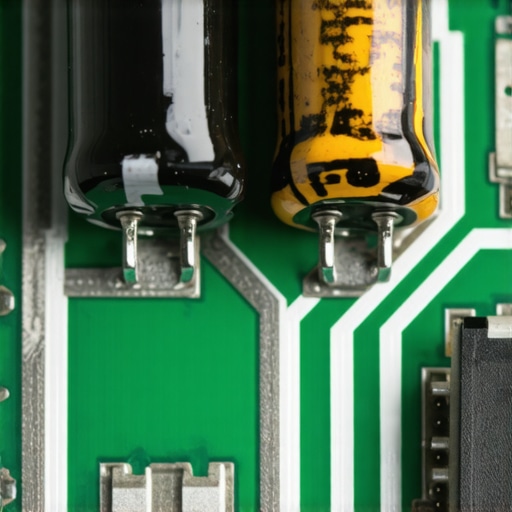
Don’t stop there. Flip the board over and look at the ‘traces’—the silver or copper lines that act as the roads for electricity. If a road looks like it’s been blasted with a blowtorch, the surge jumped the track. This is exactly the photo evidence you need for every warranty claim. Take high-resolution photos with a flashlight aimed sideways across the board to highlight the texture of the damage and the soot.
Verify Life with a Multimeter
Visuals are great, but numbers don’t lie. Even if a board looks clean, a surge can kill a component internally without leaving a mark. One of the most common victims is the thermal fuse or the power relay. You’ll want to check the exact multimeter reading for a healthy thermal fuse to ensure the path for power is actually open. If the fuse is blown, it is a safety mechanism that did its job during the surge, but it often indicates a massive spike hit the system.
While you have the meter out, testing a solenoid valve for continuity in 3 steps can help rule out other components. Often, a surge that kills the board also damages the inlet valve coils. This kind of deep-dive is the core of how appliance diagnostics can save your warranty benefits. You are providing the technician or adjuster with data that makes it impossible for them to claim user error or random failure. If you’re currently staring at a machine that shows some signs of life but won’t start the wash, you might be dealing with the fix for a dishwasher that wont start but has power which often leads right back to a partially failed relay on the board that was weakened by the storm.
The Myth of the Magic Surge Protector
Most homeowners believe that if they have a surge protector at the outlet, their dishwasher is invincible. In my experience, this is a dangerous half-truth. While a surge protector handles the massive spikes from a lightning strike, it does nothing for the ‘silent killers’—the micro-surges generated by your own AC unit or refrigerator compressor cycling on and off. According to research by the National Institute of Standards and Technology (NIST), up to 80% of power surges actually originate from within the home itself. This cumulative damage is often what weakens a board right before a storm finishes it off. If you’ve replaced your board with cheap, off-brand components, you might find yourself in a bind because the truth about non-manufacturer repair parts and your warranty is that they rarely carry the same electrical tolerances as OEM parts, making them ‘surge magnets.’
Stop Hiding the Evidence with Factory Resets
Here is the trap that catches even the smartest DIYers: the frantic reset. When a machine dies, our first instinct is to try the one-minute move to reset your control board over and over. While this is a great troubleshooting step for a glitch, doing it ten times in a row on a surge-damaged machine can actually clear the error log that an insurance adjuster needs to see. I once watched a homeowner lose a $500 claim because they successfully cleared the ‘Over-Voltage’ error code from the machine’s memory before the tech arrived. If you suspect a surge, check the display once, take a photo of the code, and then stop. This is a vital part of keep these three receipts to ensure a smooth repair claim because your ‘receipt’ in this case is the digital proof of the failure.
Can a minor power spike actually brick your software?
Many advanced users wonder if the hardware is always the culprit. The answer is no. Sometimes the physical board is fine, but the electrical noise from a storm causes a ‘bit-flip’ in the EEPROM chip. This is effectively why your appliance firmware update just bricked the control board—the software instructions become garbled. If your machine is beeping in a strange rhythm, don’t assume the motor is dead. You might need to look into understanding appliance diagnostics to see if the board is simply ‘confused’ rather than ‘fried.’ Have you ever fallen into this trap of over-resetting your machine? Let me know in the comments. Knowing the difference between a software glitch and a physical burn is the hidden loophole that gets your denied claim reversed, as it proves the failure was external and sudden, rather than a slow decline due to the fine print about normal wear and tear on appliances.
Moving beyond the immediate ‘is it fried?’ panic, I want to share the specific toolkit that turned me from a frustrated homeowner into a confident troubleshooter. Most people think a screwdriver is the main tool for a dishwasher, but I would argue a thermal camera is far more valuable today. Why your service technician carries a thermal camera isn’t just about looking high-tech; it is about seeing ‘invisible’ heat signatures on a circuit board that a multimeter might miss. If a relay is under-performing because of micro-fractures from a surge, it will glow like a Christmas tree under infrared before it actually fails. 
Whenever I dive into a machine that seems ‘glitchy,’ I also check for mechanical strain. A clogged pump makes the board work harder, drawing more current and generating more heat. This is where the real cost of skipping your monthly descaling cycle becomes apparent. Limescale doesn’t just block water; it creates friction for the motor. According to technical bulletins from the Association of Home Appliance Manufacturers (AHAM), mechanical resistance is a leading cause of premature control board failure because of the increased electrical load it puts on the transistors. I have found that learning how a toothpick can save your spray arm from clogs is just as important for the long-term health of your board as it is for the cleanliness of your plates.
How do I maintain my dishwasher electronics over the long haul?
Maintenance for a modern machine involves more than just scrubbing the tub; you need to ensure the electrical environment is stable. If you are handy, knowing how to test your inlet valve with a simple voltmeter can tell you if a solenoid is drawing too much power before it blows a fuse on the board. I also recommend checking your network environment. It sounds crazy, but I have seen cases where why your smart home hub is blocking appliance commands leads to the board constantly waking up and ‘pinging,’ which shortens the lifespan of the standby power supply. Modern boards are sensitive, and the future of repair is definitely heading toward ‘predictive maintenance’ where your machine will use onboard sensors to ping your phone to say a capacitor is nearing its end-of-life before the smoke starts.
Don’t wait for the next thunderstorm to think about your board’s health. My challenge to you: pull that bottom kickplate today and look for the debris trap most owners miss during monthly cleaning. A clear path for water means a clear path for electricity, and that is the best warranty policy you can give yourself. If you have ever noticed your machine taking forever to finish, check why high efficiency dishwashers take longer to finish to see if it is normal or a sign of a struggling sensor. Taking fifteen minutes to check these basics now will save you a $400 headache later.
Lessons From the Technician’s Clipboard
Over the years, I’ve realized that the difference between a paid claim and a $500 bill is often just ten minutes of prep. One of the biggest eye-openers for me was learning why your warranty terms change after the first year; manufacturers get much stricter, making your physical evidence even more critical. I also learned that why service techs deny warranty claims for soap choice isn’t just a myth—they look for any reason to pivot away from ‘electrical surge’ and toward ‘user error.’ Don’t give them that chance.
Another hard-earned lesson: check your local utility company’s outage map. Most providers log ‘voltage events.’ A screenshot of a recorded spike in your neighborhood is the ultimate corroborating evidence that turns a ‘maybe’ into a ‘must-pay’ for an insurance company. Finally, always keep your old board until the check clears. I once had an adjuster ask for a second look three weeks after the initial inspection.
The Survival Kit for Your Kitchen Electronics
If you want to move beyond guessing, you need a few core resources. First, bookmark a guide on top signs your dishwasher needs professional diagnostics so you can identify the point of no return. Second, I highly recommend keeping a dedicated folder for your appliance manuals and purchase receipts. If your machine is showing ‘ghost’ symptoms, look into why your appliance overheated without tripping a fuse to see if the surge caused a slow-burn thermal event that compromised the insulation.
#IMAGE_PLACE_HOLDER_E#
Finally, dive into troubleshooting dishwasher problems through the lens of a professional. This shifts your perspective from ‘my machine is broken’ to ‘the circuit was interrupted at point A,’ which is exactly the kind of logic that insurance companies respect.
Stop Letting the Adjuster Say No
You don’t have to be a master electrician to stand your ground and protect your home’s infrastructure. By identifying those scorched traces and checking your thermal fuse, you are speaking the language of the warranty department. If you find yourself facing a denial, remember there is almost always a path forward, including how to get a manufacturer to pay for an out-of-warranty repair when the hardware should have been more resilient. Your dishwasher is the workhorse of your kitchen; don’t let a single lightning strike put it out to pasture permanently. Have you ever had a warranty claim denied for something you knew was a power surge? Let me know your story in the comments below.