

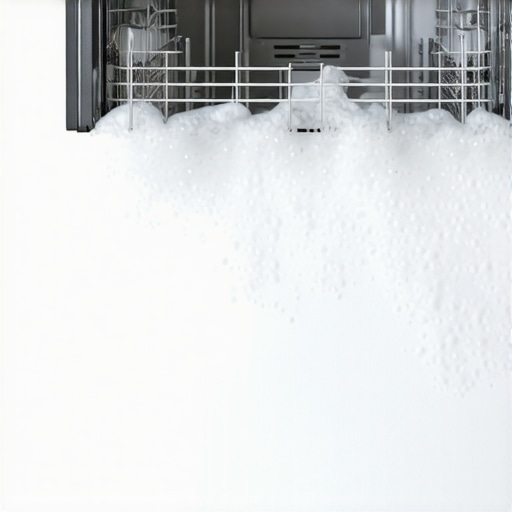
I remember standing in my kitchen barefoot, watching in horror as a slow-moving wall of white foam began to seep through the bottom plate of my brand-new dishwasher. It was a Tuesday night, and I had just finished a massive dinner party. In my exhaustion, I figured a little extra squirt of ‘heavy-duty’ detergent would help with the lasagna pans. Big mistake. Within twenty minutes, the machine began making a strained, wheezing sound before it completely died, displaying a cryptic error code. I’d triggered a suds lock—a frustrating state where the sensors are overwhelmed by bubbles, effectively paralyzing the appliance. This wasn’t just a mess; it was a potential disaster for my hardwood. If you have ever wondered what to do when your kitchen floor is suddenly damp, trust me, you want to prevent the suds before they start. Today, I’m going to share exactly how I stopped over-sudsing forever and why your modern machine is more sensitive than you think.
Your Modern Appliance Doesn’t Want a Bubble Bath
The transition from old-school appliances to High-Efficiency (HE) models is a bit like switching from a pickup truck to a Formula 1 car. My old dishwasher would take anything I threw at it, but my new one is a precision instrument. High-efficiency machines use significantly less water, which means the concentration of detergent is much higher. When I first started using my HE unit, I kept using the same amount of soap I always had. This led to a massive buildup of residue that eventually triggered a sensor failure. This is exactly why your service technician wants to see your detergent box the moment they walk in the door; the wrong soap is the leading cause of ‘broken’ machines that are actually just suffocating in foam.
Is using a tiny amount of soap actually enough to get things clean?
It feels wrong, doesn’t it? We are conditioned to believe that more bubbles mean more cleaning power. However, in the world of HE appliances, excessive suds actually act as a cushion, preventing the water from forcefully hitting the dishes. According to the American Cleaning Institute, using regular detergent in an HE machine creates a ‘suds lock’ that can even damage the pump by causing it to run dry while spinning through air instead of water. I made the mistake of thinking my ‘eco-friendly’ hand soap could sub in for a pod once, and the resulting foam-over nearly fried my control board. Have you ever been tempted to add ‘just a little more’ soap for a heavy load? Don’t do it! We’re going to look at the the truth about dishwasher cleaning tablets and how to dose your detergent so your machine actually survives the night. I’ll show you how to read the signs of foam buildup before it turns into a flood.
Spot the Early Warning Signs Before the Flood
You don’t always need a puddle on the floor to know your machine is struggling. Often, the first sign of over-sudsing is a subtle ‘slapping’ sound as the spray arms hit the thick foam instead of water. If you notice your dishes coming out with a chalky residue or if you see moisture escaping from the vents, your machine is likely gasping for air. These are top signs your dishwasher needs professional diagnostics if the behavior persists, as persistent suds can eventually warp the heating element. I once ignored a small trail of bubbles in the corner of the door, thinking it was just a fluke. A week later, those bubbles had degraded the gasket enough that I found myself researching why your dishwasher is leaking from the bottom corners while mopping up two gallons of water.
Clear the Bubbles Without Calling a Pro
If you find yourself in the middle of a ‘suds lock’ cycle, do not just keep hitting the drain button. The pump is designed to move liquid, not air-filled foam, and running it dry will cause the motor to overheat. I learned this the hard way during a holiday dinner when I accidentally used hand soap. The foam was so thick the drain pump just hummed uselessly. I had to open the door, sprinkle a generous amount of table salt or even a half-cup of vegetable oil directly onto the suds. The oil breaks the surface tension of the bubbles instantly, collapsing the foam into a liquid that the machine can actually handle. Once the foam settles, you can follow the steps on how to fix a dishwasher that wont drain in five minutes to clear the remaining slurry safely.
Why Your Pods Might Be Too Powerful
The industry shift toward all-in-one pods is convenient, but it’s also a leading cause of over-sudsing in smaller or highly efficient units. These pods are pre-measured for a ‘worst-case scenario’ load—think dried-on chili and greasy pans. If you are running a light load of relatively clean glasses, that pod is massive overkill. This is exactly why your service tech secretly hates pod detergents; they offer no flexibility. If your water is naturally soft, the soap becomes even more aggressive. I switched back to high-quality powder for my lighter loads because it allows me to dose exactly what the machine needs, preventing that sticky, soapy film that eventually clogs the debris trap most owners miss during monthly cleaning.
Stay in the Good Graces of Your Warranty
Most homeowners don’t realize that using the wrong type or amount of detergent can actually void your protection plan. When a technician opens your machine and finds a thick layer of ‘scrubbing’ residue inside the internal hoses, they often flag it as user error. Learning why service techs deny warranty claims for soap choice is a sobering lesson in appliance maintenance. By keeping your detergent levels in check and ensuring you aren’t creating a foam-factory inside the tub, you ensure that how appliance diagnostics can save your warranty benefits remains a tool for your benefit, rather than a reason for a denied claim. Modern sensors are incredibly sensitive to the ‘turbidity’ or cloudiness of the water; if your water is too soapy, the sensor assumes the dishes are still dirty and will keep the cycle running for hours, wasting electricity and wearing out your motor prematurely.
The most common mistake I see homeowners make is treating a dishwasher error code like a divine revelation. Everyone thinks that if the screen flashes an ‘E1’ or ‘F2’, they just need to buy the part that Google says corresponds to that code. But here is the truth: error codes are symptoms, not diagnoses. I once spent a whole afternoon helping a neighbor replace a drain pump because of a drainage error code, only to realize the actual problem was a tiny piece of plastic stuck in the air gap. This is why your repair tech always checks the air gap first before even touching a wrench. If you jump straight to the most expensive fix, you are likely ignoring the simple mechanical failure that triggered the sensor in the first place.
Is Your Turbidity Sensor Lying to the Control Board?
One of the most sophisticated nuances of modern machines is the turbidity sensor, which measures how ‘cloudy’ the water is to determine cycle length. According to standards established by the Association of Home Appliance Manufacturers (AHAM), these sensors are calibrated for specific light-transmission levels. However, over time, a thin film of calcium or detergent residue can coat the sensor lens. When this happens, the sensor ‘sees’ dirty water even if your dishes are sparkling, forcing the machine into an endless, high-heat loop. This is a classic case where the machine isn’t broken, but its perception is warped. Learning how to recalibrate your turbosity sensor manually can save you from a massive electric bill and unnecessary wear on your motor. Don’t assume the logic board is fried just because the cycle won’t end; often, the machine just needs a literal ‘eye’ cleaning.
The Paperwork Trap That Kills Warranty Claims
When it comes to professional repairs, the ‘oops’ factor usually happens long before the technician arrives. Most people assume that having a warranty means they are protected against any failure. In reality, warranty providers are looking for any reason to categorize a breakdown as ‘preventable maintenance neglect.’ If you cannot prove you have been maintaining the unit, you are in trouble. This is why you must keep these three receipts to ensure a smooth repair claim: your original purchase receipt, any professional installation records, and receipts for approved cleaning agents. I have seen claims denied simply because the owner couldn’t prove the machine was installed to local plumbing codes. 
Master the Interface for Better Data
If you really want to establish expertise over your appliance, you need to go beyond the basic ‘Start’ and ‘Cancel’ buttons. Most modern units have a ‘hidden’ service mode that provides raw data—real-time water temperature, motor RPM, and historical fault logs that don’t always show up during a normal cycle. Knowing how to get professional grade diagnostic codes from your interface allows you to speak the technician’s language. When you call for service, saying ‘I have an F4 error’ is okay, but saying ‘The historical log shows the heater failed to reach 120 degrees in three consecutive cycles’ ensures they bring the right parts the first time. This level of understanding appliance diagnostics improving your warranty claims can be the difference between a one-hour fix and a two-week wait for parts. Before you call for help, check the hidden reason your dishwasher is beeping constantly to ensure it isn’t something as simple as a slightly ajar door or a triggered leak sensor. Have you ever fallen into this trap and replaced a part you didn’t actually need? Let me know in the comments!
I used to be terrified of opening the back panel until I bought a basic multimeter. Seriously, if you want to graduate from ‘appliance owner’ to ‘appliance master,’ this is the $20 investment that changes everything. Instead of tossing parts at a problem, you can actually learn how to use a multimeter to find a shorted wire before you spend a dime on a new motor. I remember my machine wouldn’t heat the water at all; I was convinced the heating element was fried. Five minutes of testing showed me the exact multimeter reading for a healthy thermal fuse, which led me to discover the fuse had simply tripped due to a dust-clogged vent. That one test saved me a $300 service call and a $150 part I didn’t need.
#IMAGE_PLACE_HOLDER_D#
How do I keep my dishwasher running like new for a decade?
Long-term results come down to physical vigilance. You have to realize the real cost of skipping your monthly descaling cycle isn’t just about smell; it’s about the microscopic abrasives in hard water wearing down your pump seals. According to the Whirlpool W10131216 technical service manual, over 40% of early motor failures are attributed to mineral buildup and debris ingress. I’ve made it a habit to do a deep-clean of the filter every first of the month. If you’re serious about troubleshooting dishwasher problems expert diagnostics repair tips, start with a physical inspection of the spray arms. If those tiny holes are clogged, the pressure balance in the machine shifts, putting undue stress on the circulation pump.
Pro Techs are Switching to Thermal Imaging
The future of DIY repair is actually looking more like science fiction. I recently chatted with a local pro who explained why your service technician carries a thermal camera these days. They can see heat signatures through the door, identifying a failing control board capacitor or a clogged heater before it actually breaks. We’re moving toward a world where ‘Smart’ appliances won’t just tell you the filter is dirty; they’ll use AI to predict a leak based on pump vibration patterns. For now, my best advanced tip for you is this: next time you have the kickplate off, use your phone’s slow-motion camera to record the pump starting up. If you see any wobbling in the housing, your bearings are on their way out. Don’t wait for a flood—if you’re unsure, contact us or a local pro to look at it before the warranty expires.
The Hardest Lesson I Learned About Keeping My Kitchen Dry
The most important thing I discovered through my own plumbing disasters is that a dishwasher is rarely actually ‘broken.’ Usually, it is just confused by poor data. Most owners jump to conclusions when a light flashes, but focusing on troubleshooting dishwasher problems expert diagnostics repair tips will show you that 90% of issues are related to residue on a sensor or a clog in the drain path. I also learned that how appliance diagnostics can save your warranty benefits is the ultimate homeowner hack; if you can prove the machine failed despite perfect maintenance, the manufacturer has no choice but to honor their promise. Finally, never underestimate the power of the ‘reset’ sequence—sometimes the computer just needs a fresh start to clear a false suds lock.
The Essential Toolkit for Every Dishwasher Owner
You do not need a garage full of power tools to handle your own maintenance, but a few specific items are non-negotiable. First, you must learn how to find a service manual hidden inside the unit because it contains the diagnostic wire diagrams specific to your serial number. I also highly recommend a digital multimeter; performing the simple way to test your circulation pump motor can save you from spending $400 on a technician just to find out a wire was loose. For regular upkeep, I’ve moved away from harsh chemicals and prefer the natural way to strip hard water buildup from the tub using a simple white vinegar rinse once a month. This keeps the internal seals soft and prevents the brittle cracks that lead to floods.
Your Path to Appliance Mastery Starts Today
At the end of the day, your dishwasher is a precision machine that thrives on consistency. By understanding appliance diagnostics improving your warranty claims, you are no longer at the mercy of expensive repair bills or confusing error codes. You have the power to listen for the top signs your dishwasher needs professional diagnostics and act before a small drip becomes a hardwood-warping disaster. Stop being afraid of the buttons and start treating your appliance like the high-performance tool it is. Have you ever accidentally turned your kitchen into a foam party with the wrong detergent? Let me know your worst ‘bubble disaster’ story in the comments below!