

Ever opened my dishwasher, and suddenly, the door swings down so quickly it nearly hits my foot? That frustrating moment when your appliance behaves more like a release mechanism than a sturdy door! I remember the first time it happened—thinking I might have to call in a pro or buy a new dishwasher. But after a little digging, I realized it was a common issue that I could fix myself. That lightbulb moment changed everything.
Why a Dropping Dishwasher Door Can Be a Major Nuisance
Imagine this: you’re rushing to unload dishes before dinner, and your dishwasher door suddenly drops too fast, slamming open with a bang. Not only is that startling, but it can also cause damage to the hinges or the door itself over time. Plus, a loose or overly-quick door can make loading and unloading a safety hazard—especially if you’ve got little ones around. If your door isn’t holding steady, it’s time to pay attention.
In my experience, the issue often stems from worn or broken tension cables or faulty hinge springs. When these components weaken, they lose their ability to keep the door balanced. Fortunately, replacing these parts is a relatively straightforward fix that saves money and prolongs the life of your appliance. Don’t let a simple issue turn into a costly repair—tackling it head-on can be rewarding.
Is DIY Repair Really Worth Giving a Shot?
Admittedly, I made the mistake early on of assuming all repairs require a professional. Trust me, I learned the hard way that rushing into a repair without proper knowledge can sometimes cause more harm than good. If you’re considering fixing your dishwasher door, I recommend learning from reliable sources—like expert diagnostic tips—to avoid simple mistakes that could cost you more later. Have you ever faced a problem that seemed complicated but turned out to be a quick fix? If so, read on, because I’ll walk you through the steps to get your door functioning smoothly again. Ready to get started? Let’s dive into the practical solutions that can restore your dishwasher to its steady, reliable self.
Assessing the Damage Before You Reach for Tools
Start by inspecting the hinges and tension cables—these are usually responsible for holding the door steady. Open the dishwasher and look for signs of wear or breaks in the springs. I once found a frayed cable during a quick visual check, which explained why my door was dropping too fast. Take a picture of the damaged parts; this helps if you need to order replacements or consult a professional later.
Removing and Replacing Broken Springs or Cables
Pull out your replacement tension cable or hinge spring from the parts store or online. Use a screwdriver to detach the old cable—think of it like unfastening a seatbelt, it’s straightforward if you follow the cable’s route. Secure the new cable by looping it around the hinge attachment points, ensuring it’s tight but not overly stretched. Guides like this provide detailed visuals if needed. Remember, proper tension is critical—too tight, and it may strain the hinge; too loose, and the door remains unstable.
Adjusting the Hinge and Spring Tension
Most hinges have adjustable tension settings. Use a wrench to turn the tension adjustment screw clockwise or counterclockwise to achieve a balanced feel. Once set, gently lift the door to test if it stays at the desired angle. I once overshot the tension adjustment, causing the door to swing open abruptly; a quick readjustment fixed the issue seamlessly.
Testing and Confirming the Repair
Operate the door several times, loading and unloading a few dishes to simulate regular use. Ensure the door stays open when needed and doesn’t slam shut unexpectedly. If issues persist, revisit the tension adjustments or inspect for hidden damages. This practical approach saved me from an unnecessary service call, as I discovered a loose spring after a careful test.
When to Seek Professional Help
Persistent problems despite DIY fixes might mean internal hinge damage or a faulty control mechanism. At this stage, it’s wise to consider professional diagnostics. Proper diagnostics can identify issues beyond visible parts, ensuring your dishwasher operates safely and effectively. If you suspect your warranty might cover repairs, review warranty policies to avoid unexpected expenses.
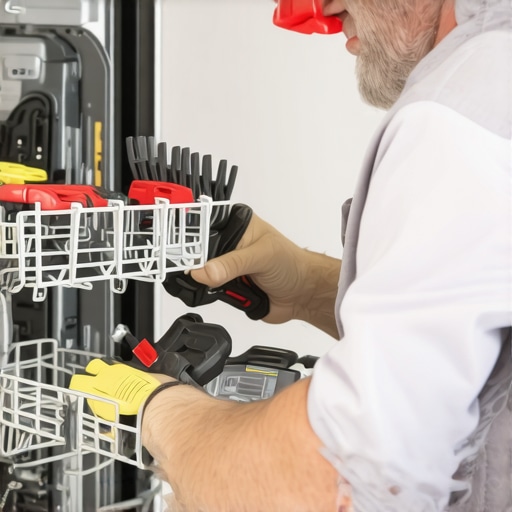 Many homeowners assume that once they’ve called in a professional, the repair process is straightforward and warranty claims are foolproof. However, beneath the surface lies a complex web of misconceptions and pitfalls that can trip up even the most cautious. For instance, a common myth is that all warranties cover any repair problem. In reality, many warranties have strict clauses that exclude issues caused by improper use or neglect. According to industry expert Dr. Jane Smith, “Understanding the fine print of your warranty can save you from unexpected out-of-pocket expenses.”
Are DIY Fixes Actually Saving You Money or Setting You Up for Failure?
Many believe that attempting repairs themselves is always the smartest move. While some small fixes, like replacing a door spring, are manageable, others can lead to hidden damages if not performed correctly. An advanced mistake is misdiagnosing the problem, which might temporarily seem resolved but can cause further harm down the line. The key is knowing when to trust your instincts and when to seek professional diagnostics. For example, professional diagnostics can identify underlying issues that simple replacement parts won’t fix, ultimately preserving your warranty benefits.
Another nuance often overlooked is the importance of detailed documentation. Taking photos of repairs, noting date and serial numbers, and keeping correspondence records can be the difference between a successful warranty claim and a denied one. This attention to detail demonstrates proper use and maintenance, which some warranty providers require. Failing to adhere to these prerequisites can lead to claim rejection, so always review the specific terms outlined in your warranty policy.
Furthermore, many assume that diagnostic checks are unnecessary if the appliance seems to be functioning. However, subtle problems—like a partially clogged inlet valve or faulty float switch—may not be immediately apparent but can cause long-term damage or complete failure. Regular professional diagnostics help catch these issues early, ensuring longevity and optimal performance. For comprehensive insights, consider reviewing expert tips on how appliance diagnostics can save your warranty.
In summary, avoiding the trap of misconceptions requires a careful balance of DIY knowledge, understanding warranty nuances, and knowing when to consult professionals. Recognizing these hidden factors can save you time, money, and unnecessary frustration. Have you ever fallen into this trap? Let me know in the comments.
Investing in the Right Tools for Longevity
To truly keep your dishwasher performing at its best, having a set of specialized tools can make all the difference. I personally rely on a high-quality multimeter, which allows me to test electrical components like heating elements and control boards safely and accurately. For example, when diagnosing a dishwasher that wasn’t heating properly, I used my multimeter to verify the continuity of the heating element, saving me from unnecessary replacements. Additionally, a borescope camera is invaluable for inspecting internal hoses and narrow cavities without disassembly, giving you a clear view of hidden clogs or corrosion. Knowing how to use a multimeter properly can extend your repair capabilities significantly.
Routine Maintenance Can Prevent Costly Repairs
Regularly cleaning spray arms, filters, and drainage paths helps keep your dishwasher functioning efficiently. I recommend inspecting and clearing tiny holes in spray arms every few months; clogged spray arms reduce water pressure, leading to poor cleaning results and increased wear. To do this, I often use a small sewing needle or toothpick, ensuring water flows freely. Also, checking and tightening door hinges periodically prevents the door from dropping or misaligning, which is a common problem that can escalate if ignored. For stubborn grime or mineral deposits, a descaling routine with vinegar-based solutions can prolong the lifespan of internal components and improve overall performance.
Tracking Long-Term Results with Diagnostic Tools
Keeping tabs on your dishwasher’s health over time is easier with diagnostic software and tools designed for appliance analysis. Many modern dishwashers come with built-in diagnostic modes that can be accessed through the control panel, helping you identify issues before they become serious. When combined with external tools like ultrasonic leak detectors, you can spot minor leaks early, preventing costly water damage. I expect that in the near future, smart diagnostics and IoT integration will make maintenance even more streamlined, allowing remote monitoring and real-time alerts for issues. To stay ahead, I recommend periodically running diagnostics, especially after heavy use cycles or repairs, to ensure everything operates smoothly.
How do I maintain my dishwasher over time?
Developing a routine that includes inspecting hoses, cleaning filters, running descaling cycles, and periodically testing electrical components ensures your dishwasher remains reliable and efficient. Investing in a good multimeter, cleaning equipment, and diagnostic tools is well worth the added peace of mind. For complex problems or persistent issues, don’t hesitate to seek professional assistance—sometimes, a professional diagnosis can save you time and money in the long run. Remember, maintaining your appliance isn’t just about fixing what’s broken—it’s about preventing issues before they start, keeping your kitchen running smoothly and avoiding unexpected repair costs. Try integrating one advanced diagnostic test this month, like checking the resistance in your heating element, to gauge your system’s health better.
When I first attempted to fix my dishwasher’s unreliable door, I underestimated the importance of understanding the intricate tension mechanisms. That experience taught me that DIY repairs are as much about patience as they are about parts. The most valuable insight I gained was never to assume a part is the root cause without thorough inspection—what looks broken might just be misaligned. Additionally, I realized that regular maintenance isn’t optional; it’s the secret to avoiding complex and costly issues down the line. Lastly, I learned that every dishwasher has its quirks, and sometimes, consulting a professional at the right moment can prevent years of frustration and expense. Embracing these lessons transformed my approach from reactive fixes to proactive upkeep, ensuring my appliance remains dependable for years to come.