

It was late in the evening when I finally cracked open my dishwasher after a long day. As I unloaded the clean dishes, a dreadful odor hit me—like rotten eggs. Disgusted, I scrunched my nose. I knew I had to fix this—immediately. That lightbulb moment made me realize I wasn’t alone in this frustrating problem, and I decided to dive deeper into understanding why dishwashers develop that sulfurous smell. If you’ve ever experienced a similar situation, you know how disruptive and embarrassing it can be, especially when friends or family visit. Today, I want to share with you what I’ve learned and how you can eliminate that unwanted eggy stench for good.
Why Does My Dishwasher Smell Like Eggs? The Hidden Culprits
Is it Really Worth the Troubles? The Skeptical Question
Initially, I thought perhaps I was doing something wrong—maybe I needed to run it more frequently or use stronger detergents. I was hesitant to admit that my appliance might be more complicated than a simple cleaning cycle. After all, we’ve all heard stories about DIY fixes gone wrong—that’s a valid concern. My early mistake was ignoring the importance of proper diagnostics and jumping straight into cleaning. I soon discovered that this common odor can be caused by something much more specific: trapped food debris, bacterial growth, or even a malfunctioning drain system. It’s worth noting that according to appliance experts, unpleasant smells often originate from residual organic matter that rots over time inside your dishwasher’s components. If neglected, these issues can not only cause odors but also damage your appliance and void warranties. To avoid these worst-case scenarios, it’s crucial to identify the root causes early. Want to learn how to do this effectively? Check out how diagnostics protect your warranty for more insights. Failing to perform proper diagnostics was my biggest early mistake, and I want you to learn from it. Next up, let’s explore the common warning signs that your dishwasher needs a closer look—so you can act before the smell becomes unbearable.
Start With a Deep Clean of Your Dishwasher
Pull out the racks and remove any visible debris. Scrub the door seal, once often overlooked, using a toothbrush dipped in warm, soapy water to dislodge mold and grime. Next, run an empty cycle with a cup of white vinegar placed on the top rack to dissolve soap scum and kill bacteria, effectively tackling the surface odors. For stubborn buildup, sprinkle baking soda inside and run a brief hot cycle; this acts like a natural deodorizer, refreshing the appliance from within.
Check and Clean the Drain Filter
The drain filter is a trap for food particles and debris that can cause lingering odors if clogged. Remove the filter according to your manufacturer’s instructions, then clean it thoroughly with warm water and a soft brush. Use a small brush or an old toothbrush to clear away any trapped gunk. Regular cleaning reduces organic residue that decomposes into sulfurous smells and prevents clogs that force the dishwasher to work harder, possibly damaging your warranty if left unchecked. Want to see how to inspect your particular model? Expert diagnostic tips can guide you through.
Inspect the Spray Arms for Blockages
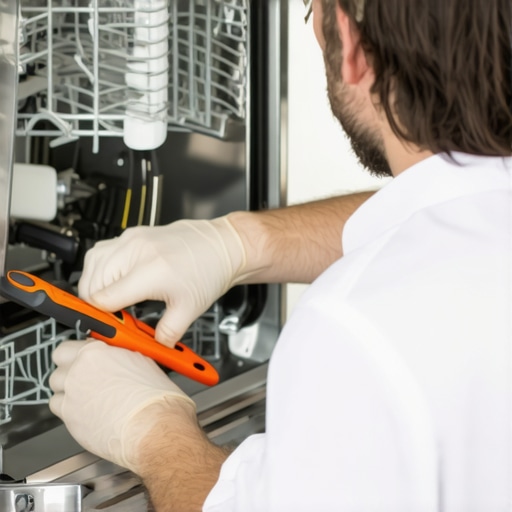
Blocked spray nozzles can trap food or debris that rot and emit foul odors. Remove the spray arms and rinse them under running water. Use a toothpick or needle to clear any clogged holes. This ensures water flows freely and thoroughly cleans your dishes, reducing residual organic matter that causes smells. If spray arms are damaged or clogged repeatedly, it might indicate deeper issues with water pressure or filters, which could compromise your warranty coverage—learning how to properly troubleshoot these can save you from costly repairs later. Check inspection guides for detailed steps.
Use the Self-Diagnostic Feature
Many modern dishwashers have a built-in diagnostic mode that can reveal underlying faults. To activate, press a specific combination of buttons—details vary by brand (consult your owner’s manual or self-diagnostic guide). Running this test can identify issues like faulty sensors or clogged filters contributing to odors. Recognizing early signs of malfunction not only restores freshness but also helps you maintain your warranty—especially before issues escalate into costly repairs. Remember, frequent diagnostics can prevent surprises and give you confidence in your appliance’s health.
Assess Your Water Quality
Sometimes, sulfur smells originate from the water itself, especially if you have hard or mineral-rich water. Installing a water softener or a filtering system can dramatically reduce the sulfur content, preventing the odor from forming inside your dishwasher. If you’re unsure about your water quality, conduct a simple test with test strips available at hardware stores or analyze your water reports. Addressing water issues can extend the lifespan of your appliance and keep warranties intact, but be aware that some warranties exclude damage caused by unaddressed water quality problems—so stay informed and proactive.
Many homeowners believe that DIY repairs and basic troubleshooting can replace professional diagnostics, but in reality, this mindset can lead to more harm than good. One prevalent myth is that all appliance issues are apparent and easy to fix without specialized tools or knowledge. However, advanced faults often hide behind simple symptoms, and misdiagnosing them can jeopardize your warranty coverage or lead to costly damage. For example, replacing a component based solely on visual clues without proper diagnostics may void your warranty if the manufacturer requires certified inspections for repairs. Furthermore, some people assume that troubleshooting processes are foolproof; but, without proper equipment—like multimeters or scan tools—you risk missing subtle issues like sensor failures or electrical shorts. This oversight can cause repeated failures or safety hazards, which external studies suggest might significantly impair the lifespan of your appliance, ultimately leading to warranty disputes according to industry experts. The crux of the nuance is recognizing the difference between surface-level troubleshooting and comprehensive diagnostics—an area where many amateurs stumble. Overconfidence in quick fixes and assumptions about appliance behavior might expedite temporary relief but could invalidate your warranty or cause irreversible damage. Remember, warranties often have strict conditions about who can perform repairs; attempting to fix a complex issue without credentialing can void your coverage, leaving you unprotected against future faults. That’s why consulting certified technicians or utilizing professional diagnostic services is a wise investment, especially when your appliance shows persistent or mysterious problems. These experts can accurately identify root causes and ensure your warranty remains valid, giving you peace of mind. If you’re unsure whether your situation warrants professional help, check out tips on trusting warranty coverage. Avoid falling into typical pitfalls by understanding the hidden nuance in diagnostics—it’s not just about fixing the appliance but doing so in a way that preserves your warranty and guarantees safety. Have you ever fallen into this trap? Let me know in the comments.
Maintaining your dishwasher’s performance over time requires more than just occasional cleaning; it calls for reliable tools and methods that enable precise diagnostics and effective upkeep. Personally, I rely on a sturdy multimeter set to measure resistance and continuity, which helps me quickly identify electrical issues like faulty sensors or blown thermal fuses. For example, testing the heating element with a multimeter can reveal hidden faults before they cause performance drops—saving you time and potential warranty headaches. Additionally, a small, flexible inspection mirror allows me to examine hard-to-reach areas such as spray arm holes or beneath the door seal without dismantling the entire appliance.
Powerful yet affordable, a digital borescope camera is a game-changer—I use mine to visually inspect internal components, like the pump or drain valve, without invasive procedures. It provides immediate feedback and helps determine if parts need replacement, thus avoiding unnecessary repairs that might void your appliance’s warranty. Combining these tools with a thorough understanding of fault codes enhances diagnostic accuracy. For instance, referencing the detailed guides available at how diagnostics protect your warranty ensures you’re performing effective checks.
To keep your dishwasher running smoothly in the long run, schedule regular maintenance checks, including filter cleaning and spray arm inspections. Employing diagnostic tools tailored for appliances minimizes guesswork and extends your appliance’s lifespan. Looking ahead, advancements in IoT technology suggest that future smart diagnostics will provide real-time alerts and automatic troubleshooting, further simplifying maintenance for homeowners. Currently, mastering these tools and methods empowers you to act swiftly at the first sign of trouble, safeguarding your warranty and ensuring spotless dishes every cycle.
How do I maintain my dishwasher over time?
Routine inspections with diagnostic tools, attention to water quality, and timely component testing form the core of effective maintenance. Remember, neglecting early signs of wear can lead to bigger problems that compromise warranty coverage. So, invest in a good multimeter, a small inspection mirror, and a borescope, and familiarize yourself with diagnostic guides. This proactive approach not only keeps your appliance reliable but also helps you spot issues before they escalate, potentially saving hundreds on repairs. Why not try testing your heating element with a multimeter today? It’s an easy, quick step that can reveal hidden faults and prolong your dishwasher’s lifespan. For comprehensive guidance on diagnostics, check out how diagnostics improve warranty claims.
What I Wish I Knew When Starting My Dishwasher Repair Adventure
One of my most eye-opening lessons was realizing that attempting quick fixes without thorough diagnostics can backfire, especially impacting warranty coverage. I once thought a simple vinegar rinse would solve all odors, but I ignored deeper issues like clogged filters or faulty sensors, which only masked the problem temporarily. This experience taught me never to underestimate the power of proper diagnosis before diving into repairs.
Another revelation was how overlooked components like spray arms and drain filters play a crucial role in odor prevention. A small, clogged nozzle can cause organic buildup and foul smells that seem insignificant at first glance. Regularly inspecting and cleaning these parts is an investment in your appliance’s longevity, reinforcing the idea that proactive maintenance beats reactive fixes every time.
Finally, I learned that understanding your dishwasher’s diagnostic tools and indicators can be a game-changer. Many modern appliances have built-in self-diagnostic modes that reveal hidden faults early on. Familiarizing yourself with these features can save you from costly repairs and ensure your warranty remains intact, making you the true master of your appliance’s health.