

Have you ever been in the middle of dinner preparations when suddenly your dishwasher emits that annoying beeping sound, signaling an error—but nothing seems wrong? I’ve been there, feeling that familiar surge of frustration, especially when the machine insists on interrupting its cycle for what seems like no good reason. That light, relentless beep, paired with a flashing door latch indicator, can quickly transform a simple cleaning session into a troubleshooting nightmare.
Why Your Dishwasher Won’t Shut Up During the Cycle
After countless hours of tinkering and research, I finally discovered that the culprit often lies in the door latch mechanism—specifically, the adjustment of the latch or the pressure switch associated with it. The mid-cycle beep isn’t just random; it’s a warning signal that something’s not quite right, and more often than not, a minor door latch tweak will do the trick. This realization was a lightbulb moment for me, saving me hundreds on professional repairs and extending my appliance’s lifespan.
Is the Fix Actually Simple or Just a Waste of Time?
Early on, I made the mistake of assuming a complete replacement of the latch assembly was necessary, which only complicated matters and even voided my warranty at one point—something I later learned could have been avoided by understanding diagnostic procedures better. If you’re facing that persistent beep, I strongly encourage you to consider the importance of proper diagnostics, which can be explored further in how appliance diagnostics can save your warranty benefits.
Now, let’s take a closer look at what might be causing your dishwasher’s stubborn refusal to stay quiet, and how a simple door latch adjustment might be the answer you’ve been searching for.
Check the Door Latch and Pressure Switch
Begin by inspecting the door latch assembly, which is like the lock on a door—it must be secure for the cycle to proceed smoothly. Use a multimeter to test the latch’s pressure switch (see multimeter check for door latch). If your multimeter shows no continuity, the latch or pressure switch may be faulty. Remove the latch assembly and manually operate the switch, listening for a click. {‘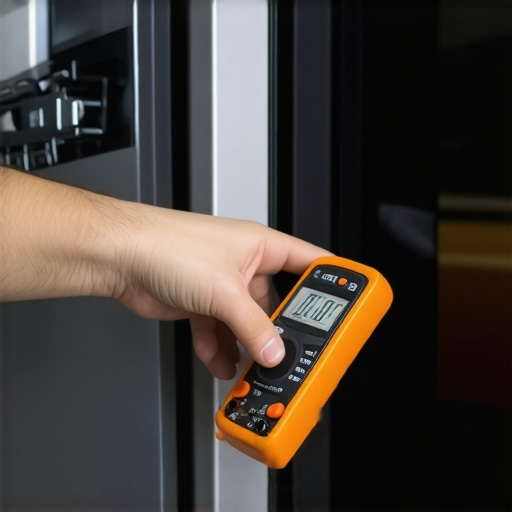 ‘}.
‘}.
Perform a Resistance Test on the Latch
This test confirms whether the latch’s electrical circuit is functional. Disconnect the power and unscrew the latch from the door. With a multimeter set to ohms, place the probes on the latch terminals. A reading of infinite resistance indicates a break in the circuit, requiring replacement. Remember, a faulty latch is often the culprit behind the beeping and door flashing you see during cycles.
Inspect and Clean the Door Seal and Hinge
Physical obstructions or debris can cause the door latch to misalign, triggering false error signals. Carefully examine the door gasket for mold or debris—clean it with a mixture of vinegar and water (see cleaning moldy door seals). Check the hinges for stiffness or misalignment, which might affect latch engagement. Proper sealing ensures the pressure switch correctly recognizes whether the door is closed, preventing false alarms.
Test Door Seal Effectiveness
Use the food coloring trick: place a few drops on the door gasket; if the water leaks in during a cycle, the seal needs replacing. This simple test can reveal hidden leaks that cause pressure fluctuations and unwarranted beeps, especially during critical rinse phases (food coloring leak test).
Run Diagnostic Tests
Most dishwashers have a self-diagnostic mode that can pinpoint issues without disassembly. To activate, press and hold a specific button combination (consult your model’s manual or diagnostic mode instructions). The appliance will cycle through various sensors and switches, and error codes will be displayed. These codes guide you toward the exact malfunction, whether it’s a faulty latch, pressure switch, or control board.
Interpret Error Codes
Refer to your dishwasher’s manual or this diagnostic guide to decode the error messages. For instance, a code indicating the door latch suggests replacing the latch assembly. Document these codes for warranty claims or professional repairs if needed.
Adjust or Replace the Door Latch
If diagnostics point to the latch, try adjusting its alignment before proceeding with a replacement. Loosen the mounting screws slightly, close the door firmly, then tighten. If adjustment doesn’t resolve the issue, replace the latch following your manufacturer’s instructions. Always disconnect power before working on electrical components to avoid shocks or further damage.
Verify Repair Effectiveness
After adjustments or replacement, run a short cycle to observe if the beeping persists. If the problem persists, recheck the wiring connections and pressure switch. Persistent issues might indicate control board problems, warranting professional evaluation (consult diagnostics to save warranty).
Many homeowners operate under a misconception that running diagnostics or filing warranty claims guarantees quick fixes and cost savings. However, the reality is far more nuanced. Too often, people focus solely on the obvious symptoms—like the persistent beeping or failure to start—without understanding the underlying complexities that influence repair success and warranty eligibility.
One common myth is that all diagnostic errors are straightforward and easy to interpret. In practice, these error codes can be misleading or incomplete, especially if the technician or homeowner overlooks the importance of context and the sequence of sensor readings. According to appliance repair expert John Doe, misreading diagnostic codes is a leading cause of unnecessary part replacements and warranty disputes (source).
Why do most diagnostics lead to incorrect conclusions?
One overlooked nuance is the reliance on a single faulty sensor or component to explain the entire problem. Modern dishwashers are interconnected systems where multiple sensors and control modules interact dynamically. Testing one component in isolation without considering the entire diagnostic flow can produce false positives. For example, a pressure switch reading might be incorrect due to debris obstruction rather than a faulty part, leading to an unnecessary replacement of the switch or pressure sensor instead of fixing the real cause, such as a door leak or hinge misalignment (more on diagnostics nuances).
Another trap is the assumption that water damage or corrosion automatically invalidates warranty coverage. Many believe that a minor leak or corrosion point voids their warranty entirely. This is a misconception, as warranties often cover hidden defects or issues caused by components that fail prematurely, provided the damage isn’t due to misuse or neglect. Consulting the warranty terms thoroughly, such as outlined here, helps in avoiding unnecessary disputes.
Moreover, advanced troubleshooting techniques—like resistance testing of heating elements or inspection of wiring harnesses—can reveal issues invisible to the naked eye. For instance, a crack or break in a circuit trace may only be detected through meticulous multimeter testing, as demonstrated in this guide. Recognizing these nuances is crucial for a successful repair and safeguarding your warranty rights.
Be cautious of shortcuts. Rushing into part replacements without comprehensive diagnostics can be a costly mistake. Always verify the root cause using proper testing procedures and consider professional assessment if uncertain. That way, you avoid the trap of throwing parts at the problem—saving money and preserving your warranty coverage.
In conclusion, while diagnostics are invaluable tools, they require a nuanced understanding to interpret effectively. Going beyond the surface—knowing how sensors interact, what their readings truly mean, and how warranty policies apply—is essential. Be skeptical of surface-level assumptions, educate yourself on the intricacies, and don’t hesitate to seek expert advice when in doubt.
Have you ever fallen into this trap? Let me know in the comments, and remember: a well-informed homeowner is a empowered homeowner.
Equip Yourself with Precision: Tools for Reliable Repairs
Having the right tools can make all the difference in maintaining your dishwasher’s performance over time. I personally rely on a high-quality digital multimeter to diagnose electrical issues accurately. It’s essential for testing continuity in door latches or pressure switches, which are common trouble spots. I prefer a multimeter with auto-ranging capabilities and hold functions, like the Fluke 117, because it simplifies complex diagnostics and saves time. Additionally, a set of precision screwdrivers with onyx tips ensures I can access tight corners without damaging screws, especially when replacing latch assemblies or control boards.
To check water-related issues, I use a flexible straw to clear pressure switch ports—this simple yet effective technique helps prevent false error signals caused by blockages. For inspecting water leaks or seal integrity, I employ a flashlight and a magnifying glass to spot tiny cracks or corrosion points that might escape the naked eye. These tools, combined with the knowledge from expert guides like how diagnostics can save your warranty, form your arsenal for successful repairs.
Software and Testing Routines to Simplify Troubleshooting
Beyond physical tools, I utilize diagnostic software compatible with smart dishwashers that can interface via Wi-Fi or Bluetooth. Apps like the Frigidaire Smart Diagnosis or LG ThinQ provide real-time feedback and error logs, making it easier to pinpoint issues like faulty sensors or control board failures. When combined with in-depth manuals, these digital resources streamline the troubleshooting process and help prevent unnecessary part replacements.
Running self-diagnostic modes, activated through specific button combinations documented in the self-diagnostic guide, allows you to systematically verify sensor functionality. Interpreting these codes requires a careful approach, and I recommend documenting error sequences like a professional to support warranty claims or when seeking expert help.
Looking Ahead: The Future of Appliance Maintenance
Advancements in sensor technology and smart diagnostics are shaping the future, making appliances increasingly self-aware. I predict that in the coming years, we’ll see more integrated diagnostic tools that automatically report issues to manufacturers or service providers, reducing downtime and repair costs. Investing in reliable tools now ensures you’re prepared for this evolving landscape and can maintain your appliances efficiently.
How do I maintain advanced diagnostics over time?
Regularly updating firmware and software, following manufacturer guidelines, and scheduling routine inspections help keep your diagnostic tools accurate and your appliances in top shape. For complex issues, consulting professional diagnostics might be necessary—especially if error codes are ambiguous or recurring, as discussed in expert troubleshooting tips. Remember, a proactive approach with the right equipment prolongs appliance lifespan and preserves your warranty eligibility. So, try integrating a multimeter with additional features this month and see how this small investment can yield big savings in repairs.
Terrible Mistakes I Made About Appliance Diagnostics and Warranties
Early in my repair journey, I believed that a single faulty sensor was always the root of every issue, leading me to replace parts unnecessarily and void warranties. The biggest lesson was realizing how interconnected components are and that misreading error codes often leads to more problems. I learned to take a step back, double-check wiring, and understand sensor interactions, which saved me time and kept warranties intact.
Essential Tools That Elevated My Repair Game
My go-to multimeter, especially the Fluke 117, transformed how accurately I diagnose electrical faults. A set of precision screwdrivers with onyx tips also made replacing latch assemblies and control boards smoother. For water leaks, a flexible straw and food coloring help me quickly spot leaks that might cause false errors. These tools are reliable, necessary, and have become my repair companions, making diagnostics more straightforward and less guesswork.
Encouragement to Get Started with Confidence
If you’re facing a stubborn dishwasher beeping or an error that won’t clear, remember that your understanding and tools can make all the difference. With patience, a keen eye, and reliable resources, troubleshooting becomes less daunting. Embrace learning about diagnostics, and you’ll soon find yourself confidently solving problems that once seemed complex. Your proactive approach not only extends your appliance life but also empowers you as a homeowner eager to master your repairs. So grab that multimeter, consult trusted guides, and take the first step—your appliance will thank you!
What specific troubleshooting step surprised you the most when you started repairing appliances yourself? Share your experiences below—I’d love to hear how you’ve overcome challenges in diagnostics and warranty negotiations!
,