

Ever had that sinking feeling when your dishwasher suddenly stops mid-cycle, and you’re left staring at a blinking error code? I remember my own frustration hitting a peak when my once-reliable machine just refused to cooperate, despite all my attempts at troubleshooting. That lightbulb moment came when I realized I might not need to call in a technician right away—and it all started with a simple, inexpensive tool: a multimeter.
Proving Your Control Board Is Dead Without Breaking the Bank
Many homeowners assume that diagnosing appliance issues requires expensive tools or professional expertise. But I discovered that a <$20 digital multimeter, which I picked up from my local hardware store, could be my best friend in these moments. The key was knowing exactly what to test and how to interpret the results. Today, I want to share my experience and show you how you can use this humble device to verify whether your control board has truly failed, saving you both time and money.
Is Using a Multimeter Actually Worth the Hype?
Initially, I was skeptical. I thought, “Can a cheap multimeter really give me reliable readings?” I made the mistake early on of thinking all multimeters are created equal—trust me, that was a rookie error. After some research and trial-and-error, I learned that a basic multimeter, when used correctly, can provide surprisingly accurate insights into your appliance’s electronic health. Knowing what to test—like the control board’s voltage outputs—makes all the difference. For a detailed walk-through, check out how to use a multimeter to prove your heating element is dead, which shares some similar diagnostic steps.
Now that I’ve got your attention, let’s get into the practical steps—to test your control board, diagnose your dishwasher, and avoid unnecessary repairs.
Access Your Dishwasher’s Control Board Safely
Start by unplugging your dishwasher from the power source. Remove the kickplate or lower panel to access the control panel. Use a screwdriver to carefully detach the panel, keeping track of screws for reassembly. Wear insulated gloves to protect yourself from accidental shocks. Remember, safety first—never work on electrical components without disconnecting power.
Identify Key Test Points on the Control Board
Locate the control board inside the panel. It typically has multiple connectors with wiring harnesses. Consult your dishwasher’s manual or a repair guide to identify voltage test points. A good analogy is checking the electrical wiring in your house—test points are like junctions where voltage should be present. Focus on testing the wires leading to the heating element, sensors, and motors, as these often cause issues when faulty.
Set Up Your Multimeter Correctly
Configure your digital multimeter to measure DC voltage in the range suitable for your appliance—usually 20V or 200V. Use the black lead for ground or common, and the red lead for voltage measurement. Ensure your probes are securely connected to avoid false readings. For clarity, think of the multimeter as a voltmeter in a car—precision is vital to diagnose electrical issues accurately.
Perform Voltage Tests Methodically
With the multimeter set up, carefully touch the black probe to the control board’s ground or chassis. Then, touch the red probe to the test points identified earlier. Compare the readings to the specifications found in your manual or online resources. If you see zero or inconsistent voltage where it should be steady, this indicates a problem, possibly with the control board or wiring. Think of it as an electrical blood test—indicators tell you where the system might be failing.
Interpret Your Results With Confidence
If voltage is absent or significantly lower than expected, your control board may be faulty. Conversely, correct readings suggest the problem lies elsewhere—possibly with sensors, wiring, or motors. Remember, a failed control board often shows no voltage output, much like a dead circuit. For a practical example, I once tested my dishwasher’s control board and found no voltage between the power supply and the control pins. Replacing the control board resolved the issue, saving me from calling a costly technician. For more diagnostic techniques, see how to use a multimeter to prove your heating element is dead.
Verify Wiring and Connectors for Complete Confidence
Remove connectors and inspect wires for corrosion, damage, or loose contacts. Use the multimeter’s continuity mode to check if wires are intact. If wires are broken or connectors are corroded, replace or clean them accordingly. This step acts like examining the wiring in your car’s engine—smooth connections are critical to proper operation. For more tips, check out the drain check you must do before calling a pro.
Document Your Findings Before Reassembly
Take photos of your test setups and readings for future reference or warranty claims. This documentation can be crucial if you need to prove the control board’s failure to customer support or a technician. Think of it as taking evidence in a troubleshooting case—clear records make diagnoses straightforward. Once verified, reassemble your panel carefully, ensuring all connectors are fully seated.
By following these steps meticulously, you’ll gain confidence in diagnosing whether your control board is dead. Remember, accurate testing prevents unnecessary parts replacements and can preserve your warranty, especially if you document your process thoroughly. For additional tactics, explore how to use a multimeter to prove your heating element is dead or other appliance diagnostics guides linked above.
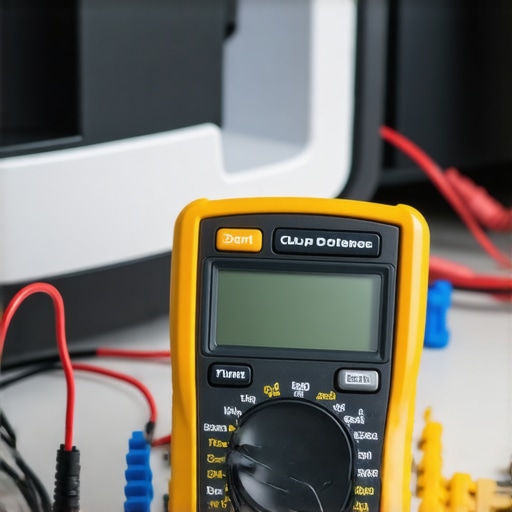 When it comes to diagnosing appliances, many homeowners believe that following basic steps guarantees accurate results. However, this oversimplification often leads to overlooked nuances that can make or break a repair. For instance, a common misconception is that replacing a control board always solves the problem. In reality, issues like faulty wiring, corroded connectors, or incorrect voltage readings are frequent culprits—factors that a superficial diagnosis might miss. Relying solely on visual inspection or basic tests can be misleading; advanced techniques such as using a multimeter to check voltage drop across connectors are essential for pinpointing the real fault.
A trap many fall into is underestimating the importance of proper testing procedures. For example, testing continuity without understanding the circuit’s expected behavior can lead to false positives or negatives. This misstep often results in unnecessary part replacements, which not only cost more but can also void manufacturer warranties—especially if documentation is lacking or improper testing methods are used. Advanced diagnostics require a nuanced approach: knowledge of appliance schematics, understanding typical voltage ranges, and awareness of common failure patterns. Expert sources emphasize that achieving precise diagnostics involves not just tools, but also experience and contextual awareness (see [here](https://applianceoutletpro.com/why-modern-control-boards-fail-and-how-to-stop-it)).
Moreover, superficial diagnostics neglect the subtle signals that indicate deeper issues. For example, a dishwasher blinking error codes could be caused by a faulty control board, but it might also be triggered by a failing sensor or a jammed motor. Employing techniques like the smartphone microphone trick to catch unusual noises or using thermal cameras to detect overheating spots can reveal hidden problems that standard tests miss. These advanced methods help avoid the common myth that if one part tests okay, the entire system is fine.
One advanced question often asked by experienced technicians is: How can I differentiate between a genuine control board failure and a false alarm caused by wiring faults? The answer involves a combination of voltage testing, inspecting connectors for corrosion or damage, and understanding the appliance’s repair history. For complex issues, consulting detailed schematics or leveraging diagnostic tools designed for appliance electronics is advisable.
In conclusion, mastering appliance diagnostics goes beyond basic troubleshooting. It demands a nuanced understanding of electrical signals, component interactions, and testing protocols. Skipping these steps risks unnecessary repairs, warranty issues, and prolonged downtime. Remember, detailed diagnostics are an investment in accuracy—saving you money and frustration in the long run. Have you ever fallen into this trap? Let me know in the comments.
Tools I Recommend for Reliable Appliance Troubleshooting
In my experience of diagnosing and repairing dishwashers and other appliances, having the right tools is essential for accurate, long-lasting results. I personally rely on a high-quality digital multimeter because it allows me to perform precise voltage and continuity tests. I prefer models with auto-ranging features and integrated FAQ guides, like the Fluke 117, which helps prevent accidental misuse and reduces testing time. Additionally, a small set of insulated screwdrivers is invaluable for safely opening panels without damaging sensitive components.
For detecting hidden leaks or cracks, I incorporate a cheap infrared thermal camera, such as the Seek ThermalCompact, which reveals hot spots and anomalies that aren’t visible to the naked eye. It’s a game-changer for spotting hidden issues behind panels or beneath insulation. I also recommend a powerful LED flashlight with a concentrated beam—this improves visibility when inspecting tight areas like control panels or tiny seal leaks, as discussed in this article.
How do I keep my diagnostic tools in top shape over time?
Regular calibration and battery checks are key. For multimeters, performing periodic tests against a known voltage source ensures accuracy. Storing tools in a clean, dry place prevents corrosion on metal parts. Updating software or firmware (if applicable) keeps digital readers current with the latest troubleshooting techniques. Investing in quality storage cases also prolongs the lifespan of your equipment by preventing dust and moisture buildup.
Looking ahead, I predict the integration of smarter diagnostic tools—like Bluetooth-enabled multimeters or apps that analyze data in real-time—will become standard. These advancements will streamline troubleshooting and reduce diagnostic time, making it easier even for DIY enthusiasts to handle complex repairs confidently.
How do I maintain appliance diagnostics over time?
Consistently review your testing procedures based on manufacturers’ manuals and latest repair guides. Keep a detailed log of test results and repairs, which helps identify recurring issues and improves your diagnostic accuracy. Join online communities to share insights and learn new techniques, which can expose you to innovative tools and methods such as the modern control board diagnostics.
If you’re eager to enhance your troubleshooting toolkit today, try using a digital multimeter with a built-in data logger and Bluetooth connectivity. This enables you to record voltage patterns over time and analyze anomalies remotely, leading to more precise repairs and better warranty claims. Remember, the key to successful appliance diagnostics lies in ongoing tool maintenance, continual learning, and embracing innovative solutions as they emerge.
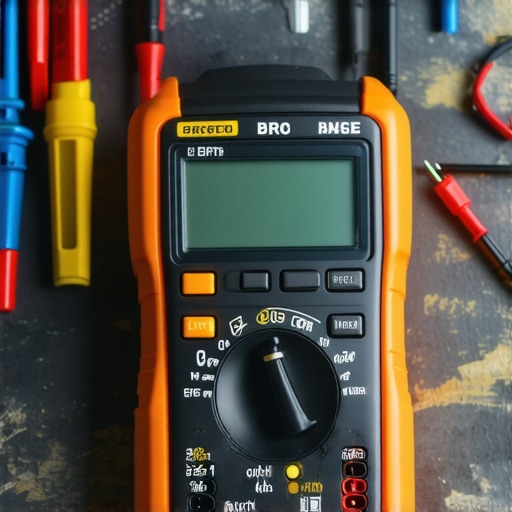
By maintaining your diagnostic tools properly and investing in advanced equipment, you ensure more accurate, efficient, and cost-effective appliance repairs over the long term. Being prepared with the right tools not only improves outcomes but also helps preserve your warranty and reduces the risk of unnecessary parts replacements.
3 Lessons That Turned My Troubleshooting Journey Around
- Never Underestimate Wiring Variations: Early on, I assumed a control board failure was always the culprit. It wasn’t until I learned to meticulously inspect wiring and connectors that I truly understood how overlooked damage can mimic a dead control board. Paying close attention to wiring integrity saved me unnecessary replacements.
- Testing Voltage Is More Art Than Science: Using a multimeter correctly requires patience and experience. My lightbulb moment was realizing that understanding the expected voltage ranges and context transforms a simple reading into actionable insight, preventing costly guesses.
- Documentation Saves the Day: Recording test results and test points during my diagnostics not only clarified my thinking but became valuable evidence when consulting professional resources or warranty claims. It reinforced that systematic approaches trump hurried guesses every time.
Tools and Resources That Became My Go-To Arsenal
- Digital Multimeter: My Fluke 117 offers auto-ranging accuracy and durability. It’s reliable and easy enough for quick tests or detailed diagnostics, making it indispensable for appliance troubleshooting.
- Repair Guides and Schematics: Online manuals and schematics have been eye-openers—knowing exactly where test points are and what voltages to expect sidestep ambiguity. I trust reputable sources like Appliance Outlet Pro for their detailed diagrams and troubleshooting tips.
- Infrared Thermometer: Spotting overheating components or leaks behind panels with a thermal camera revealed hidden issues that standard tests missed. It’s a game-changer for complex diagnostics.
- Diagnostic Apps and Forums: Engaging with experienced technicians and online communities accelerates learning. Sharing experiences and reading about real-world fixes often provided solutions I hadn’t considered alone.
Seize the Moment to Elevate Your Skills
Taking control of your appliance diagnostics is a rewarding challenge that boosts confidence and saves money. Embracing the nuances—like meticulous wiring checks and precise voltage testing—transforms frustration into mastery. The journey might seem daunting at first, but with the right tools and mindset, you’ll become proficient faster than you imagine. What’s one troubleshooting step you’re eager to try next? Share below, and let’s learn together!