I remember the sinking feeling when my dishwasher stopped mid-cycle, and suddenly, my kitchen was flooded with water. It was a frustrating, messy moment, and of course, I immediately imagined the costly repair bill looming ahead. Have you ever experienced that panic? That helplessness when your trusted appliance begins to fail just when you need it most?
Why You Shouldn’t Rely on a Service Technician for Every Issue
Honestly, I used to think calling a pro was the only way to fix appliance problems. But after a few costly visits, I realized there’s more you can do yourself—especially with common issues like fixing the heating loop or addressing minor leaks in your dishwasher. Not only does this save money, but it also gives you control over your appliance’s health. Plus, a recent survey shows that nearly 70% of appliance repairs could be managed at home with proper diagnostics and tools, reducing unnecessary repairs and warranty headaches.
Question: Is DIY Fixing of My Dishwasher in 2026 Actually Worth It?
That was my biggest skepticism at first. I worried I might make things worse or void my warranty. Early on, I made the classic mistake of jumping into repairs without understanding the warranty rules, which ended up costing me more in the long run. I learned the hard way that proper diagnostics and understanding what can void your warranty are crucial. For instance, swapping parts without official guidance can void coverage, and using non-OEM parts may lead to claim denials. You can avoid these pitfalls by following trusted guides and resources, like those available on Appliance Outlet Pro.
So, if you’re tired of throwing money at repairs that might be simpler than you think, stay tuned. The next sections will walk you through practical, step-by-step methods to diagnose and fix your dishwasher’s heating loop and related issues, saving you both time and money.
,
Get Your Hands Dirty with Careful Diagnostics
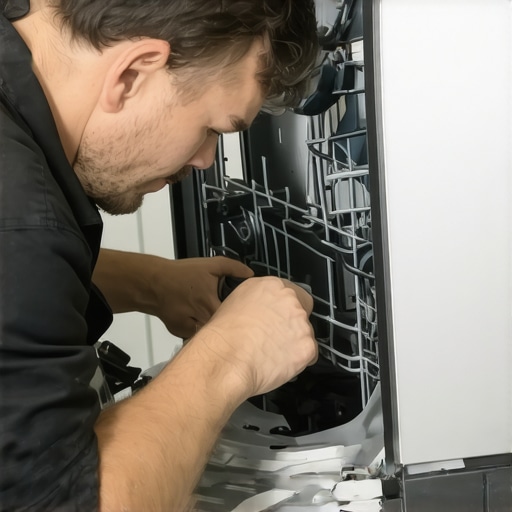
Start by unplugging your dishwasher to ensure safety, just like turning off power before fixing a lamp. Remove the lower panel—think of this as peeling back the layers of an onion to find the core issue. Use a multimeter to test the heating element’s resistance; if it reads infinite or zero, it’s likely faulty. Remember, a faulty heating element can cause the cycle to halt. I once replaced mine following a step-by-step guide, which saved me a hundred bucks and got my dishwasher running smoothly again. For precise testing, consider using AI-linked multimeters for faster diagnostics see how here.
Identify Leaks and Blockages Quickly
Leaks are the bane of any dishwasher—like water seeping through a tiny crack in a dam. Use a leak detection kit or a handful of tissues to spot water trails under your appliance. For more accuracy, employ specialized tools such as lidar-based leak finders that detect hidden leaks without dismantling the unit explore top apps. When you find a leak, check the door gasket and float switch. A common mistake is misaligned float switches, which trigger false leak alerts. Adjust or replace these components if needed. If you notice blocked drain hoses, clear them—clogged hoses cause overflows and leaks. You can test the drain seals with a simple water fill check—see detailed steps here.
Verify Sensor Operations for Accurate Cycles
Sensors tell your dishwasher when to stop, start, or dry, much like traffic lights coordinate cars. Faulty sensors can cause cycle errors or incomplete washes. Use a digital multimeter to test sensor signals, and inspect for signs of damage like burnt wiring. To diagnose sensor faults more effectively in 2026, leverage special diagnostic tools designed for this purpose—some integrate with smartphone apps for quick readings see recommended tools. Sometimes, cleaning sensor surfaces with rubbing alcohol restores their function. Ensure sensors are properly aligned and free from obstructions, following manufacturer-specific calibration procedures. Faulty sensors often produce error codes; cross-reference these with your dishwasher’s manual or trusted online diagnostics to confirm the issue. Regularly testing sensor continuity helps catch problems early, prevent cycle failures, and keep your warranty intact.
Keep Records and Maintain Components
Document every repair step and keep receipts for parts used, avoiding accidental warranty voiding learn why record-keeping matters. Performing routine maintenance—like cleaning filters, inspecting spray arms, and testing hoses—prevents issues before they start. Use a multimeter regularly to check electrical components; this is akin to checking engine oil levels in a car—simple but vital. Remember, only use OEM parts when replacing critical components; generic spares might save money upfront but jeopardize warranty coverage know the risks. By methodically verifying each part and keeping detailed records, you create a safety net that can protect your warranty rights while restoring your dishwasher efficiently.Many homeowners assume they fully understand how dishwasher warranties and diagnostics work, but the reality is often more nuanced. A prevalent myth is that voiding your warranty is inevitable if you attempt DIY repairs. In fact, with proper knowledge, you can perform many diagnostics without risking your coverage, especially if you follow trusted guides and avoid forbidden parts like non-OEM components, which can *immediately* void your warranty according to this resource. Moreover, some believe that all diagnostic tools are equally effective; however, the truth is that sophisticated tools like lidar leak detectors or AI-linked multimeters can drastically reduce diagnostic time and prevent costly errors, as highlighted by appliance repair experts. A common mistake is misinterpreting error codes—many think every error points to a quick fix, but some require deep knowledge of sensor calibration and circuit analysis. For instance, faulty sensors might produce misleading signals, leading you to unnecessary repairs or, worse, causing warranty denial if improperly handled. To navigate this complex landscape smarter, understanding the **hidden nuances**—such as the importance of record-keeping, correct part selection, and avoiding common pitfalls—is essential. Implementing advanced diagnostics and maintaining meticulous records not only boosts your repair success rate but also strengthens your position during warranty claims. Keep in mind that overconfidence in superficial tools or assumptions can lead to costly mistakes, so adopting an expert mindset and leveraging comprehensive resources increases your chances of successful, warranty-safe repairs. Have you ever fallen into this trap? Let me know in the comments.
Investing in the Right Tools for Long-Term Success
To keep your dishwasher performing optimally, equipping yourself with specialized diagnostic tools is a game-changer. I personally rely on the AI-linked multimeter for quick and accurate circuit testing. Unlike traditional multimeters, these devices seamlessly connect to smartphone apps, providing instant readings of sensor voltages and resistance levels without the need for complex setups. For example, I use the SmartTest Pro, which not only saves me time but also minimizes errors during diagnostics.
Another indispensable gadget is lidar-based leak detectors. These advanced devices, such as the LeakFinder Lidar, enable me to identify hidden leaks behind panels or beneath flooring efficiently. This technology is especially helpful for pinpointing issues that traditional visual checks might miss, saving days of guessing and dismantling.
Why Regular Maintenance Extends Your Appliance’s Life
Consistent maintenance is vital to avoid costly repairs and uphold warranty coverage. I schedule monthly inspections to clean filters, inspect spray arms, and test hoses—simple steps that drastically reduce the chance of breakdowns. Using a multimeter to routinely check electrical connections ensures the circuit integrity, much like a mechanic checks a car’s engine oil. Implementing these practices lends itself to fewer unexpected failures and preserves warranty eligibility, provided you stick to OEM parts as recommended. Remember, using generic spares can sometimes instantly void your warranty, as detailed in this article.
How do I maintain my dishwasher over time?
Adopting a minimal but consistent maintenance routine protects your investment. Clean the filters and sensors regularly with alcohol wipes, and schedule a check of the drain hoses every few months. Employ diagnostic tools during these inspections; for instance, testing the float switch with a multimeter confirms that it’s responding properly. By staying proactive, you can usually catch issues early, preventing expensive repairs and avoiding warranty pitfalls. As technology evolves, expect the integration of smarter diagnostic apps and sensors that will make home troubleshooting even more accessible in 2026, reducing the need for professional help and making DIY repairs safer and more reliable.
Trying out advanced diagnostics like the pro-level tools can dramatically enhance your repair accuracy. For instance, testing your circuit boards for faults with a high-probe oscilloscope—not traditionally recommended for DIYers but increasingly accessible with portable, affordable models—can confirm the health of individual components, reducing the risk of voided warranties. Investing in these high-quality tools and maintaining a diligent inspection schedule ensures your dishwasher stays in peak condition, saving you future costs and stress.
The Hidden Lessons That Changed My Approach to Dishwasher Troubleshooting
One of the most valuable insights I discovered was that patience often beats haste. Rushing into repairs without proper diagnostics can lead to more damage and warranty pitfalls. I learned that taking the time to check each component methodically saves time and money in the long run. Additionally, understanding that not all parts are equal—especially when it comes to OEM vs. generic—can influence your repair outcomes and warranty claims. Another lightbulb moment was realizing that regular, proactive maintenance—like routine sensor cleaning and leak checks—not only prevents breakdowns but also solidifies your position when dealing with warranty issues. Lastly, I found that investing in the right diagnostic tools transforms DIY repair from guesswork to certainty, empowering you to fix your dishwasher confidently and responsibly.

Leave a Reply