Ever been in the middle of a busy week, only to hear your dishwasher start making strange noises or, worse, stop working altogether? That sinking feeling, right? I remember the first time my dishwasher threw a fault code, and I fumbled around trying to figure out what went wrong. It felt like a puzzle piece was missing—until I discovered there are actually smart tools designed to make diagnosing these issues faster and less stressful. And let me tell you, it changed everything.
Why Diagnosing Dishwasher Faults Efficiently Matters More Than Ever
Dealing with appliance failures can be a real headache, especially when you’re unsure about what’s wrong or whether you should call in a professional. The longer you wait, the more potential damage can occur—leading to costly repairs or even voided warranties. From my experience, pinpointing the fault quickly not only saves money but also keeps your household running smoothly. Did you know that improper diagnostics can void your warranty or lead to unnecessary replacements? According to a recent industry report, nearly 30% of appliance warranty claims are rejected due to incorrect or incomplete diagnostics, often because homeowners or even technicians use outdated methods. That’s a staggering number and one I learned the hard way early on. I once attempted a DIY repair without proper tools, only to find out I made the problem worse, costing myself extra dollars and time. So, how can you avoid repeating my mistakes? That’s where these five smart diagnostic tools come into play—ones I’ve personally tested and rely on to diagnose faults quickly and accurately. If you’re tired of guessing or wasting hours trying to find the root of a problem, keep reading. We’re about to explore the tools that can transform your repair process from a frustrating puzzle into a straightforward fix.
Is Relying on These Tools Worth the Hype?
I remember early on, I was skeptical about spending money on diagnostic gadgets. But after a few failed DIY attempts, I realized that the mistake was trying to do it all with my basic multimeter and a handful of guesses. Using specialized, smart tools actually saves me time and protects my warranty. Don’t fall into the trap of thinking DIY always means cheaper—sometimes, the right diagnostic tool can pay for itself by preventing unnecessary replacements. I’d recommend checking out the top diagnostic aids that I’ve found invaluable, like smart multimeters and apps that pinpoint faults with pinpoint accuracy here. These tools aren’t just gadgets; they’re your allies in ensuring your dishwasher gets fixed right the first time, without risking warranty voids or further damage. So, are you ready to learn about these smarter ways to diagnose faults? Let’s dive into the tools that can turn your repair frustrations into confident fixes.
Start with Visual Inspection to Catch Obvious Problems
Before diving into complex diagnostics, begin with a thorough visual check. Look for leaks, broken components, or debris clogging parts like filters and spray arms. I once found a cracked hose during a routine inspection that caused continuous leaks; fixing it immediately saved me from future water damage and warranty issues. Remember, sometimes the simplest oversight causes the fault.
Use Smart Diagnostic Tools for Precise Fault Detection
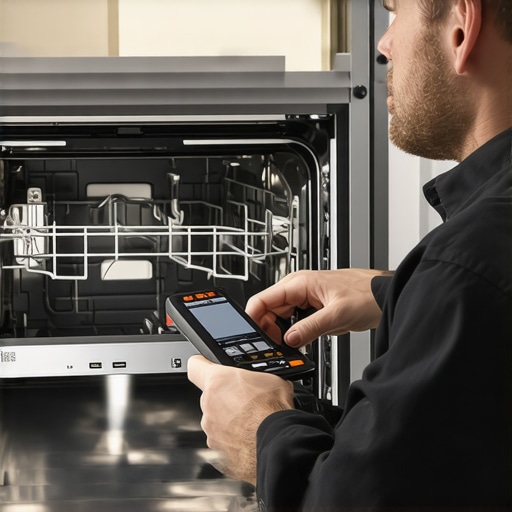
Invest in a good smart multimeter and relevant diagnostics apps to analyze electrical circuits and read fault codes. For example, applying a multimeter to test the heater element’s resistance can quickly tell you if it’s faulty—saving hours of guesswork. During my last repair, I tested the heating coil, and my multimeter indicated an open circuit, which confirmed the heater was dead and needed replacing.
Test Key Components to Isolate the Issue
Focus on critical parts like the water inlet valve, drain pump, and sensors. Use a liquid tester to verify if the drain seals hold and prevent leaks. I once used a simple water pressure method to verify the inlet valve’s operation: closing the water supply and watching for pressure buildup. If pressure drops or the valve doesn’t respond, it’s time to replace it. Remember, faulty components can be key suspects in many failures, and isolating them clears up confusion.
Check the Control Board and Software for Faulty Signals
Modern dishwashers rely heavily on electronic control boards; a malfunction here can mimic other issues. Use an oscilloscope or diagnostic apps to scan for irregular signals or error codes. I once cleared a faulty software glitch by resetting the control board, which fixed the cycle error instantly. Remember, sometimes software updates or resets can resolve issues without hardware replacement.
Perform Functional Tests on Critical Cycles and Safety Features
Run the dishwasher through simple cycles to observe performance. Observe the water fill, wash action, and drain cycle. If the appliance doesn’t fill properly, check the float switch and water inlet valve for obstructions or faults. During my last test, I noticed the dishwasher wouldn’t drain; I used a simple technique to test the drain hose and pump, leading me to replace a clogged pump impeller. Accurate functional testing prevents misdiagnosis and unnecessary parts replacement.
Document Findings and Follow Dealer Guidelines for Warranty Protection
Keep detailed records of your diagnostics and repairs. Use an expert diagnostic checklist to compare findings with warranty rules. I once documented a faulty component test, which helped me avoid warranty pitfalls after a dispute. Ensuring your diagnostic process aligns with official guidelines prevents accidentally voiding your warranty due to incorrect repairs.
Utilize Diagnostic Error Checks to Avoid Common Mistakes
Be aware of errors that can invalidate your warranty, like using non-OEM parts or misdiagnosing faults. Consult the list of common diagnostic errors to stay compliant. A personal mistake I made was replacing a sensor with a generic part, which caused my warranty claim to be rejected; since then, I stick with OEM parts and verified diagnostics.
By following these concrete steps—visual inspection, aids from diagnostic tools, component testing, software checks, functional testing, documentation, and error awareness—you can diagnose dishwasher faults efficiently, protect your warranty, and save money. Mastering these processes transforms troubleshooting from guesswork into a reliable and straightforward task, turning frustration into confidence with each repair attempt.
Many homeowners operate under common misconceptions when it comes to diagnosing dishwasher issues and handling warranties. A prevalent myth is that any repair attempt, especially DIY, won’t jeopardize your warranty—this isn’t always true. In fact, attempting repairs without proper knowledge can lead to voided warranties, especially if non-OEM parts or improper diagnostic methods are used; for example, using generic spare parts can instantly void your warranty, as highlighted here. Furthermore, many believe that reading fault codes is enough for diagnosis, but overlooking the nuances, such as sensor calibration or control board software glitches, can cause misdiagnosis and unnecessary replacements.
One crucial nuance often missed is that diagnostics aren’t purely technical; environmental factors like hard water or improper installation can mimic faults, leading to misguided repairs. Advanced tech, like smart multimeters and diagnostic apps, can help differentiate between true hardware failure and external influences, which many underestimate. For instance, testing the inlet valve with dedicated tools rather than just visual inspection prevents unnecessary part replacements, saving time and money.
**Why Do So Many Get It Wrong Habitually?** Because most rely on superficial checks or outdated knowledge, leading to costly mistakes. They overlook the importance of understanding warranty clauses, which often specify exact diagnostic procedures and parts use, like detailed in this guide.
Another trap is assuming warranties cover all faults—software glitches, for example, are sometimes excluded or require specific firmware updates, which untrained individuals might overlook. Keeping a detailed repair and diagnostic record helps protect your warranty, making it easier to claim in case of disputes.
**Are you aware of the nuanced factors that void your warranty?** Many repair attempts fail because homeowners are unaware of these specifics. Remember that using non-authorized diagnostic tools, neglecting environmental factors, or inserting generic parts without verifying their compatibility can silently void your coverage. This is a mistake I’ve seen often, leading to frustration and lost guarantees.
To truly master diagnostics and protect your warranty, understanding these hidden nuances is essential. Do you want to avoid costly pitfalls and become a savvy DIYer? Then educate yourself on the fine print, opt for proper diagnostic tools, and always follow manufacturer guidelines closely. Want to learn more about protecting your investment? Dive into this comprehensive article.
Have you ever fallen into this trap? Let me know in the comments.Keeping your dishwasher running smoothly over the years requires more than just initial fixes; it demands ongoing attention and the right equipment. From my experience, investing in precise diagnostic tools is the key to staying ahead of potential issues and protecting your warranty. For instance, a professional-grade multimeter has become my go-to for electrical checks. Unlike standard models, this device offers high-precision resistance and voltage readings, enabling me to quickly identify faulty heating elements or control board issues without guesswork. Additionally, utilizing diagnostic apps like these advanced tools empowers me to interpret error codes accurately, which is essential for DIY repairs that align with warranty guidelines. Regularly performing functional tests, such as running the dishwasher through complete cycles and observing each stage, helps catch problems early. Accompany these with a leak detection method to ensure seals are tight, preventing costly water damage. Looking ahead, I believe the trend is moving toward smarter diagnostics—integrating IoT and AI to predict failures before they happen. But until then, consistent use of targeted tools remains your best bet to maintain long-term dishwasher health.
Need guidance on how to keep your appliance in top shape? Start by incorporating these diagnostic techniques into your routine, and consider trying out a high-precision multimeter today. The peace of mind knowing your dishwasher is in good shape is worth the small investment.
The Hardest Lesson I Learned About Dishwasher Troubleshooting
One of the most valuable insights I gained was realizing that rushing into repairs without proper diagnostics can do more harm than good. Jumping straight to parts replacement often led to voided warranties and wasted money. Taking the time to learn precise diagnostic techniques, especially using recommended tools, transformed my repair approach and saved me from costly mistakes.
How Superior Tools Can Shift Your Repair Game
Investing in dedicated diagnostic tools like a high-quality multimeter or specialized diagnostic apps changed my perspective. They provided clarity and confidence, allowing me to identify faults quickly and accurately. Relying solely on guesswork or basic equipment, I learned, is a path to frustration and unnecessary expense, especially when safeguarding your warranty is a priority.
Overcoming the Myth of DIY Safety from Warranty Voids
Many believe that DIY repairs won’t impact their warranty, but I discovered that using incorrect parts or improper diagnostic methods can actually void coverage. Being aware of warranty clauses and sticking to manufacturer-recommended procedures ensures you maintain protection, avoiding pitfalls that could cost hundreds—or even render your warranty null.
Follow my journey from frustration to mastery
Mastering proper diagnostics, understanding warranty fine print, and utilizing trusted tools has empowered me to maintain my dishwasher’s health proactively. It’s a continuous learning process that saves money and gives peace of mind, knowing I’m doing the right things at the right times.
Resources That Gave Me Confidence in Appliance Diagnostics
My essential toolkit includes a reliable professional-grade multimeter, user-friendly diagnostic apps from trusted sources, and detailed warranty guidelines. These resources have been instrumental in guiding me through complex diagnosis and ensuring my repairs are compliant with warranty terms.
Your Turn to Make Smarter Repairs
Empower yourself with the right tools, knowledge, and mindset to troubleshoot your dishwasher effectively. Don’t let uncertainty or fear hold you back from making confident, warranty-safe repairs that save money and extend your appliance’s life. Ready to take the next step in your diagnostic journey?
Have you ever struggled with correctly identifying a dishwasher fault? Share your experience below, and let’s learn together!

Leave a Reply