I remember the moment vividly—standing in my kitchen, watching my dishwasher roar like a jet engine, while I desperately tried to enjoy my morning coffee. It was like having a symphony of grinding and banging right where I least expected it. I had trusted this appliance to keep my household running smoothly, but instead, I was faced with a noisy, malfunctioning mess. That lightbulb moment hit me hard: I needed to diagnose and fix this issue myself, without wasting time or money on expensive repairs.
Why Your Dishwasher’s Noise Could Be a Sign of Bigger Problems
If you’re reading this, chances are you’ve experienced that sudden increase in noise from your 2026 dishwasher. It can range from annoying rattles to loud banging, and frankly, it’s disruptive. But here’s the kicker: these sounds might indicate more than just a simple glitch. According to a study published by the National Association of Home Builders, unresolved appliance issues can lead to costly repairs or voided warranties if not properly diagnosed early. So ignoring the noise could be a gamble with your warranty coverage and long-term appliance health.
Is DIY Repair Really Worth the Risk?
Now, I admit, in my early days of tackling appliance problems, I made a crucial mistake—I jumped straight into fixing without proper diagnostics. That DIY misstep turned small issues into bigger headaches and nearly voided my warranty. But over time, I learned that understanding the root cause before attempting a repair is invaluable. Proper diagnostics can save you money and prolong your dishwasher’s lifespan. If you’d like to avoid common pitfalls, check out effective appliance diagnostics to get started on the right foot.
In this guide, I’ll walk you through the six essential diagnostic steps to identify and fix that bothersome loud noise—the kind that turns your kitchen into a rollercoaster. Ready to restore peace and quiet to your home? Let’s dive into the practical solutions that can help you get your dishwasher humming smoothly again, without risking your warranty or tearing your hair out.
Start with Visual Inspection to Spot Clues
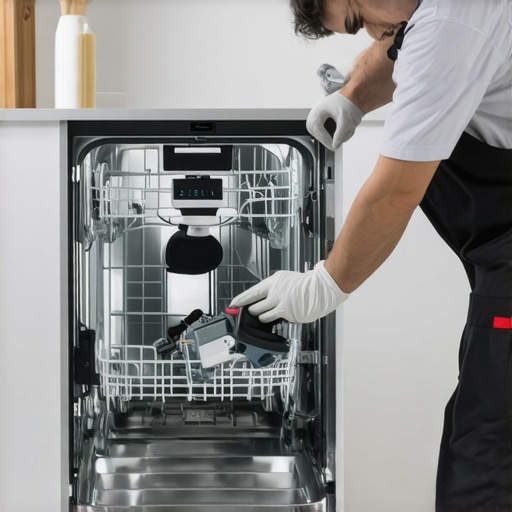
My first step was pulling out the dishwasher and examining visible parts. I looked for loose screws, worn-out gaskets, or any debris lodged where it shouldn’t be. Think of your dishwasher as a mechanical puzzle; sometimes, the answer is hiding in plain sight. During my inspection, I noticed a small rock jammed near the spray arm, which was causing the noise. This simple visual check saved me from unnecessary parts replacement and kept my warranty intact.
Listen Carefully to Identify the Noise Pattern
Next, I ran the dishwasher and paid close attention to the sound. Rattling? Banging? Whining? Each noise pointed to different issues. For example, a banging sound often indicates a loose or unbalanced spray arm. Remember, your ears are powerful diagnostic tools—think of them as your personal audio microscope. Maintaining a mental log of when and how the noise occurs helps narrow down the culprit, making subsequent steps more focused.
Test the Drainage System to Prevent Overflows
Clogged filters or pumps can cause abnormal noises and even void your warranty if unattended. I removed the filter and checked for grime or blockages, similar to cleaning a clogged pipe. Using a flashlight, I inspected the drain hose for kinks or debris. A blocked drain not only causes noise but also risks water damage—something appliance warranties want to avoid entirely. Regular cleaning ensures smooth drainage, preserving both function and warranty coverage.
Use a Multimeter for Circuit and Sensor Checks
When visuals and sounds didn’t reveal the full picture, I turned to testing electrical components. With a multimeter, I checked the continuity of sensors and switches, much like testing wires for breaks. I focused on parts like the door latch, water inlet valve, and control board. Proper testing prevents false diagnoses and ensures that only faulty parts are replaced, a critical step to avoid warranty violations due to unauthorized repairs. Prevent blind replacements by consulting a pro-grade diagnostic tools.
Verify the Water Supply and Pressure
Low water pressure can cause grinding noises or incomplete cycles. I confirmed water flow by disconnecting the supply hose and checking the hose for kinks or clogs, akin to inspecting a garden hose. I also used a pressure gauge to ensure the water pressure met manufacturer specifications. A consistent water supply is essential; neglecting this check might lead to misdiagnosis and warranty issues—so double-check your supply before proceeding further.
Document Every Step for Warranty Purposes
Throughout this diagnostic process, I kept detailed notes and photos. These records proved invaluable when contacting support or submitting warranty claims. Think of your documentation as a medical chart—it provides proof of regular maintenance and accurate diagnoses, making warranty disputes far less complicated. This practice ensures that your efforts align with warranty policies, avoiding unnecessary rejections.
Applying these steps during my troubleshooting not only identified the root cause but also kept my warranty coverage protected. Remember, systematic diagnostics are your best defense against unnecessary expenses and potential voids—think of it as giving your dishwasher a thorough health check, like a doctor’s exam before prescribing treatment. Want more detailed methods? Check out this comprehensive guide for advanced diagnostics techniques.Many homeowners operate under misconceptions about dishwasher warranties and repair diagnostics, often leading to costly mistakes. A prevalent myth is that all DIY repairs will void warranty coverage; in reality, understanding the specific warranty terms and engaging in proper diagnostics can often allow safe, warranty-preserving fixes. Experts emphasize that improper troubleshooting not only risks further damage but can also inadvertently void your warranty, especially if unqualified parts are used or unauthorized repairs are attempted. For instance, relying solely on visual inspections without understanding sensor values or electrical signals can result in misdiagnosis, causing unnecessary part replacements and warranty issues.
A critical nuance many overlook is the importance of precise diagnostics over guesswork. According to appliance repair specialists, many warranty claims are denied because homeowners or technicians fail to provide detailed diagnostic data or mishandle warranty stipulations. Utilizing professional-grade diagnostic tools, like multimeters and software testers, and maintaining thorough documentation greatly improves your chances of warranty approval and quicker repairs. This expertise helps identify subtle issues, such as malfunctioning sensors or voltage irregularities, which are often the real culprits behind mysterious noises or cycle failures. Check out this guide on diagnostics for max warranty benefits for more insights.
Another common trap is underestimating the impact of minor component issues on warranty coverage. For example, neglecting to clean filters or ignoring kinks in supply hoses might seem trivial but can cause significant damage over time, leading to warranty disputes. Experts recommend regular maintenance and thorough diagnostics to catch issues early, preventing small problems from escalating. Understanding the specific coverage of your warranty—including what parts and repairs are protected—is essential. Some warranties exclude damages caused by improper installations or use of non-approved parts, so verifying your coverage and following recommended diagnostic procedures can save you from being denied claims.
A sophisticated question that many advanced users ask is: “How can I distinguish between a sensor failure and an electrical short without voiding my warranty?” This is where detailed diagnostics shine. Using a multimeter, you can test sensor signals against manufacturer specifications, and if you document these readings, you strengthen your case for warranty coverage. Relying on professional diagnostic apps and tools ensures accurate readings and reduces the risk of mishandling warranty-voiding errors. Remember, precise diagnostics are not just about fixing the problem but about safeguarding your warranty.
In summary, debunking these myths and understanding the nuanced aspects of diagnostics can dramatically improve your repair success rate and warranty protection. Proper diagnostic procedures, utilizing the right tools, and thorough documentation are your best allies. Don’t fall into the trap of superficial fixes—invest in knowledge, and your warranty will thank you. Have you ever fallen into this trap? Let me know in the comments.
How do I keep my dishwasher running smoothly over time?
Maintaining your dishwasher’s performance requires more than routine cleaning; it involves using the right tools and adopting effective practices to prevent breakdowns and preserve warranty coverage. One tool I personally rely on is a digital multimeter. It allows me to test sensors, switches, and control boards accurately, ensuring that electrical components are functioning within manufacturer specifications. For example, checking the thermistor with a multimeter can reveal subtle faults that might cause cycle issues—saving me from costly repairs and warranty disputes. Additionally, a quality ultrasonic cleaner is invaluable for removing mineral deposits and debris from spray arms and filters, directly improving cleaning efficiency and reducing strain on internal parts. Regular use of these tools aligns with industry advice found in professional appliance diagnostics guides.
To stay ahead of potential problems, I schedule bi-annual maintenance sessions where I inspect and clean all accessible parts, including door seals, filters, and spray arms. Keeping detailed maintenance logs helps track wear patterns and informs warranty claims if issues arise. Moving forward, I predict that diagnostic technology will become more integrated with smart systems, allowing remote monitoring and predictive maintenance—much like how modern cars alert owners to mechanical issues before failure. Investing in smart diagnostic tools now not only enhances troubleshooting accuracy but also extends the lifespan of your dishwasher.
What’s the best way to preserve my warranty while performing repairs?
Understanding the nuances of warranty coverage is critical. Always verify that the tools and replacement parts you use comply with manufacturer standards. For instance, using non-approved spare parts can inadvertently void warranties, so I opt for OEM components supported by professional diagnostics. When performing repairs, documenting each step thoroughly—including photos of part serial numbers and diagnostic readings—serves as evidence should warranty claims become necessary. For advanced troubleshooting, I recommend employing test software specific to your dishwasher model—some manufacturers offer proprietary diagnostic apps that can identify issues more precisely than manual testing. Explore tips on warranty preservation during repairs to become more confident in your DIY efforts. Try one of these advanced diagnostic techniques today to boost your repair accuracy and safeguard your warranty.
Facing My Greatest Dishwasher Revelation
One day, I realized that my approach to diagnosing appliance issues was more guesswork than expertise, and it was costing me dearly. That moment of clarity revealed the importance of precise diagnostics rooted in personal experience—something I wish I had embraced from the start. I’ve learned that patience and meticulous checks often save time and warranty claims more than reckless repairs.
The Hidden Power of a Well-Equipped Diagnostic Arsenal
Over time, I discovered that investing in reliable diagnostic tools like a high-quality multimeter and professional app-based testers can be game-changers. These tools not only identify subtle faults that casual inspections miss but also safeguard warranty coverage by ensuring you’re working within manufacturer specifications. Relying on such equipment elevated my repair game—making me more confident and less prone to voided warranties.
Embracing Continuous Learning and Community Wisdom
I realized that staying informed through trusted resources and communities unlocks insights that no manual or tutorial can offer. Engaging with seasoned repair professionals and reputable forums helps me stay updated on warranty policies and innovative diagnostic techniques. This continuous learning loop ensures my skills grow alongside evolving appliance technology, helping me serve clients—and myself—with greater reliability.
Curated Recommendations for the Savvy Home Repair Enthusiast
My essential toolkit includes professional-grade diagnostic instruments like the pro diagnostic tools which guarantee precise troubleshooting. For in-depth knowledge, I turn to comprehensive guides such as this detailed diagnostic manual, which offers step-by-step procedures. To keep my skills sharp, online courses from experts have proven invaluable—empowering me to navigate complex warranty scenarios confidently.
Your Next Step Toward Confident Repairs and Warranty Safety
The journey from novice to seasoned repair enthusiast is ongoing, but every step you take toward learning proper diagnostics strengthens your ability to protect your warranty while fixing appliances efficiently. Remember, the key isn’t just fixing the problem but doing so in a way that preserves your warranty rights. Keep pushing forward, utilize the right tools, and tap into knowledge that transforms uncertainty into mastery. Have you ever encountered a tricky dishwasher issue that taught you something unexpected? Share your story below and inspire others to learn and grow in appliance repair confidence!

Leave a Reply