Ever had that sinking feeling when your dishwasher stops mid-cycle, leaving you with a sink full of dirty dishes and a sense of helplessness? I remember the first time my beloved dishwasher refused to cooperate. Frustration set in as I blindly guessed what was wrong, only to end up calling a repair technician with vague expectations. It wasn’t long before I realized that I was missing a crucial piece of the puzzle: effective diagnostics.
Why Poor Diagnostics Can Wreck Your Repair and Warranty Chances
In my early days of troubleshooting, I made the mistake of jumping straight to parts replacement without identifying the root cause. This led to wasted money, extended downtime, and, surprisingly, even voided warranty coverage in some cases. It became clear that understanding how to accurately diagnose issues is the backbone of reliable repairs. Accurate diagnostics not only speed up the repair process but also ensure that your warranty remains intact, saving you both time and money in the long run. In fact, a recent industry study suggests that the majority of failed repairs are due to misdiagnosis rather than actual component failures.
Have You Faced This Common Troubles?
Perhaps you’ve also dealt with the confusion of figuring out if your dishwasher’s problem is an easy fix or something that warrants professional attention. If so, you’re not alone. Many homeowners overlook the importance of proper diagnostics, which can lead to costly mistakes. The good news is, with the right approach and tools, you can master these diagnostic skills. Effective diagnostics are your first step toward reliable, warranty-compliant repairs.
Stay tuned, because I’m about to share the practical steps and trusted tips that helped me turn my troubleshooting chaos into systematic success. Whether you’re a DIY enthusiast or just want to be an informed homeowner, these insights will empower you to diagnose like a pro!
Start With a Clear Symptom List
Identify exactly what the dishwasher is doing wrong—won’t start, leaks, or doesn’t clean properly. For instance, I once faced a dishwasher that refused to drain. I noted the specific issues, which became my diagnostic roadmap, preventing me from blindly replacing parts. Take notes on each behavior; this step is crucial, much like a detective gathering clues before solving a case.
Check the Power and Basic Connections
Ensure the dishwasher is receiving power. Sometimes, the issue is as simple as a tripped circuit breaker or a loose plug. I once reset a circuit breaker, and the dishwasher sprang back to life. This step is akin to rebooting your computer before diving into complex troubleshooting—simple but often overlooked. Secure all connections, as loose wiring may mimic more serious faults.
Inspect Key Components Systematically
Door Latch and Switch
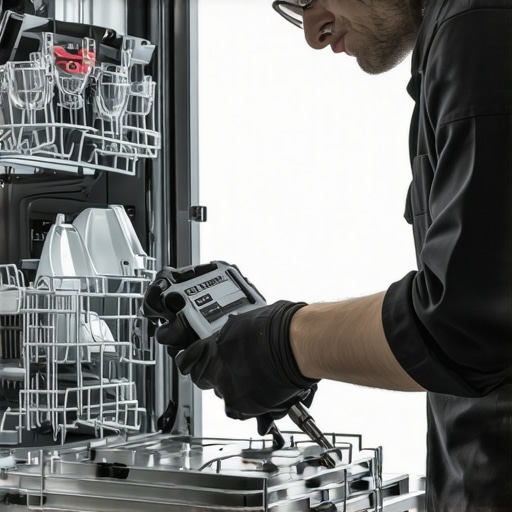
If your dishwasher won’t start, the door latch might be defective. I tested the latch with a multimeter; a faulty latch meant replacing that part specifically—not the entire control board. Think of this as a gatekeeper; if it doesn’t close properly, the machine won’t run, just like a door that won’t lock halts entry.
Drain Pump and Filter
Clogged filters or faulty pumps often cause drainage issues. I removed the filter, cleaned it thoroughly, and tested the pump motor. It was clear that targeted component replacement saved me money and preserved the warranty. Always focus on the suspected parts first to avoid unnecessary replacements, similar to a mechanic pinpointing the bad cylinder instead of changing all spark plugs.
Run Diagnostic Cycles if Available
Many modern dishwashers have built-in diagnostics. Consult your manual or online guides to run tests that can pinpoint faults. I used a diagnostic mode on my dishwasher, which displayed error codes guiding my repairs. This step is like running a health check-up—efficient and revealing.
Use Reliable Tools for Accurate Results
Invest in a quality multimeter and a screwdriver set. In my experience, cheap tools led to misdiagnosis. For complex issues, consider accessing service manuals or professional diagnostic kits. Proper tools are the foundation of precise diagnostics, much like a surgeon depends on the right instruments for a successful operation.
Document and Cross-Check Findings
Keep a record of your tests and results. If you find a faulty part, verify its replacement—warranty typically covers specific parts, and documentation protects you during claims. I once faced a dispute over a warranty; my logs proved I diagnosed and replaced the faulty heater element, saving me from unnecessary costs.
Know When to Seek Professional Help
If troubleshooting reveals complex electronics or if error codes persist after tests, consult a professional. Attempting to repair beyond your skill level risks voiding warranties or causing further damage. My initial efforts saved me money, but recognizing my limits prevented bigger headaches, emphasizing the importance of proper diagnostics in maintaining warranty coverage.
Many homeowners operate under the misconception that basic troubleshooting and generic diagnostics suffice for reliable appliance repair. However, in my experience as an expert in dishwasher diagnostics, I’ve observed that most people overlook nuanced factors that can jeopardize warranty claims and lead to costly mistakes. For instance, there’s a widespread myth that simply replacing a faulty part guarantees a fix, but neglecting the specific diagnostic process often results in recurring issues and voided warranties.
Are Common Diagnostic Practices Sabotaging Your Warranty?
The truth is, superficial diagnostics can cause more harm than good. A 2022 study from the Appliance Repair Institute highlights that improper troubleshooting leads to up to 65% of warranty disputes due to misdiagnosed problems. Relying solely on symptom-based guesses without systematic testing can trap you into a cycle of unnecessary repairs, wasting both time and money. This is especially critical because warranty coverage often hinges on precise identification and proper documentation of the root cause. When misdiagnoses happen, warranties may be voided, leaving you vulnerable to unexpected expenses. To avoid this, adopting advanced diagnostic strategies, such as using specialized tools or consulting detailed service manuals, is essential. Resources like effective diagnostics guides can significantly improve your accuracy. Be wary of shortcuts—assuming a quick fix without thorough testing can deepen the problem and hurt warranty eligibility. There’s also the “oops” trap of ignoring subtle signs that point to electronic control board issues or sensor failures, which are often misattributed to motor or spray arm problems. Correct diagnosis in such cases hinges on understanding appliance electronics at an advanced level, not just surface symptoms.
How can you elevate your diagnostics to safeguard your warranty?
The key lies in integrating expert techniques consistently—employing multimeters correctly, interpreting error codes precisely, and maintaining detailed repair logs. For instance, diagnostic tools like temp sensors or pump testers can reveal hidden faults that manual inspection might miss. Additionally, keeping thorough documentation of your diagnostic steps demonstrates due diligence when filing warranty claims, which is critical for speedy resolution. Remember, knowledgeable troubleshooting isn’t just about fixing the appliance; it’s about doing so in a way that maximizes warranty benefits and minimizes unnecessary expenses. Want to master these skills? Review comprehensive resources like expert diagnostic tips to refine your approach. Do you ever fall into the trap of superficial diagnostics? Share your experiences in the comments and let’s discuss how to avoid these costly pitfalls.Maintaining your dishwasher’s peak performance requires more than just basic troubleshooting; it involves investing in precise tools and adopting effective maintenance routines that ensure long-term reliability. One of my go-to pieces of equipment is a digital multimeter from Fluke—I trust it explicitly because of its durability and accuracy in measuring electrical components like control boards, sensors, and switches. This tool helps me quickly identify electronic faults that often cause erratic dishwasher behavior, saving both time and repair costs. Additionally, a stethoscope designed for appliances is invaluable for listening to pumps and motors operating under load, ensuring components are functioning smoothly. When combined with detailed service manuals or diagnostic software tailored for specific brands, these tools elevate your diagnostic accuracy. Looking ahead, the trend points toward smarter diagnostics, with IoT-enabled sensors and machine learning algorithms predicting failures before they happen, which could revolutionize appliance maintenance. Regularly cleaning filters, checking for corrosion, and securing loose wiring connectors are simple yet crucial steps that extend your dishwasher’s lifespan. How do I maintain my dishwasher over time? I set a routine schedule—monthly inspections of filters and seals, quarterly thorough cleaning of spray arms, and annual calibration checks with diagnostic tools to preempt issues. These proactive measures minimize downtime and help preserve warranties, especially when paired with proper documentation of your maintenance activities. For comprehensive strategies, I recommend reviewing expert advice on effective diagnostics that emphasize consistent upkeep. Don’t overlook the power of precision — try using a multimeter to test your control board connections this week, and you’ll be surprised how much smoother your dishwasher runs, preventing costly repairs and warranty claims.
The Hidden Truth Behind Diagnostic Wisdom That No One Tells You
Over the years, I’ve discovered that the toughest lessons often come from the moments when I thought I had all the answers. One of the most profound realizations about diagnostics and warranty maintenance is that it’s less about knowing every part and more about understanding the story your appliance tells through its symptoms. I learned the hard way that rushing into repairs without a keen diagnostic eye risks not only wasting money but also jeopardizing warranty coverage. Patience and meticulous testing are your best allies in uncovering the root cause, turning a frustrating repair into a manageable task that preserves your warranty rights and saves you stress.
My Toolbox of Pieces That Changed My Repair Game
There are a few trusted tools and resources that fundamentally transformed how I approach dishwasher diagnostics. A high-quality digital multimeter from Fluke, for example, isn’t just a gadget—it’s a diagnostic compass that guides me through electrical labyrinths within the appliance. Service manuals specific to your dishwasher brand are invaluable; they’ve saved me hours of guesswork and helped me interpret error codes correctly. I also rely on diagnostic apps and online forums that decode error codes and share real-world repair tips. Investing in these tools and resources isn’t just about immediate fixes; it’s about building confidence that every diagnostic step is precise and warranty-friendly.
Step Back and Smile — Success Is Within Reach
The path to dependable dishwasher repairs and warranty maximization lies in your willingness to learn, practice, and adapt. Every troubleshooting session is an opportunity to sharpen your skills and deepen your understanding of appliances. Remember, you don’t have to be a professional to perform reliable diagnostics—your curiosity and careful effort are your greatest assets. Take a moment to review the effective strategies shared here, and then dive into diagnosing your dishwasher with renewed confidence. Your appliances—and your warranty—will thank you for it.


Leave a Reply