Ever had your dishwasher break down right when you needed it most? I remember the sinking feeling of hearing that strange clunk, followed by water pooling on the kitchen floor. It was a lightbulb moment for me. I realized I’d been flying blind, trying to fix things without the right tools or knowledge, and I was risking my warranty in the process. That frustration turned into a mission: learn how to diagnose properly and protect my warranty while fixing my appliance efficiently.
Why Proper Diagnostics Save Your Wallet and Warranty
Getting your dishwasher repaired can be a headache, especially if you’re not sure what’s wrong. A wrong diagnosis can lead to unnecessary parts replacement, wasted money, and worse—voiding your warranty. I learned early on that investing in some expert diagnostic knowledge can transform the repair experience. It’s not just about fixing; it’s about fixing smartly, ensuring that your warranty stays intact and your repairs are reliable. Curious? Keep reading, because I’ll share practical tips and resources that I wish I’d known from the start.
Is It Really Worth the Hype to Learn Diagnostic Skills?
Absolutely. I used to think calling a repair technician was the only way, but I quickly found out that understanding some basic diagnostics can help you catch issues early and communicate more effectively with professionals. One mistake I made early on was trying to troubleshoot without proper tools, which led to misdiagnoses and unnecessary expenses. Nowadays, I swear by specific diagnostic tools that make troubleshooting faster and more accurate. Want to know which ones I recommend? Check out top diagnostic tools for reliable dishwasher repairs to see what can make your life easier.
Detecting the real problem from the start not only saves money but also prevents warranty disputes. Many warranties require proper diagnosis and timely repairs; ignoring this can be a costly mistake. With the right diagnostic approach, you can often identify issues before they escalate, ensuring your warranty covers the repair. Plus, knowing what to look for gives you confidence and control over your appliance repairs. Ready to get into the nitty-gritty? Let’s explore how you can master diagnostics and maximize your warranty benefits.
},
Choose the Right Tools and Get Comfortable with Them
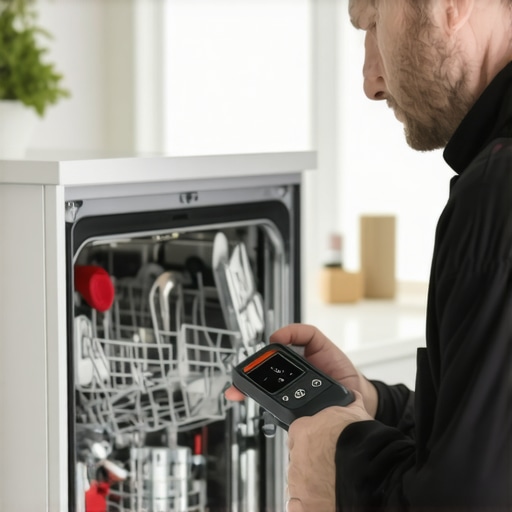
When I faced my first real dishwasher issue, I realized that relying solely on guesswork was a mistake. I invested in a good digital multimeter and a troubleshooting flashlight, which made diagnosing issues much easier. Think of these tools as your detective kit; without them, you’re just guessing in the dark. To maximize your diagnostic accuracy, visit this resource for top recommended diagnostic tools.
Identify Common Symptoms and Their Root Causes
Next, I made a checklist of common symptoms like water not draining, strange noises, or failure to start. For each symptom, I researched typical causes. For example, a clogged filter or faulty float switch could cause water drainage issues. This step is like following a map—narrowing down possibilities before testing. Use this guide to understand how to connect symptoms to specific parts.
Perform Targeted Tests Before Replacing Parts
Instead of swapping parts blindly, I tested components with my multimeter. For instance, I checked the continuity of the dishwasher’s door latch and the heating element. If a part shows no continuity, it’s a clear sign it’s faulty. This approach saves money and preserves your warranty since you’re only replacing what’s proven to be defective. For detailed testing procedures, see this diagnostic walkthrough.
Document Your Findings Clearly
Every step I took, I documented with notes and photos. This documentation proved invaluable when I contacted a technician or warranty service—showing that I did my homework. Clear records prevent misdiagnosis and help ensure your warranty remains valid. Consider maintaining a troubleshooting journal, inspired by this advice.
Use Proper Diagnostic Resources to Confirm Your Suspicions
Finally, I cross-checked my findings with online diagnostic resources and forums. These sources often include real-world troubleshooting tips and diagrams that match my symptoms. When I suspected a faulty control board, I verified it with a voltage test as recommended in this article. Confirming suspicions before ordering parts is key to protecting your warranty and avoiding unnecessary expenses.
Many DIY enthusiasts and even seasoned homeowners hold misconceptions about diagnosing dishwasher issues, often leading to costly mistakes and warranty pitfalls. Let’s dig deeper into what most people get wrong and how understanding these nuances can save you money and protect your warranty.
Why Assuming Quick Fixes Are Always the Best Option Is a Trap
One widespread myth is that replacing the most obvious faulty part, like the pump or motor, will solve the problem quickly. While sometimes effective, this approach ignores the importance of proper diagnostics. Many issues are caused by less obvious problems, such as faulty sensors or control boards, which require targeted testing. Jumping straight to part replacement without confirming the root cause can lead to unnecessary expenses and even void your warranty. For reliable diagnostics, it’s better to use specialized tools and verify each component before replacing it. For example, testing the continuity of the heating element with a multimeter can prevent you from buying a new part unnecessarily. For more advanced troubleshooting strategies, consider reviewing this guide.
Does the Complexity of Modern Dishwashers Make DIY Repairs Riskier?
Absolutely, and this is where many get tripped up. Modern dishwashers incorporate advanced electronic control systems and sensors that can be easily damaged if mishandled. A common misconception is that all parts are simple to test with basic tools, but many components require specialized diagnostic procedures. For instance, testing a control board without proper understanding can cause further damage or misdiagnosis. Experts recommend using professional diagnostic tools and consulting detailed troubleshooting resources to ensure your repairs are both effective and warranty-safe. This is especially crucial because warranties often require documented, correct diagnostics before any repairs. To learn more about safeguarding your warranty during diagnostics, visit this resource.
Common Mistakes That Damage Your Warranty Without You Realizing
One of the most overlooked errors is attempting repairs without proper documentation or following manufacturer guidelines. Many homeowners forget to record their diagnostic steps or use non-approved parts, risking warranty voidance. Additionally, misdiagnosing a problem and replacing multiple parts can lead to warranty disputes or additional charges. The key is to perform targeted tests, document every step, and only replace parts that have been conclusively identified as faulty. Using trusted diagnostic resources and tools can dramatically improve accuracy. For instance, top diagnostic tools can help confirm suspicions, ensuring your warranty remains intact and your repairs are justified.
Have you ever fallen into this trap? Let me know in the comments. Remember, proper diagnostics are your best defense against unnecessary expenses and warranty issues. Mastering this skill not only saves money but also gives you peace of mind when fixing your appliances.
How do I maintain my dishwasher over time?
Keeping your dishwasher in top condition requires more than just occasional fixes. Regular maintenance with the right tools can extend its lifespan and ensure warranty compliance. Personally, I rely heavily on a digital multimeter and a 25-foot troubleshooting extension cord. The multimeter allows me to test electrical components like heating elements and control boards precisely, while the extension cord helps me reach hard-to-access parts without straining the machine or risking damage. These tools have become indispensable in my repair routine, helping me identify issues early and avoid costly replacements.
To stay ahead of potential problems, I schedule monthly inspections where I check for clogged filters, clean spray arms, and verify that sensors are functioning correctly. Using a soft brush and a vinegar solution, I clear out mineral deposits that can cause performance drops. This proactive approach minimizes breakdowns and keeps my appliance warranty safe, as many warranties require documented maintenance routines.
Looking toward the future, I predict that diagnostic tools will become even smarter, integrating AI to analyze appliance data in real-time and suggest preventive actions. This advancement could revolutionize how homeowners maintain their appliances, making DIY easier and more reliable. For now, investing in quality diagnostic equipment and establishing a routine is the best way to keep your dishwasher running efficiently and warranty-guarded.
Why regular maintenance pays off
Consistent upkeep not only prevents unexpected failures but also enhances energy efficiency and cleaning performance. I recommend checking out this resource to explore top diagnostic tools that can help you identify issues before they escalate. Remember, a well-maintained dishwasher is less likely to void your warranty due to neglect or improper repairs. So, grab your multimeter, keep a cleaning schedule, and don’t hesitate to use advanced diagnostic tools to ensure your appliance stays in prime condition for years to come.
Three Lessons I Wish I Learned About Dishwasher Diagnostics
- Jumping straight to part replacement without proper testing can be a costly mistake—more than once, I replaced a pump only to find out the issue was a faulty float switch. Taking the time to diagnose correctly saved me money and kept my warranty intact.
- Understanding how modern electronic controls work is crucial. I once damaged my control board because I tried to test it without proper tools. Now, I know that using specialized diagnostic equipment makes all the difference in avoiding costly errors.
- Documenting every step of my troubleshooting process has been a game-changer. When I kept detailed notes and photos, warranty claims became smoother, and technicians could help me faster. It’s a small effort that yields big results.
My Go-To Resources for Reliable Dishwasher Diagnostics
- Top diagnostic tools — I personally rely on a digital multimeter and a troubleshooting flashlight for precise testing and easy inspections.
- Expert diagnostic tips — This guide helped me understand how to connect symptoms with specific parts, preventing unnecessary replacements.
- Warranty and diagnostics strategies — Knowing how to document and verify my findings kept my warranty safe and my repairs justified.
Take Action Today and Keep Your Dishwasher Running Smoothly
Being confident in your diagnostic skills can save you money, protect your warranty, and give you peace of mind. Don’t wait until a small issue turns into a costly repair—start mastering your dishwasher diagnostics now. Your wallet and warranty will thank you.
What’s been your biggest challenge when diagnosing appliance issues? Share your story below—I’d love to hear how you tackled it!


Leave a Reply